Trichologist Goole: Hard Hats, Shift Work and Your Hair
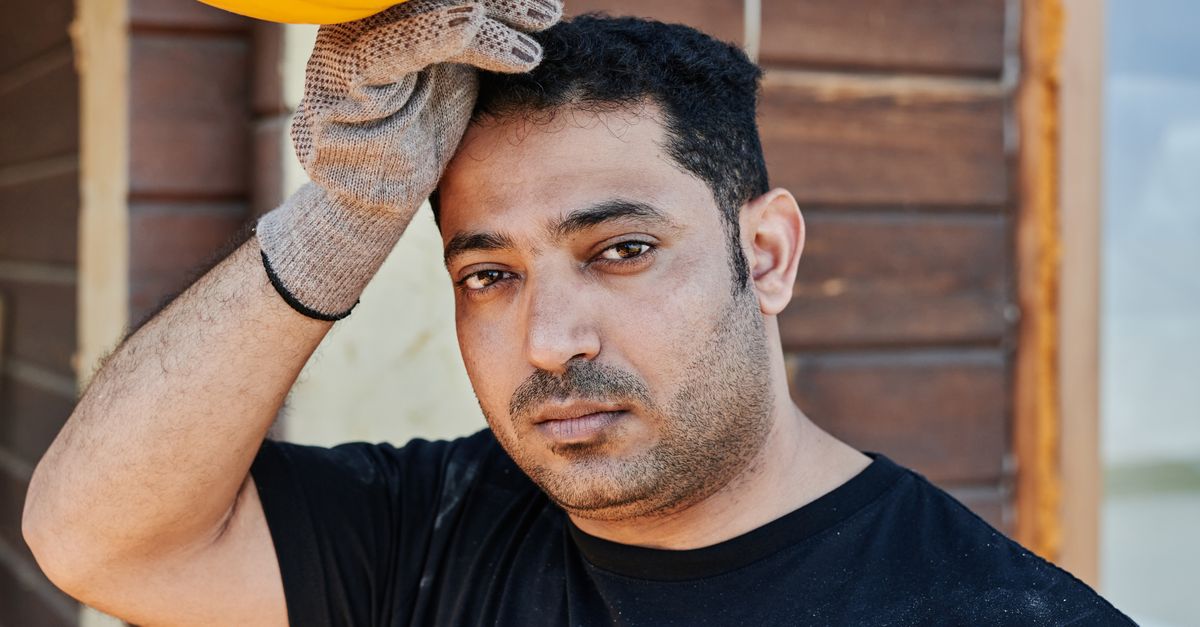
If you are looking for a trichologist Goole because your hair has thinned since you started wearing a hard hat or working nights, the honest answer is that the helmet is rarely the culprit and the shift pattern often is. Head protection causes friction and breakage at the band line. Rotating shifts, broken sleep and a compressed eating pattern are what push follicles into a shedding phase.
Our hair growth shampoo
Grow Me® Hair Growth Shampoo, £14.95. A sulphate free daily shampoo that supports a healthy scalp environment and helps reduce breakage, so lengths hold on and look fuller.
Key takeaways
- Head protection does not cause pattern hair loss. What it causes is breakage and occasionally traction damage where straps sit tight against the same line every day.
- Rotating and night shifts disrupt sleep and appetite, and both are recognised contributors to the kind of diffuse shedding that shows up two to three months later.
- Breakage leaves short blunt stubs with no bulb. Shedding leaves full length hairs with a pale root. The fix is completely different for each.
- Under UK regulations head protection must fit properly and be maintained, and a badly fitting hat is both a safety issue and a hair issue.
- Washing after a shift is not the problem. Washing badly, with the wrong products and rough towelling, is.
Does wearing a hard hat cause hair loss?
Wearing a hard hat does not cause pattern hair loss. Follicle miniaturisation is driven by genetics and hormones, not by pressure from above. What head protection does cause is mechanical damage: fibres rubbing against the harness and sweatband, snapping along the shaft, and tension where a chin strap or headband sits tight on the same line every day.
That distinction changes what you do about it. Breakage at the band line responds within weeks to a looser harness, a clean sweatband and better conditioning. Genuine pattern loss does not, and it needs a proper assessment rather than a change of helmet. Many people wearing PPE have both at once, which is why the helmet gets blamed for something it did not start.
There is one real exception. Sustained tension along the same line for years can cause traction alopecia, where repeated pulling damages the follicle and eventually scars it. It is uncommon from a correctly fitted hard hat and much more common from tight ponytails worn under one, which is the combination worth watching.

What does a trichologist Goole appointment look at for shift workers?
A trichologist Goole consultation should cover the hair shaft as well as the scalp. Expect an examination of the band line for broken stubs, a pull test for active shedding, questions about your shift rota and sleep, and a review of recent blood results. Registered members of the Institute of Trichologists work to a published code of practice.
Bring your rota. It sounds trivial and it is the single most useful document you can produce, because shedding triggered by a change in shift pattern shows up two to three months after the change, not during it. Without dates, that link is invisible, and it is the link that explains most of these cases.
Trichology is not statutorily regulated in the UK, so anyone may use the title. Check registration before paying, and expect a first private consultation in this region to fall somewhere between sixty and a hundred and fifty pounds, with prices varying widely between practices and no standard rate.
How do you tell breakage from shedding at the band line?
Look at the ends. Broken hairs are short, blunt at both ends and have no bulb, and they concentrate in a band where the harness sits. Shed hairs are full length with a small pale club at the root and are spread evenly across the whole scalp. A ring of short frizzy stubs at the hatline is breakage, not loss.
| What you find | What it is | What fixes it |
|---|---|---|
| Short blunt stubs and frizz in a band across the head | Breakage from harness friction | Looser fit, clean sweatband, conditioner every wash, weekly mask |
| Full length hairs with a pale root, evenly across the scalp | A shedding phase, often tracing back to a shift change or illness two to three months earlier | Find the trigger, check bloods, give it three to six months |
| Gradual widening at the parting or crown over years | Pattern hair loss, unrelated to the helmet | A proper assessment with a GP or trichologist |
| A sore, itchy or spotty scalp under the hat | Irritation or folliculitis from trapped sweat and an unwashed liner | Clean the liner, wash after shifts, and see a GP if it persists |
Our piece on scalp care under a helmet goes further into the itch and spot side of this, and why a scalp becomes tender and how to calm it covers the soreness that often arrives alongside it.
What do the UK rules actually require of head protection?
UK regulations require that personal protective equipment is suitable, fits the wearer and is properly maintained. The Personal Protective Equipment at Work Regulations 1992, amended in 2022 to extend duties to a wider group of workers, place responsibility on the employer to provide suitable equipment and keep it in good repair.
Fit is the part that matters for hair. A harness adjusted too tight to compensate for a worn cradle presses harder on the same line all day. A sweatband that is never replaced holds sweat, salts and grit against the scalp for a whole shift. Both are maintenance issues you are entitled to raise, and both show up in the mirror.
Two things to ask for at work
A correctly sized shell with an intact harness cradle, and replacement sweatbands or liners on a regular schedule. Neither is a favour. Suitability and maintenance of PPE are employer duties under the regulations, and a hat adjusted too tight because the cradle has gone is not suitable.
Get a discount on the hair breakage range
Join the Watermans mailing list and we will email a discount code straight to your inbox, so you can try the hair breakage range for less. Made in the UK, over 6.5 million bottles sold since 2012.
Why does shift work show up in your hair months later?
Shift work shows up late because follicles do not shed on the day they are disturbed. A period of disrupted sleep, irregular eating and physical stress pushes follicles into their resting phase early, and resting hairs stay anchored for roughly three months before releasing. The shed therefore lands two to three months after the rota changed.
The HSE regards fatigue from shift work as a genuine workplace risk, associated with reduced sleep quality and quantity rather than simply feeling tired. That same disruption is what affects hair: shorter sleep, altered appetite, more reliance on quick food, and less consistent iron and protein intake across the week.
At roughly one centimetre of growth a month, hair is a slow recorder. What you see in the brush today usually reflects what your body was dealing with around three months ago.
The practical consequence is that blaming this week is almost always wrong. Look back at what changed twelve weeks ago: a new rota, a run of doubles, an illness, a crash diet or a stretch of genuinely bad sleep. Our guide to training, sweat and hair shedding covers the same delayed pattern in people who train hard.

How should you wash your hair around shifts?
Wash after shifts where you have sweated heavily, and do not stretch washes to protect hair that is already breaking. Sweat leaves salts and, on a covered scalp, the residue sits against the skin for hours. The goal is a gentle regular wash rather than a rare aggressive one.
Four details do most of the work. Use a sulphate free shampoo so you are not stripping an already irritated scalp. Condition the mid lengths and ends every single wash, because that is where the band friction lands. Blot with a microfibre towel rather than rubbing. And never put a hat back on over wet hair, since wet hair stretches and snaps far more easily than dry. There is more on scalp serum on wet hair in a separate guide.

Grow Me® Hair Growth Shampoo £14.95
Sulphate free, with caffeine, biotin, rosemary and hydrolysed lupine protein. Cleans a sweaty scalp without stripping it and supports a healthy scalp environment.

Condition Me® Hair Growth Conditioner £13.95
Cholesterol, shea butter and hydrolysed lupine protein for slip and breakage defence, aimed squarely at the band line where friction does its damage.

What else reduces damage under PPE during a shift?
Five changes make a measurable difference: adjust the harness so the shell carries the weight rather than the strap, keep hair dry before putting the hat on, avoid tight ponytails or buns under the shell, replace liners and sweatbands regularly, and take the hat off during genuine breaks so the scalp can dry out.
If long hair has to be secured, secure it low and loose rather than high and tight, and use a fabric tie rather than a thin elastic. Tension is cumulative. A single tight bun is nothing, and the same tight bun five shifts a week for three years is how traction damage happens, as covered in our guide to looking after hair around exercise and sweating.

Masque Me® Deep Conditioning Hair Mask £24.95
A weekly deep conditioning mask with rosemary, panthenol and hydrolysed lupine protein, for hair that has taken months of friction and needs the fibre strengthening rather than just softening.
Does diet on nights make any difference to hair?
Diet on nights matters mainly through iron and protein. Night workers commonly eat less and at odd hours, and both nutrients are easy to fall short on. Hair is roughly ninety per cent keratin, a protein, and iron deficiency anaemia is a recognised cause of hair changes that the NHS confirms with a blood test.
The fix is practical rather than clinical. Take real food on shift rather than relying on what the vending machine offers, keep a protein source in every meal including the one at three in the morning, and pair plant sources of iron with something containing vitamin C. If shedding has been running for months, ask your GP about ferritin specifically rather than accepting that a full blood count was normal.

When should you see a GP rather than a trichologist Goole clinic?
See a GP first if the scalp is painful, weeping, scaly or scarred, if hair is coming out in patches with smooth bare skin, if loss is sudden and in clumps, or if there are other symptoms such as unexplained weight change or persistent fatigue. The NHS advises seeing a GP for sudden hair loss or hair loss in patches.
Spots, boils or persistent soreness under a hard hat also belong with a GP rather than a product, because infected follicles can scar if they are left. A trichologist Goole appointment is most useful once anything medical has been excluded, or alongside GP care for the day to day management of hair and scalp.
Watermans does not run clinics If your question is about products or a routine rather than a medical one, you can talk to Gail Waterman, our co-founder, as an AI avatar on the Watermans homepage.
We make cosmetic hair care and nothing else. We do not offer consultations, scalp assessments or medical advice, and nothing here replaces seeing your GP about a sore scalp, sudden shedding or patchy loss.
Frequently asked questions
Will my hair recover if I stop wearing a hard hat?
Breakage at the band line recovers once the friction stops and conditioning improves, usually within a few months as the damaged length grows out or is cut off. If the thinning is pattern hair loss, removing the hat changes nothing, which is why telling the two apart comes first.
Is a bald spot from a helmet permanent?
A smooth bare patch under a helmet is not typical friction damage and should be seen by a GP rather than assumed to be the hat. Traction damage from years of tension can become permanent once the follicle scars, so persistent tension along one line is worth changing early.
Should I wash my hair after every shift?
After any shift where you sweated heavily, yes. Leaving sweat salts and grit against a covered scalp for hours is more irritating than a gentle sulphate free wash. The problem is never frequency, it is harsh products and rough drying.
Can a trichologist Goole appointment prove the shifts caused it?
A trichologist Goole consultation cannot prove causation, but the timeline is strong circumstantial evidence. A diffuse shed starting two to three months after a rota change, with no other trigger, fits a recognised pattern and is enough to act on.
Does wearing a hat make you go bald faster?
No. Pattern hair loss is driven by genetics and hormones, and there is no mechanism by which a hat accelerates it. Hats cause breakage and can trap sweat, both of which make existing thinning look worse without changing what the follicles are doing.
What about hi vis hoods and balaclavas in winter?
The same rules apply. Anything worn tight against the same line for hours causes friction, and anything that traps moisture against the scalp encourages irritation. Looser fit, dry hair before you put it on and a clean liner cover most of it.
How long until I know whether the shedding is settling?
Give it three months of watching before drawing conclusions. Counts falling week on week are reassuring. Shedding still heavy at six months, or restarting repeatedly, deserves a GP review rather than more patience.
Do hair supplements help night workers?
They help where there is a genuine shortfall, and nutrients such as biotin, zinc and selenium contribute to the maintenance of normal hair. They do not replace a blood test. If ferritin is low, correcting that specific gap with your GP is more useful than a broad multivitamin.
Sources & references
- NHS: Hair loss, on causes of temporary hair loss and when to see a GP
- DermNet: Telogen effluvium, on the delayed, diffuse shedding pattern and its usual duration
- DermNet: Traction alopecia, on tension related hair loss and when it becomes permanent
- DermNet: Scalp folliculitis, on inflamed follicles, spots and soreness on the scalp
- HSE: Personal protective equipment at work, on employer duties to provide suitable, well fitting and maintained PPE
- The Personal Protective Equipment at Work Regulations 1992, on the statutory requirements for suitability and maintenance
- HSE: Fatigue, on shift work, sleep disruption and fatigue as a workplace risk
- NHS: Iron deficiency anaemia, on symptoms, blood testing and why stores fall
What is the bottom line on trichologist Goole searches about hard hats?
The bottom line on a trichologist Goole search is that the hat gets blamed for two different problems it did not cause. Friction at the band line is breakage, and it responds quickly to a better fit, a clean liner and proper conditioning. Diffuse shedding usually traces back to a shift change two to three months earlier.
Do three things this week. Check the harness fit and ask for a fresh sweatband. Look back twelve weeks in your rota for what changed. And if shedding has run past three months or the scalp is sore, spotty or patchy, take it to your GP rather than to a product.
If the damage is at the band line, the fix is slip and strength rather than anything clever. Our hair growth conditioner is built around cholesterol, shea butter and hydrolysed lupine protein for breakage defence, from a UK brand with over 6.5 million bottles sold since 2012.
Watermans products are 100% cosmetic and do not treat medical hair loss. Individual results may vary.