Trichologists Hinckley: Bleach, Highlights and Fine Hair
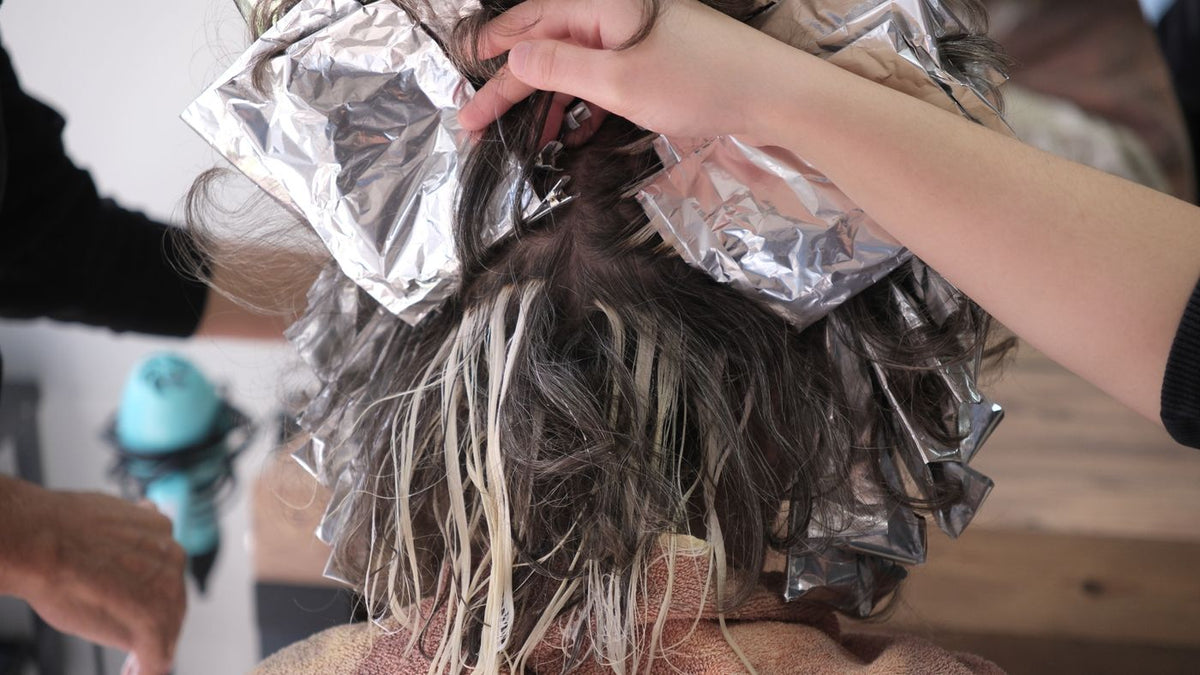
People search for trichologists Hinckley after a colour appointment more often than you might expect, and the trigger is almost always the same: the hair felt fine leaving the salon, and two weeks later it is snapping off at the crown. Fine hair and bleach can coexist, but the margin for error is narrower than on coarse hair, and most of the damage happens in decisions made before the foils go in.
Our weekly hair mask
Masque Me® Hair Mask, £24.95. A deep conditioning weekly mask for dry, stressed lengths, adding gloss and hydration where heat and colour have taken their toll.
The short answer: bleaching removes pigment by opening the cuticle and breaking internal bonds, so it lowers the strength of the fibre rather than harming the follicle. That means bleach causes breakage, not hair loss. Fine hair shows it sooner because there is less fibre to lose. Searches for trichologists Hinckley usually follow breakage, and the fix is spacing services further apart, keeping bleach off previously lightened lengths, and handling wet hair carefully.
Key takeaways
- Bleach damages the hair fibre above the scalp. It does not reach or harm the follicle, so it causes breakage rather than pattern hair loss.
- Fine hair has less internal mass, so it reaches the damage threshold in fewer sessions than coarse hair.
- Root-only application on six to eight week cycles protects the lengths far more than any aftercare product.
- Wet bleached hair is at its weakest. A wide-tooth comb on wet hair prevents more breakage than any mask.
- An allergy alert test 48 hours before a colour service is standard UK practice, every time, even if you have coloured before.
What do trichologists Hinckley say bleach actually does to the hair fibre?
Bleach lifts the cuticle scales and oxidises the melanin inside the cortex, and in doing so it breaks some of the disulphide bonds that give keratin its strength. Hair is roughly ninety per cent keratin protein, and those bonds are what hold the structure together. Lightening also strips 18-MEA, the lipid layer that makes healthy hair feel smooth and water-repellent.
Two consequences follow. The hair becomes more porous, which is why bleached hair soaks up water, takes longer to dry and feels rough. And it becomes weaker in tension, which is why it snaps under forces it would previously have survived, such as a brush pulled through a wet tangle.
Crucially, none of this happens below the skin. The follicle sits well beneath the surface and bleach never reaches it. That is why a colour service can leave your hair looking thinner without changing anything about how much hair your scalp is producing.
How is bleach breakage different from hair loss and shedding?
Three different things get called thinning, and separating them decides what you do next. Hair loss means follicles producing finer hair or stopping. Shedding means more hairs than usual completing their cycle and leaving the scalp, against a baseline of roughly 50 to 100 a day. Breakage means the fibre snapping somewhere along its length while the root stays put.
Bleach causes the third one, essentially always. The tell is in what you find: broken hairs have two blunt or frayed ends and no pale bulb, and they are short, often one to three inches, because they snapped mid-length rather than fell out. Shed hairs have a small white bulb at one end and are full length.
If you are finding full-length hairs with bulbs after a colour service, the bleach is probably not the cause and something else is going on at the same time. Our guide to new growth, breakage and flyaways goes through how to read the ends of the hairs you lose.
The wet stretch test
Take one shed hair, wet it, and pull gently. Healthy hair stretches around 20 to 30 per cent and springs back. Over-processed hair stretches much further, stays stretched, or breaks with almost no resistance. If yours behaves like that, postpone the next lightening service rather than booking a repair service on top of it.

Why does fine hair reach the damage threshold faster?
Fine hair has a smaller diameter, a thinner cuticle layer and less cortex, so the same chemical process removes a larger proportion of the available structure. A coarse hair might have ten cuticle layers, a fine hair as few as five, and each lightening session lifts and erodes those scales. Less starting material means fewer sessions before the fibre gives way.
Fine hair also tends to be lighter in weight, so damage shows visually much sooner. Broken ends on coarse hair get hidden by surrounding mass. On fine hair, a halo of snapped hairs around the crown and parting reads immediately as thinning, even though the follicle count has not changed at all.
The practical result is that fine hair rewards restraint. Fewer foils placed more thoughtfully, a shade closer to your natural base, and longer gaps between services will keep fine hair looking fuller than an aggressive lift followed by intensive aftercare.
| Service | Scalp contact | Risk to fine hair | Typical repeat cycle |
|---|---|---|---|
| Foil highlights | None | Lower, untouched hair between sections | 8 to 12 weeks |
| Balayage | None | Lower, roots left natural | 12 to 16 weeks |
| Full head lightening | Direct | Highest, whole fibre processed | 6 to 8 weeks for roots |
| Root-only refresh | Direct, small area | Lower for lengths | 6 to 8 weeks |
What should you ask for at the salon if your hair is fine?
Ask three specific questions before any lightening service: will bleach touch hair that has been lightened before, how many levels of lift are we attempting in one sitting, and what is the plan if the test strand does not behave. A colourist who answers those clearly is protecting your hair. Vague reassurance is the warning sign.
- Request a strand test. A small section processed first shows how your hair responds before the whole head is committed.
- Ask for root-only where possible. Overlapping bleach onto already-lightened hair is the single most common cause of mid-length snapping.
- Take fewer levels of lift per visit. Two visits to go from dark to blonde is gentler than one long session, even though it costs more.
- Insist on the allergy alert test. At least 48 hours before, every time, as UK salon practice requires.
- Say if you have a sore or broken scalp. Bleach on damaged skin can cause chemical burns, and a colourist needs to know.
If a service has already gone wrong and you are dealing with snapped lengths right now, our realistic plan for repairing bleach damaged hair covers the recovery side in detail, including when cutting is the only honest answer. This page is about the decisions that come before that point.
Get a discount on the fine and colour-treated hair range
Join the Watermans mailing list and we will email a discount code straight to your inbox, so you can try the fine and colour-treated hair range for less. Made in the UK, over 6.5 million bottles sold since 2012.
Which aftercare genuinely helps colour-treated fine hair?
Aftercare cannot rebuild broken bonds, but it can reduce further loss of fibre, and that is worth having. The highest-value habits are mechanical rather than chemical: comb wet hair with a wide-tooth comb starting at the ends, never brush it wet, and let hair dry to damp before any heat. Heat on soaking wet bleached hair is a reliable way to create more breakage.
On the product side, a conditioner every wash matters more than an occasional mask, because detangling is where the daily damage happens. A deeper conditioning mask once a week adds slip and softness, and a light oil on the ends reduces the friction that frays already-porous hair.


Masque Me® Repairing Hair Mask
A weekly deep conditioning mask for hair that has been lightened. Works on the ends and mid-lengths where porosity is highest, adding slip so wet combing pulls less.

Condition Me® Hair Growth Conditioner
The every-wash step that matters most. Lightweight enough for fine hair, with enough slip to get a wide-tooth comb through wet lengths without snapping them.

Camellia & Black Castor Hair & Body Oil
A few drops of camellia and black castor oil through dry ends reduces friction and flyaway frizz on porous, lightened hair, without weighing down a fine texture.
How long should you wait between lightening services?
Six to eight weeks is the usual minimum for a root refresh, and longer is better if the hair feels stretchy when wet. Hair grows at roughly one centimetre a month, so eight weeks produces about two centimetres of new growth, which is enough for a colourist to work on the root alone without overlapping bleach onto lengths that have already been processed.
Stretching the cycle is the cheapest fix available to you. Going from a six week to a ten week cycle removes roughly two lightening services a year, and on fine hair that is often the difference between hair that holds its length and hair that will not grow past the shoulders.
Root smudging, a shadow root or a slightly deeper base shade all buy you more time between visits, and they cost less than the service you are postponing.

When is it worth seeing a GP or trichologists Hinckley instead of a colourist?
See a GP if your scalp is blistered, weeping, crusted or painful after a colour service, because bleach on broken skin can cause a chemical burn that needs medical attention. Also see a GP if you develop swelling of the face, lips or eyes after a colour service, or if you find distinct bald patches rather than generalised snapping. If your question is about products or a routine rather than a medical one, you can talk to Gail Waterman, our co-founder, as an AI avatar on the Watermans homepage.
Private hair and scalp specialists, including trichologists Hinckley, are worth paying for when the picture is mixed: breakage from colour on top of shedding that started before the service, or thinning that continued after you stopped bleaching altogether. Trichology sits outside the NHS, so sessions are paid privately and commonly cost between 40 and 90 pounds for a first assessment.
Check credentials first. Trichologist is not a title protected by UK law, so look for membership of the Institute of Trichologists or the Trichological Society, which indicates assessed training. Our guide to relaxers, keratin smoothing and scalp burns covers the scalp-damage side, which is the closest neighbour to this topic.
Frequently asked questions
Does bleaching cause hair loss?
Bleaching does not damage the follicle under the skin, so it does not cause pattern hair loss. What it causes is breakage: the fibre above the scalp weakens and snaps. The difference matters because breakage grows back as the existing hair is replaced, whereas follicle-level loss does not resolve by changing your hair care.
How long should I wait between bleach sessions?
Most colourists work to a minimum of six to eight weeks between full lightening services, and longer if the hair is already fragile. Hair grows roughly one centimetre a month, so waiting eight weeks gives you around two centimetres of virgin root, which is enough for a root-only application rather than pulling bleach through the lengths again.
Is a patch test really necessary if I have bleached before?
Yes. UK salon practice is an allergy alert test at least 48 hours before every colour service, because sensitisation can develop at any time, including to a product you have used for years. Bleach itself is the lightening step, but the toner that usually follows it can contain dyes that people react to.
Can fine hair handle highlights at all?
Fine hair often handles highlights better than an all-over lightening service, because foils keep the product off the scalp and leave untouched hair between the lightened sections. Fine hair has a thinner cuticle and less internal mass, so it reaches the point of damage faster, which makes the spacing of the service more important than the shade.
Do bond builders actually work?
Bond builders are cosmetic products applied during and after a chemical service that work on the hair fibre itself rather than the scalp. They do not return hair to its virgin state, and they are not a licence to bleach more often or to lift further in one sitting. Think of them as damage limitation, and judge them on how your hair feels when wet rather than on the claims on the box.
Why does my bleached hair feel fine dry but stretchy when wet?
Wet hair swells and its internal bonds are temporarily weakened, and bleached hair is more porous, so it takes on more water and stays weak for longer. Hair that stretches like chewing gum when wet and does not spring back is over-processed, and it will snap when combed. Handle it with a wide-tooth comb and never brush it wet.
Should I bleach at home to save money?
Home lightening is where most severe breakage cases start, because the product is applied to lengths that have already been lightened before, without the sectioning and timing control a colourist uses. If budget is the issue, ask a salon about a root-only application or fewer, wider foils rather than switching to a box.
What do trichologists Hinckley add that a colourist does not?
A colourist assesses the hair to deliver a colour result. A hair and scalp specialist looks at the scalp, the shedding pattern and your wider history to work out whether what you are seeing is breakage from chemistry or a separate hair loss issue that happens to coincide with it. Those two answers lead to completely different plans.
What is the bottom line on trichologists Hinckley?
Bleach and fine hair can work together, but only with restraint built into the plan. Keep bleach off previously lightened lengths, stretch the cycle to eight weeks or more, take fewer levels of lift per visit, and handle wet hair as the fragile thing it is. Those four habits prevent more damage than any aftercare range. Searching for trichologists Hinckley makes most sense when breakage and shedding are happening together and you want someone to separate them, and a GP is the right call for a sore, blistered or patchy scalp.
Remember which problem you are solving. Bleach breaks the fibre above the scalp. It does not touch the follicle. Hair that snapped will be replaced as it grows, at about a centimetre a month, provided you stop adding to the damage while it does.
If you want one product to start with, a weekly deep conditioning hair mask on the mid-lengths and ends gives lightened fine hair the slip it needs to survive wet combing, which is where most day-to-day breakage actually happens.
Watermans products are 100% cosmetic and do not treat medical hair loss. Individual results may vary.
Sources & References
- British Association of Dermatologists, Hair and scalp information leaflets: hair structure, growth rate and hair care guidance.
- NHS, Hair loss: when hair changes warrant a GP opinion.
- NHS, Burns and scalds: guidance on chemical burns to the skin and scalp.
- DermNet, Shampoo: shampoo, conditioning ingredients and the hair cuticle.
- Institute of Trichologists, Find a trichologist: UK membership and training standards.