Trichologists Carlisle: Flaky Scalp, Dandruff and Hair
Searches for trichologists Carlisle tend to spike when someone notices white flakes on a dark jumper, or catches the reflection of a pink, scaly patch in the bathroom mirror. A flaky scalp is one of the most common reasons people start looking for a hair and scalp specialist in Cumbria, and it is also one of the most misunderstood. Most of the time it is manageable at home, and knowing which signs genuinely need a professional saves both worry and money.
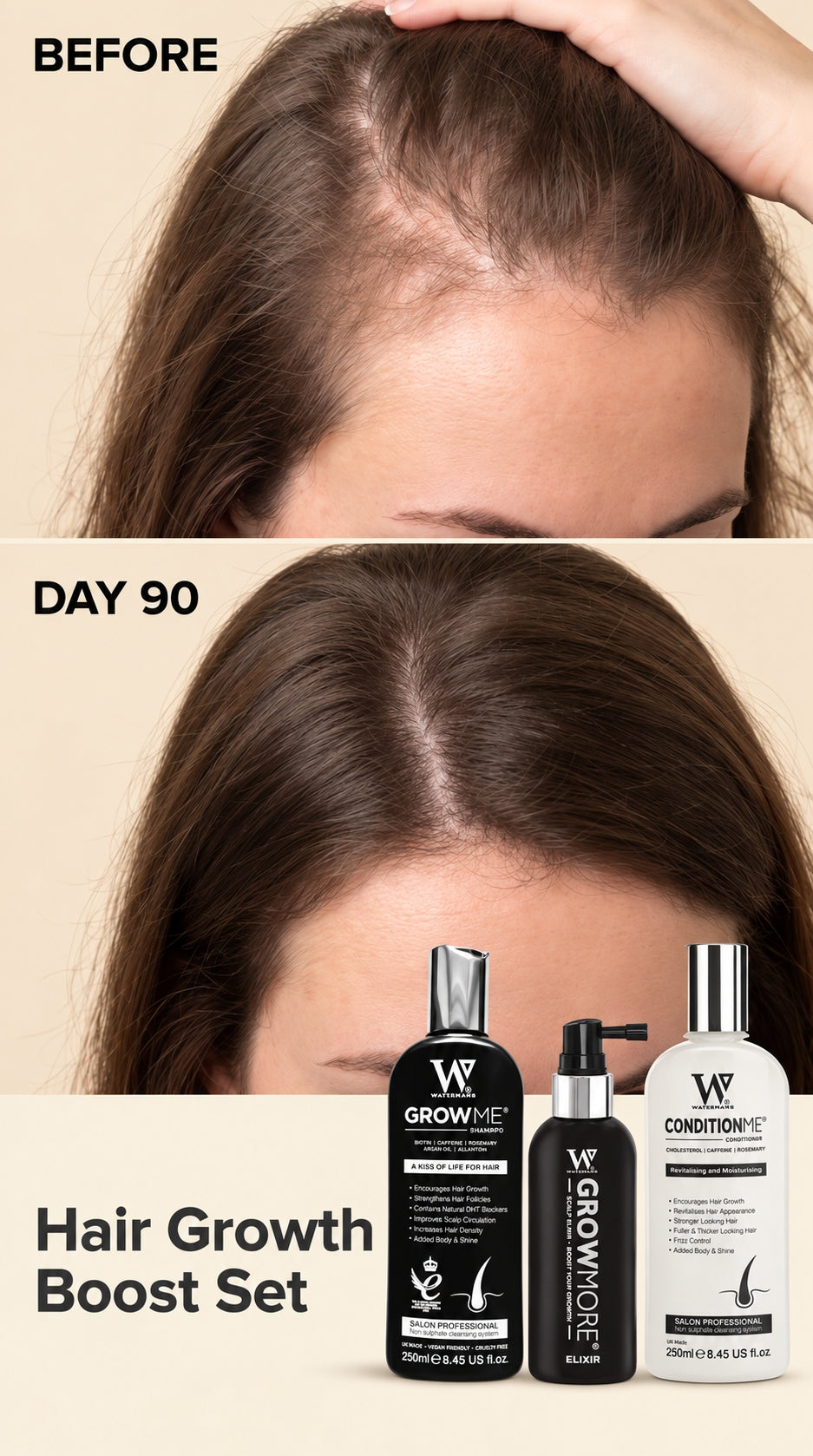
Our hair growth shampoo
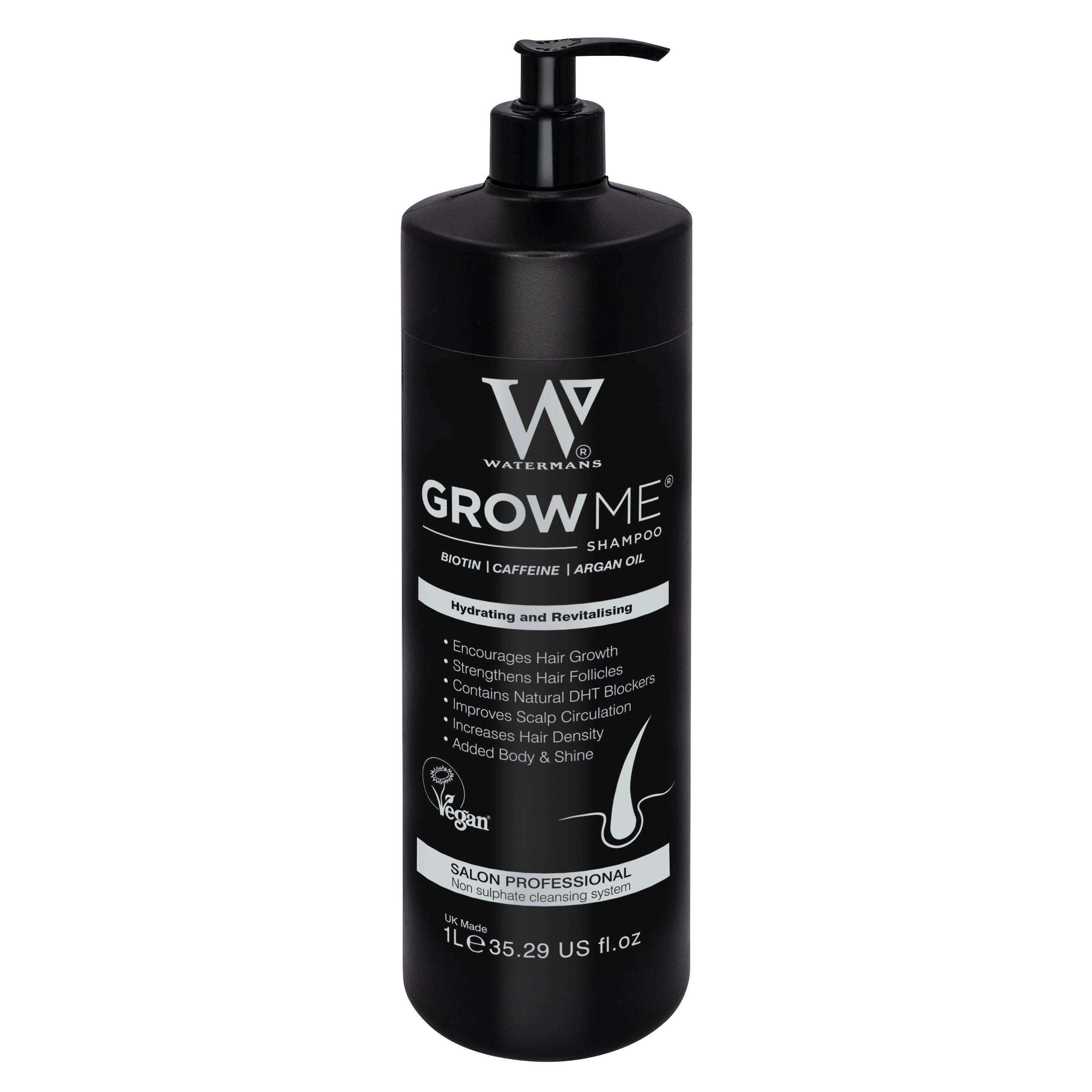
Grow Me® Hair Growth Shampoo, £14.95. A sulphate free daily shampoo that supports a healthy scalp environment and helps reduce breakage, so lengths hold on and look fuller.
The short answer: flaking is usually dandruff or seborrhoeic dermatitis, both driven by the everyday Malassezia yeast on the scalp rather than by poor hygiene, and both usually respond to a properly used anti-dandruff shampoo within about a month. People search for trichologists Carlisle when home washing stops working, when the skin becomes inflamed or sore, or when flaking arrives alongside noticeable shedding. Those three situations are worth a professional opinion, and a GP is the right first call.
Key takeaways
- Dandruff is not caused by dirty hair and it is not contagious, and NHS guidance says it is not usually a sign of anything serious.
- Give an anti-dandruff shampoo about a month of consistent use before you decide it has not worked.
- Flaking does not destroy follicles, but the scratching it causes breaks hair fibres near the scalp.
- Trichologist is not a protected title in the UK, so check for Institute of Trichologists or Trichological Society membership.
- Inflamed, weeping or painful skin, bald patches, or flaking in a child under two are reasons to see a GP rather than self-manage.
What do trichologists Carlisle actually do about a flaky scalp?
A trichologist examines the scalp surface and the hair fibre, usually with magnification, takes a history covering washing habits, styling, diet and recent health events, and gives a written plan for scalp care. Trichology sits outside the NHS in the UK, so sessions are paid privately, commonly between 40 and 90 pounds for a first assessment in the North West and Cumbria.
What a trichologist cannot do is write you a prescription. Only a doctor can do that, so if your flaking turns out to need a medicated product stronger than pharmacy strength, the route still runs through your GP. That is why, for a straightforward flaky scalp, most people get further by starting at the pharmacy counter and escalating to a GP if a month of consistent washing has not shifted it.
Where a trichologist genuinely earns their fee is with the confusing cases: flaking plus shedding, flaking that keeps coming back in the same patch, or scalp problems tangled up with heavy styling. If you want to see what a structured self-check looks like before you pay anyone, the three-clue self-check we published walks through the same observations. Whichever route you take, our Greenock guide to preparing for a hair and scalp appointment sets out the photographs, counts and notes worth gathering in the two weeks beforehand.
What is the difference between dandruff, dry scalp and seborrhoeic dermatitis?
Dandruff, dry scalp and seborrhoeic dermatitis produce similar flakes but come from different places. Dandruff and seborrhoeic dermatitis are linked to sebum and Malassezia yeast, and their flakes are usually larger, oilier and yellowish. A genuinely dry scalp gives small white powdery flakes and tight skin, and it often follows hard washing, heat or cold weather rather than yeast activity.
| Sign | Dandruff | Dry scalp | Seborrhoeic dermatitis |
|---|---|---|---|
| Flake type | Larger, greasy, white to yellow | Small, white, powdery | Greasy yellow scale on red skin |
| Skin underneath | Normal to slightly pink | Tight, sometimes rough | Visibly red and inflamed |
| Other sites | Scalp only | Often dry skin elsewhere | Eyebrows, sides of nose, chest |
| Usual first step | Anti-dandruff shampoo | Gentler washing, less heat | Pharmacy advice, then GP |
The practical difference matters because the fixes pull in opposite directions. A dry scalp improves when you wash more gently and use less heat. Dandruff usually improves when you wash more thoroughly and more regularly. Guessing wrong is why so many people conclude that nothing works.

Does a flaky scalp cause hair loss, shedding or breakage?
Flaking affects the hair fibre far more than the follicle, and the three things people lump together are genuinely different. Hair loss means follicles producing thinner hair or none at all. Shedding means more hairs than usual leaving the scalp at the end of their cycle, against a normal baseline of roughly 50 to 100 a day. Breakage means the fibre snapping along its length.
A flaky scalp mostly causes the third one. Scratching abrades the cuticle, and hair that snaps an inch from the scalp leaves short broken ends that look exactly like new growth or like thinning at the parting. Seborrhoeic dermatitis can be associated with some temporary shedding while the skin is inflamed, and that usually settles as the scalp calms.
What flaking does not do is cause pattern hair loss. If you are seeing a widening parting or a receding hairline alongside the flakes, those are two separate things happening at once, and the parting change is the one that needs a GP. Our guide to new growth, breakage and flyaways covers how to tell breakage apart from genuine new growth. Readers nearer Craigavon may find our guide to finding hair and scalp help in Craigavon more useful.
A quick test you can do at home
Collect the hairs you lose over one wash and look at the ends. A shed hair has a small pale bulb at the root end. A broken hair has two blunt or frayed ends and no bulb. Mostly bulbs points to shedding, mostly frayed ends points to breakage, and the two need different responses. Oiling a flaky scalp can backfire, which our guide to scalp massage and whether it helps explains in more detail.
Which anti-dandruff ingredients does NHS guidance point to?
NHS advice for dandruff centres on anti-dandruff shampoos containing one of a small group of actives, including zinc pyrithione and salicylic acid. A pharmacist can match one to your scalp without a GP visit. NHS guidance also gives a clear timescale: if dandruff has not improved after about a month of using one, see a GP.
Two practical details decide whether these work. The first is contact time. Most people lather and rinse within seconds, which gives the active almost no time on the skin. Leaving it on the scalp for the time stated on the pack, often three to five minutes, changes the result more than switching brands does. The second is rotation: if one active stops helping after a few months, moving to a different one often helps.
Watermans does not make an anti-dandruff shampoo, and we are not going to pretend otherwise. Where our range fits is the other half of the routine, the everyday cleanse and condition you use on the days between medicated washes, and keeping the lengths strong so scratching does less damage.

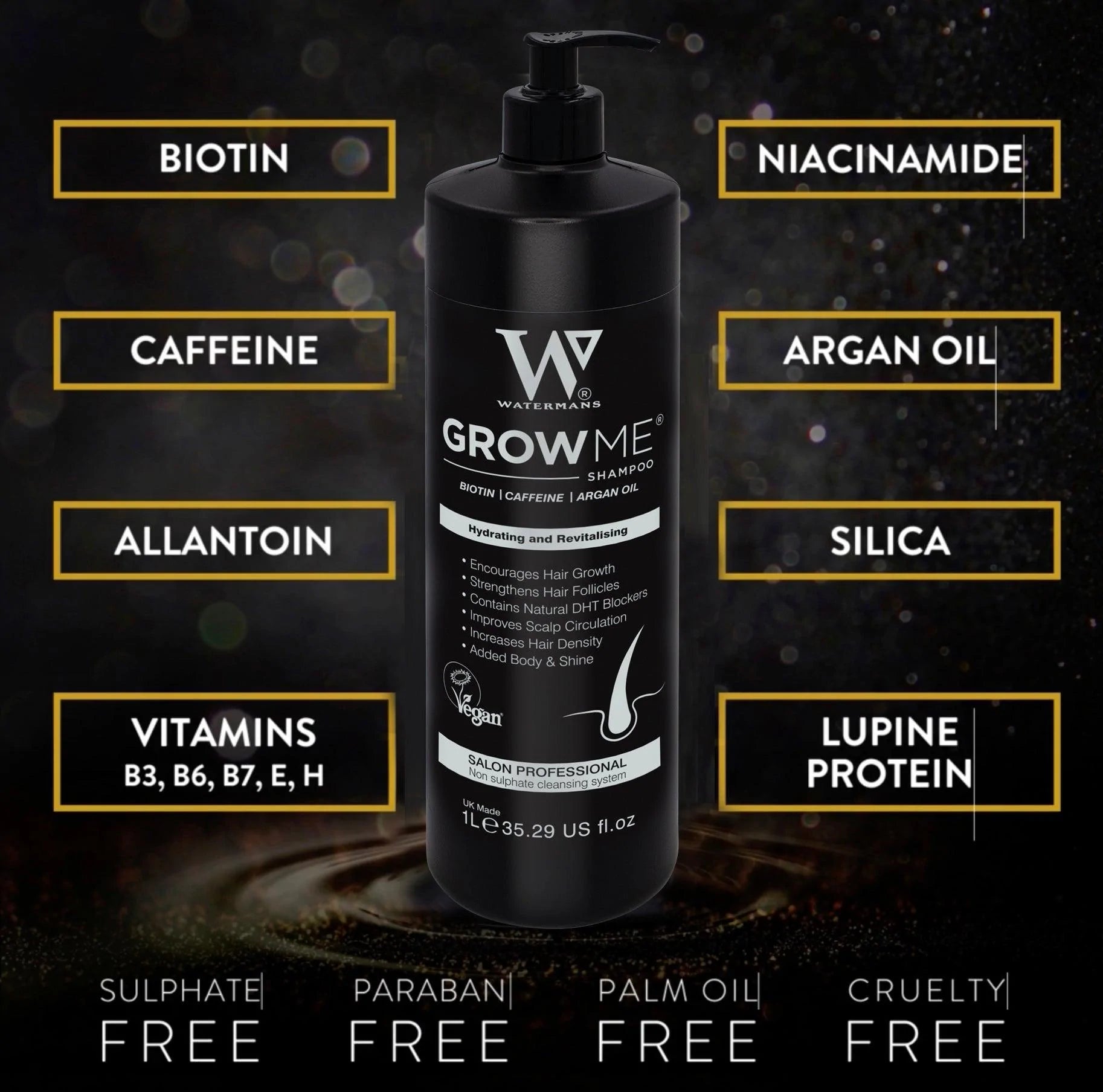
A sulphate-free everyday shampoo with caffeine, biotin and allantoin that cleanses without stripping, so it sits comfortably alongside a medicated shampoo on your non-medicated wash days.

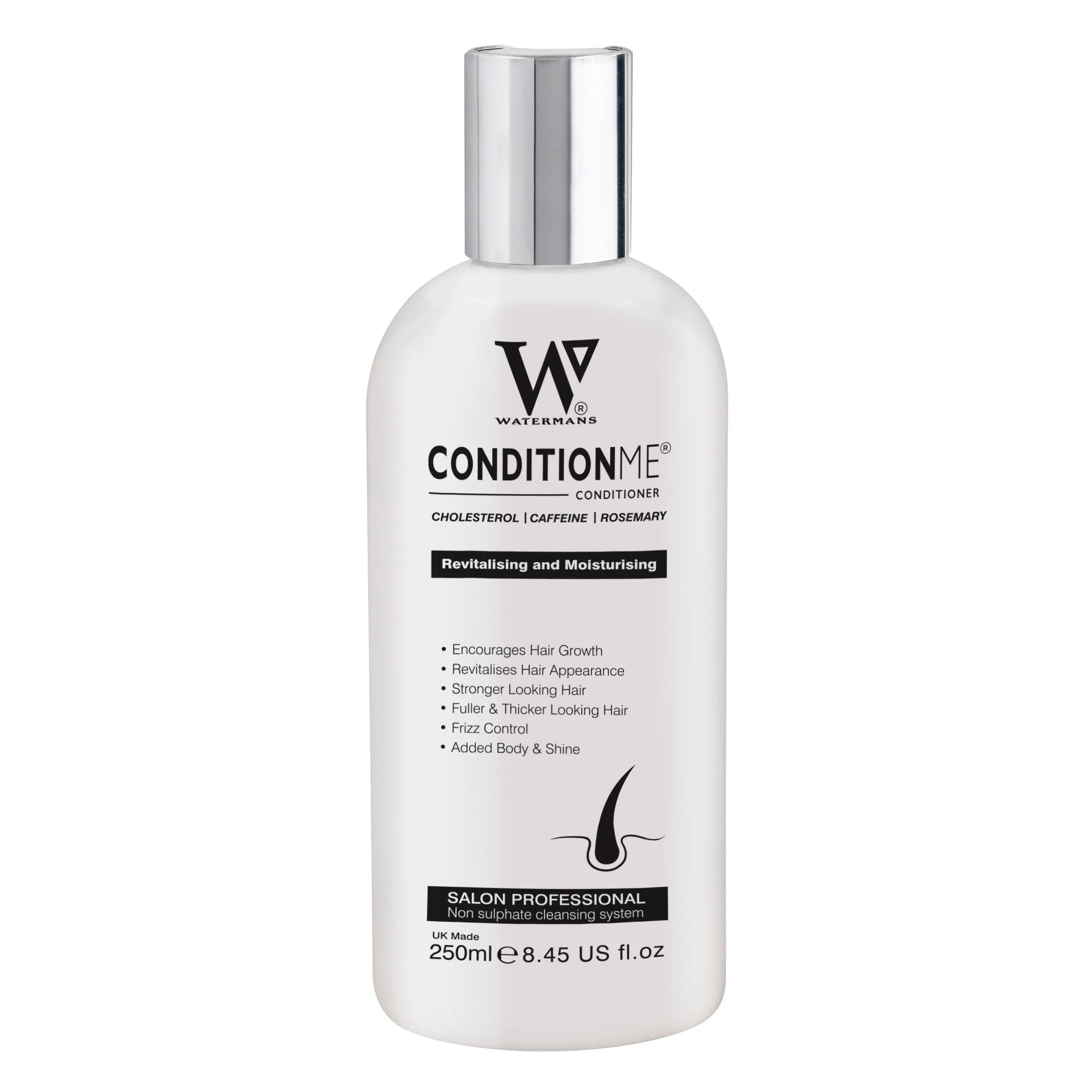
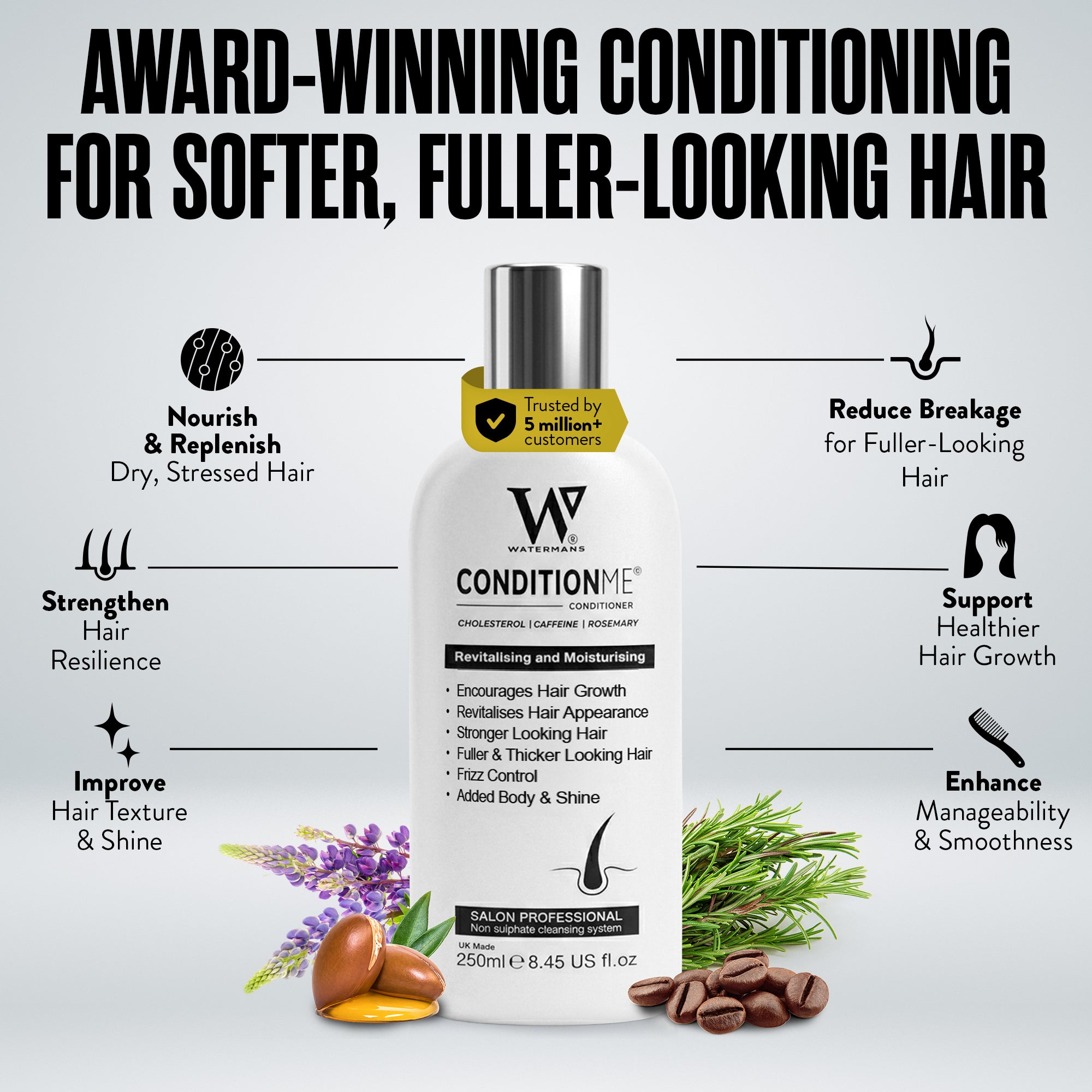
Condition Me® Hair Growth Conditioner
A lightweight conditioner for the mid-lengths and ends. It makes wet hair easier to comb, which is the single most useful thing you can do to cut the breakage that comes with scratching and tangles.
Get a discount on the flaky scalp and fine hair range
Join the Watermans mailing list and we will email a discount code straight to your inbox, so you can try the flaky scalp and fine hair range for less. Made in the UK, over 6.5 million bottles sold since 2012.
How should you wash your hair when your scalp flakes?
Washing technique matters more than product choice for most flaky scalps. Work shampoo into the scalp with the pads of your fingers rather than your nails, cover the whole scalp rather than just the crown, let a medicated shampoo sit for the contact time on the label, and rinse until the water runs completely clear. Residue left behind is itself a common cause of continued itching.
- Wet thoroughly for 30 seconds. Dry hair repels shampoo and you end up using more product than you need.
- Shampoo the scalp, not the lengths. The lengths get cleaned by the run-off. Scrubbing them is how you create breakage.
- Use fingertips, never nails. Nails break the skin surface, and broken skin flakes more.
- Respect the contact time. Three to five minutes for most medicated shampoos, as stated on the pack.
- Condition mid-lengths to ends only. Keeps the scalp clear while protecting the fibre.
- Rinse longer than feels necessary. Until the water runs clear and the hair squeaks slightly at the root.
If you are wondering whether washing more often is itself a problem, it is not. Our piece on clarifying shampoo and build-up looks at the evidence on wash frequency for fine and thinning hair in more detail.

What everyday habits make scalp flaking worse?
Several ordinary habits keep a flaky scalp going. Very hot water, heavy styling products left on the scalp overnight, dry shampoo used repeatedly without washing in between, tight hats worn on damp hair, and long gaps between washes all tend to increase flaking. Stress and cold weather make it worse for many people, which is why flaking often peaks in winter.
- Dry shampoo build-up. Useful occasionally, but layered day after day it sits on the scalp and adds to the scale you are trying to remove.
- Styling product at the roots. Waxes, gels and thick creams belong on the lengths, not the scalp.
- Damp hair under a hat. Warm and damp is exactly the environment yeast prefers. Dry hair properly before covering it.
- Water that is too hot. Hot water strips and irritates. Warm is enough to clean.
- Scratching with nails. The single biggest driver of breakage on a flaky scalp.
None of these will be the whole story on their own, but together they explain most of the cases where a perfectly good shampoo appears to stop working.
When should you see a GP rather than search for trichologists Carlisle?
Certain signs move a flaky scalp out of self-management. See a GP if an anti-dandruff shampoo has not helped after about a month, if the skin is red, weeping, crusted or painful, if you have distinct bald patches, if flaking spreads to the face or chest, or if a child under two has a persistent scaly scalp. A GP can refer you into NHS dermatology.
That referral route matters financially. NHS dermatology costs nothing, whereas private sessions with trichologists Carlisle are paid for out of pocket and cannot lead to a prescription. For anyone in the Carlisle area, a GP referral leads to the dermatology service covering the city and the wider Cumberland area, and that is the right pathway for inflamed or patchy scalp problems. For a related angle, see our guide to trichologist in Harlow.
There is no downside to starting with the pharmacy counter. Pharmacists in the UK can advise on anti-dandruff products without an appointment being needed at all, and they will tell you directly when something needs a GP.

How do you choose between trichologists Carlisle and an NHS route?
Choose by what you actually need. If you want a medicated product, a skin examination by a doctor, or anything that might need a referral, the NHS route through your GP is both free and more appropriate. If you want a long appraisal of your routine, styling and hair care habits, and you are willing to pay for it, a private trichologist can give you that in a way a ten minute GP slot cannot.
If you do go privately, check credentials before you pay. Trichologist is not a title protected by UK law, which means anyone can use it. Membership of the Institute of Trichologists or the Trichological Society shows assessed training and a complaints process behind it. Ask what the fee covers, how long the session lasts, whether you get a written summary, and whether any product sales are involved.
Be wary of anyone promising a specific outcome or selling a long course of products at the first visit. For related reading on spotting overclaims, our guide to buying hair care safely online is a useful companion piece. Knowing the format helps you prepare, and the history, trichoscopy and pull test explained describes each part and what it is for.
Frequently asked questions
Do trichologists Carlisle charge for a first visit?
Most private trichology practices in and around Carlisle charge for an initial scalp assessment, commonly in the region of 40 to 90 pounds for a first session, with follow-ups billed separately. Trichology is not funded by the NHS, so ask for the full fee, the session length and what the written summary includes before you commit.
Is dandruff contagious?
Dandruff is not contagious. NHS guidance is explicit that you cannot catch it from someone else and that it is not usually a sign of anything serious. The flaking is driven by your own scalp environment, including sebum levels and the Malassezia yeast that lives on almost everyone's skin, not by anything passed between people.
How long should an anti-dandruff shampoo take to work?
NHS guidance suggests giving an anti-dandruff shampoo about a month of consistent use before deciding it has not helped. Use it at the frequency on the label rather than once in a while, and leave it on the scalp for the contact time the pack specifies, because rinsing straight off gives the active ingredient very little time to do anything.
Does dandruff make your hair fall out?
Dandruff itself does not destroy hair follicles. What it can do is make you scratch, and persistent scratching damages the hair fibre and can cause breakage near the scalp. Any shedding that comes with a flaky scalp is usually temporary and settles once the itching is under control, but persistent or patchy loss deserves a GP's opinion.
Can I use a conditioner if I have a flaky scalp?
Yes. A conditioner applied from the mid-lengths to the ends does not sit on the scalp, so it will not add to flaking, and it makes wet hair easier to comb, which reduces the breakage that comes from dragging a comb through tangles. Keep heavy oils and rich masks away from the roots if flaking is your main concern.
What is the difference between a trichologist and a dermatologist?
A dermatologist is a doctor with a medical degree and specialist training in skin, hair and nails, and can be seen on the NHS through a GP referral. A trichologist is a hair and scalp specialist whose title is not protected by law in the UK, so qualifications vary. Check membership of the Institute of Trichologists or the Trichological Society.
Should I wash my hair less often if I have dandruff?
Washing less often usually makes flaking worse rather than better, because the scale and oil that feed the problem stay on the scalp for longer. NHS guidance points towards regular washing with an anti-dandruff shampoo. If your lengths feel dry, wash the scalp thoroughly and condition only the mid-lengths and ends.
When should I see a GP about a flaky scalp?
See a GP if an anti-dandruff shampoo has not helped after about a month, if the skin is inflamed, weeping, crusted or painful, if you have bald patches, or if a child under two has a persistent scaly scalp. A GP can refer you to NHS dermatology, and Cumberland Infirmary serves the Carlisle area for referred skin care. If your question is about products or a routine rather than a medical one, you can talk to Gail Waterman, our co-founder, as an AI avatar on the Watermans homepage.
What is the bottom line on trichologists Carlisle?
A flaky scalp is common, manageable and rarely serious, and most people do not need to pay anyone to sort it out. Use an anti-dandruff shampoo properly, respect the contact time, wash regularly rather than rarely, condition the lengths, and stop scratching with your nails. Give it about a month. If the flaking persists past that, or the skin is inflamed or patchy, a GP is the right next step, and searching for trichologists Carlisle makes most sense once you want a detailed look at your routine rather than a medical opinion.
Keep the three problems separate in your head as you go. Hair loss, shedding and breakage have different causes and different answers, and a flaky scalp mostly drives the third. Fixing the itch protects the fibre.
If you want to sort the everyday half of the routine while you work on the scalp, our hair growth shampoo is a sulphate-free daily cleanse that works alongside a medicated shampoo rather than competing with it, and it will not strip hair that is already fragile from scratching.
Watermans products are 100% cosmetic and do not treat medical hair loss. Individual results may vary.
Sources & References
- NHS, Dandruff: guidance on causes, anti-dandruff shampoo ingredients and the one month timescale before seeing a GP.
- NHS, Hair loss: general guidance on when hair changes need a GP.
- British Association of Dermatologists, Skin condition information leaflets: seborrhoeic dermatitis and scalp conditions.
- DermNet, Seborrhoeic dermatitis: the role of Malassezia yeast and typical distribution.
- Institute of Trichologists, Find a trichologist: membership and training standards in the UK.