Trichologists Livingston: Use the Free NHS Route First
Anyone searching for trichologists Livingston is usually one step ahead of themselves. The free part of the pathway, your own GP practice, sits in front of the paid part and answers a different question: whether something correctable is behind the change. NHS inform advises contacting your GP practice about abnormal, unexpected or sudden hair loss, and a GP can arrange blood tests and a dermatology referral that no trichologist can. Do that first, then decide what you are paying for. Bathgate is the next town over, and we have a matching guide to trichologists in Bathgate.
Our hair growth shampoo
Grow Me® Hair Growth Shampoo, £14.95. A sulphate free daily shampoo that supports a healthy scalp environment and helps reduce breakage, so lengths hold on and look fuller.
Key takeaways
- The NHS covers the medical half of this: GP appointment, blood tests, dermatology referral where warranted. Trichology itself is private, with no NHS route.
- Trichologist is not a protected title in the UK, so ask for Institute of Trichologists or Trichological Society membership and a number you can check.
- Anyone weighing up trichologists Livingston has Edinburgh about 15 miles east and Glasgow about 30 miles west, so an accredited practitioner is roughly half an hour away in either direction.
- Ferritin, full blood count, thyroid function and vitamin D are the tests worth having before you spend anything privately.
- Hair loss, hair shedding and hair breakage are three different problems with three different answers. Sorting out which one you have is most of the work.
- Shampoos and serums are cosmetic support: less breakage, a comfortable scalp, hair that looks fuller. They do not address a medical cause.
What can a GP practice do that trichologists Livingston searchers usually skip?
A GP practice can do three things a trichologist cannot: arrange blood tests on the NHS, refer you to a dermatology department, and review the medicines you already take. NHS inform is explicit that you should speak to your GP practice if you are worried about hair loss, that they will examine your hair to help find the cause, and that sometimes a blood test is needed. None of that costs you anything.
That matters because several of the commonest causes of increased shedding are both cheap to find and correctable. NHS inform lists nutritional deficiencies such as iron deficiency, and endocrine disorders including under and overactive thyroid, among the triggers for telogen effluvium. A private consultation that ends with someone advising you to ask your GP for bloods has charged you for a referral you could have made yourself.
The medication review is the quietly valuable part. Several common drug classes list hair changes among their side effects, and the timing usually gives it away. Never stop a prescription on your own, but do ask whether the start date lines up with when the shedding began.

When does the NHS refer you to a dermatology department?
A referral happens when your GP is unsure of the cause or thinks a specialist would help, which is how NHS inform describes it. In practice the triggers are patchy loss, a scalp that is painful, scaling or scarring, loss that started suddenly without an obvious reason, or hair changes sitting alongside other symptoms such as fatigue or weight change.
Livingston sits in the NHS Lothian area, and waiting times move quarter by quarter, so no article should quote you a fixed number of weeks. Public Health Scotland publishes outpatient waiting times by board and speciality, and NHS Lothian publishes its own service information. Look those up for the month you are actually in.
What you can do is make the referral easier to justify. Take your dated photographs, a written list of when the change started, any illness, operation, birth, bereavement or diet change in the three to four months before it, and the start dates of every medicine and supplement. A five minute appointment goes a long way further with that in your hand.
What does a private trichologist add that the NHS route does not?
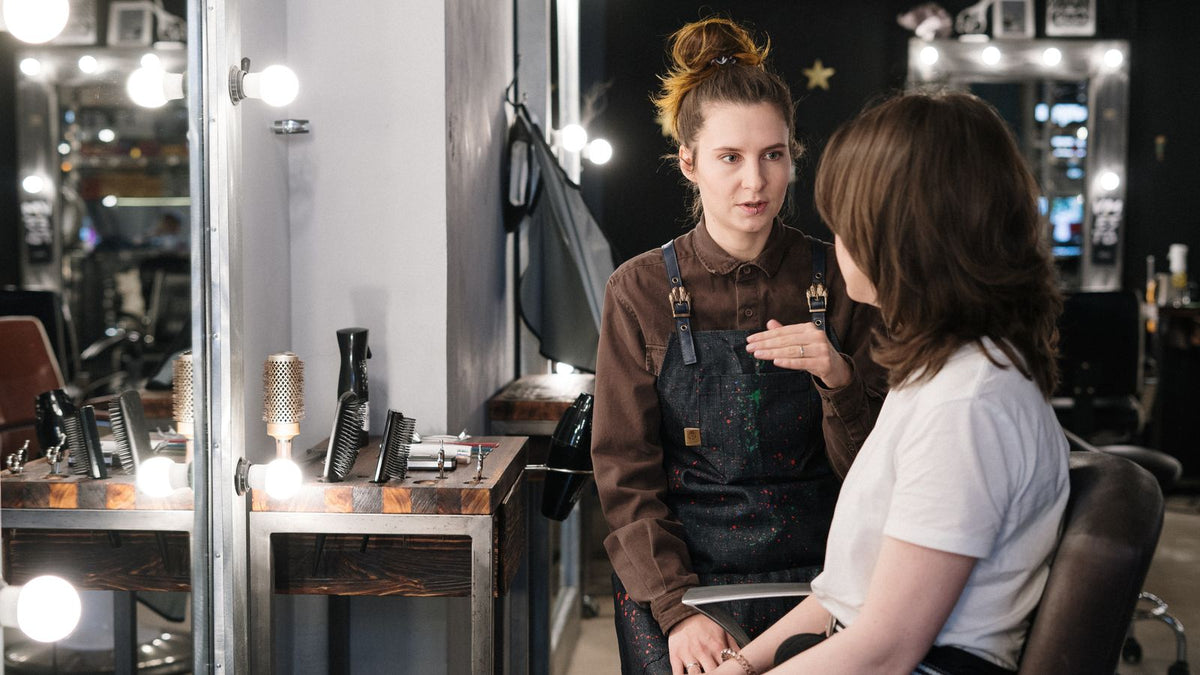
The trichologists Livingston option adds time, magnification and pattern recognition. A first consultation typically runs 45 to 60 minutes against a standard GP slot of around ten, and most of that goes on history, which does the bulk of the work. Trichoscopy then shows follicle openings, hair calibre, redness, scale and any scarring at magnification your own mirror cannot manage.
The honest limits matter just as much. A trichologist is not a doctor. They cannot write a prescription, order NHS blood tests, or manage an autoimmune or scarring condition, and the reputable ones say all of that in the first five minutes. If someone is vague about that boundary, it is the most reliable warning sign there is.
So the sensible sequence is: GP first for the free and potentially decisive part, trichologist second for detail, interpretation and a routine you can actually follow. Reversing that order is what leads people to spend money on a programme for a cause that a blood test would have named.
How do you check a trichologist is properly qualified?
Ask two questions before anything else: which professional body do you belong to, and what is your membership number. This is the step that separates the trichologists Livingston listings worth your money from the rest. A qualified practitioner answers both without hesitation, and the Institute of Trichologists and The Trichological Society both publish practitioner listings you can check independently.
| Worth your money | Walk away |
|---|---|
| Named membership of the Institute of Trichologists or The Trichological Society, with a number you can verify | Certified or accredited with no named body behind the word |
| States plainly that they cannot write a prescription or manage a medical condition | Offers to take on alopecia areata or a scarring condition with no medical involvement |
| Written findings and dated baseline photographs you take home | Verbal advice only, with nothing to review in six months |
| Sends you to your GP practice for bloods first, at no cost to you | Quotes a four figure package before examining your scalp |
| Willing to say when the evidence for something is weak | Every option presented as equally proven |
| Advice that does not depend on buying their own product range | Before and after photographs offered as the main evidence |
That last row deserves emphasis. Before and after photographs are not evidence of anything, because lighting, hair length, styling, wet against dry and camera angle can transform apparent density without a single new hair existing.
Get a discount on the thinning hair range
Join the Watermans mailing list and we will email a discount code straight to your inbox, so you can try the thinning hair range for less. Made in the UK, over 6.5 million bottles sold since 2012.
Which blood tests are worth having before you pay anything?
Four are the usual starting set, and your GP practice can arrange all of them. NHS inform describes blood tests as a routine part of working out what is behind hair loss, and the same page names iron deficiency and thyroid disorders among the causes of increased shedding.
| Test | Why it earns its place |
|---|---|
| Ferritin and full blood count | Iron stores can sit low enough to affect hair while haemoglobin still reads normal. NHS inform lists iron deficiency among the triggers for telogen effluvium. |
| Thyroid function | NHS inform names both underactive and overactive thyroid as endocrine causes of shedding. Both are manageable once identified. |
| Vitamin D | NHS inform recommends a daily vitamin D supplement over the Scottish winter for everyone, given how little the daylight supplies between October and March. |
| Medication and supplement review | Timing is the clue. Shedding that began three to four months after a new prescription is worth raising, without ever stopping it yourself. |
One practical caution: high dose biotin can distort thyroid and cardiac blood results. Tell whoever takes the sample if you have been taking a hair supplement, so nobody chases a false reading.

What is the difference between hair loss, hair shedding and hair breakage?
Three different problems get flattened into one phrase, and the answers differ completely. Sorting out which one you have does more for you than any product decision, because the wrong label sends you down a route that was never going to work.
- Hair shedding is hairs leaving the scalp from the resting phase. NHS inform notes it is normal to lose up to 100 hairs a day, often without noticing. Telogen effluvium is increased shedding, triggered by illness, stress, nutritional deficiency such as iron deficiency, childbirth or a thyroid disorder, and it typically appears around three months after the trigger and settles once that trigger passes.
- Hair loss means follicles producing progressively finer hair, or none. In pattern loss the give away is not volume in the plughole, it is new hair noticeably finer than what fell out. NHS inform describes female pattern hair loss as thinning at the top of the head and male pattern as a receding hairline with loss at the crown.
- Hair breakage is the fibre snapping mid length while the follicle underneath is perfectly healthy. Short broken ends of uneven length along the mid shaft, rather than tapered new hairs at the root, are the tell. Heat, bleach, tight styling and rough wet detangling cause it, and it is the fastest of the three to improve.
Traction alopecia sits at the join. Sustained pulling from tight ponytails, buns, braids, weaves and extensions shows first at the temples and hairline, and DermNet notes it is recoverable when caught early and permanent once the follicles scar. Loosening the styling costs nothing at all.
Which conditions will a trichologist be looking for?
Five account for most of what walks through the door, and each has a different implication for what to do next.
- Androgenetic alopecia. Follicles sensitive to dihydrotestosterone shorten their anagen growing phase with each cycle and produce finer hair. NHS inform attributes male and female pattern hair loss to a combination of hormonal and genetic factors. Progressive, common in both sexes, and the one where acting early genuinely changes the outcome. More in what pattern hair loss is and what causes it.
- Telogen effluvium. A stressor pushes many follicles into telogen at once and they release together about three months later. Usually self limiting. Identifying it correctly saves a great deal of unnecessary spending, as what causes telogen effluvium sets out.
- Alopecia areata. Smooth round patches appearing over days or weeks. NHS inform describes it as thought to be autoimmune, notes hair can sometimes come back white, and that the larger the area, the smaller the chance of full recovery. This belongs with a GP, not a cosmetic routine.
- Seborrhoeic dermatitis. Greasy yellowish scale, redness and itching at the hairline, behind the ears and along the parting, typically worse in a Scottish winter. It does not cause pattern hair loss, though persistent scratching adds breakage.
- Scarring alopecia. NHS inform lists several types causing permanent loss, including frontal fibrosing alopecia at the hairline. A shiny, smooth or sore scalp with no visible follicle openings is a same week GP matter.
What should you do in the weeks before any appointment?
Six steps, none of which costs anything, and all of which make whatever you decide next work better. They also build the record that turns a rushed ten minute slot into a useful one.
- Arrange the bloods. Ferritin, full blood count, thyroid function, vitamin D, through your GP practice. Free, and the likeliest place a fixable answer turns up.
- Start the monthly photograph. Same parting, same spot, same daylight, dated. Any of the trichologists Livingston practitioners will want it. Whatever you do next, that series is the only honest way you will judge whether it worked.
- Wash two to four times a week. Washing less does not save hairs that have already detached. It just lets oil and scale build up on the scalp.
- Detangle from the ends upwards with a wide tooth comb, never a fine brush dragged through soaking wet hair. This is the single biggest lever on breakage.
- Lower the heat and loosen the styling. Breakage is what makes thinning look considerably worse than it is, and it is the part you control outright.
- Eat enough, with protein at each meal. Severe restriction reliably triggers shedding a season later, which is exactly the telogen effluvium pattern above.
Our guide to keeping your scalp healthy for stronger hair covers the routine properly, and what counts as normal hair loss is worth reading before you assume anything is wrong.

What cosmetic care helps while you sort out the cause?
Every reputable practitioner you will find searching trichologists Livingston draws the same line here, and so do we. Products do not address a medical cause and we will not pretend otherwise. What a well made routine does is keep the scalp comfortable and cut the breakage working against you, so the hair you already have looks and feels fuller. That is worth having while the slower parts of the pathway play out, and it is worth nothing as a substitute for them.

Grow Me® Hair Growth Shampoo, £14.95
Sulphate free daily shampoo with biotin, caffeine, rosemary, niacinamide and hydrolysed lupine protein. Gentle enough to wash as often as your scalp needs without stripping it. Vegan.

Condition Me® Hair Growth Conditioner, £13.95
Shea butter, glycerin, cholesterol and lupine protein for slip and breakage defence, so detangling costs you fewer strands. The everyday partner to Grow Me.

Grow More® Leave In Scalp Elixir, £25.50
A leave on overnight serum for the parting and crown, with caffeine, rosemary, niacinamide and lupine protein. Useful when your concern sits in one area rather than all over. Vegan.
Watermans has sold over 6.5 million bottles since 2012, is made in Britain and is free from sulphates and parabens. Grow Me shampoo is vegan. Condition Me conditioner is not, because its cholesterol comes from lanolin, and neither are our Hair Building Fibres, which use wool keratin. For the Northern Ireland version of the same sequence, see what to do while a dermatology referral is pending.
Frequently asked questions
Are there trichologists in Livingston itself?
Provision inside West Lothian is thin, and that matters less than it sounds for anyone searching {KW}. Livingston sits roughly 15 miles from Edinburgh and 30 from Glasgow, with two railway stations and direct M8 access, so an accredited practitioner is within about half an hour in either direction. Check the Institute of Trichologists register rather than a map.
Should I see my GP or a trichologist first?
See your GP practice first in almost every case. NHS inform advises contacting your GP practice if you are worried about abnormal, unexpected or sudden hair loss. A GP can arrange blood tests at no cost and refer you to dermatology, neither of which a trichologist can do, and those results change what a trichologist would advise anyway.
Is trichologist a protected title in the UK?
No. There is no statutory register and no legal barrier to using the word, so a trained practitioner and an untrained one can look identical online. Ask which professional body they belong to and for a membership number you can check against the Institute of Trichologists or The Trichological Society.
Does the NHS pay for trichology?
No. Trichology is a private service in Scotland and there is no NHS route to it. What the NHS does cover is the medical part: your GP appointment, the blood tests, and a dermatology referral where one is warranted. Those are the expensive steps elsewhere, and here they are free.
Which blood tests should I ask my GP practice about?
Ferritin with a full blood count, thyroid function, and vitamin D are the usual starting set. NHS inform lists iron deficiency and both underactive and overactive thyroid among the causes of increased shedding, and all three are correctable once found. Ask what the results were rather than accepting normal as an answer.
How long does an NHS dermatology referral take in Lothian?
It varies by board and by month, so no article should quote you a fixed figure. Public Health Scotland publishes outpatient waiting times by board and speciality every quarter, and NHS Lothian publishes its own service information. Check both rather than relying on a number written a year ago.
What can trichologists Livingston residents see actually do for me?
A trichologist takes a detailed history, examines the scalp under magnification, works out which pattern fits, and sets out what would and would not help. That is genuinely useful. They cannot write a prescription, order NHS bloods or manage an autoimmune or scarring condition, and a good one says so early.
Is hair shedding the same as hair loss?
No, and confusing them wastes money. Shedding is hairs leaving the scalp from the resting phase, often three months after an illness, birth or crash diet, and it usually settles. Hair loss means follicles producing finer hair or none at all. Breakage is a third thing again: the fibre snapping mid length while the follicle is fine.
Are before and after photographs reliable evidence?
No. Lighting, hair length, styling, wet against dry and camera angle can transform apparent density without one new hair existing. Treat them as marketing. Your own dated monthly photograph of the same parting in the same light is worth more than any gallery on a website.
What can I do today that costs nothing?
Three things. Contact your GP practice about blood tests. Photograph your parting in daylight, standing in the same spot, and date it. Loosen tight styling and drop the heat, because breakage is what makes thinning look worse than it is. If your question is about products or a routine rather than a medical one, you can talk to Gail Waterman, our co-founder, as an AI avatar on the Watermans homepage.
Sources & references
Every factual claim above was checked against the following on 12 September 2026.
- NHS inform, Alopecia (hair loss)
- NHS inform, Blood tests
- NHS inform, Iron deficiency anaemia
- NHS inform, Underactive thyroid
- NHS inform, Overactive thyroid
- NHS inform, Vitamins and minerals
- NHS inform, Scotland's service directory: GP practices
- NHS Lothian
- Public Health Scotland, NHS waiting times: stage of treatment
- Institute of Trichologists, Find a trichologist
- The Trichological Society
- DermNet, Telogen effluvium
- DermNet, Female pattern hair loss
- DermNet, Traction alopecia
- British Association of Dermatologists, Alopecia areata leaflet
- Scottish Intercollegiate Guidelines Network, Our guidelines
What is the bottom line on trichologists Livingston?
Use the free route before the paid one. For most people searching trichologists Livingston, the GP appointment, the blood tests and, where warranted, the dermatology referral answer more of the question than a private consultation will, and they cost nothing. Then, if you still want the detail, magnification and a proper routine, pay for a practitioner whose membership number you have checked. Sequence, not spending, is what decides how this goes. There is more on trichologists Newtownabbey in a separate guide.
If you want to keep breakage from making the next six months look worse than they are, a gentle daily hair growth shampoo is the simplest place to start, and it costs less than one consultation.
Watermans products are 100% cosmetic and do not treat medical hair loss. Individual results may vary. This article is general information about hair and scalp care and is not medical advice. If you have sudden, patchy or painful hair loss, hair loss in a child, or hair loss alongside other symptoms, please speak to your GP practice.