DHT Levels and Hair: What They Really Tell You
Dihydrotestosterone can be measured in blood, but the number rarely matches what you see in the mirror.
DHT levels describe how much dihydrotestosterone, a potent androgen made from testosterone, is circulating in the body. The number is easy to picture and misleading in practice, because pattern hair loss tracks inherited follicle reactivity far more closely than it tracks a blood result. Most people with visible thinning have entirely ordinary DHT levels, which is why the mirror is better evidence than the form.
Our hair growth shampoo
Grow Me® Hair Growth Shampoo, £14.95. A sulphate free daily shampoo that supports a healthy scalp environment and helps reduce breakage, so lengths hold on and look fuller.
Key takeaways
- DHT is made from testosterone by the enzyme 5 alpha reductase, mostly in tissues rather than in the bloodstream.
- Scalp follicles respond to it according to inherited reactivity, so a normal blood result is the expected finding in pattern hair loss.
- Routine hair loss care in the UK does not involve measuring it at all.
- Hair loss, hair shedding and hair breakage are three different problems and only the first is androgen driven.
- No shampoo, supplement or food changes a hormone level, and any product claiming to is overselling.
What are DHT levels?
DHT levels are the concentration of dihydrotestosterone in the blood. Dihydrotestosterone is made from testosterone by an enzyme called 5 alpha reductase, and it binds androgen receptors more strongly than testosterone does. Everyone produces it, at higher concentrations in men and lower ones in women, and it has ordinary jobs in the body throughout life.
The important detail is where it acts. Much of the conversion happens inside tissues, including the skin and the hair follicle itself, so the concentration reaching a follicle is not the same as the concentration a blood sample records. A blood test samples the circulation, not the scalp.
Does this hormone cause pattern hair loss on its own?
Hormone alone does not decide the outcome. Pattern hair loss needs two ingredients: androgens present at normal levels, and follicles that are inherently reactive to them. Follicles at the temples and crown respond by shortening their growing phase and producing a finer hair each cycle, which is miniaturisation. Follicles at the back and sides, and in the beard, do not behave that way at all. Deciding what to do with that information is the harder half, and our guide to DHT hair loss options works through the options.
That is why the same hormone produces a receding hairline and a thick beard on the same person, and why hair moved from the back of the head keeps growing after a transplant. Our guide to androgen sensitivity explains the receptor side of the story in full.

A blood result cannot tell you what a scalp follicle is doing, which is why the pattern matters more than the number.
Can a blood test measure your DHT levels?
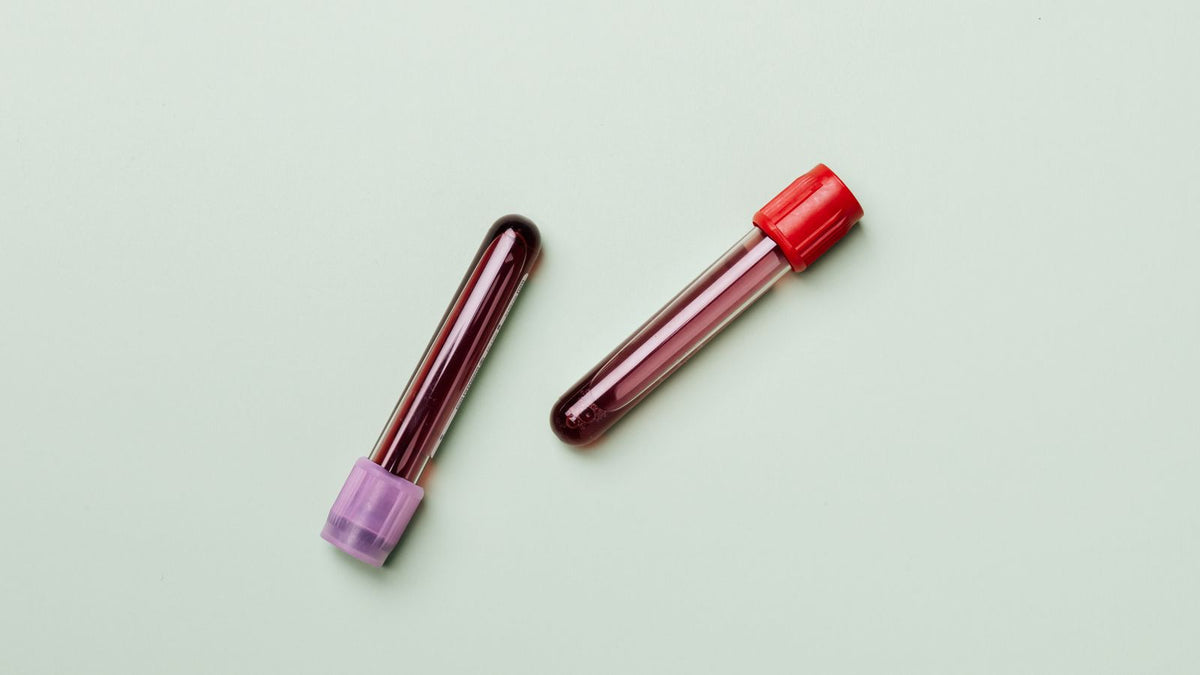
A laboratory can measure dihydrotestosterone in blood, but it is not part of ordinary hair loss care in the UK and a normal result would not change what is available to you. Where a GP does order blood tests for hair loss, the useful ones are usually iron studies, ferritin and thyroid function, because deficiency and thyroid disease cause shedding that actually responds to being corrected.
In women with irregular periods, acne or unwanted facial hair, a GP may investigate further, since polycystic ovary syndrome raises androgens and adds a genuine hormonal push on top of inherited reactivity. That is a medical assessment, and it belongs with a GP rather than a private hormone panel bought online. For the surgical route and what it can realistically achieve, see our guide to follicular unit extraction and UK hair transplant costs.
Why a normal result feels like a dead end
People often come away from a normal hormone result feeling dismissed. It is worth knowing that normal is the expected finding: pattern hair loss is a receptor story, not a hormone excess story. The result has not missed anything, it has simply answered a different question.
| Test | What it is actually useful for | Does it explain pattern thinning? |
|---|---|---|
| Ferritin and iron studies | Finding iron deficiency, a common and correctable cause of diffuse shedding. | No, but it is often the more useful test. |
| Thyroid function | Finding an overactive or underactive thyroid. | No, though thyroid disease causes its own shedding. |
| Testosterone and DHT | Investigating suspected hormonal disorders. | Rarely. Results are usually normal. |
| Scalp examination by a clinician | Telling miniaturisation apart from shedding and scarring. | Yes, this is the one that answers the question. |
Get a discount on the thinning hair range
Join the Watermans mailing list and we will email a discount code straight to your inbox, so you can try the thinning hair range for less. Made in the UK, over 6.5 million bottles sold since 2012.
What raises or lowers this hormone in the body?
Genetics set the baseline, through inherited differences in 5 alpha reductase activity and in receptor behaviour. Age, body composition and certain medical conditions shift the picture somewhat. Prescription medicines that act on this pathway exist, they are a matter for a GP or dermatologist, and they are outside what a cosmetics company should be discussing.
The honest summary of everything else is that day to day lifestyle factors move hormone levels a little, unpredictably, and nowhere near enough to override an inherited follicle trait. It is a comforting idea that a routine could switch the process off. The evidence does not support it.
What does diet do to DHT levels?
Diet has a small and inconsistent effect on circulating androgens and no demonstrated effect on the pattern of hair loss. Studies of specific foods and extracts tend to be short, small and contradictory, and the popular lists of hormone lowering foods are built on laboratory work rather than on people with thinning hair.
Where diet genuinely matters is deficiency. Low iron is a well recognised cause of diffuse shedding, particularly in women with heavy periods, and correcting it helps. NHS guidance on vitamins and minerals is the sensible reference, and a blood test beats guesswork. Crash dieting is a reliable trigger for telogen effluvium roughly two to three months later.

Diet matters for hair through deficiency, not by changing hormone levels.
Is it hair loss, hair shedding or hair breakage?
Three different problems get lumped together as thinning and they have different answers. Hair loss means follicles are miniaturising or scarring, which is the androgen driven process this page is about. Hair shedding means normal hairs are leaving the scalp at the root in greater numbers, which is telogen effluvium. Hair breakage means the fibre is snapping along its length, so the hair is still rooted but shorter and frayed.
The brush tells you which. Losing 50 to 100 hairs a day is normal, as the NHS notes, and a shed hair carries a small pale bulb at the root end. A broken hair has no bulb and is a short, blunt or split fragment. Hormones have nothing to do with breakage, which is caused by heat, tension, friction and chemical processing, and breakage is the part that improves fastest when you change what you do.

Finer hairs in the affected area indicate miniaturisation rather than breakage.
Our three clue self check and the three mechanisms behind thinning hair walk through the self check.
Do shampoos change DHT levels?
No cosmetic shampoo changes a hormone level, and we will not tell you ours does. A shampoo sits on the scalp and hair for a couple of minutes and is rinsed away. Under UK rules a product that genuinely altered hormone activity would not be a cosmetic at all, and claims of that kind are exactly what the Advertising Standards Authority rules against.
What a well formulated shampoo can do is worth having anyway. It cleans without stripping, which keeps the scalp comfortable. It conditions the fibre, which reduces breakage. On a head where hairs are already becoming finer, less breakage means more length survives, and coverage looks better even though the follicle has not changed. That is the honest offer. For the biology behind that pattern, see our explainer on what scalp DHT actually does inside the follicle.
Our look at the natural remedies takes apart the popular natural claims in this space in more detail.

Grow Me® Hair Growth Shampoo £14.95
Sulfate free daily shampoo with caffeine, rosemary, niacinamide, biotin and hydrolysed lupine protein. Cleanses without stripping and reduces breakage, so hair looks fuller along the lengths.
Grow Me is sulfate free, with caffeine, rosemary, niacinamide, biotin and hydrolysed lupine protein. It is a cosmetic shampoo that reduces breakage for fuller looking hair. It does not act on hormones.

Condition Me® Hair Growth Conditioner £13.95
Breakage defence conditioner with cholesterol, shea butter, glycerin and silica. Makes wet detangling easier, which is where a lot of avoidable snapping happens.
Condition Me is the other half of the routine. Wet detangling is where a large share of avoidable breakage happens, and finer hair snaps more easily than coarse hair, so conditioning matters more as hairs miniaturise, not less.
Frequently asked questions about dht levels
What is a normal DHT level?
Reference ranges vary between laboratories and depend on sex, age and the assay used, which is one reason a single number is hard to interpret on its own. A GP reads any hormone result in the context of your symptoms and examination. A result read without that context, from a private panel, is very easy to misinterpret. If your question is about products or a routine rather than a medical one, you can talk to Gail Waterman, our co-founder, as an AI avatar on the Watermans homepage.
Should I ask my GP for a hormone test?
It is not routine for hair loss, and a normal result would not change your options. It is more useful to ask about ferritin and thyroid function if shedding is diffuse or recent, and to ask for a scalp examination, since the pattern of miniaturisation is what actually answers the question.
Do women need to worry about this hormone?
Women produce androgens too, at lower concentrations, and scalp follicles respond according to inherited reactivity rather than to the amount present. Female pattern hair loss usually shows as a widening central parting with the front hairline preserved. Where periods are irregular or facial hair has increased, a GP may look into polycystic ovary syndrome.
Does saw palmetto or rosemary change hormone levels?
The laboratory studies behind those claims are not the same thing as evidence in people with thinning hair, and the human research is small and mixed. We use rosemary in our products as a cosmetic ingredient for the scalp and fibre, not as a hormonal claim, and you should be wary of any brand that words it differently.
Can exercise or weight loss change things?
Body composition influences hormone metabolism to some degree, and there are excellent reasons to exercise. There is no good evidence that either changes the course of pattern hair loss. Rapid weight loss is actually a well known trigger for a heavy shed about two to three months afterwards.
Why does hair at the back never seem affected?
Follicles at the back and sides of the scalp are genetically programmed to be far less reactive to androgens, so they carry on cycling normally for decades. That regional difference is not a quirk. It is the entire reason hair transplant surgery is possible.
If nothing over the counter changes it, what is worth doing?
Get the problem identified correctly first, because shedding and breakage are both common and both more fixable. Then protect what you grow: gentler washing, conditioning every wash, less heat, less tension. If you want medical options, that conversation belongs with a GP or dermatologist.
What is the bottom line on DHT levels?
DHT levels are a poor guide to what is happening on your head, because pattern hair loss is driven by how reactive your follicles are rather than by how much hormone is circulating. Normal results are the norm. The tests worth asking about are ferritin and thyroid function, and the observation worth trusting is the pattern of thinning itself.
Meanwhile, the breakage sitting on top of genuine thinning is real, common and fixable this month. Read what triggers androgenic alopecia next if the change was gradual, or our guide to telogen effluvium if it came on suddenly.
If you change one product, change the wash. A sulfate free hair growth shampoo cleans without stripping the scalp and reduces the breakage that makes fine hair look thinner than it is.
Sources & references
- NHS, Hair loss, on normal daily shedding of 50 to 100 hairs and when to see a GP
- NHS, Blood tests, on what blood tests are and are not used for
- NHS, Polycystic ovary syndrome, on raised androgens and associated hair changes
- DermNet, Male pattern hair loss, on androgen receptors, 5 alpha reductase and follicle miniaturisation
- DermNet, Female pattern hair loss, on the diffuse female pattern and preserved frontal hairline
- DermNet, Telogen effluvium, on the two to three month lag after crash dieting, illness or stress
- NHS, Vitamins and minerals, on when supplementation is and is not useful
Watermans products are 100% cosmetic and do not treat medical hair loss. Individual results may vary.