Rice Oil vs Rice Water for Hair: What You Can Actually Make at Home
The honest answer to rice oil vs rice water for hair is that they are two different things and only one of them can be made in a kitchen. Rice bran oil is pressed and refined industrially from the bran layer, so you buy it. Rice water is the starchy liquid left after soaking or rinsing grains, and that is the genuine do it yourself option. Rice water coats and smooths. Rice bran oil conditions and adds slip. Horsetail is the other traditional hair herb people ask about, and our guide to horsetail for hair covers its oil, rinse and extract forms and what the evidence supports.
Our hair and body oil
Camellia & Black Castor Hair & Body Oil, £24.95. Adds hydration and shine to dry lengths and smooths the hair before a blow dry, without weighing fine hair down.
Key takeaways
- You cannot make rice bran oil at home. Boiling or soaking rice makes rice water, which is a different product with a different job.
- Rice bran oil is an emollient. It sits on the fibre, smooths the cuticle and reduces the friction that causes breakage.
- Rice water is a starchy, mildly protein containing rinse. It leaves a light film that can make hair feel thicker and look glossier.
- The published evidence for rice water on hair is thin. Most of what circulates online is tradition and testimony, not trial data.
- Overusing rice water is the common mistake. Too much protein like coating leaves hair stiff, dull and more likely to snap.
- Neither one changes what is happening at the follicle. Both work on the strand you already have.
Rice oil vs rice water for hair: what is the actual difference?
Rice bran oil and rice water come from the same grain and behave nothing alike. Rice bran oil is pressed from the bran, the brown outer layer removed during milling. It is a true lipid, rich in oleic and linoleic fatty acids, vitamin E compounds and gamma oryzanol, and its extraction needs mechanical pressing or solvent refining at industrial scale. Rice water is the cloudy liquid left after grains are rinsed, soaked or boiled. It is mostly water with dissolved starch, small amounts of amino acids and B vitamins, and traces of minerals.
| Rice bran oil | Rice water | |
|---|---|---|
| What it is | A pressed and refined oil from the bran layer | A starchy rinse water from soaking or cooking grains |
| Can you make it at home | No. It needs pressing or solvent extraction | Yes, in about ten minutes |
| What it does on hair | Softens, adds slip, lowers friction, reduces breakage during combing | Leaves a light starchy film, adds temporary body and shine |
| Best used | As a pre wash oil or a few drops on dry ends | As a post shampoo rinse, once a week at most |
| Main risk | Too much weighs fine hair down | Overuse leaves hair stiff and brittle feeling |
Can you make rice bran oil at home?
No, and this is where most online recipes mislead people. Rice bran oil is extracted from bran that has been stabilised straight after milling, because the bran contains enzymes that turn the oil rancid within hours. Commercial production then uses cold pressing or solvent extraction, followed by refining. Food science work on rice bran describes exactly this sequence, and none of it is reproducible with a saucepan.
What you get when you simmer rice in water is rice water. It is a perfectly reasonable thing to put on your hair, it just is not oil, contains almost no lipid, and will not behave like one. If a recipe promises homemade rice oil, it is mislabelling a rinse.

How do you make a rice water rinse properly?
Two methods cover almost everything you will see online. The plain soak is the one to start with, because it is milder and much harder to get wrong.
The plain soak, about ten minutes
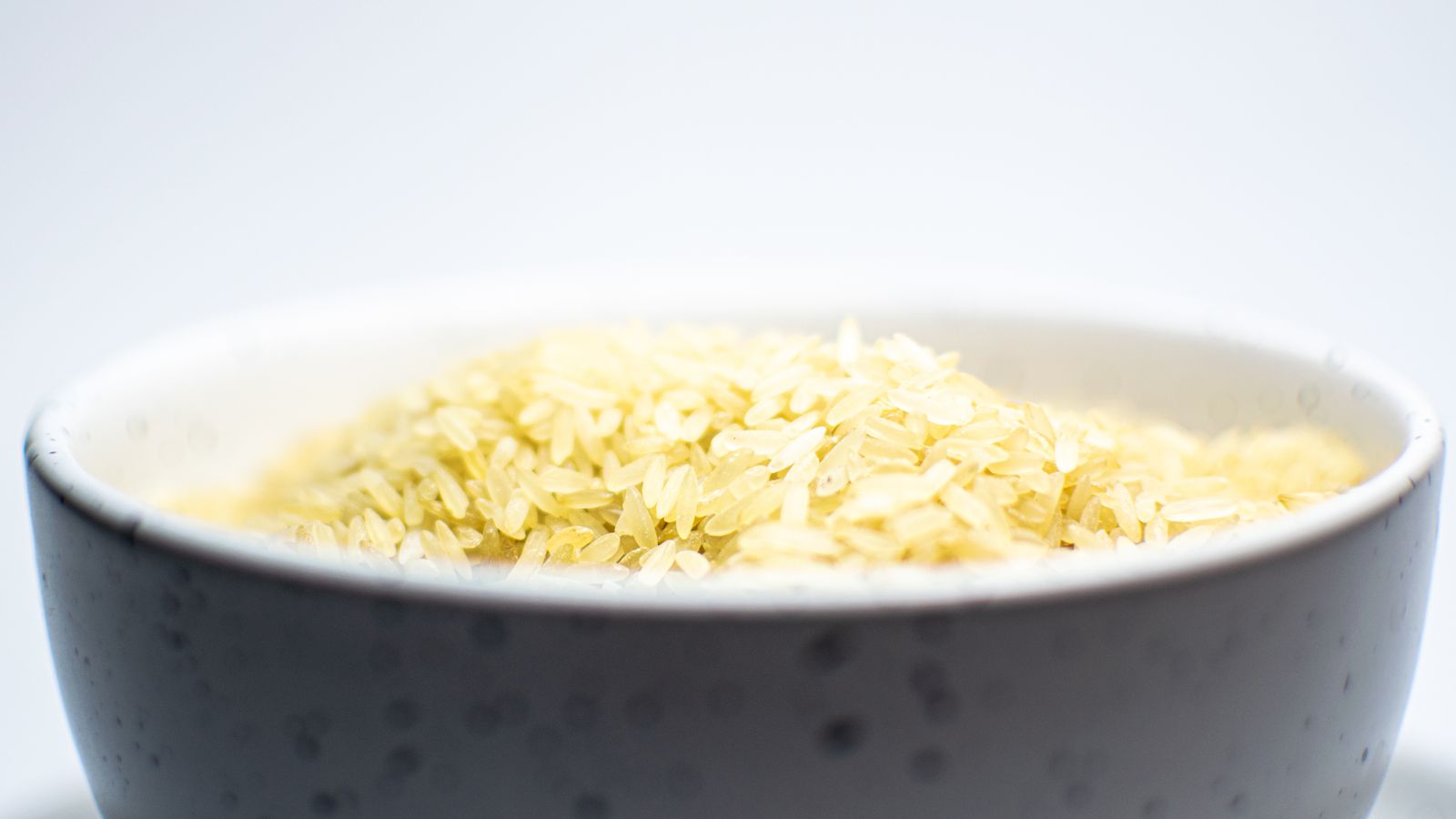
- Rinse half a cup of uncooked rice under the tap to wash off dust and loose starch.
- Cover it with two cups of cool water and leave it for 15 to 30 minutes.
- Strain the liquid into a clean bottle or jug and throw the grains away or cook them.
- Use it within 24 hours if kept at room temperature, or up to four days in the fridge.
The fermented version, with care
Fermenting means leaving the strained liquid at room temperature for 12 to 24 hours until it smells sour, then refrigerating it. Fermentation lowers the pH and people report more slip, but it also grows bacteria, and an unpleasant smell is your only real quality control. Skip it entirely if your scalp is broken, irritated or recovering from a reaction, and never leave it fermenting for days.
How to use it on hair
Shampoo first, then pour the rice water through the lengths, work it in for a minute or two, and rinse it out with cool water. Follow with your normal conditioner. Once a week is plenty for most people, and every other week suits fine hair better. Leaving it in without rinsing is the fastest route to the stiff, straw like feel people complain about.

What does the evidence actually say about rice water?
Less than the internet implies. Search rice oil vs rice water for hair and you will find confident claims on both sides with very little behind them. There is no meaningful body of peer reviewed research testing rice water rinses on human hair, and the famous story of the long haired women of Huangluo is a tradition rather than a controlled study. What we can say with more confidence comes from general hair science: substances that deposit on the cuticle reduce friction and make hair feel smoother and look shinier, and that is a real, measurable cosmetic effect even when nothing has changed inside the fibre.
There is also a useful lesson from research on hydrolysed proteins. Work measuring how keratin hydrolysates of different molecular weights behave on hair found that only the smaller fragments penetrate the fibre at all, while larger ones stay on the surface as a film. The proteins in a starchy kitchen rinse are neither purified nor size selected, so treating rice water as a repair product overstates it. As a cheap, pleasant rinse that makes hair feel thicker, it earns its place. As a fix for damaged hair, it does not.
Where good sources disagree is on whether the inositol in rice has a lasting protective role on hair, which is claimed in cosmetic marketing and has not been demonstrated in independent published trials on rice water rinses. We are not going to pretend that argument is settled.
Get a discount on the dry or brittle hair range
Join the Watermans mailing list and we will email a discount code straight to your inbox, so you can try the dry or brittle hair range for less. Vegan, made in the UK, over 6.5 million bottles sold since 2012.
Which one suits your hair type?
Hair type decides rice oil vs rice water for hair more than anything else. Fine hair is easily weighed down by oil and often prefers a light rinse. Coarse, curly or coily hair usually drinks up oil and gets very little from a starchy film. Damaged or over processed hair should be careful with anything protein like until the moisture balance is right. Low porosity hair is the type most easily overloaded by a starchy rinse, and our guide to rice water on low porosity hair explains how to use it carefully.
| Hair type | Better pick | Why |
|---|---|---|
| Fine, limp, gets greasy quickly | Rice water, fortnightly | Adds body without the weight of an oil |
| Thick, dry, frizz prone | Rice bran oil, pre wash | Lipids do more for dryness than starch ever will |
| Curly or coily | Oil, with rice water only occasionally | Slip during detangling protects length better than film |
| Bleached or colour processed | Oil, plus a formulated mask | Needs balanced moisture and protein, not a starch rinse |
| Scalp prone to itch or flaking | Neither on the scalp | Keep both on the lengths and see your GP if the scalp stays sore |
If your hair is already dry and snapping, start with the basics before any kitchen experiment. Our guides to fixing dry hair and what causes hair damage cover the changes that make the biggest difference.

How does a shop bought product compare?
A kitchen rinse is cheap and fun, and it is also inconsistent. Every batch is a different strength, none of it is preserved, and none of the actives are size selected to do a particular job. A formulated product trades that romance for consistency. If the appeal of rice oil vs rice water for hair is smoother, stronger looking lengths, these are the equivalents from our own range.

Camellia & Black Castor Hair & Body Oil
The oil lane, done properly. Camellia and black castor oils for slip and shine on dry ends, or as a pre wash treatment. Made in the UK.

Where a rice water rinse is guessing at protein, this is measured. Hydrolysed lupine protein, provitamin B5 and argan oil for softer, stronger looking lengths, once a week.

The wash to build any of this on. Sulphate free, so it cleans without stripping the lipids your lengths need, with biotin, caffeine and rosemary.
What can go wrong, and when to stop?
Three things go wrong often enough to be worth naming. Hair that feels stiff, squeaky and snaps more easily has usually had too much rice water, and the answer is to stop for a fortnight and use a plain moisturising conditioner. A sour smell that survives washing means the rinse was fermented too long or stored too warm, so make a fresh batch and keep it in the fridge. An itchy or bumpy scalp after using rice water is a reason to stop altogether, wash it out with a mild shampoo, and see your GP if it does not settle in a few days.
One more honest limit. If what you are actually worried about is thinning, a widening parting or a lot more hair in the brush than usual, no kitchen rinse addresses that. Read our piece on why hair thins and how to tell which type you have, and take persistent changes to your GP. If your question is about products or a routine rather than a medical one, you can talk to Gail Waterman, our co-founder, as an AI avatar on the Watermans homepage.
Watermans products are 100% cosmetic and do not treat medical hair loss. Individual results may vary.
Frequently asked questions
Can I really make rice oil at home?
No. Rice bran oil needs stabilised bran and industrial pressing or solvent extraction. Anything you make by boiling rice is rice water, which is a rinse and not an oil.
In rice oil vs rice water for hair, which is better for shine?
Rice bran oil gives more shine, because a thin lipid layer reflects light and lies the cuticle flat. Rice water gives a lighter gloss with more perceived body.
How often should I use a rice water rinse?
Once a week for most hair, and every other week for fine hair. More often than that is where the stiff, brittle feeling starts.
Is fermented rice water better than plain?
It has more devoted fans and no good trial evidence behind it. The lower pH may add slip. Ferment for no more than 24 hours, refrigerate it, and skip it if your scalp is irritated.
Can I put rice bran oil straight on my scalp?
You can, but there is little point unless the scalp is dry. Oils do most of their useful work on the lengths and ends, and a heavy scalp application can leave hair looking greasy for days.
Does rice water make hair grow faster?
There is no reliable evidence that it changes the rate hair grows from the follicle. What it can do is help you keep the length you already have by reducing breakage during handling, which people often experience as faster growth.
Will rice water damage bleached hair?
It can if you overdo it. Bleached hair is already protein hungry but easily tipped into stiffness, so use it fortnightly at most and always follow with a moisturising conditioner.
How long does homemade rice water keep?
About 24 hours at room temperature and up to four days in the fridge. Make small batches, and throw it out if it smells strongly sour.
Can I use the water I boiled rice in?
Yes, once it has cooled completely. Boiled rice water is more concentrated than a cold soak, so dilute it with plain water before pouring it over your hair.
What is the bottom line on rice oil vs rice water for hair?
Put plainly, rice oil vs rice water for hair is a choice between a bought lipid and a homemade rinse, not two versions of the same thing. Rice bran oil smooths, softens and reduces friction. Rice water leaves a light starchy film that adds body and shine, is cheap to make, and is easy to overuse. Neither changes what your follicles are doing, and the published evidence for the rinse is thin, so keep your expectations calm and your batches small. If you would rather have a consistent product than a kitchen experiment, our oil and mask do the same jobs with measured ingredients. Watermans is made in the UK, and has sold over 6.5 million bottles since 2012. Another kitchen infusion worth knowing the limits of is horsetail oil, how to make it and what it does.
Rather than decanting something from the kitchen, the Camellia and Black Castor hair oil is made for hair and skin.
Sources and References
- Dias, Hair cosmetics: an overview, International Journal of Trichology, 2015, for how conditioning agents and surface deposits act on the hair fibre.
- Penetration of different molecular weight hydrolysed keratins into hair fibres and their effects, International Journal of Cosmetic Science, 2021, for why only smaller protein fragments enter the fibre while larger ones stay on the surface.
- Rice bran: from waste to nutritious food ingredients, Nutrients, 2023, for bran stabilisation and the composition of rice bran and its oil.
- Bioactives from crude rice bran oils extracted using green technology, Molecules, 2023, for the extraction methods used to obtain rice bran oil and its gamma oryzanol and tocol content.