Hydrating Hair Serum: What It Does and How to Use It
A hydrating hair serum is a lightweight leave-in that smooths the cuticle, slows water loss and adds shine. It works mainly on the outside of the strand, which makes it a finishing and protecting step rather than a deep repair. Used on damp mid-lengths and ends, a pea sized amount calms frizz and buys back softness. Used on dry hair or at the roots, it mostly makes things greasy.
Our hair and body oil
Camellia & Black Castor Hair & Body Oil, £24.95. Adds hydration and shine to dry lengths and smooths the hair before a blow dry, without weighing fine hair down.
Key takeaways
- A serum seals and smooths. It is the last step, not the deep one.
- Apply to damp hair. On dry hair it coats the outside and traps whatever state the hair is already in.
- Mid-lengths and ends only. The scalp has its own oil and does not need yours.
- A pea sized amount for fine hair, up to an almond for thick or coily hair. Too much is the usual mistake.
- A serum is not a heat protectant. If you use hot tools, use an actual heat spray as well.
- Serums help hair breakage. They do nothing for hair loss or shedding, which start at the follicle.
What does a hydrating hair serum actually do?
A hydrating hair serum lays a thin film over the cuticle, the overlapping outer scales of each strand. That film does four measurable things. It slows the rate at which water leaves the fibre. It flattens lifted cuticle scales so light reflects evenly, which is what we perceive as shine. It reduces friction between neighbouring strands, so they slide past each other instead of catching and frizzing. And it adds slip, which lowers the force needed to comb through.
That last one is the underrated benefit. Research on hair breakage during combing found that conditioning treatments measurably reduced breakage during both wet and dry combing, and combing is one of the few moments in a hair routine where you are actively applying force to the fibre. A product that makes the comb move more easily is doing real structural good, even though it is only working on the surface.

What can a hydrating hair serum not do?
A serum cannot rebuild the inside of a damaged strand, and no leave-in can. Hair is dead protein once it leaves the follicle, so structural damage to the cortex is permanent. What a serum does is manage the consequences of that damage very well: it hides the roughness, holds the moisture and stops the split ends catching on each other. Those are worth paying for. They are just not repair.
A serum also will not do anything about hair density. If the hair coming out of your scalp is finer than it used to be, or there is visibly less of it, that is happening at the follicle and a surface product cannot reach it. Any serum marketed on both shine and density is doing two very different jobs and you should read which claim applies to which part.
And a serum is not a substitute for conditioner. Conditioner deposits a lamellar gel structure across the whole fibre during the wash, which a 2025 review in Advances in Colloid and Interface Science describes in detail. A serum sits on top of that afterwards. Skipping the conditioner and doubling the serum gives you shiny hair that is still dry underneath. For a related angle, see our guide to is lamellar water bad for hair.
Which ingredients matter in a hydrating hair serum?
Serum formulas fall into three ingredient families, and most bottles carry a mix of all three. Reading which family dominates tells you how the bottle will behave on your hair.
| Ingredient family | Examples | What it does on the strand |
|---|---|---|
| Humectants | Glycerine, panthenol, aloe, hyaluronic acid | Attract and hold water. Need something over them or they can work backwards in dry air. |
| Light oils | Argan, jojoba, camellia, squalane | Smooth and seal without the weight of a butter. The backbone of most serums. |
| Silicones | Dimethicone, cyclomethicone, amodimethicone | The best frizz control and slip available. Wash out easily with most shampoos. |
| Antioxidants | Vitamin E, niacinamide | Support the surface and add a light gloss. A supporting act, not the main event. |
| Proteins | Hydrolysed wheat, lupine, keratin | Temporarily fill surface gaps. Useful in moderation, stiffening in excess. |
Hyaluronic acid deserves a note because it has migrated into hair care from skincare on the strength of its skincare reputation. It does hold water, but molecular weight decides whether it does anything useful on a hair fibre, and the results are far less consistent than on skin. We looked at where it disappoints in our guide to hyaluronic acid for hair side effects.
Argan oil turns up in almost every serum on the shelf, and unlike some marketing ingredients it earns the place. What it does and does not do is covered in our honest look at argan oil for hair.

How do you apply a hydrating hair serum properly?
Application is where most of the value is won or lost, and the whole method takes about twenty seconds.
- Start with damp hair, not dripping and not dry. Towel-blot until it stops running. Dripping hair dilutes the serum straight down the plughole. Dry hair has nothing left to seal in.
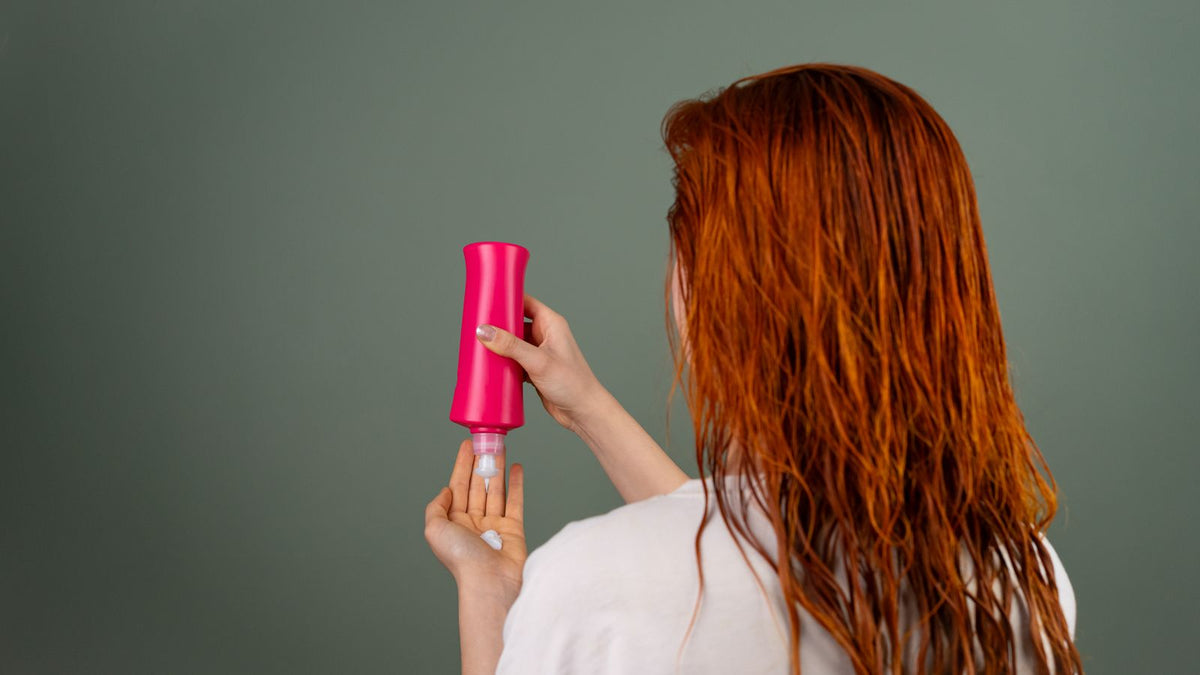
- Measure into your palm. A pea for fine or shoulder length hair, a five pence piece for thick or long hair, up to an almond for coily hair. Start smaller than you think.
- Warm it between both palms until it spreads into a thin film. Serum applied as a blob lands as a blob.
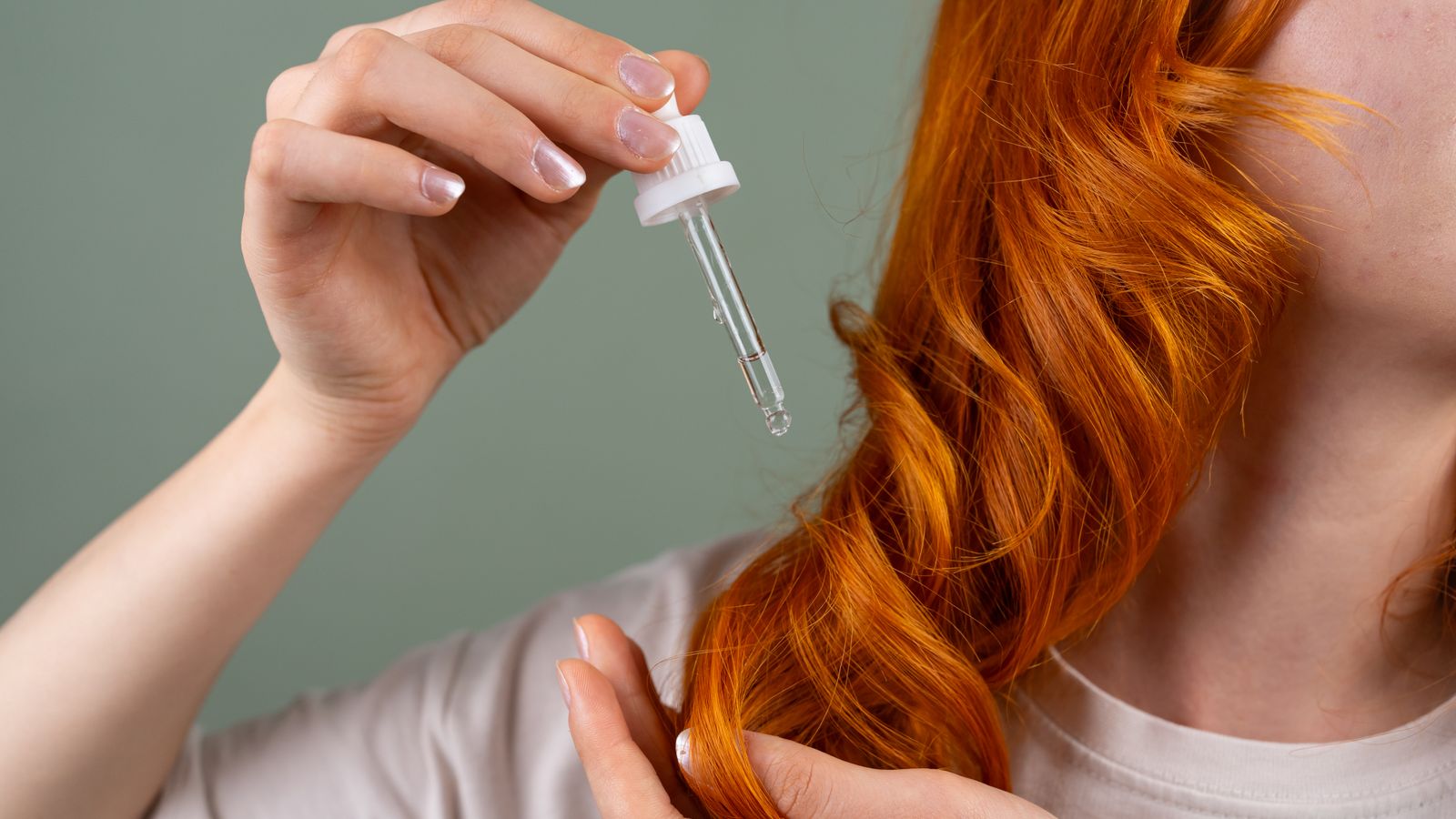
- Press it through the mid-lengths and ends. Start at the ends, which are the oldest and driest part of the hair, and work up. Stop at roughly ear level.
- Comb through with a wide-tooth comb. This distributes it evenly and does the detangling while there is slip to help.
- Then style. Air dry where you can. If you are using heat, add a dedicated heat protectant now, on top.
If you always end up greasy: you are almost certainly applying too much, too high up, or to hair that was already dry. Halve the amount, stay below ear level, and apply while the hair is still visibly damp. Three changes, one wash to test them.
Get a discount on the dry and frizz-prone hair range
Join the Watermans mailing list and we will email a discount code straight to your inbox, so you can try the dry and frizz-prone hair range for less. Vegan, made in the UK, over 6.5 million bottles sold since 2012.
Serum, hair oil or leave-in conditioner, which is which?
These three products overlap enough that shops stock them side by side and shoppers buy the wrong one. The differences are real and they come down to weight, water content and where the product is meant to sit.
| Product | What it mostly is | Best at | Watch out for |
|---|---|---|---|
| Hydrating serum | Light oils and silicones, sometimes with humectants | Shine, frizz control, slip, finishing | Overuse. It is the easiest product to overdo. |
| Hair oil | Pure or blended plant oils, heavier | Deep sealing, pre-wash use, coarse and coily hair | Weight on fine hair. Build-up if never clarified. |
| Leave-in conditioner | Water based, with conditioning agents | Softening, detangling, adding water back | Needs sealing after it in very dry air. |
If that sounds like three products doing two jobs, it is, and the two jobs are the ones covered in our guide to hydrating versus moisturising hair. A leave-in mostly hydrates. An oil mostly seals. A serum is a light sealer that sometimes carries humectants along for the ride.
What is the difference between a lengths serum and a scalp serum?
The two products share a name and share almost nothing else. A lengths serum is a cosmetic finishing product for the hair fibre, applied to mid-lengths and ends, judged on shine and frizz. A scalp serum is a leave-on product for the skin of the scalp, applied at the roots, and judged on how the scalp feels and how the hair looks over months rather than minutes.
Applying a lengths serum to your scalp achieves nothing useful and makes the roots greasy. Applying a scalp serum to your ends wastes it. If your concern is shine and frizz along the hair, you want the first kind. If your concern is the scalp and the look of density at the parting, you want the second, and Watermans makes a dedicated leave-on scalp elixir for exactly that. If you want something that stays on all day, our guide to choosing a leave in hair serum covers how much to use and where.

How much serum should you use for your hair type?
Dose scales with surface area, not with how dry the hair feels. A long thick head of hair has many times the strand surface of a fine bob, and that is the number that matters.
- Fine, straight, shoulder length. One or two drops, ends only. Fine hair shows weight faster than any other type.
- Medium, wavy, mid-back. A pea sized amount through the bottom two thirds.
- Thick, straight or wavy, long. A five pence piece, applied in two halves so it actually reaches everything.
- Curly and coily. Up to an almond, applied in sections on soaking wet hair, often layered over a leave-in rather than used alone.
- Colour treated or bleached. Same dose as your texture suggests, but expect to need it at every wash rather than occasionally.
Does a hydrating hair serum protect hair from heat?
A serum offers a small amount of buffering and nothing like the protection of a product built for the job. Some serums list a heat claim, and a light film does slow the rate at which heat reaches the fibre, but the temperature at the plate of a straightener is far beyond what a finishing product is formulated to handle.
The honest position is that a serum is a nice-to-have before heat and a heat protectant is the actual requirement. If you use straighteners, curling tongs or a hot brush regularly, use a dedicated heat protection spray, then the serum afterwards as the finishing layer. If you would rather use one product, choose the heat protectant, because heat damage is permanent and dullness is not. Our guide to choosing a heat protectant spray explains what to look for on the label.
Can a hydrating hair serum cause greasiness or build-up?
Yes to both, and both are dose and placement problems rather than product problems. Greasiness is immediate and comes from applying too much or applying it too close to the roots, where your scalp is already producing oil. Build-up is gradual, shows up as hair that feels coated and looks dull no matter how recently it was washed, and comes from heavy or frequent use without an occasional clarifying wash.
The silicone question comes up here constantly. Most modern silicones in hair care are water soluble or wash out readily with an ordinary shampoo, so build-up is far less common than the internet suggests. Where it does happen, one clarifying wash resets it. That is a minor inconvenience, not a reason to avoid the most effective frizz control ingredient available.
Does a serum help with hair loss, shedding or breakage?
A serum helps with exactly one of those three, and being clear about which saves a lot of money and disappointment.
- Hair breakage is the fibre snapping partway along its length. You find short broken pieces with no bulb on the end, plus a halo of flyaways and length that never seems to build. This is what a serum genuinely helps with, by adding slip, reducing friction and slowing water loss so the strand stays flexible.
- Hair shedding is a growth cycle event. More follicles than usual enter the resting phase at once, typically two to three months after childbirth, illness, surgery, a crash diet or a stressful stretch. The hairs come out from the root with a small pale bulb attached. A serum does not touch this.
- Hair loss is a follicle change, as in androgenetic alopecia, where the follicle produces progressively finer hair. Again, nothing applied to the length of the hair reaches it.
Improving breakage often makes hair look thicker within a couple of months, because you keep the length you grow instead of losing it to snapping. That is a real and visible win, and it is a different thing from changing what the follicle is doing. If hair is coming out from the root in noticeably increased amounts, or the parting is widening, the NHS has clear guidance on hair loss and it is worth a GP conversation. If your question is about products or a routine rather than a medical one, you can talk to Gail Waterman, our co-founder, as an AI avatar on the Watermans homepage.
Watermans products are 100% cosmetic and do not treat medical hair loss. Individual results may vary.
What does the science say about serums and hair?
The published evidence on leave-in surface products is modest, consistent and less exciting than the marketing. The overview of hair cosmetics in the International Journal of Trichology sets out what conditioning agents, silicones and oils actually do to the fibre, and the answer is smoothing, sealing and friction reduction rather than structural change. Work on hair moisture sorption shows the fibre is constantly exchanging water with the surrounding air, which is why a sealing layer changes how hair behaves through a humid day.
The one clear exception on penetration is coconut oil. A frequently cited cosmetic science study found it reduced protein loss in hair where mineral oil and sunflower oil did not, attributed to its ability to get inside the fibre. That finding is specific to coconut oil and is regularly over-extended to oils in general in product copy. Most oils, including several excellent ones, work on the surface.
Where good sources differ is on humectants in low humidity. Some formulators consider the drying effect of glycerine in dry air a genuine formulation constraint, others regard it as overstated at the concentrations actually used. That disagreement is unresolved, and it is one more reason to seal after hydrating rather than rely on humectants alone. If you are unsure how to layer several products, our guide to combining hair care products sets out the right order.
Which Watermans products fit here?
Three products cover the serum question depending on which end of the hair you are actually asking about.

Camellia and Black Castor Hair and Body Oil, £24.95
The lengths option. A few drops through damp mid-lengths and ends for smoothing, shine and slip, and light enough to use as a blow-dry oil. Made in the UK.

Grow More Leave-In Scalp Elixir, £25.50
The scalp option, not the lengths one. A leave-on elixir with caffeine, rosemary, niacinamide and biotin for people whose concern is the scalp and the look of density at the parting. Cosmetic care only.

Protect Me Heat Protection Spray, £13.95
The part a serum cannot do. A leave-in spray with panthenol and sunflower oil for heat up to 230C, plus colour and frizz support. Use this first, then finish with your serum.

If your hair needs more than a finishing step, the deeper end of the routine is covered in our guide to using a hydration mask for hair.
Frequently Asked Questions
What does a hydrating hair serum do?
It smooths the cuticle, slows water loss from the fibre, reduces friction between strands and adds shine. It works on the surface of the hair, so it is a finishing and protecting step rather than a deep repair.
Should serum go on wet or dry hair?
Damp hair, towel-blotted so it is no longer dripping. Dripping hair dilutes the serum and washes it away, while dry hair has no moisture left for the serum to seal in.
How much hair serum should I use?
A pea sized amount for fine or shoulder length hair, a five pence piece for thick or long hair, and up to an almond for coily hair. Start with less than you think you need, because too much is the most common mistake.
Can I put hair serum on my scalp?
Not a lengths serum. It will make the roots greasy and achieves nothing useful there. Scalp serums are a separate category of leave-on product formulated for the skin of the scalp rather than the hair fibre.
Is a hair serum a heat protectant?
No. A serum offers slight buffering but nothing close to a dedicated heat protection spray. If you use straighteners or tongs, apply a heat protectant first and finish with the serum.
Does hair serum cause build-up?
It can with heavy or frequent use, showing as hair that feels coated and looks dull. Most modern silicones wash out with an ordinary shampoo, and one clarifying wash resets any build-up that does occur.
Will a hair serum help with hair loss?
No. A serum works on the hair fibre, so it helps with breakage, where strands snap partway along their length. Hair loss and shedding start at the follicle and the growth cycle, which no surface product reaches.
Can I use a serum every day?
Yes, if you use a small amount on the mid-lengths and ends. Daily use on fine hair often looks better every other day instead, and a clarifying wash every few weeks keeps everything feeling light.
What is the bottom line on hydrating hair serum?
A hydrating hair serum is a finishing product that does its job extremely well and does not do the other jobs at all. It seals, smooths, adds slip and keeps water in the strand, which shows up as shine, less frizz and less breakage at the comb. It does not rebuild damaged hair, it does not replace conditioner, it is not a heat protectant, and it has nothing to say about density. Use a small amount on damp mid-lengths and ends, keep it off the scalp, and add a heat spray underneath if hot tools are part of your week.
If you would rather work on the scalp overnight, that is what the Grow More hair growth serum is for. Made in the UK, with over 6.5 million bottles sold since 2012.
Sources & References
- Martel JL, Miao JH, Badri T, Fakoya AO. Physiology, Hair. StatPearls, NCBI Bookshelf. ncbi.nlm.nih.gov/books/NBK499948
- Gavazzoni Dias MFR. Hair cosmetics: an overview. International Journal of Trichology, 2015. PMID 25878443
- Rele AS, Mohile RB. Effect of mineral oil, sunflower oil, and coconut oil on prevention of hair damage. Journal of Cosmetic Science, 2003. PMID 12715094
- Learning from hair moisture sorption and hysteresis. International Journal of Cosmetic Science, 2022. PMID 35892223
- Hair breakage during combing III: the effects of bleaching and conditioning on wet and dry combing. Journal of Cosmetic Science, 2007. PMID 17728947
- Exploring formulation, manufacture and characterisation techniques of lamellar gel networks in hair conditioners: a review. Advances in Colloid and Interface Science, 2025. PMID 39955857
- NHS. Hair loss. nhs.uk/conditions/hair-loss