Lime for Hair: Benefits, Risks and How to Use It Safely

Used as a heavily diluted, occasional rinse, lime for hair works as a natural clarifier: the citric acid smooths the cuticle so strands reflect more light, and it helps lift product residue and hard water film that leave hair dull and heavy. That is the honest limit of it. Neat lime juice is far too acidic for the scalp, and citrus on skin followed by sunlight can cause a painful burn-like reaction, so dilution and shade are not optional extras.
Key Takeaways
- Lime is a clarifier and a shine booster, not a hair growth ingredient.
- Dilute hard: one tablespoon of juice in a large mug of cool water, never neat.
- Citrus on skin plus sunlight can cause phytophotodermatitis, a burn-like rash. Stay out of the sun afterwards.
- Keep it to once a week at most, and always follow with conditioner or a mask.
- Acidic rinses can dry the fibre, and dry fibre snaps. That is breakage, not hair loss.
- Skip lime entirely on a sensitive, broken, eczema-prone or psoriasis-prone scalp.
- For persistent flaking, itching or genuine hair loss, see a GP or pharmacist.
What does lime for hair actually do?
Lime works on hair through simple chemistry, not biology. Lime juice sits at roughly pH 2, which is strongly acidic compared with the hair fibre's natural pH of about 4.5 to 5.5. When a mildly acidic rinse meets the hair shaft, the overlapping cuticle scales lie flatter against each other. A flatter surface scatters less light, so hair looks glossier and feels smoother under the fingers. The same acidity dissolves mineral and product residue, which is why a citrus rinse can make hair feel lighter after a run of dry shampoo, styling cream or hard water washes.
Those two effects, shine and clarifying, are the genuine case for lime for hair. Here is what each one is worth in practice:
- Adds shine: flattening the cuticle is a real, immediate, purely cosmetic optical effect. It washes out.
- Clarifies build-up: citric acid chelates the calcium and magnesium left behind by hard water, and helps shift silicone and polymer residue.
- Temporarily reduces a greasy feel: the astringency makes roots feel less oily for a day or so. It does not change how much oil the scalp produces.
- Mild antimicrobial activity: this is why citrus rinses appear in traditional flaky-scalp remedies. The evidence in humans is thin, so treat it as a gentle helper and nothing more.
- The smell: genuinely pleasant, and worth something on its own.

What are the risks of putting lime on your hair and scalp?
The risks of lime are real and most articles skip them. The same acidity that delivers the shine is what causes the problems, so the two cannot be separated.
- Photosensitivity, the serious one: limes contain furocoumarins, chiefly bergapten. On skin, in sunlight, these compounds trigger phytophotodermatitis, a delayed burn-like reaction with redness, blistering and long-lasting brown staining. It is common enough on hands and forearms in summer that clinicians nickname it margarita burn. Lime running down your hairline and neck before a sunny walk is exactly the setup for it.
- Dryness and brittleness: repeated low-pH exposure strips sebum and roughens the cuticle over time. Hair that has lost its lipid layer feels rough, tangles more and snaps more easily.
- Scalp irritation: undiluted or strong lime juice stings, reddens and can sensitise skin, particularly where the scalp is already inflamed or scratched.
- Unintended lightening: citric acid plus UV gradually lifts pigment. On colour-treated or dark hair this can read as brassiness rather than the sun-kissed effect people hope for.
- Eyes: it stings badly. Keep the rinse below the hairline and lean forward.
How do you make a safe diluted lime rinse?
A safe lime rinse comes down to three numbers: one tablespoon of juice, one large mug of water, and no more than one rinse a week. Follow the sequence below and the risk drops sharply.
- Dilute properly. Squeeze half a lime, roughly one tablespoon, into a large mug of cool water. This lands the mixture nearer pH 4 to 5, close to hair's own range, instead of pH 2.
- Strain it. Pulp caught in the hair is both irritating and annoying to rinse out.
- Shampoo as normal first. A gentle sulphate-free shampoo is the better partner here, because you are already asking a lot of the fibre.
- Pour slowly over the lengths. Aim at the mid-lengths and ends, not the scalp. The shine benefit is on the fibre; the risk is on the skin.
- Leave for one to two minutes. Longer does not add shine, it only adds dryness.
- Rinse out completely with cool water. No acidic residue should be left behind.
- Condition immediately. This step is not optional, and the next section explains why.
- Stay out of direct sun for the rest of the day, and wear a hat if you cannot.
Get a discount on the hair shine and clarifying range
Join the Watermans mailing list and we will email a discount code straight to your inbox, so you can try the hair shine and clarifying range for less. Vegan, made in the UK, over 6.5 million bottles sold since 2012.

Lime, lemon or apple cider vinegar: which rinse suits your hair?
Apple cider vinegar is the sensible default for most people, and lime for hair is best kept as an occasional shine treatment. The table compares the three honestly.
| Rinse | What it does well | The real drawback | Sensible frequency |
|---|---|---|---|
| Lime | Strong clarifying, high shine, pleasant scent | Highest furocoumarin load, so the biggest sun-reaction risk; drying | Once a week at most |
| Lemon | Very similar shine and clarifying to lime | Also photosensitising and drying; lightens hair faster | Once a week at most |
| Apple cider vinegar | Gentle clarifying, cuticle smoothing, no citrus photosensitivity | The smell, which does fade as hair dries | Once or twice a week |
| A clarifying shampoo | Predictable, pH-balanced, formulated to rinse clean | Costs more than a piece of fruit | Every two to four weeks |
If your reason for reaching for lime is dullness caused by hard water, read our guide to protecting hair from chlorine and hard tap water, which covers the mineral problem directly. If the issue is product build-up on fine hair, switching cleanser can do more than any rinse, and whether sulphate free shampoo is really better weighs that up.
Does lime for hair help with hair loss, shedding or breakage?
Lime for hair has no meaningful effect on hair loss or shedding, and it can make breakage worse. These three words get used interchangeably online and they describe three different things, which is exactly why people reach for the wrong fix.
| What it is | What is happening | Where lime sits |
|---|---|---|
| Hair loss | A follicular problem. The follicle itself miniaturises or is disrupted, as in androgenetic alopecia or alopecia areata. Density falls at the root. | No effect. A rinse never reaches the follicle. |
| Hair shedding | A cycle problem. More follicles than usual shift into the resting phase at once, then release together, as in telogen effluvium after illness, childbirth or stress. Losing 50 to 100 hairs a day is normal. | No effect. Shedding is driven from inside the body. |
| Hair breakage | A fibre problem. The strand snaps along its length, so hair looks thinner and shorter without any follicle being lost. Caused by mechanical, heat and chemical stress. | Directly relevant, and not in a good way. Over-acidified, dried out hair snaps more. |
So if your hair looks thinner and you are finding short broken pieces on your pillow and jumper, that is breakage, and adding a weekly acid rinse is the opposite of what the fibre needs. Our guide to what causes hair damage covers the four culprits. If instead you are seeing more hair in the plughole and a widening parting, that is a shedding or hair loss question, and a GP or pharmacist is the right first stop rather than anything in your fruit bowl.
Watermans products are 100% cosmetic and do not treat medical hair loss. Individual results may vary.
How do you restore moisture after a lime rinse?
Restoring moisture means putting lipids and conditioning agents back onto a fibre that has just had its surface stripped. Do this in the same shower, not the next day. An acidic rinse leaves the cuticle clean but bare, and bare cuticle is where roughness, tangling and snapping start.

Condition Me® Hair Growth Conditioner £13.95
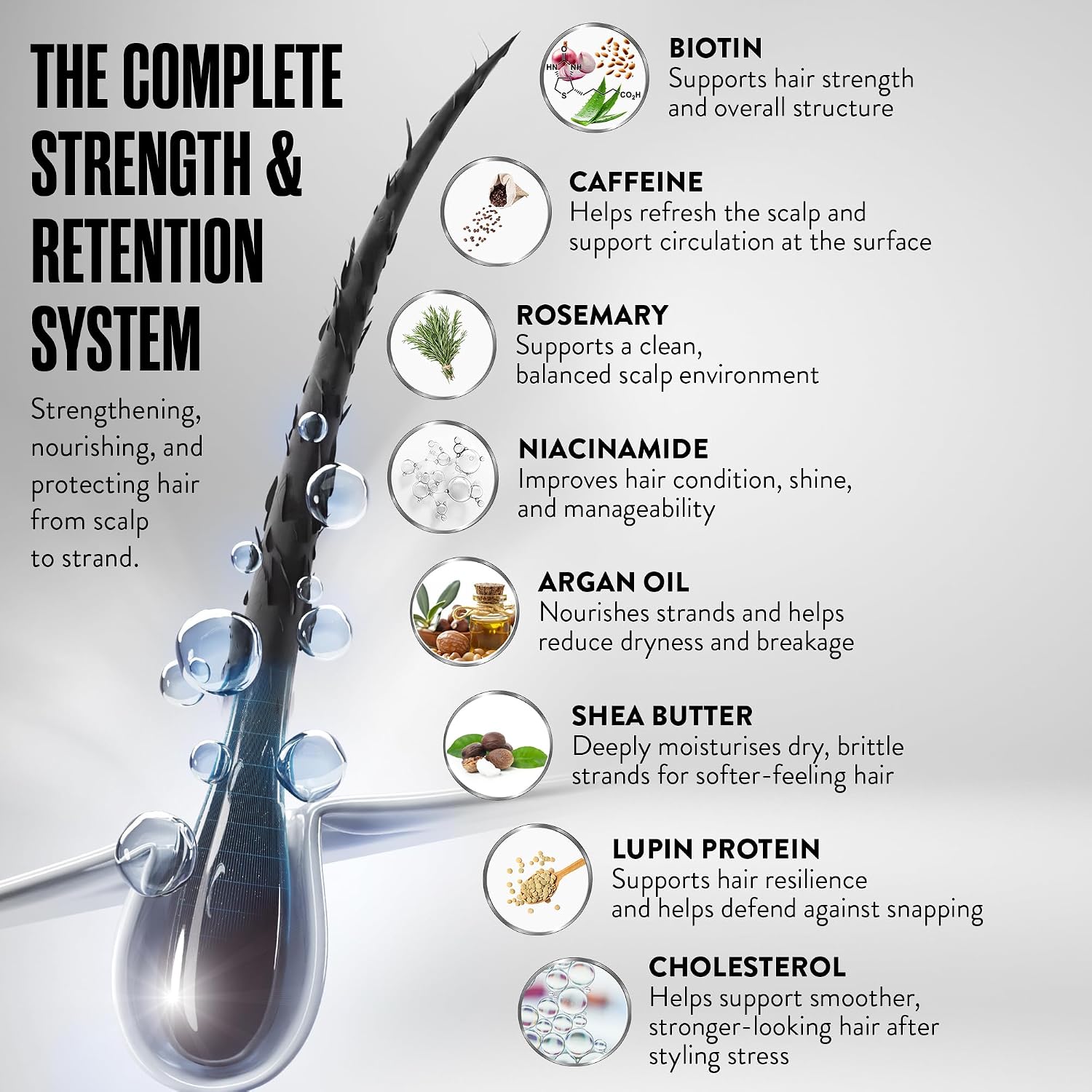
The straightforward post-rinse step. Condition Me is a breakage-defence conditioner with cholesterol, shea butter, glycerin and hydrolysed lupine protein, so it puts slip and softness back onto a freshly clarified fibre and makes combing out far less brutal.
View Condition MeIf your hair is already dry, coloured or heat-styled, a weekly mask does more than a rinse-out conditioner alone, because it has time and richer emollients to work with.

Masque Me® Repairing Hair Mask £24.95
An 8-in-1 deep conditioning mask with argan oil, provitamin B5 and rosemary. Use it on the same day as any clarifying rinse: five minutes on the mid-lengths and ends puts back the softness the acid took off, and leaves hair looking fuller and feeling stronger.
View Masque MeA light oil on the ends afterwards seals the result and adds the shine people were chasing with lime in the first place, without the sun risk. For a fuller routine, our four step routine for dry hair sets out the order of operations, and keeping the scalp healthy matters more for long-term hair condition than any single rinse.
Who should avoid lime for hair completely?
Some people should not use lime on hair at all. Skip it if any of the following applies to you:
- You have eczema, psoriasis, seborrhoeic dermatitis, or any broken, weeping or sore skin on the scalp.
- Your hair is bleached, highlighted or chemically straightened. The cuticle is already compromised and further acid exposure accelerates snapping.
- You have colour you do not want lifted, especially reds and cool-toned brunettes.
- Your hair is already dry, porous or prone to breakage.
- You spend a lot of time outdoors and cannot reliably stay out of the sun afterwards.
- You are dealing with active hair loss or heavy shedding and want to avoid adding any extra stress to the hair while you work out the cause with a GP.
For anyone in that list, an apple cider vinegar rinse or a proper clarifying shampoo gives you most of the clarifying benefit with a fraction of the downside.

Frequently Asked Questions
Can I leave lime juice in my hair overnight?
No. Leaving lime juice in overnight is one of the most common ways people end up with an irritated scalp and badly dried out ends. Lime is acidic enough that even two minutes is plenty, and an overnight leave-in also means sleeping with a photosensitiser on your skin before a morning outdoors.
Does lime for hair make it grow faster?
No. Lime for hair has no effect on growth rate. Hair grows roughly 1cm a month from a follicle fed by your bloodstream, and a rinse that sits on the outside of the fibre for two minutes cannot change that. Anything promising otherwise is overselling a shine ingredient.
Will lime lighten my hair?
Gradually, yes, if you combine it with sun exposure. Citric acid plus UV slowly lifts pigment. The effect is uneven and hard to control, and it often reads as brassy rather than sun-kissed, so it is not a reliable way to lighten hair on purpose.
Is lime better than lemon for hair?
They are close to interchangeable. Both are strongly acidic, both clarify and add shine, and both contain furocoumarins that cause sun sensitivity. Lime tends to carry slightly more of those compounds, so if anything lemon is the marginally safer of the two. Neither is as gentle as apple cider vinegar.
How often can I use a lime rinse?
Once a week at absolute most, and less if your hair feels at all dry or straw-like afterwards. Many people do better at once a fortnight or once a month, using it as an occasional reset rather than part of a weekly routine.
Can lime help with dandruff?
Not reliably. Lime has mild antimicrobial activity, which is why it turns up in traditional flaky-scalp remedies, but the human evidence is weak and the acidity can irritate an already inflamed scalp. Persistent flaking is usually seborrhoeic dermatitis, and a proper antifungal shampoo from a pharmacist works far better.
Does a lime rinse damage colour-treated hair?
It can. Colour-treated hair has a more porous cuticle, so it absorbs the acid faster, dries out faster and loses tone faster. If you have spent money on colour, use a clarifying shampoo made for coloured hair instead.
What should I do if my scalp reacts to lime?
Rinse thoroughly with cool water, keep the area out of the sun, and use a bland emollient. If you get blistering, spreading redness or brown staining that lasts more than a few days, that pattern fits phytophotodermatitis and is worth a pharmacist or GP visit.
Sources & References
- DermNet, Phytophotodermatitis (furocoumarin skin reactions from limes and other plants). dermnetnz.org
- NHS, Sunburn: prevention, treatment and when to get medical help. nhs.uk
- Trüeb RM, Scalp Condition Impacts Hair Growth and Retention via Oxidative Stress, International Journal of Trichology, 2018. PMC6369642
- British Association of Dermatologists, Telogen Effluvium information leaflet (on normal daily shedding and cycle-driven hair loss). bad.org.uk
- NHS, Hair loss: causes, when to see a GP and what treatment is available on the NHS. nhs.uk
Conclusion: is lime for hair worth it?
Lime for hair is a cheap, effective clarifier and shine booster with a genuine safety catch attached. If your hair is healthy, uncoloured and dulled by product or hard water build-up, a properly diluted lime rinse once a week, followed by a conditioner or mask and a day out of the sun, will leave it glossier and lighter. If your hair is dry, coloured, damaged or breaking, or your scalp is sensitive, the risk outweighs the shine and apple cider vinegar or a clarifying shampoo is the better call. And if what is actually bothering you is hair loss or heavy shedding rather than dullness, no rinse of any kind is the answer: that is a conversation for your GP or pharmacist.
Watermans is a British, vegan, cruelty-free hair care brand, and we have sold over 6.5 million bottles since 2012.