Pomegranate Benefits for Hair: What the Evidence Actually Supports
The honest position on pomegranate benefits for hair is this: pomegranate is a genuinely good source of vitamin C and polyphenols, and pomegranate seed oil is a light, conditioning oil that adds slip and shine. Almost all of the published research is on skin, not on scalp hair, and there is no good human evidence that pomegranate makes hair grow. Treat it as a nice conditioning ingredient and a good fruit to eat. For a home made oil with a similar evidence picture, see horsetail oil for hair growth.
Our hair and body oil
Camellia & Black Castor Hair & Body Oil, £24.95. Adds hydration and shine to dry lengths and smooths the hair before a blow dry, without weighing fine hair down.
Key Takeaways
- Pomegranate seed oil is rich in punicic acid, a light conditioning oil that improves slip, softness and shine on the hair fibre.
- The fruit is a strong source of vitamin C and polyphenols such as punicalagins and ellagic acid.
- The research base is on skin, in cell and animal models. Human scalp hair studies are essentially absent.
- No credible evidence supports pomegranate making hair grow. Anyone promising that is going well beyond the data.
- The realistic gains are cosmetic: better shine, less roughness, easier detangling and therefore less breakage.
- Eating pomegranate is worthwhile as part of a varied diet. It is not a substitute for checking iron or thyroid if hair is genuinely thinning.

What is in a pomegranate?
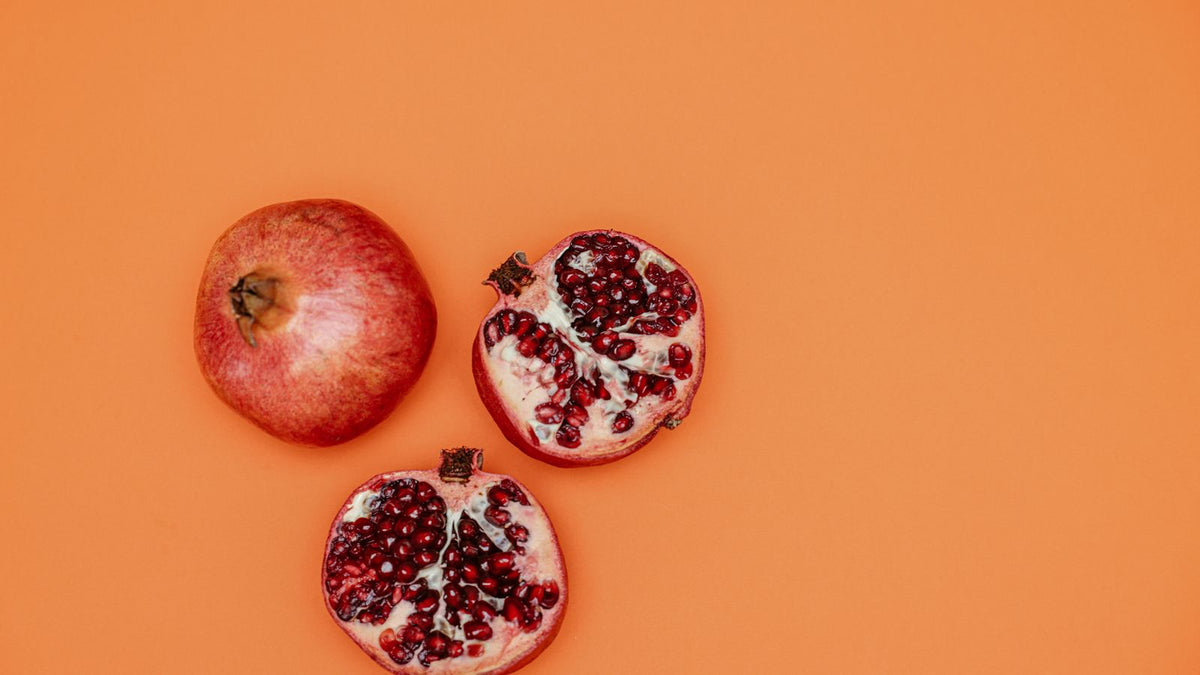
Pomegranate (Punica granatum) carries three groups of compounds that matter to anyone reading about pomegranate benefits for hair. Knowing which part of the fruit you are dealing with matters, because the seed, the juice and the peel are chemically quite different.
- Punicic acid. The dominant fatty acid in pomegranate seed oil, making up roughly 65 to 80 percent of it. It is a conjugated fatty acid, and it is why the oil behaves as a light, non-greasy conditioning oil.
- Punicalagins and ellagic acid. Large polyphenols concentrated in the juice and peel. These are what give pomegranate its high antioxidant readings in laboratory assays.
- Vitamin C, potassium and vitamin K. Ordinary but useful nutrition from the fruit itself. Vitamin C contributes to normal collagen formation and helps the body absorb iron from plant foods, which is a genuinely relevant point for hair.
Seed oil, juice and extract are not interchangeable
A product listing "pomegranate extract" near the bottom of an ingredient list is giving you polyphenols in small quantity. A product built on pomegranate seed oil is giving you a conditioning lipid. They do completely different jobs on hair, and marketing copy routinely blurs the two.
What are the real pomegranate benefits for hair?
Split the claims into what the evidence supports, what is plausible but unproven, and what is simply not true. That division is more useful than any list of benefits.
Well supported, on the fibre. Pomegranate seed oil is a light emollient. Applied to hair it coats the cuticle, reduces friction between strands, improves combing and adds visible shine. This is ordinary, real oil behaviour, well described in the hair cosmetics literature, and it is the benefit you will actually notice. For a related angle, see our guide to hemp seed oil for hair.
Plausible, but demonstrated on skin rather than scalp. Pomegranate polyphenols show antioxidant and anti-inflammatory activity in laboratory and skin studies. A calmer, less irritated scalp is a better environment for hair, so the logic holds. The step from a skin cell study to your scalp is a real leap and has not been made in published human work.
Not supported. That pomegranate makes hair grow faster, thickens existing hair, or does anything about pattern hair loss. There is no human trial evidence for any of this. If you are seeing that claim on a bottle, it is marketing.
| Claim | Evidence level | What to expect |
|---|---|---|
| Adds shine and softness | Good, general oil science | Noticeable from the first use |
| Reduces breakage via better slip | Good, indirect | Over weeks, if detangling improves |
| Antioxidant support for the scalp | Laboratory and skin studies only | Unclear in real use |
| Makes hair grow faster or thicker | None in humans | Expect nothing |
Get a discount on the dry and dull hair range
Join the Watermans mailing list and we will email a discount code straight to your inbox, so you can try the dry and dull hair range for less. Made in the UK, over 6.5 million bottles sold since 2012.
How do you use pomegranate on hair at home?
If you want to try it, use the seed oil rather than the juice. Juice on hair is sticky, sugary and stains light hair, and the polyphenols it carries are not going to survive a rinse in any meaningful way.
- As a pre-wash oil. Warm three to six drops between your palms and work through the mid-lengths and ends, not the scalp. Leave 20 to 30 minutes, then shampoo as normal. This is the highest value use, because oiling before washing reduces the swelling and cuticle lift that washing itself causes.
- As a finishing oil. One or two drops on damp or dry ends for shine and frizz control. Start with less than you think, since fine hair goes lank quickly.
- Mixed into a mask. A few drops stirred into a conditioning mask before you apply it.
- On the scalp, sparingly. Only if your scalp is dry rather than oily, and always washed out. Leaving oil on a scalp prone to flaking usually makes flaking worse.
Patch test, and mind the stain
Test any new oil on your inner forearm 24 hours before you put it near your scalp. Pomegranate juice will stain light, grey or bleached hair, so keep juice out of DIY hair recipes entirely.

Is a ready made oil better than a kitchen recipe?
For most people, yes, and not for a snobbish reason. A blended cosmetic oil is filtered, stabilised against going rancid, and balanced so it does not sit heavily on the hair. Pressed fruit oils oxidise, and a rancid oil on your hair smells bad and does nothing useful.
Pomegranate seed oil is also expensive relative to what it delivers, which is why it usually appears as a small part of a blend rather than as the whole product. Other light oils do the same conditioning job more cheaply.

Camellia & Black Castor Hair & Body Oil £24.95
A blended hair and body oil built on camellia and black castor oils. Light enough for fine hair as a finishing oil, rich enough as a pre-wash treatment, and it will not go rancid in the bathroom cupboard.

Masque Me® Hair Mask £24.95
An 8-in-1 conditioning mask with rosemary, argan oil, panthenol and hydrolysed lupine protein. The better choice if the real problem is dryness, roughness and dullness rather than a missing single ingredient.

Condition Me® Hair Growth Conditioner £13.95
The everyday conditioner. Slip for safe detangling is where most avoidable breakage is prevented, and that matters more week to week than any single botanical.
Watermans is a British brand. Everything we make is made in the UK, and we have sold over 6.5 million bottles since 2012.
Important: Watermans products are 100% cosmetic and do not treat medical hair loss. Individual results may vary.
Should you eat pomegranate for your hair?
Eating pomegranate is a perfectly good idea, just not a hair strategy on its own. It counts towards your five a day, it is a strong source of vitamin C, and vitamin C helps you absorb non-haem iron, the form of iron found in plant foods. Since low iron stores are one of the more common contributors to diffuse shedding in women, that indirect route is the most credible nutritional link there is.
What it will not do is compensate for a diet short on protein or overall energy. Hair is made of protein, and it is one of the first things the body deprioritises when intake drops. A pomegranate on top of an inadequate diet changes very little.
Our guide to vitamins for hair growth covers which nutrients have real evidence behind them and which are sold on hope.

When is dullness a sign of something else?
Dull, rough, brittle hair is usually a damage problem rather than a nutrition problem, and no oil fixes it faster than changing what caused it. Bleach, daily high heat, hard water and tight styling are the usual culprits, and they are all covered in our guide to what causes hair damage.
Separate that from two other things. Hair shedding means whole hairs leaving the scalp with a pale bulb, from all over, usually two to four months after an illness, a birth or a big stress. Hair loss means the follicle producing progressively finer hair, which shows as a widening parting or receding temples over years. Neither is a shine problem, and neither responds to an oil. If you are seeing either, see your GP and ask about ferritin and thyroid function.
For everyday dryness, our four step routine for dry hair and the honest guide to argan oil are more practical starting points than any single fruit extract.
Sources & References
- Punica granatum L. (Pomegranate) Extracts and Their Effects on Healthy and Diseased Skin (2024), for the antioxidant and anti-inflammatory work, all of it on skin rather than scalp hair.
- Dias MFRG, Hair Cosmetics: An Overview, International Journal of Trichology (2015), for what oils do to the hair fibre and why pre-wash oiling helps.
- NHS, Vitamin C, for requirements and the iron absorption link.
- NHS, Why 5 A Day, for where fruit like pomegranate sits in a normal diet.
- NHS, Hair loss, for when thinning needs a GP rather than a new product.
A note on where these sources pull against each other. The laboratory literature on pomegranate polyphenols is genuinely enthusiastic, reporting strong antioxidant activity in cell models. The clinical literature on human hair contains essentially nothing. We have followed the clinical gap rather than the laboratory enthusiasm, because a cell culture result is not a promise about your scalp.
Frequently asked questions
What are the real pomegranate benefits for hair?
The dependable pomegranate benefits for hair are cosmetic. Pomegranate seed oil is a light conditioning oil that improves slip, softness and shine, and better slip means less breakage during detangling. The antioxidant claims come from skin research, and there is no human evidence for growth.
Does pomegranate make hair grow?
There is no credible human evidence that it does. Studies on pomegranate are dominated by skin research in cell and animal models. If hair growth is your goal, checking iron, ferritin and thyroid function with your GP is a far better use of your time.
Is pomegranate seed oil good for the scalp?
It can be, sparingly, if your scalp is dry rather than oily, and it should always be washed out. On a scalp prone to flaking or seborrhoeic dermatitis, added oil often makes flaking worse rather than better.
Can I put pomegranate juice on my hair?
Better not. Juice is sticky and sugary, it stains light, grey and bleached hair, and its useful polyphenols do not survive a rinse in any meaningful amount. If you want to try pomegranate on hair, use the seed oil.
How often should I use a pomegranate oil treatment?
Once or twice a week as a pre-wash treatment is plenty. As a finishing oil, one or two drops on the ends whenever hair looks dull. Fine hair goes lank quickly, so always start with less than you think you need.
Is eating pomegranate better than putting it on my hair?
For overall health, yes, and the vitamin C helps you absorb iron from plant foods, which is the most credible indirect link to hair there is. For shine and softness specifically, applying an oil to the fibre does more than eating the fruit.
Is pomegranate oil safe on colour treated hair?
The seed oil is generally fine and often helps colour treated hair look less dull. Pomegranate juice is not, because it stains. Patch test any new oil 24 hours before use.
My hair is thinning, not dull. Will pomegranate help?
No. Thinning is a follicle or hair cycle issue and an oil works on the fibre surface. Work out first whether you are seeing breakage, shedding or patterned loss, and see your GP if the parting is widening. If your question is about products or a routine rather than a medical one, you can talk to Gail Waterman, our co-founder, as an AI avatar on the Watermans homepage.
What is the bottom line on pomegranate benefits for hair?
The realistic pomegranate benefits for hair are shine, softness and easier detangling, which over time means less breakage. That is a decent, honest set of benefits for a light conditioning oil. The antioxidant story is real in the laboratory and unproven on human scalps, and the growth claims have nothing behind them at all. Eat the fruit because it is good food, use the seed oil because it makes hair look better, and look elsewhere if hair is genuinely getting thinner.
If dullness is the problem you are actually solving, the Camellia and Black Castor oil and Masque Me are the two we would reach for first.