Healthy Hair Crown: How to Keep the Top of Your Hair Full
The crown is the swirl of hair at the top and slightly back of your head, and it is the area almost everybody worries about first. It catches overhead light, it is the part other people see when you look down, and it is genuinely more exposed than the rest of your head. Keeping a healthy hair crown is less about a miracle product than about understanding why this particular patch takes more punishment than anywhere else, and adjusting a few ordinary habits accordingly.
Our hair growth shampoo
Grow Me® Hair Growth Shampoo, £14.95. A sulphate free daily shampoo that supports a healthy scalp environment and helps reduce breakage, so lengths hold on and look fuller.
A healthy hair crown means the hair at the top of your head is a similar density and calibre to the hair at the sides, with a defined swirl pattern, no widening scalp show under normal light, and no halo of short broken hairs. Protecting it comes down to gentle washing, conditioning the lengths properly, keeping heat and tension away from the top section, and looking at it honestly every few months in the same light.
Key takeaways
- The crown sits directly under overhead light and sunlight, so it shows change earlier than any other area.
- A healthy hair crown has a clear swirl, even density and no halo of short snapped hairs.
- Tight ponytails, repeated heat and rough towel drying do most of their damage in exactly this spot.
- Photograph your crown in the same light every three months. Memory is a terrible measuring instrument.
- Widening scalp show at the crown over months to years is worth a GP conversation, not a bigger bottle.
What does a healthy hair crown actually look like?
Useful to define, because a lot of anxiety comes from comparing your own crown to a photograph that has been lit and styled to hide exactly what you are looking for.
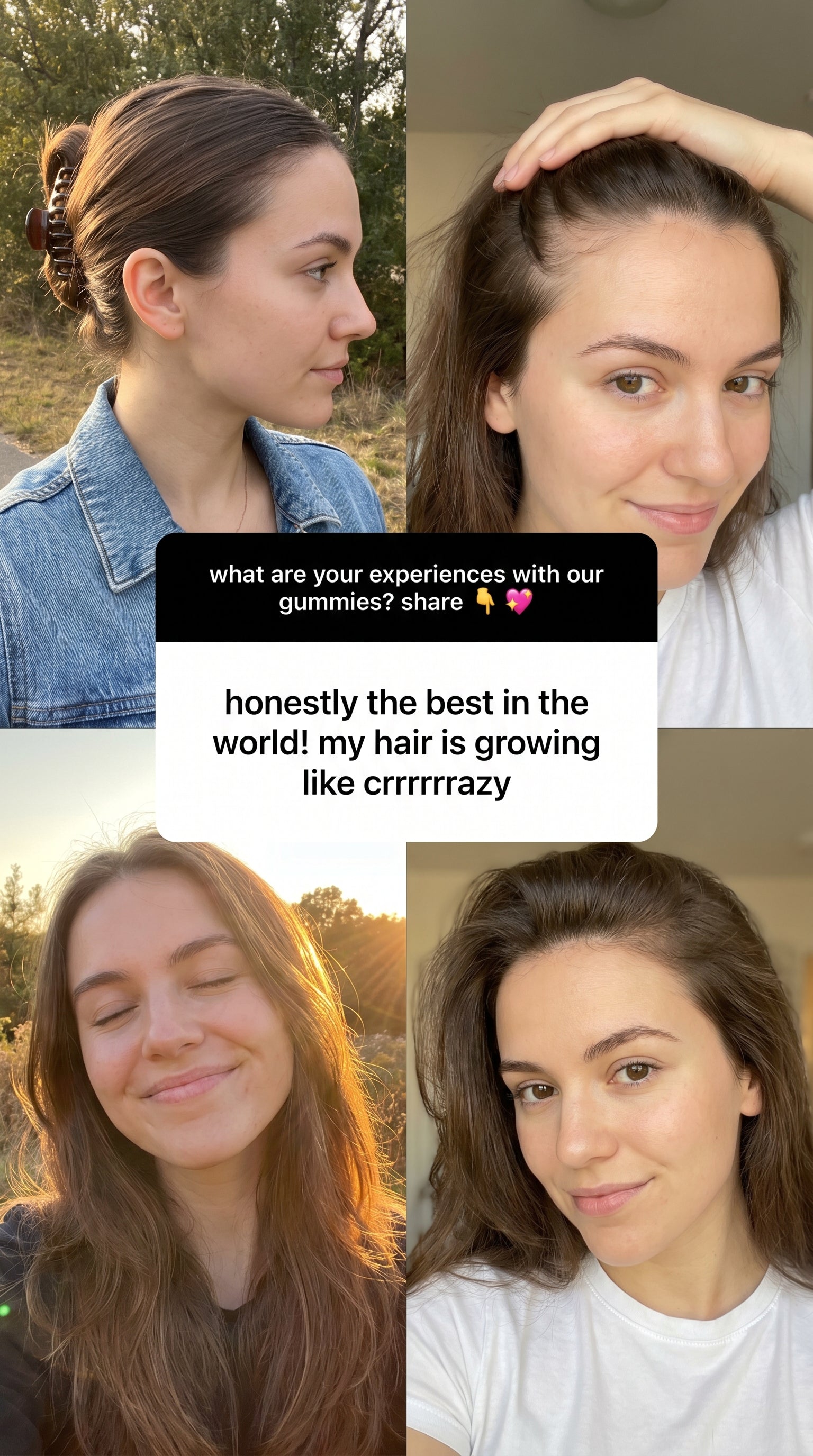
On a healthy hair crown the hair grows in a spiral, called the whorl, from a central point. Some scalp is visible at the very centre of that spiral on absolutely everybody, because the hairs radiate outward from a point and cannot cover their own origin. The hair around it should be a similar thickness to the hair at the back and sides, and the scalp show should not widen as you move outward from the whorl.

Roughly ten percent of people have a double whorl, two spirals side by side, which naturally shows more scalp and is entirely normal. Hair direction at the crown also fights any style that runs against it, which is why the crown is where cowlicks and stubborn partings live.
Why does the crown show change before anywhere else?
Three separate reasons stack up on the same patch of skin, which is why this area is the early warning system.
First, light. Overhead lighting in shops, offices and bathrooms falls directly onto the crown, and light passing between hairs to reach scalp is what reads as thinning. The same head under front lighting can look completely different, which is why people get contradictory impressions on the same day.
Second, geometry. Hair radiates outward from the whorl rather than lying in one direction, so there is less overlap between hairs than in a flat section. Less overlap means less visual coverage from the same number of hairs.
Third, biology. In pattern hair loss, the crown and the frontal hairline are the areas where follicles are most sensitive to hormonal influence, so they miniaturise earlier than the back and sides. This is why a change at the crown carries more weight than a change elsewhere, and why it is worth taking seriously rather than dismissing.
Is thinning at the crown hair loss, hair shedding or hair breakage?
Three different problems present at the crown and get treated as one, which is why so many people buy the wrong thing.
Hair loss at the crown means the follicles are miniaturising. The hairs coming through are progressively finer and shorter, the scalp show widens gradually over years, and the change is slow but does not reverse on its own. Our guide to working out why hair is thinning walks through how to tell this apart from the others.
Hair shedding at the crown is usually part of a whole head event rather than a crown specific one. A trigger such as illness, childbirth, a crash diet or serious stress pushes many follicles into the resting phase at once, and two to three months later hair comes out noticeably in the shower and on the brush. It affects the crown along with everywhere else, and it typically recovers.
Hair breakage at the crown is extremely common and constantly mistaken for the first two. Ponytails sit on the crown, hot tools reach it first, and towel rubbing concentrates there. The result is a fringe of short broken hairs standing up around the whorl, which looks precisely like new hair sprouting and is in fact old hair snapping. The test is simple: new growth tapers to a fine point, broken hair has a blunt end.
The blunt end test
Pull one of the short hairs standing up at your crown and look at the tip under good light. A tapered, pointed tip means it is genuinely growing. A blunt, squared off tip means it snapped, and the fix is in how you handle your hair, not in what you put on your scalp.
Watermans products are 100% cosmetic and do not treat medical hair loss. Individual results may vary.
Get a discount on the thinning hair range
Join the Watermans mailing list and we will email a discount code straight to your inbox, so you can try the thinning hair range for less. Made in the UK, over 6.5 million bottles sold since 2012.
How should you wash a healthy hair crown?
Washing is where most crown damage either happens or does not, and the mistakes are small and easy to correct.

- Shampoo the scalp, condition the lengths. Shampoo is for the skin and the roots. Conditioner belongs from the mid lengths down. Piling conditioner onto the crown flattens it and adds weight exactly where you want lift.
- Use fingertips, not nails. A minute of gentle massage cleans better than thirty seconds of scrubbing, and it does not scratch the skin.
- Wash often enough. Leaving an oily scalp unwashed for days does not protect hair, it just leaves the crown flat and the scalp uncomfortable. Two or three times a week suits most people, more if your scalp runs oily.
- Rinse cooler than feels luxurious. Very hot water leaves the scalp irritated and the cuticle raised.
- Squeeze, do not rub. Rubbing a towel over the crown is the single most efficient way to snap hair there. Press the water out, or use a soft cotton t shirt.
- Detangle from the ends upward, with a wide tooth comb, working up toward the crown rather than dragging down from it.
If you are not sure your conditioning step is doing anything, our guide on how to use conditioner properly covers placement and timing, both of which matter more than the brand.
Which styling habits damage the crown most?
Some habits are far more expensive than others. The table below ranks the common ones by how much damage they do to the crown specifically.
| Habit | What it does at the crown | What to do instead |
|---|---|---|
| Tight high ponytail worn daily | Constant tension on crown follicles, snapped hairs at the elastic line | Lower, looser, and vary the position day to day |
| Straighteners on dry hair without protection | Cuticle damage first at the top section, which meets the plates first | Heat protection every time, lower temperature setting |
| Rough towel rubbing | Snapped hairs and frizz concentrated on the crown | Squeeze dry, or use a cotton t shirt |
| Brushing wet hair from the roots down | Wet hair stretches and snaps, and the crown takes the pull | Wide tooth comb, ends first, work upward |
| Backcombing for volume | Deliberately roughs the cuticle where hair is already most exposed | Root lift with a dryer nozzle instead |
| Skipping sun protection in summer | UV degrades keratin, and the crown gets the most direct exposure | A hat, or a leave in with UV filters |
The crown is the meeting point for tension, heat and sunlight. Reducing any one of them helps.

Sun exposure deserves a note of its own, because it is genuinely underrated. The crown is the part of your head that faces the sky, and prolonged UV exposure degrades the keratin in the hair shaft and dries the scalp. A hat on a bright day does more for your crown than most products do.
How do you check your own crown honestly?
Self assessment at the crown is difficult because you cannot see it directly, and phone cameras exaggerate scalp show depending on angle and light. A simple, repeatable method beats anxious daily inspection.
- Take a photo of your crown in the same room, in the same light, at the same time of day, on dry hair styled the usual way.
- Repeat every three months, not every week. Hair changes on a scale of months.
- Compare photos side by side rather than comparing today to your memory of a year ago.
- Count what you shed for a few days if you are worried. Losing 50 to 100 hairs a day is normal, and the number rises during a shedding phase.
Book a GP conversation if the scalp show at your crown is widening steadily over months, if hair comes out in defined patches, if the scalp is sore, scaling or itchy in a way that does not settle, or if heavy shedding continues beyond about six months. Our guide to everyday habits that protect hair covers the preventable side, and how to get thicker looking hair covers what genuinely changes apparent density. For a month-by-month look at what to expect, see our guide to crown hair growth.
What routine supports a healthy hair crown?
Nothing exotic. A gentle cleanse that does not strip, a conditioner that keeps the fibre flexible, protection before heat, and a scalp that is comfortable rather than irritated.

Grow Me® Hair Growth Shampoo £14.95
A sulfate free daily shampoo with biotin, caffeine, rosemary and niacinamide. Cleanses the crown without stripping it, which matters when you are washing two or three times a week.

Condition Me® Hair Growth Conditioner £13.95
A breakage defence conditioner for the mid lengths and ends. This is the step that reduces the snapping responsible for most of the halo of short hairs people see at the crown.

Grow More® Leave-In Scalp Elixir £25.50
A leave in scalp elixir applied along partings, including through the crown. Designed to be left on the skin rather than rinsed out, and light enough not to flatten the top section.
Grow Me shampoo is vegan. Watermans products are made in the UK, and we have sold over 6.5 million bottles since 2012.
Frequently asked questions
How much scalp show at the crown is normal?
Some scalp is visible at the centre of the whorl on everyone, because hairs radiate outward from a point and cannot cover their own origin. What is not normal is that visible area widening steadily over months or years, or scalp becoming visible well away from the whorl.
Why does my crown look thin in some lights and fine in others?
Overhead lighting shines straight down onto the crown and passes between the hairs, which reads as scalp show. Front lighting does not. This is why a bathroom mirror and a shop changing room give completely different impressions of the same head on the same day.
Are the short hairs standing up at my crown new growth or breakage?
Check the tip. Genuinely new hair tapers to a fine point. Broken hair has a blunt, squared off end. A halo of blunt tipped short hairs at the crown almost always means styling damage rather than new growth.
Does wearing a hat cause crown thinning?
No. Ordinary hats do not cause hair loss. A hat worn extremely tight for long periods can contribute to tension damage, but a normal hat is protective against UV, which genuinely does degrade the hair shaft.
Should I part my hair differently to cover my crown?
You can, and it often helps visually, but be aware that a parting worn in exactly the same place for years concentrates light and tension in one line. Moving it occasionally is a reasonable habit.
How often should I wash if I want a fuller looking crown?
Most people do well on two or three washes a week, more if the scalp runs oily. Under washing leaves the crown flat and the scalp uncomfortable, which works against the look you are after.
Can a haircut make my crown look fuller?
Yes, and it is one of the more effective things available. Shorter layers at the top add lift, blunt ends read as denser than tapered ones, and a good stylist can cut around a whorl rather than fighting it.
When should I see a GP about my crown?
If scalp show is widening steadily over months, if hair is coming out in defined patches, if the scalp is sore or scaling persistently, or if heavy shedding carries on past about six months. Those are worth proper assessment rather than another product.
What is the bottom line on healthy hair crown?
A healthy hair crown is mostly the product of unremarkable habits repeated for a long time. Wash often enough and gently enough, keep conditioner on the lengths where it belongs, protect before heat, ease off the tension, wear a hat in strong sun, and squeeze rather than rub when you dry. Photograph the area every three months in the same light so you are working from evidence rather than from a bad moment in a lift mirror. And if the scalp show is genuinely widening year on year, take that to your GP early, because the options that exist work far better before a great deal has changed. If your question is about products or a routine rather than a medical one, you can talk to Gail Waterman, our co-founder, as an AI avatar on the Watermans homepage.
For thinner areas specifically, the Grow More hair growth serum is the targeted step. Vegan, made in the UK.
Sources and references
- NHS, Hair loss, on normal daily shedding, common causes and when to seek advice.
- NICE Clinical Knowledge Summaries, Male pattern hair loss, primary care guidance on assessing pattern hair loss.
- British Association of Dermatologists, public information leaflets on pattern hair loss, traction damage and scalp conditions.
- NHS, Sunscreen and sun safety, on UV exposure and protecting the scalp.
- International Journal of Trichology, Hair cosmetics: an overview, on how grooming, heat and styling wear the hair shaft.
- Annals of Dermatology, Hair shaft damage from heat and drying time of hair dryer, on heat exposure and fibre damage.