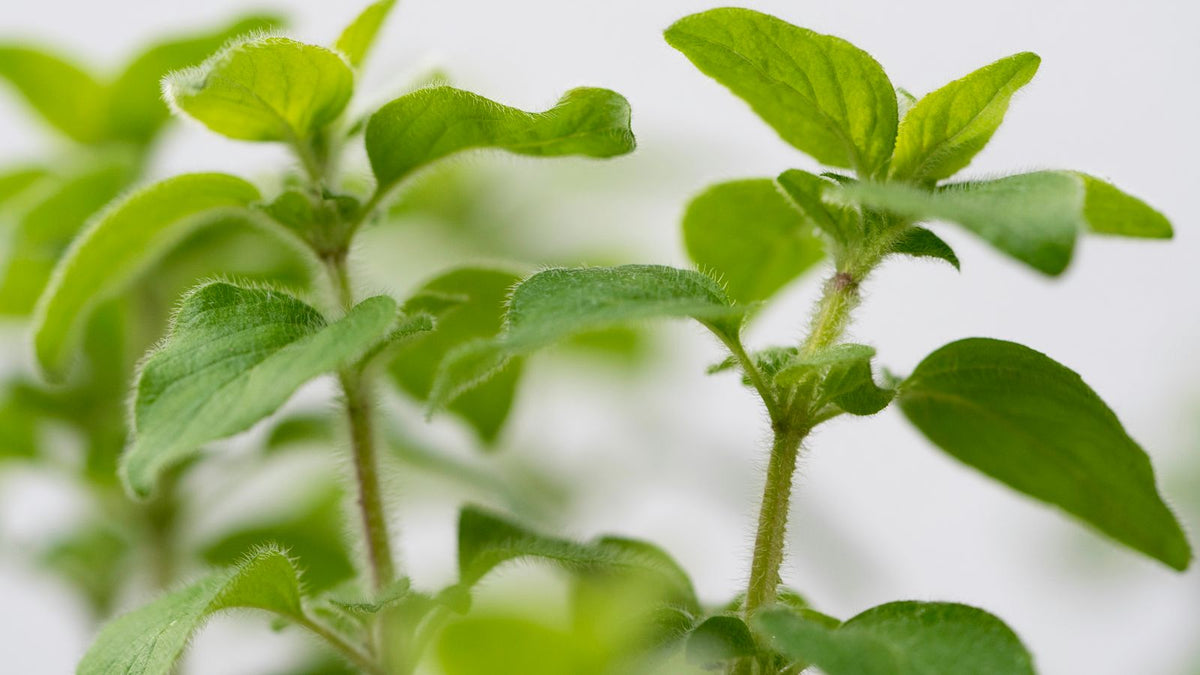
Oregano for Hair Growth: What It Can and Cannot Do
Search for oregano for hair growth and you will find a lot of confidence and very little evidence. Oregano oil is a genuinely potent botanical, rich in carvacrol and thymol, and it has a long record of antimicrobial activity in the laboratory. None of that is the same as a herb that makes hair grow, and the gap between those two ideas is where most of the advice online falls down. This guide sets out what the herb honestly offers a scalp, what it does not do, and how to use it without burning yourself.
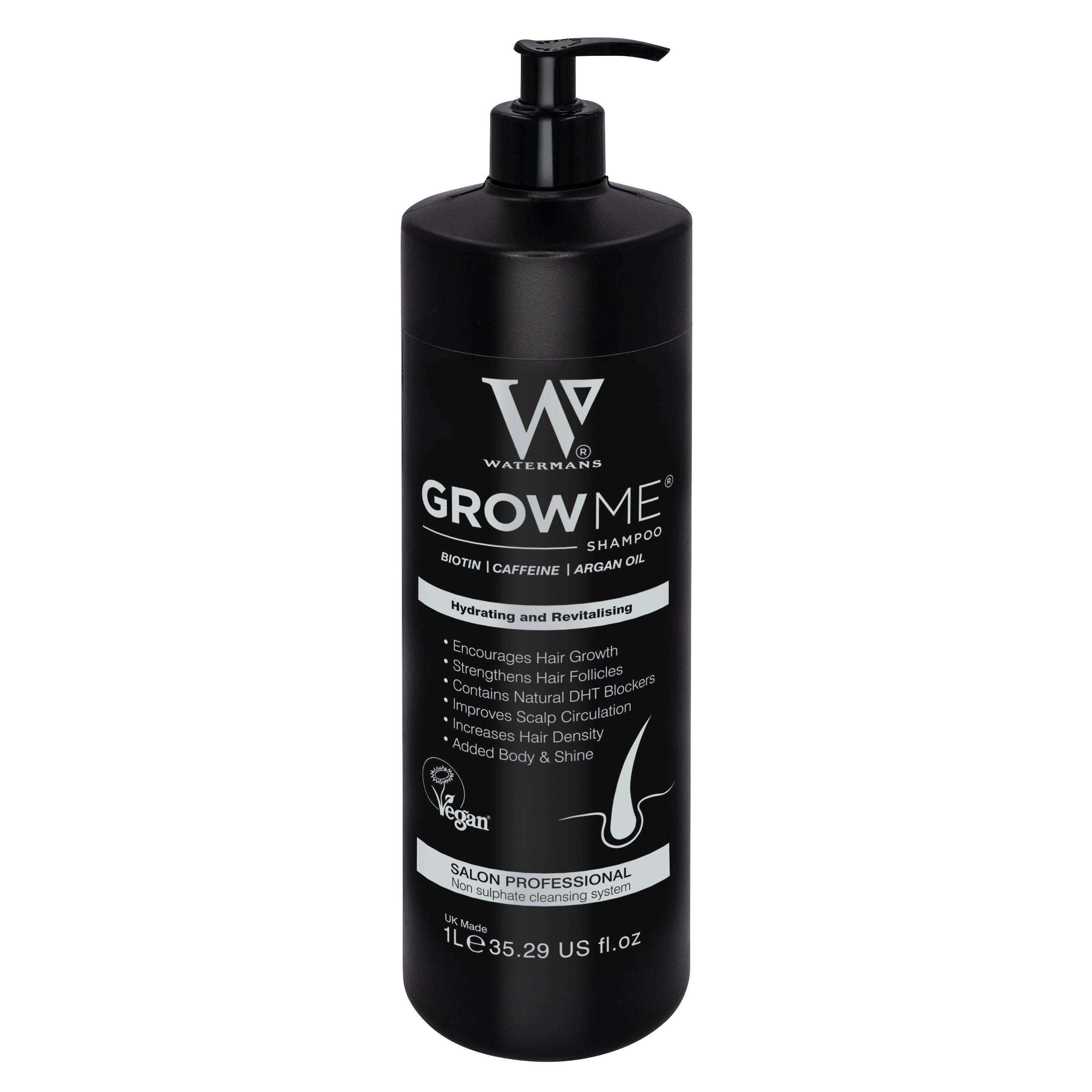
Our hair growth shampoo
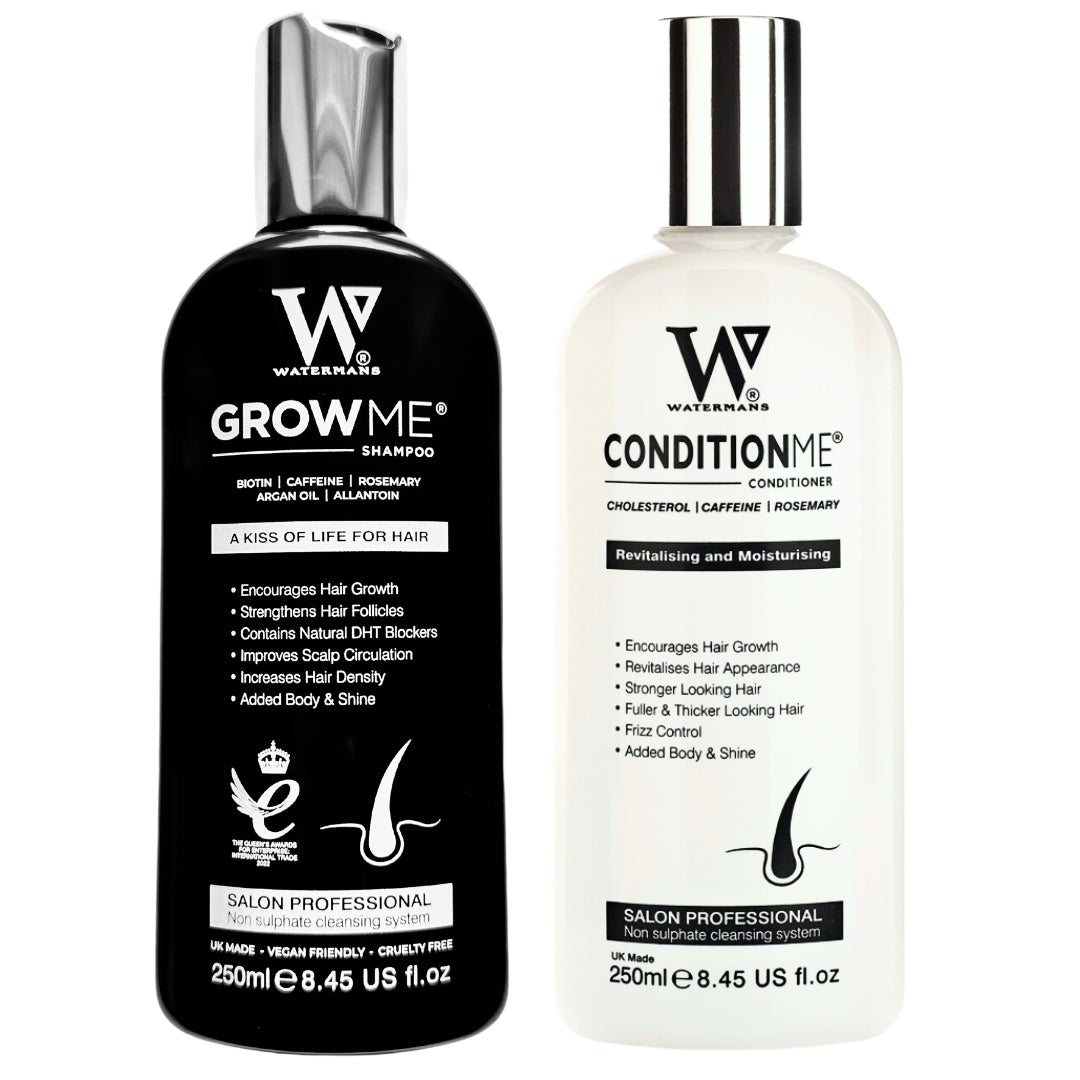
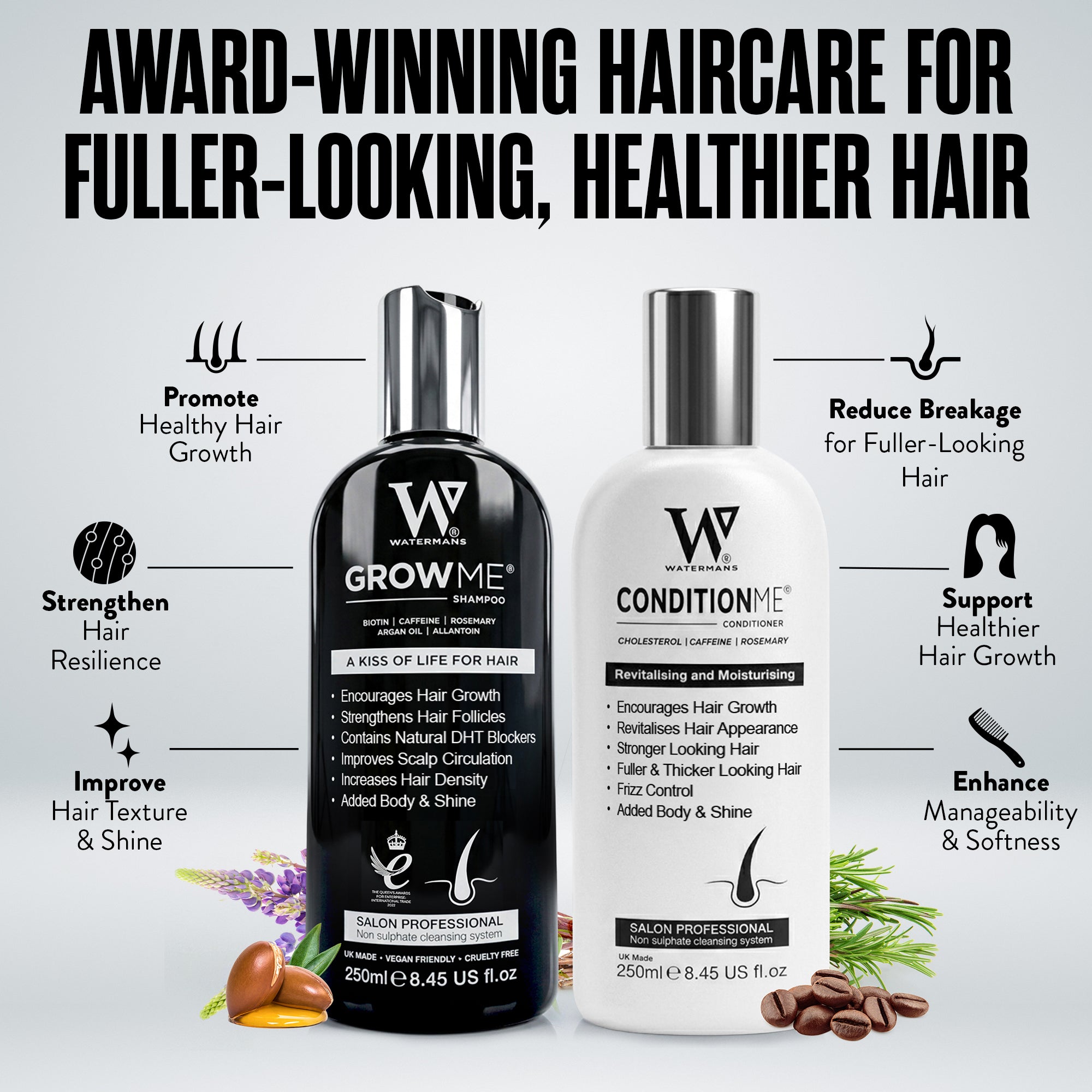
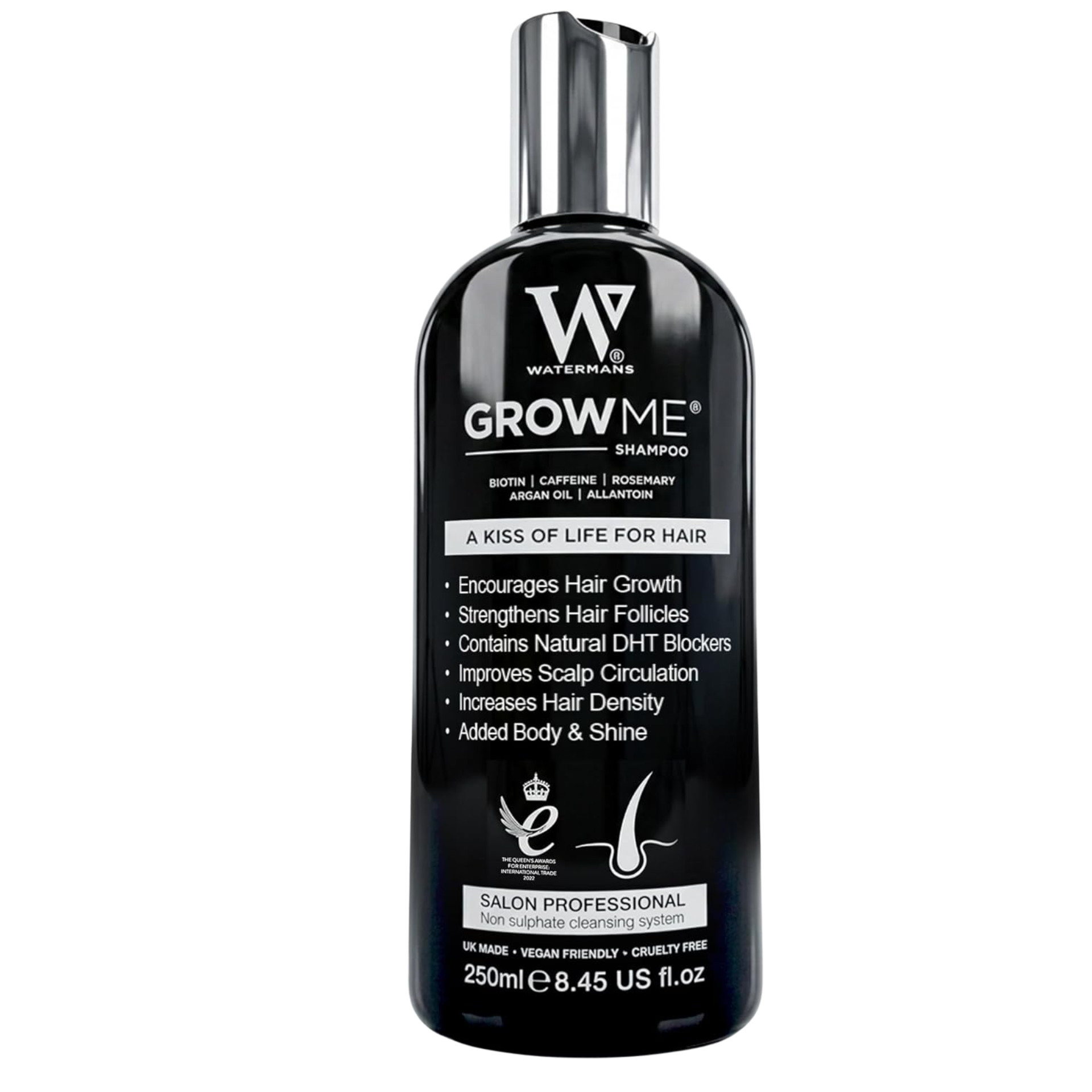
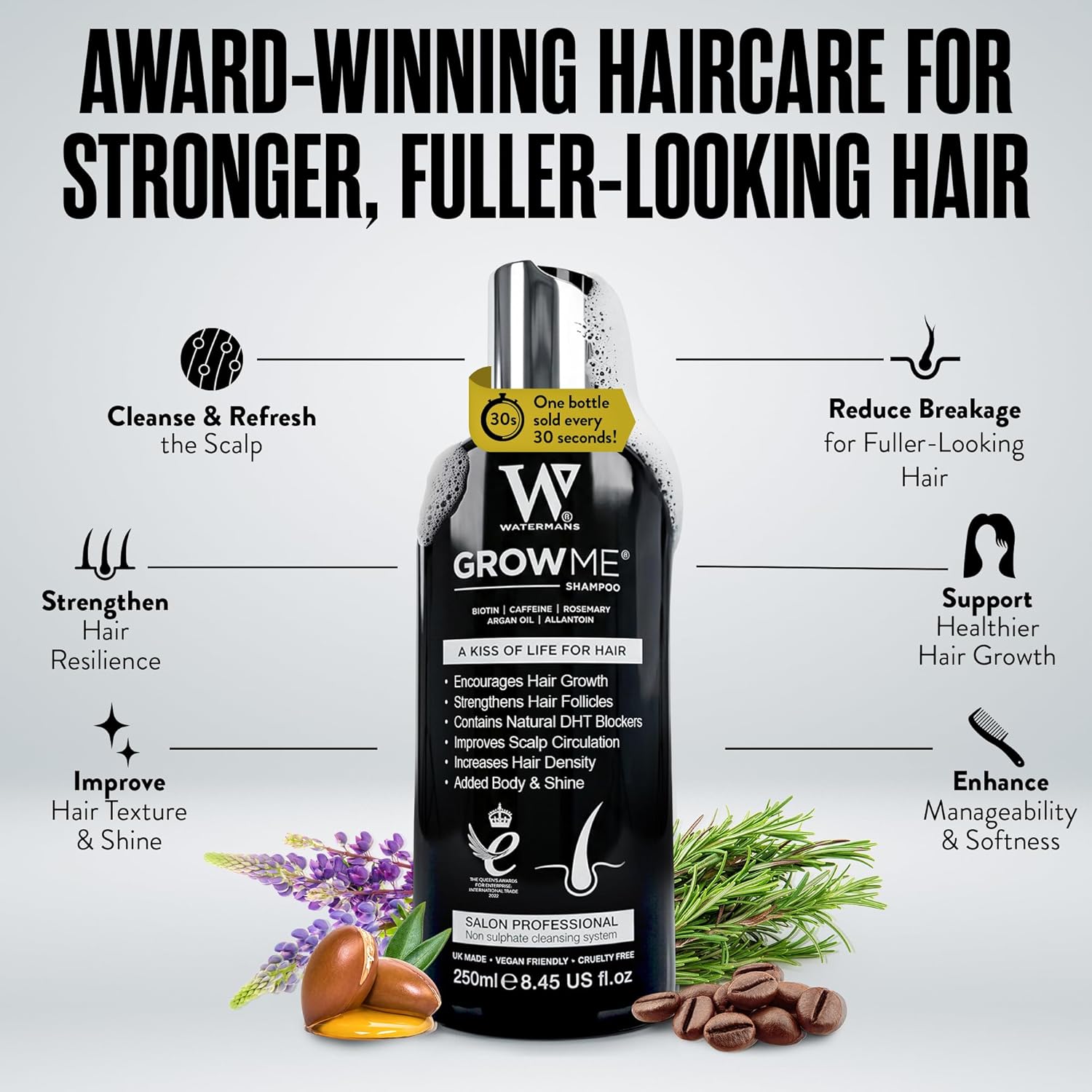
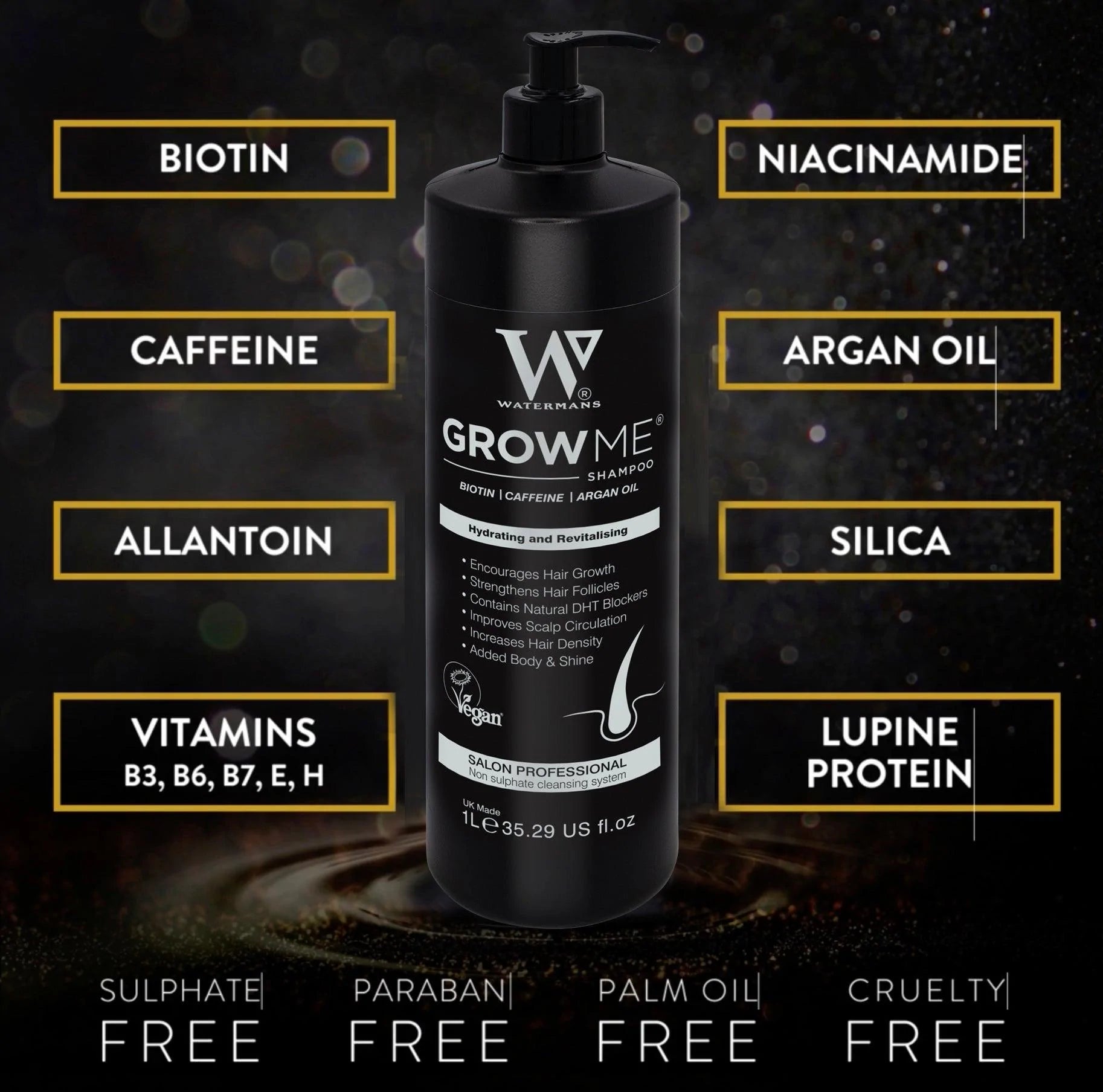
Grow Me® Hair Growth Shampoo, £14.95. A sulphate free daily shampoo that supports a healthy scalp environment and helps reduce breakage, so lengths hold on and look fuller.
Oregano for hair growth has no human trial behind it. What oregano oil does have is strong laboratory evidence of antimicrobial and antifungal activity, which is why it turns up in scalp discussions at all: a calmer, more comfortable scalp is a better environment for the hair you already have. It is also one of the harshest essential oils on skin and must be heavily diluted. Treat it as optional scalp support, never as a growth agent. If you want the detail on that, our guide to datura for hair growth walks through it step by step.
Key takeaways
- There is no published human trial of oregano for hair growth. Anyone promising a specific result is guessing.
- Oregano oil is a potent antimicrobial in laboratory work, which is a scalp comfort story, not a growth story.
- It is a high risk sensitiser. Never apply it neat, and always patch test 24 hours ahead.
- Hair loss, hair shedding and hair breakage are three different problems, and only one of them responds to what you put on your scalp.
- Consistent washing, gentle handling and heat protection do more for visible fullness than any herb.
What is oregano oil, and what does it do on the scalp?
Oregano oil is a steam distilled essential oil from Origanum vulgare. Its activity comes mostly from two phenolic compounds, carvacrol and thymol, which typically make up somewhere between 60 and 80 percent of the oil. Those two molecules are the reason oregano oil is studied so heavily in food preservation and microbiology: they disrupt microbial cell membranes efficiently at low concentrations.
On a scalp, that antimicrobial property is the only mechanism with real support behind it. A scalp carries its own microbial population, and when that population is out of balance the result is often itching, flaking and general discomfort. Reducing that irritation is worth having. It is simply a different claim from growing hair, and the two get blurred constantly in the content that ranks for this topic.

Culinary oregano, the dried herb in your cupboard, is a far weaker thing than the essential oil. Steeping dried oregano in hot water gives you an aromatic rinse with a small amount of plant polyphenol in it. It will not do harm, and it will not do much else either.
Does oregano for hair growth have any evidence behind it?
No, not in humans. A search of the published literature turns up no controlled trial testing oregano oil, oregano extract or oregano rinses against hair density, hair count or shedding rate in people. That absence matters. Rosemary, caffeine and a handful of other botanicals have at least some human research to argue over, and oregano simply does not.
What exists instead is indirect. Carvacrol has antioxidant and anti inflammatory activity in cell and animal models, and oregano oil has repeatedly shown antifungal activity against Malassezia, the yeast most associated with flaking scalps. It is reasonable to say that a less irritated scalp is a better place to grow hair. It is not reasonable to convert that into a promise about density, and any page that does has stopped describing the evidence and started selling.
The honest summary
If someone tells you oregano thickened their hair, the most likely explanations are a calmer scalp, less scratching and less mechanical damage, or simply the normal variation of the hair cycle over the months they were using it. None of those require the herb to have done anything to the follicle.
How does oregano compare with better studied botanicals?
Comparing oregano with the botanicals that have actually been tested makes the picture clearer. The table below separates what has human evidence, what has laboratory evidence only, and what is simply traditional use.
| Botanical | Strength of evidence | What it is reasonably said to do |
|---|---|---|
| Rosemary | Some human research, small and debated | Studied for scalp application, best described as promising rather than settled |
| Caffeine | Laboratory and some topical human work | Studied on the hair follicle in culture, widely used in scalp formulas |
| Oregano | Laboratory only, none on hair in humans | Antimicrobial and antifungal activity, so scalp comfort at most |
| Peppermint | Animal work only | Popular, but the evidence is rodent studies, not people |
| Coconut oil | Human hair fibre studies | Reduces protein loss from the hair shaft, so less breakage |
Evidence tiers are about how much has been tested, not about how well a product sells.
Notice that the one entry with solid human fibre data, coconut oil, works on the hair you already have rather than on the follicle. That is a useful pattern. Most of what genuinely helps hair look fuller is about keeping length on your head, not about persuading the scalp to do something new. If you want the fuller picture on that, our guide to how to get thicker hair covers the mechanics.
Why do hair loss, hair shedding and hair breakage need separating?
Most confusion about herbs comes from lumping three different problems together. They have different causes and they respond to completely different things.
Hair loss is follicular. In pattern hair loss the follicle itself miniaturises over years, producing progressively finer, shorter hairs. Nothing you rinse through your hair changes that process, and a herb certainly does not. Our explainer on why hair starts thinning walks through how to tell which pattern you are looking at.
Hair shedding is a cycle problem. Every follicle moves through growing, transitional and resting phases, and a shock such as illness, a crash diet, childbirth or severe stress can push an unusually large group into the resting phase at once. The shedding shows up two to three months later and usually settles on its own. Telogen effluvium works on a predictable timeline, which is why patience matters more than product here.
Hair breakage is fibre failure. The hair snaps partway along its length because it has been bleached, heat styled, over brushed or pulled tight. This is the one problem where what you put on your hair genuinely changes the outcome, because you are protecting a fibre rather than a follicle. It is also the problem most often mistaken for hair loss, because a scalp full of snapped short hairs reads as thinning in the mirror.
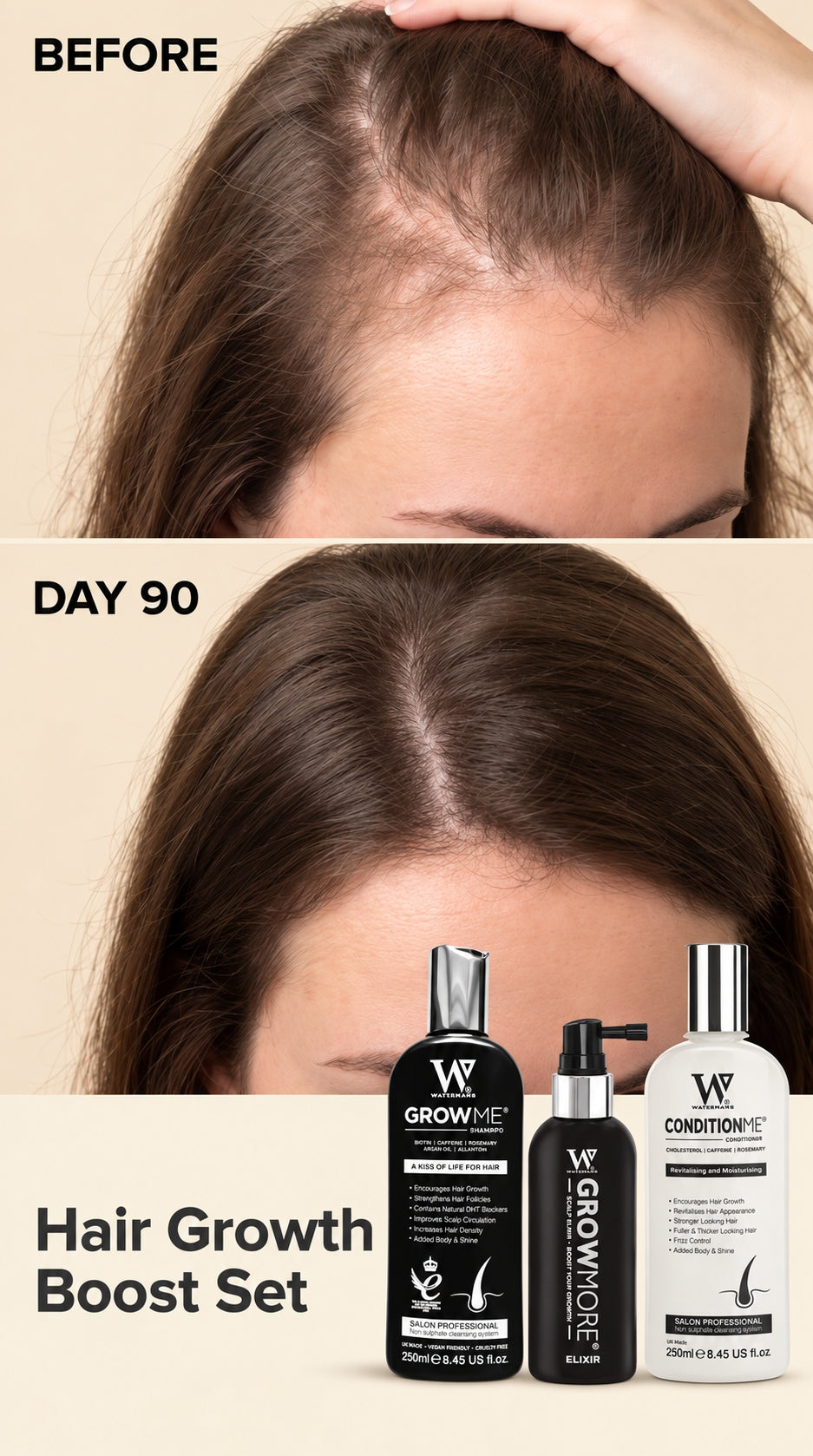
Watermans products are 100% cosmetic and do not treat medical hair loss. Individual results may vary.
Get a discount on the thinning hair range
Join the Watermans mailing list and we will email a discount code straight to your inbox, so you can try the thinning hair range for less. Vegan, made in the UK, over 6.5 million bottles sold since 2012.
How do you use oregano oil on the scalp safely?
If you still want to try it, the safety margin matters more here than with almost any other essential oil. Oregano oil is a recognised skin sensitiser and is capable of causing chemical burns when used neat. Follow the dilution properly rather than eyeballing it.

- Dilute to 0.5 to 1 percent. That is roughly one to two drops of oregano essential oil in a full tablespoon of carrier oil. This is a lower concentration than most essential oils, deliberately.
- Choose a sensible carrier. Olive, jojoba, sweet almond or coconut oil all work. The carrier is not optional and it is not a formality.
- Patch test on your inner forearm and wait 24 hours. If there is redness, stinging or itching, stop there. This step is skipped constantly and it is the step that prevents most of the harm.
- Apply to the scalp, not the lengths. Part the hair, apply sparingly along the parting, and massage gently with fingertips rather than nails.
- Leave it 20 to 30 minutes, then shampoo out. Overnight is unnecessary and raises the irritation risk considerably.
- Use it once a week at most, and stop entirely at the first sign of irritation.
Stop immediately if
you notice burning, persistent redness, blistering, increased flaking or a rash spreading beyond where you applied it. Wash the area with a mild shampoo and see your GP or a pharmacist if the reaction does not settle within a day or two.
If you would rather infuse the herb yourself than buy an essential oil, the gentler route is a warm infusion of the dried herb in a carrier oil, which extracts far less carvacrol and is correspondingly milder. Our guide to infusing herbs in oil covers the method and the storage rules that stop the oil going rancid.
Who should leave oregano oil alone?
Some people should not use it on the scalp at all. Avoid it if you are pregnant or breastfeeding, because the safety data simply is not there. Avoid it on children. Avoid it if you have eczema, psoriasis or any broken or inflamed skin on the scalp, because a potent phenolic oil on compromised skin is a reliable way to make things worse. People allergic to other plants in the mint family, including basil, sage, mint and thyme, have a higher chance of reacting to oregano too. For a related angle, see our guide to how to use sage for hair.
If your scalp is already sore, flaking heavily or losing hair in defined patches, that is a reason to speak to your GP or a pharmacist rather than to reach for a stronger botanical.
What actually helps hair look fuller?
The unglamorous answers keep outperforming the exciting ones. Washing regularly enough to keep the scalp comfortable, conditioning the mid lengths and ends every wash, drying on a lower heat, protecting before hot tools, and easing off tight styles will do more for visible fullness over six months than any herb in this article. Keeping a healthy scalp environment is the part oregano is gesturing at, and there are far gentler ways to get there.

If you want botanicals in the routine, it makes more sense to get them in a formulation that has already solved the dilution and stability problem for you.

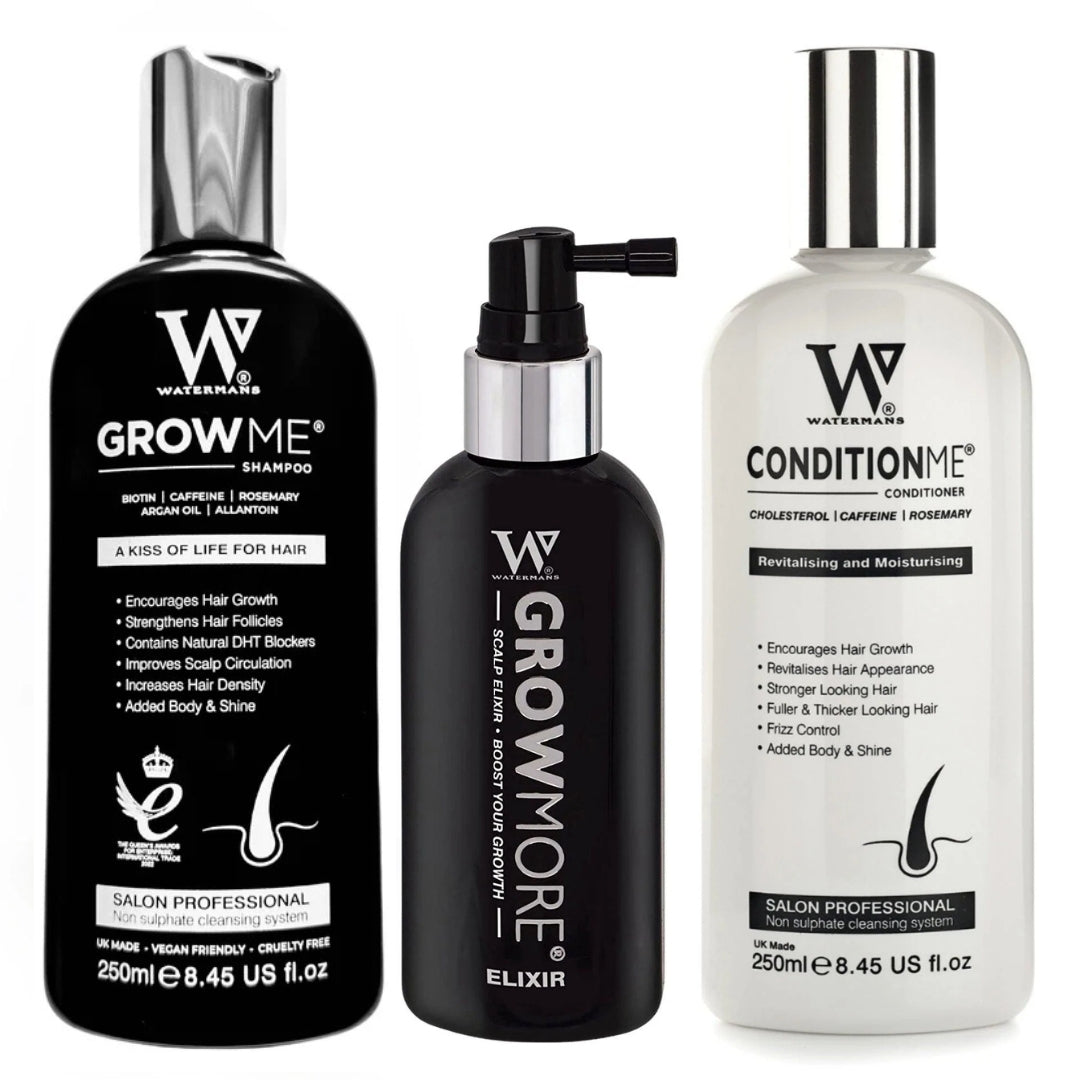
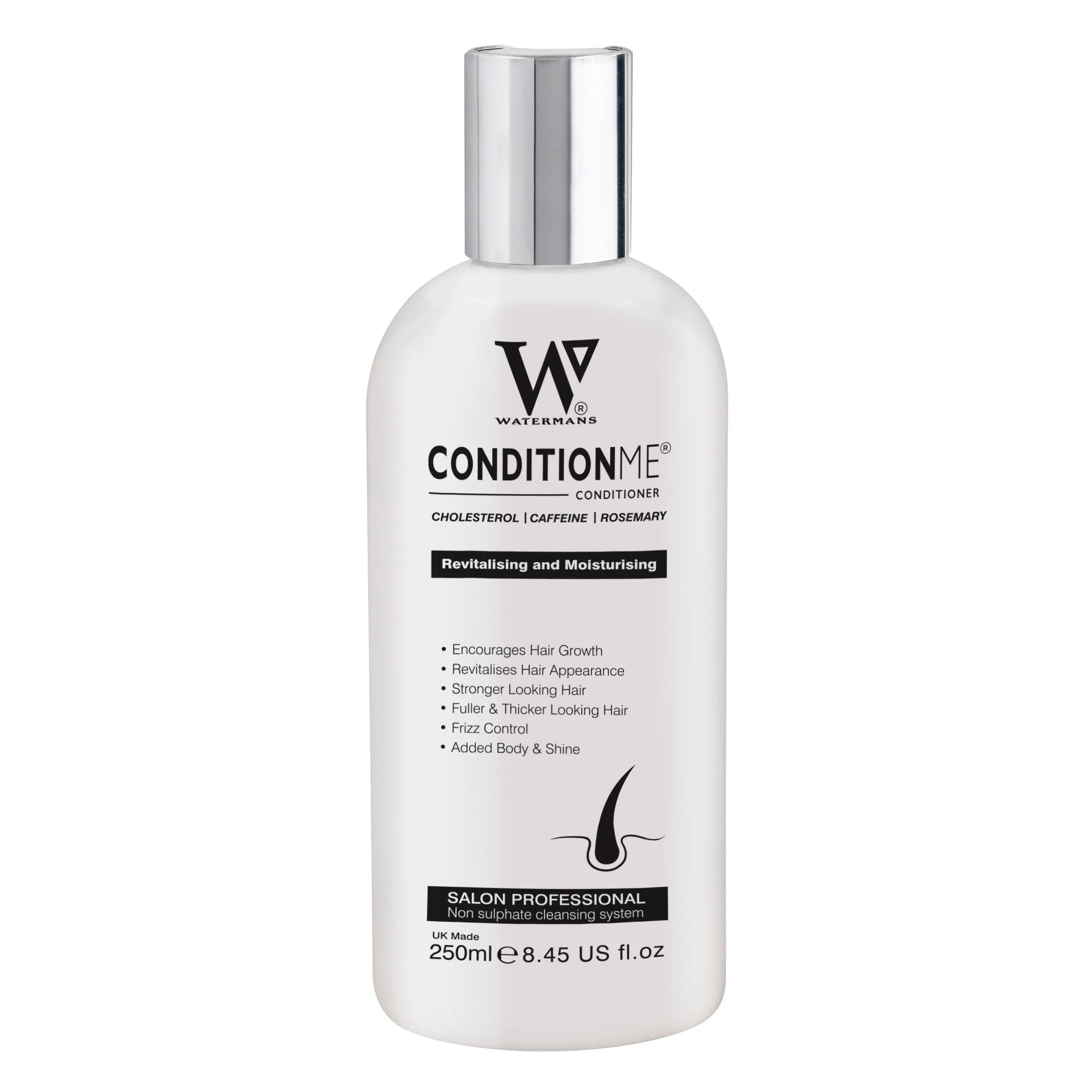
Grow Me® Hair Growth Shampoo £14.95
A sulfate free daily shampoo built around rosemary, caffeine, biotin and niacinamide. Cleanses without stripping and supports a comfortable scalp environment, which is the honest version of what people hope oregano will do.

Grow More® Leave-In Scalp Elixir £25.50
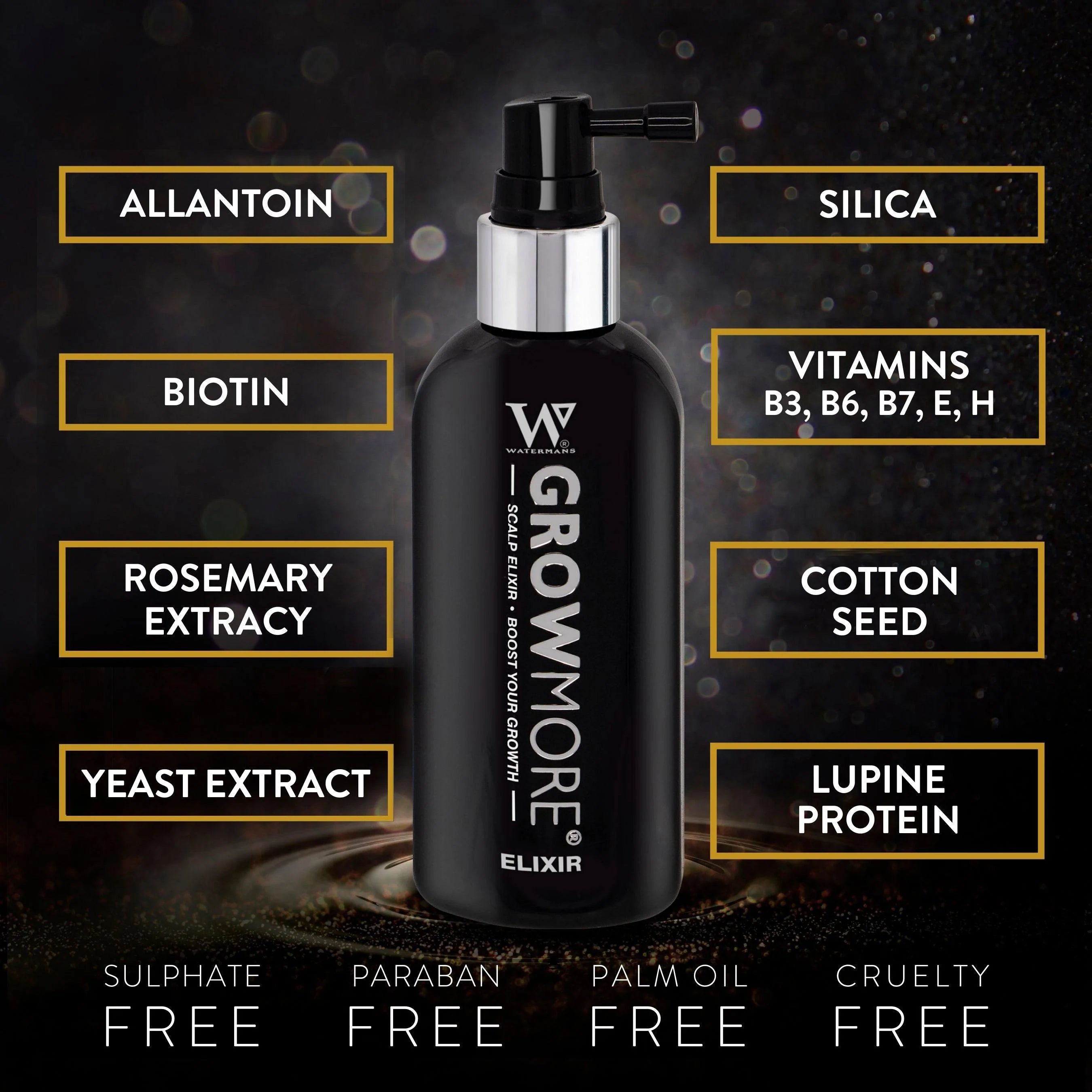
A leave in scalp elixir for lower density areas along the parting and crown. Formulated to be left on the scalp safely, which is exactly what an undiluted essential oil is not.

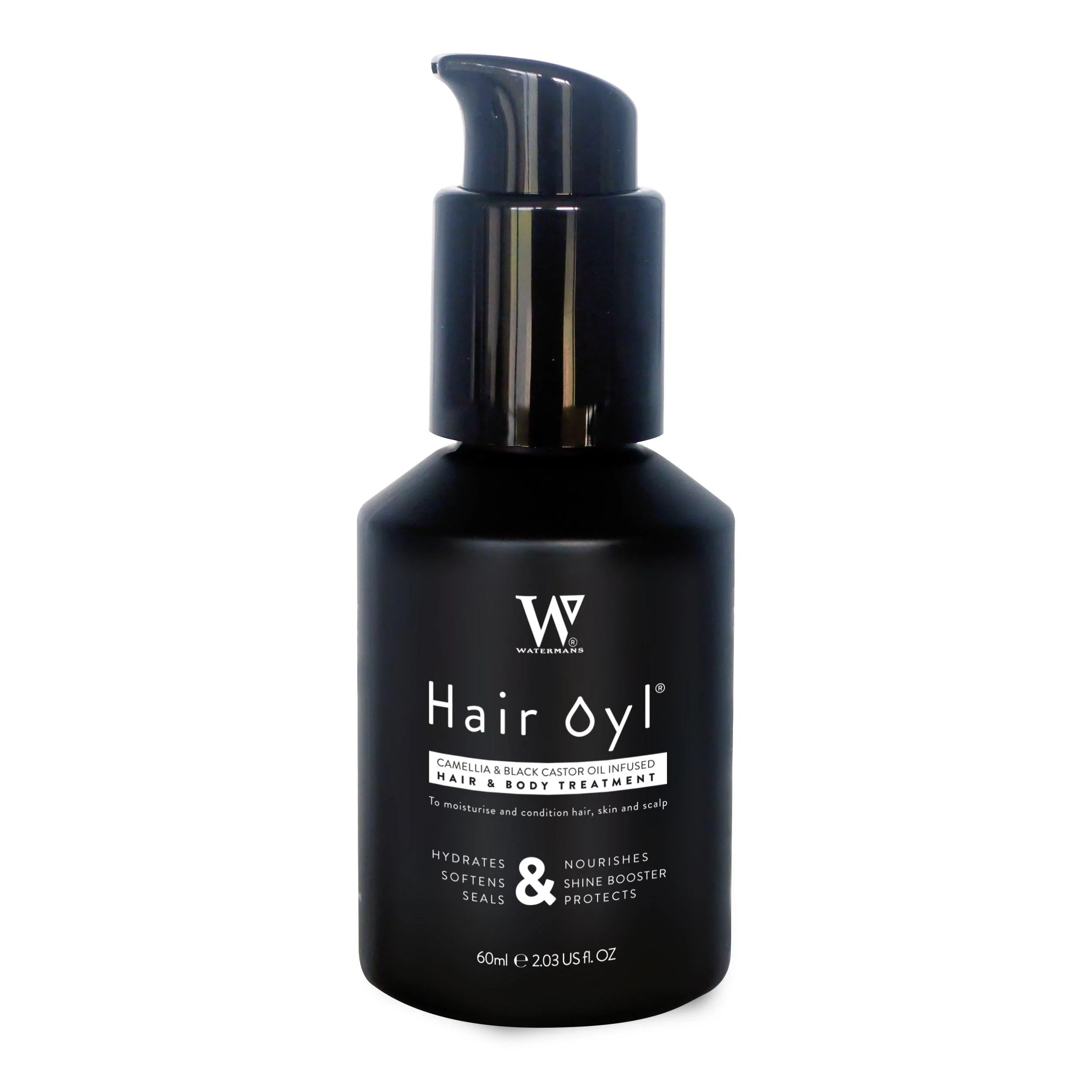
Camellia & Black Castor Hair & Body Oil £24.95
A camellia and black castor oil blend for the lengths and ends. If you want an oil in the routine, this is the low risk way to have one, and it doubles as a pre wash treatment.
Grow Me shampoo is vegan. Watermans products are made in the UK, and we have sold over 6.5 million bottles since 2012.
Frequently asked questions
Is oregano for hair growth backed by any research?
No. There is no published human trial testing oregano for hair growth. The research that exists covers oregano oil's antimicrobial and antifungal activity in laboratory settings, which is a scalp comfort finding rather than a hair density finding.
Can I put oregano oil directly on my scalp?
No. Oregano essential oil is one of the most irritating essential oils on skin and can cause chemical burns when applied neat. Dilute it to 0.5 to 1 percent in a carrier oil, which is about one to two drops per tablespoon, and patch test 24 hours beforehand.
How long would I need to use it to see anything?
Because there is no evidence it changes hair density, there is no meaningful timeline to give. If you are using it for scalp comfort, you would expect to notice whether it suits your skin within two or three uses. Any change in the hair itself takes months and is far more likely to reflect the hair cycle than the herb.
Is oregano oil safe during pregnancy?
Avoid it. There is not enough safety data on topical oregano essential oil in pregnancy or breastfeeding, and the sensible default with a potent phenolic oil is to leave it out.
Does drinking oregano tea help hair?
There is no evidence that it does. Oregano tea made from the dried culinary herb is a mild aromatic drink with a small polyphenol content. It is harmless in normal amounts and it is not a hair strategy.
Will oregano oil help dandruff or a flaky scalp?
It has antifungal activity against the yeast associated with flaking in laboratory studies, so there is a plausible mechanism, but it has not been tested properly on people for this. A dedicated anti flaking shampoo from a pharmacy is a better first step, and a pharmacist can point you to one.
Is oregano safer than rosemary oil for the scalp?
No, the opposite. Rosemary oil is milder, is normally used at 2 to 3 percent dilution, and has at least some human research behind it. Oregano is more irritating and has none.
My hair is shedding a lot. Should I try oregano first?
No. Sudden heavy shedding usually points to a trigger such as illness, a nutritional gap, a thyroid problem or major stress in the previous two to three months. Work out the trigger with your GP first, because that is what changes the outcome. If your question is about products or a routine rather than a medical one, you can talk to Gail Waterman, our co-founder, as an AI avatar on the Watermans homepage.
What is the bottom line on oregano for hair growth?
Oregano is a serious antimicrobial herb with a genuine place in food science and no demonstrated place in hair growth. Considering oregano for hair growth is reasonable curiosity; acting as though it thickens hair is not supported by anything published. If you like the idea, dilute it properly, patch test it, use it sparingly for scalp comfort and judge it on how your scalp feels rather than on what your hairline does. Then put your real effort into the boring things, gentle washing, conditioning, heat protection and looking honestly at whether you are dealing with loss, shedding or breakage, because that is where the visible difference actually comes from.
If you want a straightforward starting point rather than a shelf of products, that is the Grow Me hair growth shampoo. Vegan and made in the UK.
Sources and references
- NHS, Hair loss, overview of causes and when to seek help.
- NICE Clinical Knowledge Summaries, Male pattern hair loss, primary care guidance on assessing pattern hair loss.
- British Association of Dermatologists, public information leaflets on hair and scalp conditions, including contact dermatitis from topical products.
- National Center for Complementary and Integrative Health, aromatherapy and essential oil safety, on dilution and skin sensitisation.
- European Medicines Agency, herbal medicinal products, which record no approved hair indication for Origanum vulgare.