How to Use Sage for Hair: Rinses, Benefits and Safety
If you want to know how to use sage for hair, the honest answer is that it is a rinse, not a growth product. You steep dried or fresh sage leaves in just boiled water, let the infusion cool completely, then pour it through clean hair as the last step of a wash and leave it in. It can leave the scalp feeling calmer and dark hair looking slightly deeper in tone. It will not change what your follicles are doing.
Our hair growth shampoo
Grow Me® Hair Growth Shampoo, £14.95. A sulphate free daily shampoo that supports a healthy scalp environment and helps reduce breakage, so lengths hold on and look fuller.
Key Takeaways
- The short version of how to use sage for hair: steep the leaf, cool the infusion completely, pour it through clean hair and leave it in.
- There is no published human trial showing sage changes hair density. Anyone telling you otherwise is selling something.
- What it can honestly offer is a calmer feeling scalp, a little slip, and a subtle deepening of tone on already dark hair.
- Sage contains thujone. Keep it topical and occasional, and do not drink strong sage preparations or use sage essential oil neat on skin.
- Work out whether you have hair loss, hair shedding or hair breakage before you buy anything. The three need completely different responses.
- Patch test behind your ear and wait twenty four hours. Botanical does not mean hypoallergenic.
What is sage, and what is actually in it?
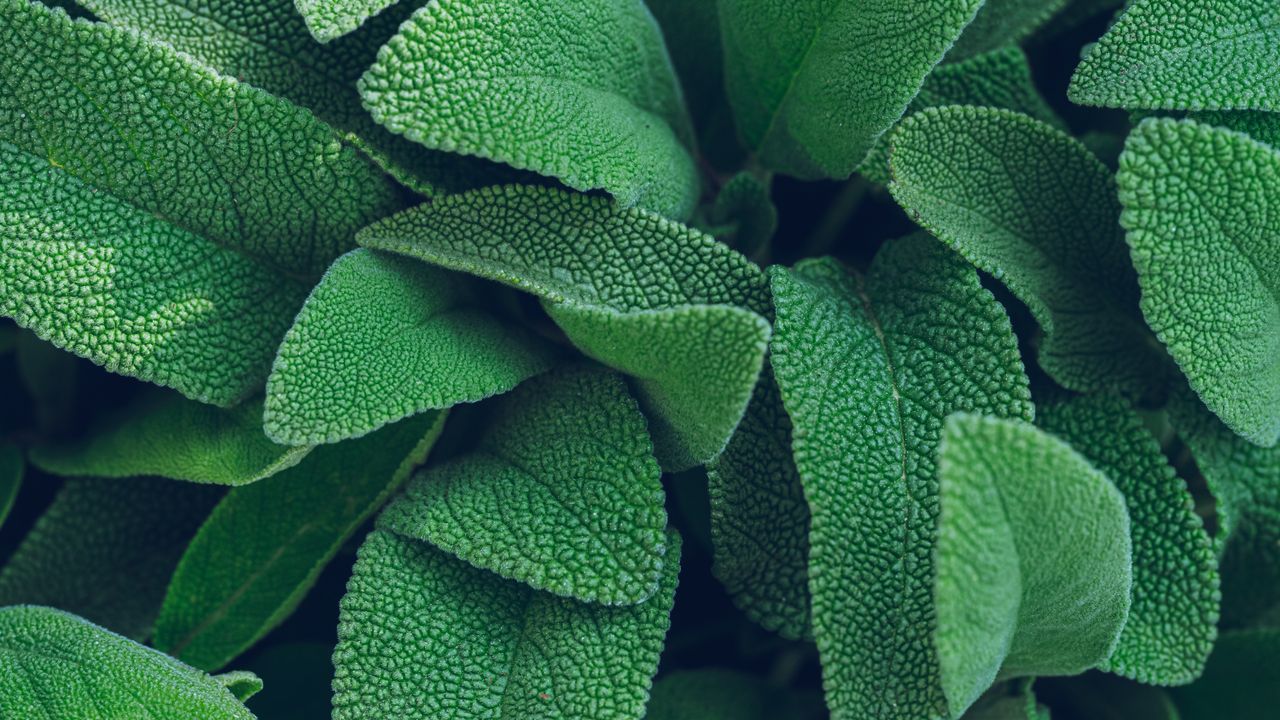
Common sage is Salvia officinalis, a woody Mediterranean herb from the mint family. The leaves carry a volatile oil built mostly from thujone, camphor, cineole and borneol, plus a group of non volatile compounds including rosmarinic acid and carnosic acid. Those last two are the ones cosmetic chemists find interesting, because both are antioxidants and rosmarinic acid in particular has been studied for its effect on irritated skin.
Sage is closely related to rosemary, and the two share carnosic acid. That family resemblance is why sage keeps appearing in hair folklore that really belongs to rosemary. It is worth being precise about this, because the research on the two plants is not interchangeable and the volume of it is very different.
Sage leaf is also a mild colourant. Steeping it produces a brownish liquid, and repeated use builds a faint deepening of tone on dark hair. On light or grey hair the result is unpredictable and can read as dull, which is why a strand test matters here.
Does sage make hair grow?
No. Most people looking up how to use sage for hair are really asking whether it will thicken it, and on that the answer is no. There is no published human trial showing that a sage rinse, a sage oil or a sage supplement increases hair count, hair density or growth rate. When you strip the claims back, the evidence for sage on hair falls into three buckets, and none of them is a growth study. The same question is asked of a more popular pairing in our guide to what rosemary and mint really do for hair.
The first bucket is laboratory antimicrobial work. Sage oil has been tested in a dish against organisms that affect hair and scalp, including a study of essential oils against Trichosporon ovoides, the yeast behind white piedra, and separate in vitro work on the activity of plant volatile oils against head lice. Both are real findings. Neither tells you what happens when a cooled leaf infusion meets an intact human scalp.
The second bucket is mechanistic chemistry. Carnosic acid, which sage shares with rosemary, has been reviewed for its theoretical relevance to hair loss pathways. A mechanistic review is a hypothesis about why something might be worth testing. It is a starting line, not a result.
The third bucket is tradition, which deserves respect as tradition and nothing more. Sage rinses have been used for generations for shine and for darkening greying hair. That is a cosmetic use, and on that ground sage does fine.
The test to apply to any herbal hair claim. Ask whether the study was done in a dish, in an animal, or on human scalps, and whether the thing tested was the same preparation you are about to use. A concentrated extract in a petri dish is not a mug of cooled sage tea.
Hair loss, hair shedding or hair breakage: which do you actually have?
This matters more than any rinse, because the three problems look similar in the plughole and respond to completely different things. Sorting this out first is the single most useful thing on this page.
Hair loss is a follicular problem. The follicle itself is producing thinner, shorter, weaker fibres over months and years, or has stopped producing altogether. You see it as a widening parting, a receding temple, or scalp showing through where it did not before. A rinse cannot touch this.
Hair shedding is a cycle problem. A larger than usual share of follicles has been pushed into their resting phase at the same time, typically two to four months after a trigger such as illness, surgery, a crash diet or childbirth. The hairs that come out are full length with a small pale bulb at the root. The follicle is intact and the cycle usually rights itself over six to twelve months.
Hair breakage is a fibre problem. The hair is snapping somewhere along its length, so what you find is short broken pieces with no bulb, often with split or frayed ends. Heat, bleach, tight styling and rough handling cause it. This is the one that cosmetic care genuinely helps, and it is also the one most often mistaken for hair loss, because breakage at the hairline mimics thinning almost exactly.
| What you see | Most likely | Will a sage rinse help? |
|---|---|---|
| Full length hairs with a pale bulb, lots of them, started a few months after a life event | Shedding | No. Time and addressing the trigger do the work. |
| Short broken fragments, no bulb, split ends, hair feels rough | Breakage | Marginally. Gentler handling and conditioning matter far more. |
| Widening parting, scalp visible, gradual over a year or more | Hair loss | No. Worth raising with your GP. |
| Itching, flaking, tightness, no obvious change in density | Scalp irritation | Possibly, as comfort. See a GP if it persists. |
If you are unsure which of the three you have, photograph the same parting in the same light once a month. Hair changes far too slowly to judge from memory, and a phone camera is more honest than a bathroom mirror at eight in the morning. Our guide to everyday habits that reduce breakage covers the handling side in more detail.

How to use sage for hair: what are the steps?
Here is how to use sage for hair in the plainest version there is. The elaborate methods circulating online add steps without adding anything useful.
- Measure. Two tablespoons of dried sage leaf, or a generous handful of fresh leaves, to 500ml of water. More than that does not make it work better, it just stains more.
- Steep. Pour just boiled water over the leaves in a heatproof jug. Cover it, which keeps the volatile oils in rather than letting them drift off with the steam, and leave it for twenty to thirty minutes.
- Strain and cool completely. Strain through a fine sieve or a square of muslin. Let it come down to room temperature or cooler. A warm rinse on the scalp is uncomfortable and pointless.
- Wash first. Shampoo and condition as normal, then rinse the conditioner out. A sage rinse goes onto clean hair, not dirty hair, and not instead of washing.
- Pour it through. Tip your head forward over the bath and pour slowly, catching the run off in a bowl and pouring it through a second and third time. Work it over the scalp with your fingertips, not your nails.
- Leave it in. Squeeze out the excess and do not rinse it away with plain water. Dry as usual.
- Repeat at most once or twice a week. Daily use is where staining, dryness and irritation start.
Store any leftover infusion in the fridge and use it within three days. It contains no preservative, so it will grow bacteria and mould at room temperature far faster than people expect. If it smells sour or looks cloudy, pour it away.
One useful variation: a tablespoon of apple cider vinegar in the cooled infusion closes the cuticle and adds shine. If you wanted a scalp massage rather than a rinse, a plain carrier oil is the better vehicle, and our piece on what argan oil really does for hair explains why the carrier does most of the work.
Get a discount on the dry and irritated scalp range
Join the Watermans mailing list and we will email a discount code straight to your inbox, so you can try the dry and irritated scalp range for less. Made in the UK, over 6.5 million bottles sold since 2012.

What can a sage rinse honestly do for your scalp?
Three things, all modest, all cosmetic.
It can make an itchy scalp feel calmer. Rosmarinic acid is an anti irritant, and a cool liquid poured over an irritated scalp soothes in its own right regardless of what is dissolved in it. If your scalp feels tight after washing, this is a cheap thing to try. If it is genuinely flaking, red or sore, that is a job for a pharmacist or a GP rather than a herb.
It adds a little slip and shine. Any acidic or tannin bearing rinse flattens the cuticle slightly, and flatter cuticles reflect more light. This is the same mechanism behind a vinegar rinse and behind a cold final rinse. It is real, and it is temporary.
It can subtly deepen the tone of dark hair. With repeated use, sage leaves a faint brown cast. People with dark hair going grey sometimes use it to soften the contrast at the roots. It is not a dye, the effect washes out over a few weeks, and on blonde or white hair it can look muddy.
What it cannot do is change follicle behaviour, alter the hair cycle, or rebuild a damaged fibre. Nothing you rinse out of a jug does that. If your scalp is the thing that keeps bothering you, our guide to keeping your scalp healthy for longer, stronger hair goes further into routine and washing frequency.
Is sage safe to use on hair and skin?
For most people, a cooled leaf infusion used once or twice a week on the scalp is low risk. Before you settle on how to use sage for hair week to week, though, three real cautions are worth stating plainly rather than burying.
Thujone. Sage leaf volatile oil is high in thujone, which is neurotoxic at sufficient dose. European regulators set limits on thujone in food and herbal preparations, and the herbal monograph on sage leaf restricts how much should be taken internally and for how long. An occasional dilute rinse on intact scalp skin is a very different exposure from drinking strong sage tea daily, and it is the internal route that carries the documented risk.
Essential oil is not the same thing as an infusion. Sage essential oil is concentrated many times over and should never go on the scalp neat. If you want to use it at all, it belongs at a low percentage in a carrier oil, and clary sage, a different species, is the one usually recommended for topical cosmetic use because its thujone content is far lower.
Allergy. Plants are among the more common causes of allergic contact reactions in cosmetics, and mint family plants are no exception. Patch test a small amount behind your ear, leave it twenty four hours, and check for redness or itching before you pour it over your whole head.
Do not use sage preparations if you are pregnant or breastfeeding without asking a pharmacist or midwife first, and do not give sage rinses or sage tea to children. If you have epilepsy, thujone containing preparations are specifically cautioned against. When in doubt, ask a pharmacist. They will answer this for free.
How does sage compare with other herbal hair rinses?
Sage is one of a family of kitchen rinses that get recommended interchangeably online, which is unhelpful because they do genuinely different things.
| Rinse | Best for | Watch out for |
|---|---|---|
| Sage | Scalp comfort, faint deepening of dark tone | Staining light hair, thujone if taken internally |
| Rosemary | Scalp comfort, the most studied of the group | Scalp tingling and irritation if made too strong |
| Apple cider vinegar | Shine, cuticle smoothing, removing product build up | Dryness and colour fade if used undiluted or too often |
| Green or black tea | Shine, mild tone deepening | Tannins can feel drying on already dry hair |
| Chamomile | Very subtle brightening on fair hair | Does nothing visible on dark hair |
Deciding whether and how to use sage for hair really comes down to the outcome you want. Shine and build up point to vinegar. Scalp comfort points to sage or rosemary. Tone points to sage on dark hair or chamomile on fair. None of them points to density.

Where does cosmetic hair care fit alongside a sage rinse?
In one honest place: looking after the hair you already have. A rinse is a nice finishing step, but the things that decide whether your hair looks thick in six months are how gently you wash it, how well you condition it, and how much heat and tension you put it through. Those are the levers worth pulling.

Grow Me® Shampoo · £14.95
Sulfate free, with rosemary, caffeine, biotin and niacinamide. A gentle everyday cleanse is the sensible base under any herbal rinse, and it will not strip a sage rinse straight back out of dark hair.

Condition Me® Conditioner · £13.95
Reduces breakage so more of your length survives to be seen. If you are only going to add one thing to a wash routine, make it this rather than the rinse.

Camellia & Black Castor Hair & Body Oil · £24.95
If what you actually wanted from sage was a scalp massage rather than a rinse, an oil is the better vehicle. A few drops through the mid lengths also takes the edge off any dryness a rinse leaves behind.
Made in the UK, and over 6.5 million bottles sold since 2012. If you want the ordering of a full wash routine spelled out, our step by step on how to use conditioner properly is the place to start.
Frequently asked questions
How often should you use a sage rinse on hair?
Once or twice a week is plenty. Daily use is where dryness, staining and scalp irritation tend to start, and there is no benefit to going more often.
Do you rinse sage water out of your hair?
No. A sage rinse is a leave in step. Pour it through clean, conditioned hair as the final stage of your wash, squeeze out the excess and dry as usual.
Will sage darken grey hair?
It can deepen the tone of dark hair slightly with repeated use, which softens the contrast at grey roots. It is not a dye, the effect is subtle and it washes out over a few weeks. On blonde or white hair it can look muddy, so strand test first.
Is sage or rosemary better for hair?
Rosemary has more research behind it and is the better first choice for scalp comfort. Sage is the better choice if you also want a faint deepening of dark tone. Neither has been shown to change hair density in a human trial.
Is sage safe during pregnancy?
Ask a pharmacist or midwife before using sage preparations in pregnancy or while breastfeeding. Sage contains thujone, and both internal use and concentrated essential oils carry specific cautions.
Can a sage rinse cause hair loss?
Not in itself. It can dry the hair if used too often or made too strong, and dry hair snaps more easily, which reads as loss but is actually breakage. Keep it to once or twice a week and follow with conditioner.
Sources & References
- Saxena S, Uniyal V, Bhatt RP. Inhibitory effect of essential oils against Trichosporon ovoides causing Piedra Hair Infection. Brazilian Journal of Microbiology, 2012. PubMed 24031963. In vitro only.
- Limoncu ME, Balcioğlu İC, Gümüş Y, et al. In vitro Investigation of the Pediculicidal Activities of the Volatile Oil Components of Some Medical Plants Raised in Turkey. Türkiye Parazitoloji Dergisi, 2017. PubMed 29318991.
- Singh P, et al. Therapeutic Potential of Carnosic Acid in Alopecia: A Mechanistic Perspective. Planta Medica, 2025. PubMed 40780265. A mechanistic review, not a clinical trial.
- European Medicines Agency, Committee on Herbal Medicinal Products. Community herbal monograph on Salvia officinalis L., folium, on thujone content and limits on internal use. ema.europa.eu
- NHS. Hair loss, on when scalp and hair changes should be seen by a GP. nhs.uk
What is the bottom line on how to use sage for hair?
Knowing how to use sage for hair is genuinely simple: steep the leaf, cool it fully, pour it through clean hair as the last step and leave it in, once or twice a week. Expect a calmer feeling scalp, a bit of shine, and on dark hair a faint deepening of tone. Do not expect it to change density, because no human study says it will, and the honest sellers do not claim it does. Work out first whether you are dealing with hair loss, shedding or breakage, take the heat and tension out of your routine, and see your GP if your parting is genuinely widening. The rinse is a pleasant finishing touch on top of that, and it is fine for it to be exactly that. If your question is about products or a routine rather than a medical one, you can talk to Gail Waterman, our co-founder, as an AI avatar on the Watermans homepage.
The shampoo is the step you actually repeat, which is why the Grow Me hair growth shampoo is the one worth getting right. Made in the UK, with over 6.5 million bottles sold since 2012.
Watermans products are 100% cosmetic and do not treat medical hair loss. Individual results may vary.