Trichologists Exeter: Hair Gummies, Biotin and What the Evidence Shows
Hair gummies are often the first thing people buy when their hair starts to look thinner, long before they ask anyone for advice.
If you are searching for trichologists Exeter because your hair looks thinner and you are wondering whether to try biotin or hair gummies first, the research is clear on one point: correcting a genuine shortfall is what matters, and there is little good evidence that extra biotin or gummies do anything for hair when your levels are already normal. High-dose biotin can also distort some blood test results, and too much vitamin A or selenium is linked to shedding. Start with food, get heavy shedding checked by your GP, then see a registered trichologist if it carries on.
Our hair growth shampoo
Grow Me® Hair Growth Shampoo, £14.95. A sulphate free daily shampoo that supports a healthy scalp environment and helps reduce breakage, so lengths hold on and look fuller.
Key takeaways
- A 2017 review found 18 published cases of biotin helping hair or nails, and every one involved an underlying problem such as a deficiency. The authors found no good evidence for healthy people.
- The NHS says bowel bacteria make biotin and that 0.9mg or less a day from supplements is unlikely to cause any harm.
- The US Food and Drug Administration warns that biotin in supplements can interfere with certain lab tests and give wrong results that may go unnoticed.
- More is not better: in a 2010 US outbreak, a supplement holding 200 times its labelled selenium caused hair loss in 72% of 201 people.
- The NHS says losing 50 to 100 hairs a day is normal and advises seeing a GP before a commercial hair clinic, so save trichologists Exeter for shedding or thinning that lasts once your blood results are back.
Do hair supplements work if you are not deficient in anything?
Hair supplements have very little good evidence behind them for people who are not deficient in anything, because the studies that show a benefit almost always involve someone who was short of a nutrient to begin with, and correcting a genuine shortfall is a very different thing from topping up levels that were already normal.
Biotin is the clearest example. A 2017 review in Skin Appendage Disorders by Patel, Swink and Castelo-Soccio searched for every published case of biotin being used for hair or nails and found 18. In every case the person had an underlying reason for poor hair or nail growth, such as an inherited or acquired biotin deficiency or a rare hair shaft condition. The authors concluded that the evidence was not sufficient to support biotin for healthy people.
A 2017 review of diet and hair loss by Guo and Katta, in Dermatology Practical & Conceptual, reached the same place from a wider angle. Where someone is genuinely deficient, the deficiency should be corrected. Where there is no deficiency, research on extra supplements is lacking, and the authors point out that biotin deficiency is rare because gut bacteria usually make enough. A 2019 review by Almohanna and colleagues, covering vitamins A, B, C, D and E plus iron, selenium and zinc, went further and noted that biotin deficiency in healthy people eating a normal diet has never been reported.
| Your situation | What the evidence suggests | Sensible first step |
|---|---|---|
| A blood test has confirmed low iron, B12, folate or vitamin D | Correcting a confirmed shortfall is worthwhile, according to Guo and Katta | Follow your GP's advice on which product and how much |
| Restricted diet, such as vegan or very low calorie | Higher risk of shortfalls; the British Association of Dermatologists says supplements are worth considering | Check the gaps with your GP before buying anything |
| Varied diet and no other symptoms | Little evidence that extra biotin or gummies change anything | Food first, and keep the money |
| Taking two or three supplements at once | Overlapping labels can push vitamin A or selenium past NHS limits | Add up every label before adding another |
How much biotin do you need, and how much is in a hair gummy?
Most people need no extra biotin at all, because the NHS says the bacteria living naturally in the bowel make biotin, that it is found at low levels in a wide range of foods, and that taking 0.9mg or less a day in supplements is unlikely to cause any harm to an adult.
Biotin, also called vitamin B7, helps the body make fatty acids. The NHS notes that it is not even clear whether we need any additional biotin from the diet, and says there is not enough evidence to know what taking high daily doses might do. The Almohanna review adds that many hair, skin and nails supplements far exceed the recommended daily intake of biotin, so the label figure is the one to read.
Labels are where people trip up. Biotin is usually listed in micrograms (µg), and 0.9mg is the same as 900µg. Check the amount per daily serving rather than per gummy, because many gummies are taken two at a time, and add any biotin in a multivitamin or a hair, skin and nails product you already take. If the total is well above 900µg, you are into the range the NHS says has not been studied enough.
Reading a gummy label in 30 seconds
Find the daily serving size, then the biotin, vitamin A, selenium and iron figures. Compare them with the NHS figures in the table further down. Watch for 1000µg, which is 1mg of biotin, and for vitamin A listed as retinol, which counts towards the 1.5mg daily ceiling the NHS gives for food and supplements combined.
Why can high-dose biotin distort some blood test results?
High-dose biotin can distort some blood test results because many laboratory tests use biotin as part of their chemistry, and the US Food and Drug Administration warns that biotin in dietary supplements can significantly interfere with certain tests and cause incorrect results that may go undetected by the people reading them.
The FDA says some test makers have since reduced the problem in their assays but others have not, and it has continued to receive reports of biotin causing falsely low troponin results. Troponin is a blood test used when heart damage is suspected, so a wrong answer there matters far more than anything to do with hair. The Almohanna review describes the same effect in hair research terms: high biotin intake can cause falsely high or falsely low laboratory results, which it calls dangerous. Our guide to fda-approved hair growth products is the place to go next on that.
Shedding is exactly the situation in which a GP may order blood tests, so a hair gummy can end up clouding the very results meant to explain your shedding. Before any blood test, tell the GP, practice nurse or whoever takes your blood about every supplement you take, including gummies and multivitamins, and ask whether you should pause the biotin beforehand and for how long.

Before any blood test
Write down every supplement you take with its daily amount, including hair gummies, multivitamins and fish liver oil. Hand the list over when the blood is taken, and ask whether any of it could affect the tests being run. This takes two minutes and can save you a repeat test.
Is your hair shedding, breaking or genuinely thinning?
Hair that comes out whole with a small pale bulb at the root is shedding, short snapped pieces with no bulb are breakage, and a widening parting, receding hairline or bald patches point to genuine hair loss, and shedding is the one with the clearest link to diet, weight loss and nutrient levels.
- Hair shedding. Whole hairs fall out at the end of their growth cycle. The NHS says losing 50 to 100 hairs a day is normal. The British Association of Dermatologists (BAD) explains that normally about 15% of scalp hair is in the shedding phase, rising to 30% or more in telogen effluvium, often around 3 months after a trigger. Its list of triggers includes marked weight loss and extreme dieting.
- Hair breakage. The fibre snaps somewhere along its length and the follicle is untouched. Heat, bleach and rough detangling are the usual causes, and a supplement cannot mend a strand that has already snapped.
- Hair loss. The follicle itself changes, as in pattern hair loss, or hair is lost in patches. That needs a conversation with your own GP rather than a trip to the vitamin aisle.
Save a few days of hairs from your brush and look at the root ends. Mostly full-length hairs with a bulb suggest shedding, which is where a food or blood check makes sense. Our guide to what causes telogen effluvium walks through the triggers and the usual timeline.

Which nutrients matter most for hair, and which foods provide them?
The nutrients with the clearest links to hair are iron, protein, vitamin B12, folate, vitamin D, zinc and selenium, and the NHS says a varied, balanced diet covers most of them for most adults, with vitamin D in autumn and winter the main exception, when everyone is advised to consider a daily 10 microgram supplement.
DermNet's advice for shedding follows the same food-first line: a nutritious diet with plenty of protein, fruit and vegetables, plus correcting any abnormal thyroid, iron, vitamin B12 or folic acid levels found on testing. The NHS Eatwell Guide gives the everyday version: at least 5 portions of fruit and vegetables a day, protein from beans, pulses, fish, eggs and meat, and 6 to 8 cups or glasses of fluid.
| Nutrient | NHS daily amount, adults | Food sources the NHS lists | NHS supplement guidance |
|---|---|---|---|
| Iron | 8.7mg for men; 14.8mg for women aged 19 to 49 | Red meat, beans, nuts, dried fruit, fortified breakfast cereals | 17mg or less a day unlikely to cause harm, unless your GP advises more |
| Selenium | 75µg for men; 60µg for women aged 19 to 64 | Brazil nuts, fish, meat, eggs | 350µg or less a day unlikely to cause harm |
| Vitamin A | 700µg for men; 600µg for women aged 19 to 64 | Cheese, eggs, oily fish, milk and yoghurt; liver no more than once a week | No more than 1.5mg a day from food and supplements combined for those at higher risk of weak bones |
| Biotin | No amount needed from diet is clear, as bowel bacteria make it | A wide range of foods, at low levels | 0.9mg or less a day unlikely to cause harm |
| Vitamin D | 10 micrograms a day | Mostly sunlight from late March to the end of September | Everyone should consider a daily supplement in autumn and winter |
If you eat little or no animal food, the gaps are different, and our Ipswich guide to vegan diets, iron and B12 covers plant sources and where a supplement genuinely earns its place.

Get a discount on the thinning hair range
Join the Watermans mailing list and we will email a discount code straight to your inbox, so you can try the thinning hair range for less. Made in the UK, over 6.5 million bottles sold since 2012.
Can too much vitamin A or selenium make your hair shed?
Too much vitamin A or selenium can make hair shed, because both are nutrients where the gap between enough and too much is narrow, and the NHS itself says excess selenium causes selenosis, a condition that in its mildest form can lead to loss of hair and nails.
The starkest example is a 2010 report in Archives of Internal Medicine by MacFarquhar and colleagues at the US Centers for Disease Control and Prevention. A liquid dietary supplement turned out to contain 200 times the selenium printed on its label. Investigators found 201 affected people across 10 states, and 72% reported hair loss. Ninety days later, 29% still had hair loss. The median estimated intake was 41,749µg a day, against the NHS figure of 60 to 75µg that most adults need.
Vitamin A works the same way. Guo and Katta note that over-supplementation of selenium, vitamin A and vitamin E has been linked to hair loss, and the Almohanna review describes a man whose hair came out after he took excess vitamin A supplements. The NHS warns that many multivitamins contain vitamin A, that fish liver oil is high in it, and that anyone eating liver every week should not take supplements containing vitamin A at all.
The stacking problem
A hair gummy, a daily multivitamin and a fish liver oil capsule can each look modest on their own. Together they can double up vitamin A and selenium. If your shedding started after you added a new supplement, mention that to your GP, because the supplement itself may be part of the picture.
When does shedding need a GP blood check before any supplement?
Shedding needs a GP blood check before any supplement when it is heavy, has gone on for more than a few months, or arrives alongside tiredness, heavy periods, breathlessness or other changes in your health, because the British Association of Dermatologists says a blood test can exclude causes such as thyroid conditions and iron deficiency.
The NHS lists iron deficiency among the causes of temporary hair loss and advises seeing a GP to get an idea of what is causing it before thinking about a commercial hair clinic. Its iron deficiency anaemia page names noticing more hair coming out when brushing or washing as a less common symptom, alongside tiredness, shortness of breath and paler skin. The BAD adds that telogen effluvium can come back if an underlying cause such as iron deficiency is not sorted out, and counts shedding that lasts more than 6 months as chronic.
Testing first beats guessing. The NHS says iron doses over 20mg can cause constipation, sickness and stomach pain, while a person who is genuinely low may need a different amount from anything on a supermarket shelf. A result gives your GP the number to work from. For what each test measures and how to ask for it, our Northampton guide to the blood tests to ask your GP for goes into the detail.
Speak to your own GP promptly if
You have smooth bald patches, shiny or scarred skin where hair used to grow, a sore, red or weeping scalp, handfuls of whole hairs coming out, or shedding together with tiredness, breathlessness, heavy periods or weight change. Stop any supplement you suspect and take the label with you.
The same evidence-first approach applies to the other vitamin people reach for in winter, which we set out in our guide to vitamin C and the immune system.
How do you run a sensible supplement trial if you still want one?
A sensible supplement trial means choosing one product, checking every ingredient against the NHS limits, telling your GP or the lab before any blood test, and judging it only after three months or more, because DermNet explains that a resting hair stays in the scalp for about four months before a new hair pushes it out. The same one-change-at-a-time rule applies to home remedies such as rosemary oil, covered in our Poole guide to the rosemary oil evidence. Buying hair products from unfamiliar online sellers deserves similar care, and our Ashford guide to fake and dupe hair care explains how to check a UK label before you buy.
- Test before you trial. If shedding is heavy or you have other symptoms, get the blood results first so a supplement cannot muddy them.
- One product at a time. Two new supplements at once make it impossible to tell which one did anything, good or bad.
- Add up the labels. Keep biotin at or under 0.9mg, selenium under 350µg and vitamin A within the NHS 1.5mg ceiling across everything you take.
- Flag it before bloods. Tell whoever takes your blood about biotin, and ask whether to pause it.
- Photograph your parting. Same spot, same light, once a month. Memory is a poor judge of hair density.
- Set a stop date. If nothing has changed after three to six months, stop rather than doubling the amount.
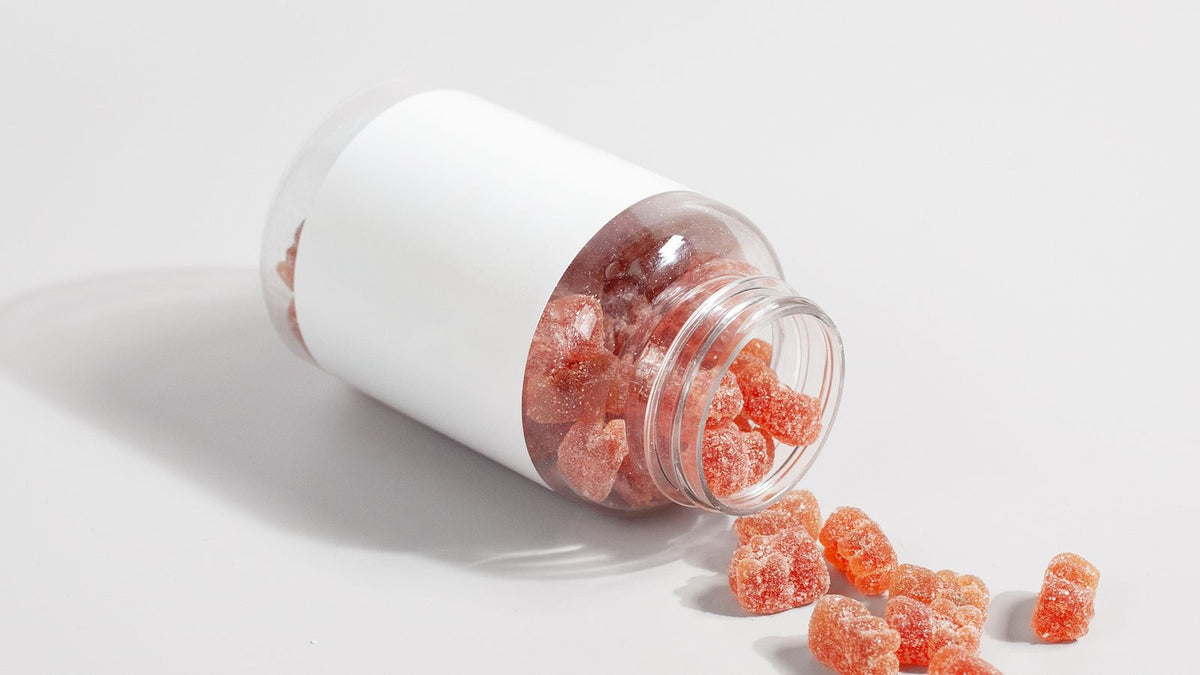
We sell a hair gummy ourselves, and the same rules apply to it: a supplement is a way to fill a diet gap, not a fix for shedding with a medical cause.
What can hair care do while you wait for results?
Hair care cannot change what happens inside a follicle, but a gentle wash and condition routine can make existing hair look fuller, cut breakage along the lengths and keep the scalp comfortable while you wait for blood results or give a diet change the three months or so it needs.
Shedding and breakage often overlap. When hair is already coming out at the root, snapping more of it on a rough brush makes the thinning look worse than it is. Condition every wash, detangle from the ends upwards and keep tight styles to a minimum.

A sulfate-free shampoo with caffeine, niacinamide, rosemary and hydrolysed lupine protein, £14.95 in September 2026. It cleanses the scalp gently and helps thinner hair look fuller. It is a cosmetic, so it will not correct a nutrient shortfall.

A breakage-defence conditioner with cholesterol, shea butter, glycerin and hydrolysed lupine protein, £13.95 in September 2026. Use it on the lengths after every wash to reduce breakage-related hair fall while you work out what is behind any shedding.
When are trichologists Exeter worth paying for after a supplement trial?
Trichologists Exeter based are worth paying for once your GP has checked your bloods and found nothing to explain the shedding, or when thinning, breakage or scalp symptoms carry on after a fair trial of better food and gentler care, because a trichologist can examine your hair and scalp closely and review your whole routine.
A trichologist is a private practitioner rather than part of the NHS, and most are not doctors, so they cannot supply medicines. What a good one adds is time: a detailed history of your diet, supplements, styling and health, a close look at the scalp and hair shaft under magnification, and a clear answer on whether you are dealing with shedding, breakage or something that belongs back with your GP.
To get your money's worth, take:
- A list of every supplement you have taken in the past six months, with the daily amounts from the labels.
- Copies of any recent blood results, so nothing is repeated without reason.
- Your monthly parting photos and a note of when the shedding started.
Ask three questions: will you look at my existing results before suggesting more tests, do you sell supplements yourself and will you tell me if I do not need one, and at what point would you send me back to my GP?
How do you check the trichologists Exeter searches turn up?
Checking the trichologists Exeter searches turn up comes down to professional registration, so look the practitioner up on the Institute of Trichologists' Find a Trichologist register or ask whether they belong to the Trichological Society, and confirm the membership on that body's own website rather than trusting a logo on a clinic page.
The Institute of Trichologists publishes its classes of registration and continuing professional development requirements, which tells you what a listed member has had to meet. Search results in Devon mix registered trichologists with salons, cosmetic clinics and supplement sellers, and the register is the quickest way to tell them apart. Be wary of anyone who proposes a costly supplement plan before seeing your blood results.

We sell hair care, so weigh our view accordingly. Grow Me shampoo is vegan, and Watermans hair care is made in the UK, with over 6.5 million bottles sold since 2012. They are cosmetic: they help hair look and feel healthier and reduce breakage, but they cannot change how a follicle behaves or correct a deficiency.
What are the most frequently asked questions about hair supplements and biotin?
Should I try hair gummies before seeing one of the trichologists Exeter lists?
Not as a first step if your shedding is heavy or you feel unwell. See your GP, who can check iron, thyroid and other levels, and tell them about any supplement first. If your diet is varied and your results are normal, there is little evidence a gummy will change your hair, and a registered trichologist is the better next step.
Does biotin make hair grow faster?
There is no good evidence that it does in healthy people. A 2017 review found 18 published cases where biotin helped hair or nails, and every one involved an underlying problem such as a biotin deficiency or a rare hair shaft condition. Biotin deficiency is rare because bowel bacteria usually make enough.
Do I need to stop biotin before a blood test?
Ask first. The US Food and Drug Administration warns that biotin in supplements can interfere with certain lab tests and give incorrect results that may go unnoticed. Tell your GP, practice nurse or whoever takes your blood about every supplement you take, and ask whether and for how long to pause it.
How much biotin is safe to take?
The NHS says taking 0.9mg or less a day of biotin in supplements is unlikely to cause any harm, and that there is not enough evidence to know what high daily doses do. Check the amount per daily serving, and remember that 0.9mg is the same as 900 micrograms.
Can hair vitamins cause hair loss?
Too much of some nutrients can. The NHS says excess selenium causes selenosis, which in its mildest form can lead to loss of hair and nails, and reviews link excess vitamin A to hair loss too. In a 2010 US outbreak, a supplement with 200 times its labelled selenium caused hair loss in 72% of 201 people.
Which blood tests matter for hair shedding?
Your GP decides based on your symptoms. The British Association of Dermatologists says a blood test can exclude causes such as thyroid conditions and iron deficiency, and DermNet also mentions checking vitamin B12 and folic acid. Mention any supplements before the blood is taken.
How long does a supplement take to show any difference?
Allow at least three months. DermNet explains that a resting hair stays in the scalp for about four months before a new hair pushes it out, so any change takes time to show. If nothing has changed after three to six months, stop rather than taking more.
Is it better to get hair nutrients from food?
For most adults, yes. The NHS says a varied, balanced diet provides enough iron, selenium and vitamin A for most people, with vitamin D in autumn and winter the main exception. The British Association of Dermatologists says supplements are worth considering if your diet is restricted, for example vegan or vegetarian. If you live on the coast, our Torquay guide to sun, sea and chlorine damage covers what salt water, pool water and UV actually do to the hair fibre.
Sources & references
- NHS, Hair loss
- NHS, Vitamin B (including biotin)
- NHS, Vitamin A
- NHS, Vitamin D
- NHS, Iron
- NHS, Other vitamins and minerals (selenium)
- NHS, Iron deficiency anaemia
- NHS, The Eatwell Guide
- Food Standards Agency, Food supplements guidance
- US Food and Drug Administration, Biotin interference with troponin lab tests
- British Association of Dermatologists, Telogen effluvium
- DermNet, Telogen effluvium
- Patel DP, Swink SM, Castelo-Soccio L. A review of the use of biotin for hair loss. Skin Appendage Disord, 2017
- Guo EL, Katta R. Diet and hair loss: effects of nutrient deficiency and supplement use. Dermatol Pract Concept, 2017
- Almohanna HM et al. The role of vitamins and minerals in hair loss: a review. Dermatol Ther (Heidelb), 2019
- MacFarquhar JK et al. Acute selenium toxicity associated with a dietary supplement. Arch Intern Med, 2010
- Dasgupta A. Immunoassay design and biotin interference. Adv Clin Chem, 2022
- The Institute of Trichologists, Find a Trichologist
- The Trichological Society
What is the bottom line on trichologists Exeter?
Biotin and hair gummies make sense when a blood test or a restricted diet shows a genuine gap, and there is little evidence they do anything for hair when your levels are already normal. Tell anyone taking your blood about biotin, keep vitamin A and selenium within NHS limits, and eat for your hair first. If shedding is heavy, see your GP before buying anything, and save trichologists Exeter for thinning or shedding that carries on once your results are back. If your question is about products or a routine rather than a medical one, you can talk to Gail Waterman, our co-founder, as an AI avatar on the Watermans homepage.
For the part of the job that happens outside the body, a gentle hair growth shampoo such as Grow Me cleanses the scalp with caffeine, niacinamide and rosemary and helps thinner hair look fuller, with no label maths required.
Watermans products are 100% cosmetic and do not treat medical hair loss. Individual results may vary.