Trichologists York: Itchy or Sore Scalp After Hair Dye
A scalp that prickles, itches or burns after colouring is usually telling you about the dye, not about your hair.
If you are searching for trichologists York because your scalp itches, stings or feels sore after hair dye, rinse the dye out straight away with lukewarm water and a mild shampoo. Most reactions are mild irritation that settles within days. Swelling of the lips, tongue or throat, or any trouble breathing, means calling 999. A pharmacist can suggest something for a mild rash, your GP comes next if it spreads or lingers, and a registered trichologist helps with scalp or hair-fibre concerns once the reaction has passed.
Our hair growth shampoo
Grow Me® Hair Growth Shampoo, £14.95. A sulphate free daily shampoo that supports a healthy scalp environment and helps reduce breakage, so lengths hold on and look fuller.
Key takeaways
- The NHS says hair dye reactions are fairly common but usually mild, and that symptoms can take up to 72 hours to appear.
- Irritation stings or burns within minutes to hours; an allergy more often brings an itchy, red, sometimes blistered rash hours or days later, as the British Association of Dermatologists describes.
- PPD, found in many permanent dyes, is the usual culprit: in a five-country European study, 0.8% of adults tested were allergic to it, rising to 3.2% among people who had had a black henna tattoo.
- Do a skin allergy test at least 48 hours before every colour, even with a shade you have used for years.
- Swollen lips, tongue or throat, or difficulty breathing: call 999. A mild itch: a pharmacist first. Scalp or hair concerns that linger after the skin settles: the trichologists York searches bring up, checked against a professional register.
How can you tell irritation from an allergic reaction to hair dye?
Irritation from hair dye usually stings, burns or feels tight within minutes to hours of colouring and stays where the dye touched, while an allergic reaction more often brings an itchy red rash, sometimes with blisters or swelling, that appears hours or even days later and can spread beyond the hairline.
The British Association of Dermatologists (BAD) splits contact reactions into these two types in its contact dermatitis leaflet. Irritant contact dermatitis happens when a substance damages the skin directly, and the leaflet says it usually appears within minutes to hours. Allergic contact dermatitis happens when the immune system has learned to recognise a chemical as a threat, and symptoms usually appear within hours or days of contact. Hair dye is named in the leaflet as a common cause of the allergic type. DermNet adds that burning and pain are more common than itch in irritant reactions, and that the two types can happen at the same time, so the labels overlap more than most people expect.
The NHS lists stinging and burning, an itchy rash, dryness, tightness and soreness, and blisters as the common signs of a hair dye reaction. On white skin a rash tends to look red. On brown and black skin the NHS says it may look darker brown, purple or grey, or be harder to see at all, so go by how your scalp feels as well as how it looks in the mirror.
| What you notice | Irritation | Allergic reaction |
|---|---|---|
| When it starts | During colouring or within a few hours | Usually hours to days later; the NHS says up to 72 hours |
| Main feeling | Stinging, burning, tightness | Itching, often intense |
| Where | Where the dye sat, often the parting and hairline | Can spread to the ears, eyelids, face and neck |
| Next time you colour | May not happen again if you change how the product is used | Tends to come faster and stronger, as DermNet explains |
| First step | Rinse, soothe and leave the scalp alone for a few days | Rinse, stop using the dye, and speak to a pharmacist or your GP |
Which chemicals in hair dye cause allergic reactions?
Most allergic reactions to hair dye are caused by PPD (paraphenylenediamine), a colourless chemical found in many permanent and some semi-permanent dyes, together with close relatives such as toluene-2,5-diamine (PTD), which manufacturers often use as an alternative but which the immune system frequently mistakes for PPD.
DermNet explains that PPD only becomes a dye when it reacts with oxygen, which is why permanent kits come as two bottles, and that the partly oxidised form is what sensitises skin. Darker shades contain more PPD than lighter ones, so people who colour dark hair, and hairdressers who apply dye all day, are the most exposed. The American Contact Dermatitis Society named PPD its Contact Allergen of the Year in 2006, and chose toluene-2,5-diamine sulfate for 2025, noting that cross-reactions between the two are common.
How common is PPD allergy? Diepgen and colleagues interviewed 10,425 adults in five European countries and patch tested 2,739 of them: 0.8% were allergic to PPD, although only 0.1% had a positive result clearly linked to their own hair colour. Among people already referred to skin clinics the figure is higher, and a European review by Thyssen and White put it at between 2% and 6%. Both numbers are right; they simply describe different groups of people.
Why "PPD-free" is not the same as allergy-free
Dyes sold as PPD-free often swap in PTD or other para compounds. A 2014 report in the International Journal of Dermatology warned of the potential danger of dyes marketed as free from PPD, and a Groningen study of 8,036 people patch tested over two decades found cross-reactions were common among those sensitised to PPD or PTD. Read the full ingredients list, and do the skin test anyway.
Why can a reaction appear days after colouring, even with a dye you have used for years?
A reaction can appear days after colouring, even with a familiar dye, because hair dye allergy is a delayed immune response that builds with exposure: early contacts may cause no symptoms at all, then once the immune system is primed, later contacts trigger a reaction that arrives sooner and grows stronger each time.
DermNet describes exactly that pattern, and adds that once a reaction subsides, lifelong sensitisation to PPD is likely. In a German analysis of 4,314 people patch tested with PPD, Schubert and colleagues found that 80% of those who reacted had dyed their hair, and 57% of that group went on to develop dermatitis on the scalp. Dyeing hair raised the odds of PPD allergy about sixfold.
The delay catches people out. The NHS says symptoms can take up to 72 hours to appear, and a 2014 BMJ Case Reports article described a 33-year-old woman whose scalp began itching, and whose face then swelled, 3 days after using hair dye, with no earlier history of reacting. She had recovered by the following day after hospital care. DermNet notes that a mild reaction often shows first as an itchy, dry rash on the upper eyelids or the rims of the ears rather than on the scalp, so check those spots in the days after you colour.
How do you do a 48-hour skin allergy test, and how reliable is it?
A 48-hour skin allergy test means dabbing a small amount of the dye on a patch of skin, usually behind the ear or inside the elbow as the pack instructs, then leaving it and watching for itching, redness or swelling for two full days before you colour your hair.
The NHS advises testing at least 48 hours before you use a dye, following the instructions on the packet, and says you can buy a patch test kit to use at home if you think you may be allergic. It also says not to go ahead if you feel unwell or have any reaction after the test.
- Test every time. Repeat it 48 hours ahead of each colour, even for the same shade and brand, because sensitivity can build.
- Follow the pack. Use the method, amount and area the manufacturer describes.
- Leave it alone. Keep the area uncovered and unwashed for as long as the pack says.
- Check twice. Look at 24 and 48 hours for itch, redness, bumps or swelling, remembering that on brown or black skin a reaction may look darker rather than red.
- Any reaction means no. Do not use that dye, and do not colour at all if you feel unwell.
- Tell your colourist. A salon needs to know about any past reaction or black henna tattoo before mixing anything.
The evidence on reliability genuinely pulls in two directions. Coenraads and colleagues designed a standard allergy alert test and found it produced a noticeable reaction on the forearm in 90.5% (38 of 42) of people known to be allergic to PPD, and behind the ear in 93%, with no reactions in 48 people who were not allergic. But when Friis and colleagues bought 40 permanent dyes from 21 manufacturers across 8 European countries, 39 told buyers to self-test, and the instructions varied greatly in where to apply the dye, how much to use, how long to wait and what counted as a reaction. The authors concluded that concerns about safety and validity remain. DermNet also warns that a clear test does not rule out a later reaction, and that the test itself could add to sensitisation. See a clear result as reassuring, not as proof.

Is natural henna or black henna safer than ordinary hair dye?
Pure natural henna, which stains hair an orange or reddish brown, is not known to cause allergic reactions according to DermNet, but black henna is a different product: most so-called black henna contains PPD, often at levels above legal limits, and it can cause severe reactions and leave a lifelong sensitivity to hair dye.
The British Skin Foundation points out that real henna is orange or brown, and that most black henna temporary tattoos are not based on henna at all. PPD is permitted in hair dye, but its use in skin-contact products such as temporary tattoos is illegal in the European Union. In the foundation's survey, three quarters of people did not know black henna contains PPD, and about two thirds of the dermatologists it approached had seen more reactions to hair dye, many in people who had previously had a black henna tattoo.
The numbers back that up. In the Diepgen study, PPD allergy was found in 3.2% of people who had ever had a black henna tattoo against 0.6% of those who had not, and after adjusting for age and gender the odds were about nine times higher. A Dutch study by Vogel and colleagues found that people sensitised through black henna had significantly stronger reactions when later tested. DermNet adds that people sensitised by a tattoo have gone on to react to hair dyes, clothing dyes and even a marker pen.
Labels worth a second look
"Natural", "herbal" and "henna-based" are marketing words, not a promise about what is in the pot. Pure henna, listed as Lawsonia inermis, cannot give a black result on its own, so any dark "henna" hair colour deserves a close read of the ingredients for PPD, PTD or other para compounds. If you have ever had a black henna tattoo, tell whoever colours your hair.
Get a discount on the sensitive scalp range
Join the Watermans mailing list and we will email a discount code straight to your inbox, so you can try the sensitive scalp range for less. Made in the UK, over 6.5 million bottles sold since 2012.
Which symptoms after hair dye mean calling 999 or NHS 111?
Call 999 straight away if your lips, mouth, tongue or throat swell, if breathing becomes fast, wheezy or difficult, if your throat feels tight, or if you feel suddenly confused, faint or dizzy after colouring, because the NHS lists these as signs of a serious allergic reaction that needs hospital care.
Call 999 if, after colouring:
- your lips, mouth, throat or tongue suddenly swell
- you are breathing very fast, wheezing or struggling to breathe
- your throat feels tight or you are struggling to swallow
- your skin, tongue or lips turn blue, grey or pale
- you suddenly feel very confused, drowsy or dizzy, or someone faints and cannot be woken
The NHS says not to drive yourself to A&E. For sudden swelling of the eyelids or face without any breathing trouble, contact NHS 111 or ask your GP surgery for an urgent same-day conversation.
Serious reactions are rare, and the NHS is clear on that. DermNet describes severe hair dye reactions as marked reddening, blistering and swelling of the eyelids, scalp, face and neck, and notes that whole-body reactions such as asthma and anaphylaxis have been reported. The NHS page on angioedema, the medical name for sudden swelling under the skin, names the lips, tongue and eyelids among the areas most often affected, and advises NHS 111 or an urgent GP conversation when part of the body suddenly swells.
What should you do in the first 24 hours after your scalp reacts to dye?
In the first 24 hours after a scalp reaction, wash the dye out thoroughly with lukewarm water and a mild shampoo, stop using that product, keep heat and further chemicals away from your head, and watch closely for swelling, because the NHS says symptoms can keep developing for up to 72 hours.
- Rinse now, and rinse well. The NHS advises washing hair and scalp thoroughly with mild shampoo immediately if you feel you are having a reaction. Use lukewarm water and keep rinsing until it runs clear.
- Leave the rest of the box. Do not finish the colour, top up the roots or try a different shade the same week.
- Cool, do not scratch. A cool, damp flannel can ease stinging. Scratching breaks the skin, and the BAD notes that infected contact dermatitis can lead to impetigo.
- Skip heat and extras. No hot hairdryer, straighteners, dry shampoo, fragranced sprays or oils on the scalp until it has calmed down.
- Ask a pharmacist. For mild symptoms the NHS says a pharmacist can suggest a moisturising cream (emollient) or an antihistamine to ease itching.
- Keep the evidence. Keep the box for its ingredients list, and take a photo morning and evening so you can show how things changed.
If symptoms get worse, the NHS says to see a GP. When a reaction does not go away, a GP can offer stronger options for inflamed skin and may refer you to a dermatologist for a patch test, which pins down the exact chemical involved. For the wider picture on stinging and heat on the head, see our guide on why a scalp burns and how to calm it, and for redness that keeps coming back, our piece on scalp inflammation and finding the trigger.

How should you care for your hair and scalp once a reaction has settled?
Once a reaction has fully settled, care for your hair and scalp by washing with a gentle sulfate-free shampoo, keeping conditioner and masks on the lengths rather than the scalp, introducing one new product at a time with a skin test first, and holding off on more colour until you know which ingredient caused the problem.
DermNet explains that irritants strip oils and natural moisturising factor from the outer layer of the skin, which lets other chemicals in more easily, and the BAD leaflet says irritant reactions depend on how often and how strongly the skin is exposed. A scalp that has just reacted is exactly that kind of weakened barrier, so fewer products and a simpler routine give it the best chance of staying calm. The same caution applies to perm lotion, and our Ellesmere Port guide to perms and body waves on fine or sensitive hair covers what to do if waving lotion stings.
- Wash gently. Lather at the scalp with your fingertips, not your nails, and rinse in lukewarm water.
- Condition the lengths only. Colour can leave the lengths dry, but conditioner does its job there, not on reactive skin.
- One change at a time. Add new products one by one, a few days apart, so you can tell what the scalp likes.
- Skin test ours too. Our shampoo and conditioner contain botanicals such as rosemary, so the same rule applies: test anything new behind the ear first and stop if your scalp stings.

A sulfate-free 250ml shampoo with biotin, caffeine, rosemary and niacinamide. Once your scalp has calmed and passed a skin test, it gives a gentle clean that helps hair look and feel fuller.

A breakage-defence conditioner with cholesterol, shea butter, glycerin and hydrolysed lupine protein, £13.95 in September 2026. Smooth it through coloured mid-lengths and ends, away from the scalp, to reduce breakage and add softness.
For keeping colour bright without extra harshness on the hair, our guide on caring for coloured hair day to day covers washing, heat and sun, and our article on patch testing a new scalp product walks through how to try anything new safely.
Is it shedding, breakage or hair loss after a dye reaction?
Hair that comes away after a dye reaction is usually breakage, meaning short snapped pieces from chemically weakened fibres, or shedding, meaning whole hairs with a small bulb released weeks later, and only occasionally genuine hair loss, where the follicle itself is affected and the scalp changes, which always warrants your GP's opinion. Our East Kilbride guide to telling a temporary shed from ongoing hair loss sets out the same three clues in more detail.
- Hair breakage. The fibre snaps along its length and the follicle is untouched. Colour and bleach weaken the fibre, so short pieces in the sink after colouring are usually breakage.
- Hair shedding. Whole hairs fall at the end of their cycle. The NHS says losing 50 to 100 hairs a day is normal. The BAD explains that normally about 15% of scalp hair is in the shedding phase, rising to 30% or more in telogen effluvium, often around 3 months after a trigger such as illness or significant stress on the body, with the shedding phase lasting 3 to 6 months.
- Hair loss. The follicle itself is damaged or changes. DermNet notes that a severe PPD reaction can be followed by changes in skin colour or, less often, scarring, and any smooth, shiny or scarred patch on the scalp needs a GP to look at it.
| What you see | Breakage | Shedding | Hair loss |
|---|---|---|---|
| Length | Short, uneven pieces | Full length with a small bulb | The change shows on the scalp itself |
| Timing | Days after colouring, when brushing | Around 3 months after a trigger | Gradual, or patches that do not fill in |
| First step | Gentler handling and conditioning | Usually settles; GP if heavy or ongoing | Speak to your own GP |
If breakage or shedding carries on for months after your skin has settled, that is a sensible point to look at the trichologists York has on the professional registers for a closer look at the hair fibre, while anything visible on the scalp itself still goes to your GP first.
Can you colour your hair again after a reaction?
Colouring again after a reaction is possible for some people, but only once the scalp has fully settled and you know what caused it, because the NHS advises avoiding PPD products if you have ever reacted to hair dye or had a black henna tattoo, and suggests a non-permanent dye if a permanent one caused the reaction. If the reaction came from a relaxer or keratin smoothing rather than dye, our Southend-on-Sea guide to chemical straightening burns and breakage covers first aid and safer spacing.
The clearest answer comes from a proper patch test. The NHS says a doctor may refer you to a dermatologist for one, and DermNet notes that people with a clear history of reacting are usually tested with a weaker PPD concentration to avoid a severe blistering response. Once you know the culprit, the options look like this:
- Non-permanent colour. The NHS suggestion after a permanent-dye reaction, though it also notes that some semi-permanent dyes contain PPD, so check the label.
- "PPD-free" dyes. Many rely on PTD, and the 2025 Allergen of the Year paper by Tran and colleagues says cross-reactivity with PPD is common.
- Dyes based on ME-PPD. In a small study of 20 PPD-allergic volunteers, Zahir and colleagues found an absent or reduced response to a dye containing 2-methoxymethyl-PPD in the allergy alert test. Encouraging, but small, and not a green light for anyone whose reaction involved swelling.
- Pure henna. DermNet says it does not cause allergic reactions, but it only gives orange to reddish-brown tones and must be genuinely pure.
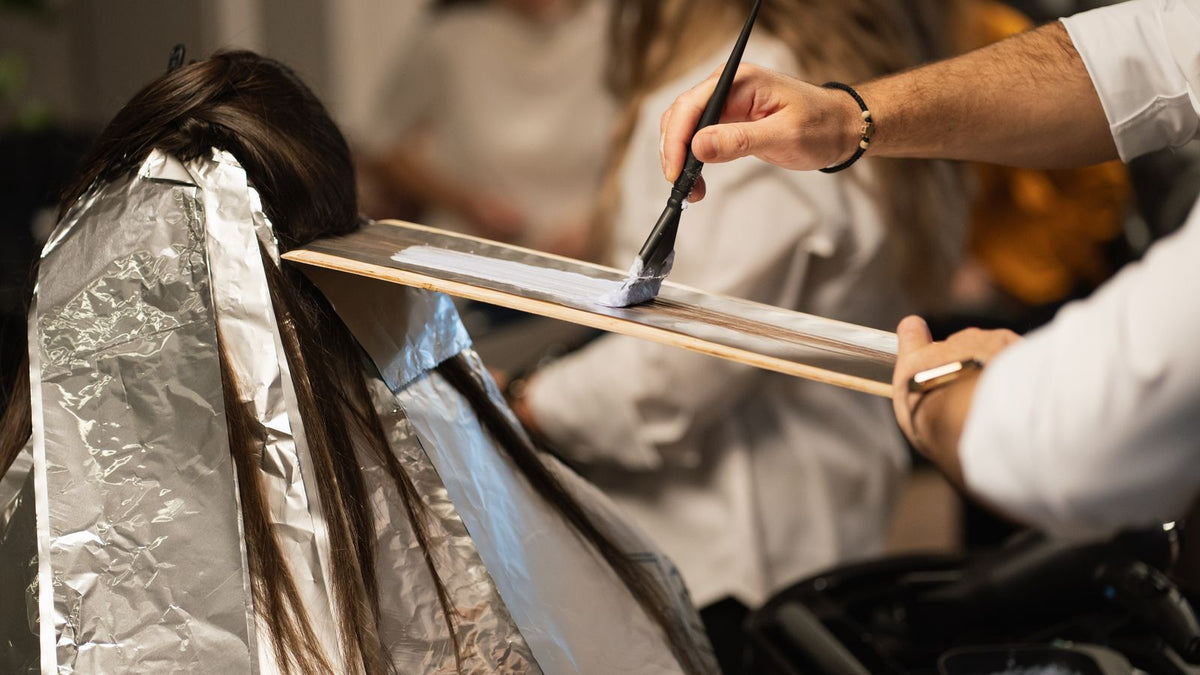
- Colour placed away from the scalp. Highlights in foils or hand-painted lengths cut skin contact, though they do not remove the risk entirely.
If your reaction involved swelling of the face, eyes or throat, do not experiment at home. Speak to your own GP before any dye touches your hair again.
Who should you see in York: a pharmacist, your GP or trichologists York?
In York, as anywhere, match the person to the problem: 999 for swelling of the lips or throat or any breathing difficulty, a pharmacist for a mild itchy rash, your GP when symptoms worsen or linger, and trichologists York practices for ongoing scalp or hair-fibre concerns once the reaction has passed.

| Who | When | What they can do |
|---|---|---|
| 999 | Swelling of lips, tongue or throat; breathing difficulty; collapse | Emergency help; the NHS says do not drive yourself to A&E |
| NHS 111 | Sudden swelling of the eyelids or face without breathing trouble, or you are unsure | Advice by phone or online on where to go next |
| Pharmacist | Mild itch, dryness or tightness | Suggest an emollient or antihistamine, and tell you if you need a GP |
| Your GP | Symptoms getting worse, spreading or not settling | Stronger options for inflamed skin and referral for patch testing |
| Registered trichologist | After the skin has settled: lingering flaking or tenderness, breakage or thinning after colour | Look at scalp and hair under magnification and review your routine and products |
Trichologists are not medical doctors, so an active allergic rash belongs with a pharmacist or GP first. Where the trichologists York searches turn up genuinely earn their fee is afterwards: a scalp that stays flaky or tender, hair that feels brittle after colour, or a routine that needs rebuilding around a known allergy. Check membership before you pay. The Institute of Trichologists keeps a Find a Trichologist register, and the Trichological Society is the other main UK body.
- Which professional body do you belong to, and can I check your entry on its website?
- If this still looks like an active allergy, will you send me back to my GP?
- Do you sell the products you recommend, and can I keep using my own?
We make hair care and run no clinics, so we cannot look at your scalp, and you should weigh our view accordingly. Grow Me shampoo is vegan, and Watermans hair care is made in the UK, with over 6.5 million bottles sold since 2012. They are cosmetic: they help hair look and feel healthier and reduce breakage, but they are not a remedy for an allergic reaction.

What are the most frequently asked questions about hair dye scalp reactions?
Should I see one of the trichologists York lists for an itchy scalp after hair dye?
Not first. Rinse the dye out with a mild shampoo, ask a pharmacist about a mild rash, see your GP if it gets worse, and call 999 for swelling of the lips, tongue or throat or any breathing difficulty. A registered trichologist helps most once the reaction has settled and you still have scalp or hair concerns.
How long does a hair dye reaction take to appear?
The NHS says symptoms can take up to 72 hours to appear. Irritation tends to show during colouring or within hours, while an allergic reaction usually arrives hours or days later. Mild irritation usually calms once the dye is rinsed away; if symptoms get worse, the NHS says see a GP.
Is stinging during colouring normal?
Stinging and burning are among the signs the NHS lists for a hair dye reaction, so it is not something to push through. If your scalp burns while the dye is on, rinse it off early with plenty of lukewarm water and a mild shampoo, and do not use that product again until you know why.
Can I become allergic to a hair dye I have used for years?
Yes. Hair dye allergy builds with exposure, so earlier colours can pass without trouble before a reaction appears. DermNet says lifelong sensitisation to PPD is likely once a reaction has happened, and a German study found dyeing hair raised the odds of PPD allergy about sixfold. Just along the road, our Selby guide covers an itchy scalp with no flakes at all.
Does a clear 48-hour skin test mean I am safe?
A clear test is reassuring but not proof. A standard allergy alert test flagged 90.5% of PPD-allergic people on the forearm, but a survey of 40 dyes found self-test instructions varied greatly between products, and DermNet warns that a clear test does not rule out a later reaction. Shedding that starts two to four months after a new medicine is a different problem again, and we cover how medicine-linked shedding differs from a scalp reaction.
Is black henna safe to use on hair?
No. Most so-called black henna contains PPD, and the British Skin Foundation says its use in skin-contact products such as temporary tattoos is illegal in the EU. Pure henna gives orange to reddish-brown tones. A past black henna tattoo also raises the risk of reacting to hair dye later. If the fibre rather than the scalp is what changed, the mechanics are covered in our guide to bleach, colour and hair damage.
What can a pharmacist suggest for a mild hair dye rash?
The NHS says a pharmacist can suggest a moisturising cream, called an emollient, or antihistamine tablets or cream to ease itching. Take the dye box with you so they can see the ingredients, and ask them whether you need to see your GP.
What does PPD stand for in hair dye?
PPD stands for paraphenylenediamine, a chemical in many permanent and some semi-permanent hair dyes. DermNet says darker shades contain more of it than lighter ones. Close relatives such as toluene-2,5-diamine are often used instead, and cross-reactions between them are common.
Sources & references
- NHS, Hair dye reactions
- NHS, Angioedema
- NHS, When to use NHS 111
- NHS, Hair loss
- British Association of Dermatologists, Contact dermatitis
- British Association of Dermatologists, Telogen effluvium
- DermNet, Allergy to paraphenylenediamine
- DermNet, Black henna tattoo reaction
- DermNet, Irritant contact dermatitis
- British Skin Foundation, The dangers of black henna temporary tattoos
- Diepgen TL et al. Prevalence of contact allergy to p-phenylenediamine in the European general population. J Invest Dermatol, 2016
- Thyssen JP, White JM. Epidemiological data on consumer allergy to p-phenylenediamine. Contact Dermatitis, 2008
- Schubert S et al. Factors associated with p-phenylenediamine sensitization: data from the Information Network of Departments of Dermatology, 2008 to 2013. Contact Dermatitis, 2018
- Coenraads PJ et al. Allergy alert test for p-phenylenediamine-allergic hair dye users. Dermatitis, 2018
- Friis UF et al. Self-testing for contact allergy to hair dyes: a 5-year follow-up multicentre study. Contact Dermatitis, 2018
- Vogel TA et al. p-Phenylenediamine exposure in real life: a case-control study in the northern Netherlands. Contact Dermatitis, 2015
- Vogel TA et al. Two decades of p-phenylenediamine and toluene-2,5-diamine patch testing. Contact Dermatitis, 2017
- Tran K, Adler BL, Yu J. Toluene-2,5-diamine sulfate: the 2025 American Contact Dermatitis Society Allergen of the Year. Cutis, 2025
- Zahir A et al. Tolerance to a hair dye product containing 2-methoxymethyl-p-phenylenediamine in PPD-allergic individuals. Dermatitis, 2016
- Ingram JR, Hughes TM, Stone NM. Potential danger of hair dyes marketed as free from para-phenylenediamine. Int J Dermatol, 2014
- van Genderen ME et al. Severe facial swelling in a pregnant woman after using hair dye. BMJ Case Reports, 2014
- The Institute of Trichologists, Find a Trichologist
- The Trichological Society
What is the bottom line on trichologists York?
Most itchy or sore scalps after hair dye are mild irritation that eases once the dye is washed out, but an allergy to PPD or its chemical relatives is real, tends to get worse with each exposure and can arrive days later. Test 48 hours before every colour, be wary of black henna and "PPD-free" labels, and call 999 for swelling of the lips, tongue or throat. Use a pharmacist for a mild rash and your GP when it spreads or lingers, and save trichologists York for scalp or hair concerns that remain once your skin has settled. If your question is about products or a routine rather than a medical one, you can talk to Gail Waterman, our co-founder, as an AI avatar on the Watermans homepage.
When your scalp is calm again and has passed a skin test, a sulfate-free shampoo such as Grow Me gives a gentle, low-fuss wash that keeps the routine simple.
Watermans products are 100% cosmetic and do not treat medical hair loss. Individual results may vary.