Trichologists Gillingham: Does Hair Oiling Actually Help?
A few drops of oil can make dry ends feel better, but no oil can change what your follicles are doing.
If you are searching for trichologists Gillingham to find out whether hair oiling is worth the mess, the honest answer is yes for dry, breakage-prone lengths, and only modestly. Lab studies found coconut oil cut the protein washed out of hair, and argan oil protected hair against oxidative damage. No cosmetic oil changes the hair growth cycle, so oiling will not fix shedding or hair loss, and oil on a flaky scalp can make the flaking worse.
Our hair and body oil
Camellia & Black Castor Hair & Body Oil, £24.95. Adds hydration and shine to dry lengths and smooths the hair before a blow dry, without weighing fine hair down.
Key takeaways
- In a 2003 lab study, coconut oil was the only one of three oils tested, alongside sunflower and mineral oil, that markedly reduced protein loss from hair used before and after washing.
- Oil works on the hair fibre, not the follicle. It can reduce breakage-related hair fall, but the NHS says losing 50 to 100 hairs a day is normal, and oil does not change that shedding.
- Pre-wash oiling on the lengths is the best-supported routine; a leave-in only needs a few drops on the ends.
- Keep oil off a flaky scalp: the British Association of Dermatologists links seborrhoeic dermatitis to Malassezia, a skin yeast, and to sensitivity to the oleic acid it produces.
- Patch test any new oil first, and speak to your own GP about patches, heavy shedding or a sore scalp before contacting any of the trichologists Gillingham has.
Does hair oiling actually help, and for which hair problems?
Hair oiling helps with one family of problems, the dry, rough and easily snapped lengths left by washing, heat and colour, because oil coats the hair fibre and some oils soak into it, but hair oiling does nothing for problems that begin in the follicle, such as shedding or pattern hair loss.
That split matters because three different things all end up as hair in the plughole, and only one of them responds to oil:
- Hair breakage. The fibre snaps somewhere along its length, leaving short pieces with no bulb at either end. The follicle is fine. This is where oil earns its place.
- Hair shedding. A whole hair, with a small pale bulb at the root, is released at the end of its growth cycle. The NHS says we can lose between 50 and 100 hairs a day, often without noticing.
- Hair loss. The follicle itself changes, producing finer or fewer hairs, as in pattern hair loss or patchy loss.
The NHS lists illness, stress, weight loss and iron deficiency among the causes of temporary hair loss. Not one of them is a shortage of oil. If you arrived here looking for trichologists Gillingham because your hair is thinning rather than snapping, read oiling as a comfort ritual for your lengths, not a plan for your scalp, and jump to the GP section further down.
What does the evidence actually show about coconut oil and protein loss?
The evidence on coconut oil and protein loss comes mainly from laboratory studies on cut hair, which found that coconut oil soaks into the hair shaft and reduced the protein washed out of both undamaged and damaged hair, while sunflower oil and mineral oil, tested in the same way, did not help.
The study most often quoted is by Rele and Mohile, published in the Journal of Cosmetic Science in 2003. Of the three oils they tested, coconut oil was the only one that reduced protein loss remarkably, for both undamaged and damaged hair, when used as a pre-wash and as a post-wash grooming product. Sunflower oil and mineral oil did not reduce protein loss at all.
The authors put the difference down to chemistry. Coconut oil is mainly a triglyceride of lauric acid, a small, straight-chain molecule with a strong affinity for hair protein, so it can get inside the shaft. Sunflower oil is built around linoleic acid, whose kinked shape keeps it outside the fibre, and mineral oil, a hydrocarbon, has no affinity for protein at all.
An earlier paper, led by Ruetsch at TRI Princeton in 2001 with Rele and Mohile as co-authors, used a technique called secondary ion mass spectrometry to map where the oils ended up inside cross-sections of hair. Coconut oil penetrated the shaft and mineral oil did not. Oil inside the fibre also limited how much the hair swelled in water, and the authors point out that repeated swelling and drying, known as hygral fatigue, is one of the ways hair gets damaged.
Read the small print
The 2003 paper came from the research and development department of Marico, an Indian hair oil maker, and Rele and Mohile were also co-authors of the 2001 paper. The tests were done on hair tresses in a lab, not on people, and they measured protein loss rather than how hair looked after months of use. A 2015 review of hair cosmetics in the International Journal of Trichology notes that few articles have been published on what mineral and vegetable oils do to human hair.

How do castor, argan and other hair oils compare with coconut oil?
Castor, argan and other hair oils compare unevenly with coconut oil, because few have been tested the same way: argan oil has one laboratory study showing less protein loss after oxidative damage, castor oil is thick and mainly adds shine, and sunflower and mineral oils stay on the surface of the fibre.
The 2015 review in the International Journal of Trichology explains the general rule: saturated and monounsaturated oils diffuse into hair much better than polyunsaturated oils. The same review reports that oil treatments reduced the force needed to comb wet hair and reduced the formation of split ends, while hair treated with thicker butters combed poorly.
Argan oil has the next best evidence after coconut. In a 2022 study in the Journal of Cosmetic Dermatology, Sharifi and colleagues coated hair tresses with argan oil before damaging them with an oxidising agent. The oiled tresses lost significantly less protein than untreated ones, and some oil could still be detected on the hair after washing.
Castor oil is the one most heavily marketed for thickness, and the evidence is thinnest. A 2026 narrative review of castor oil in dermatology, by Girdler and colleagues in Cureus, found support for its use in hair care for improving lustre, and listed contact dermatitis and hair felting as rare side effects. Felting is worth knowing about: a 2017 case report in the International Journal of Trichology describes a person whose whole head of long hair matted into a hard mass straight after coconut oil and castor oil were used following a wash, and the authors blamed the high viscosity of castor oil. The matted hair had to be cut off. For how people combine castor with rosemary, see our deep dive on using rosemary and castor oil together.
| Oil | What the research shows | Where it fits | Watch out for |
|---|---|---|---|
| Coconut | Enters the shaft and reduced protein loss in lab tests (2001, 2003) | Pre-wash on mid-lengths and ends | Can feel heavy on fine hair; studies funded by an oil maker |
| Argan | Reduced protein loss after oxidative damage in one lab study (2022) | Before colour or bleach days; a drop on dry ends | A single small study on cut hair |
| Castor | Support for improving lustre, per a 2026 review | Blended with a lighter oil, on the ends | Very thick; rare felting and contact dermatitis |
| Sunflower | Did not reduce protein loss in the 2003 tests | Light surface shine | Stays on the outside of the fibre |
| Mineral oil | Did not penetrate or reduce protein loss (2001, 2003) | Cheap gloss and slip | No protein benefit |

Is pre-wash oiling or leave-in oiling better for dry hair?
Pre-wash oiling and leave-in oiling both have a place for dry hair: the 2003 coconut oil study found less protein loss when oil went on before washing and as a light after-wash grooming product, so a weekly pre-wash session suits the heavy lifting, while a leave-in keeps the ends soft between washes.
The reason pre-wash oiling makes sense goes back to hygral fatigue. Ruetsch and colleagues found that oil inside the fibre limits how much hair swells when it gets wet, and shampooing is exactly when hair swells most. Oil applied first acts as a buffer during the wash. A simple pre-wash routine:
- Start with dry hair. Oil spreads more evenly on dry lengths than on wet ones.
- Work in sections. Smooth the oil over the mid-lengths and ends, where the hair is oldest.
- Leave it on. Many people leave oil in for an hour or overnight. We found no study comparing times, so longer is not proven to be better.
- Shampoo the scalp. Lather at the roots and let the rinse carry through the lengths; a second lather may be needed.
- Condition the lengths. Conditioner restores slip for detangling, which cuts the pulling that snaps weak strands.

A leave-in oil is a finishing step rather than a deep one. Warm one or two drops between your palms and press them into the last few centimetres of dry or towel-dried hair, keeping well away from the roots.

Camellia & Black Castor Hair & Body Oil
A blend of camellia oil and black castor oil, rich in oleic acid, made in the UK in a recyclable glass bottle, £24.95 in September 2026. Use it as a pre-wash on dry lengths or press a few drops into the ends as a leave-in to add shine and reduce breakage during styling.

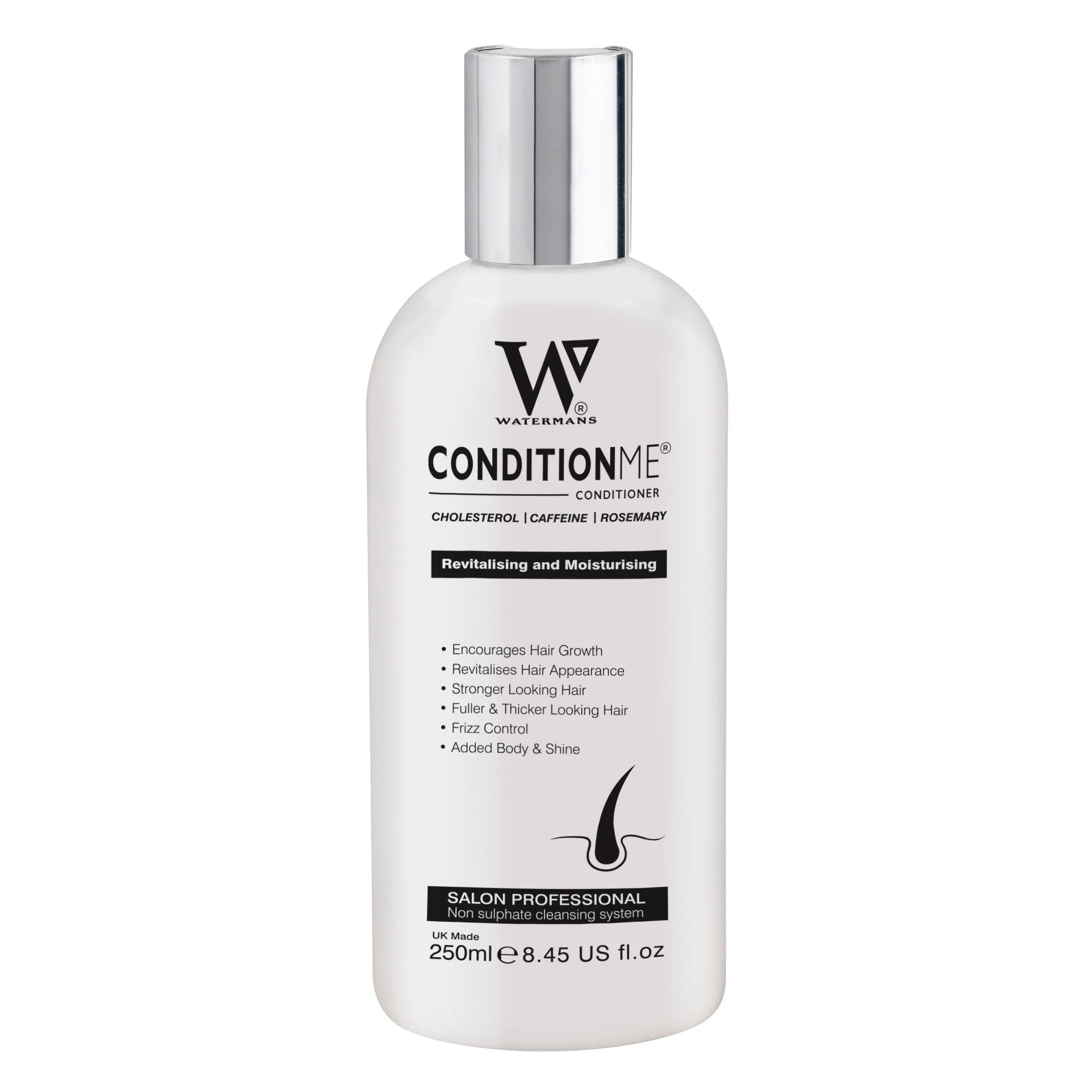
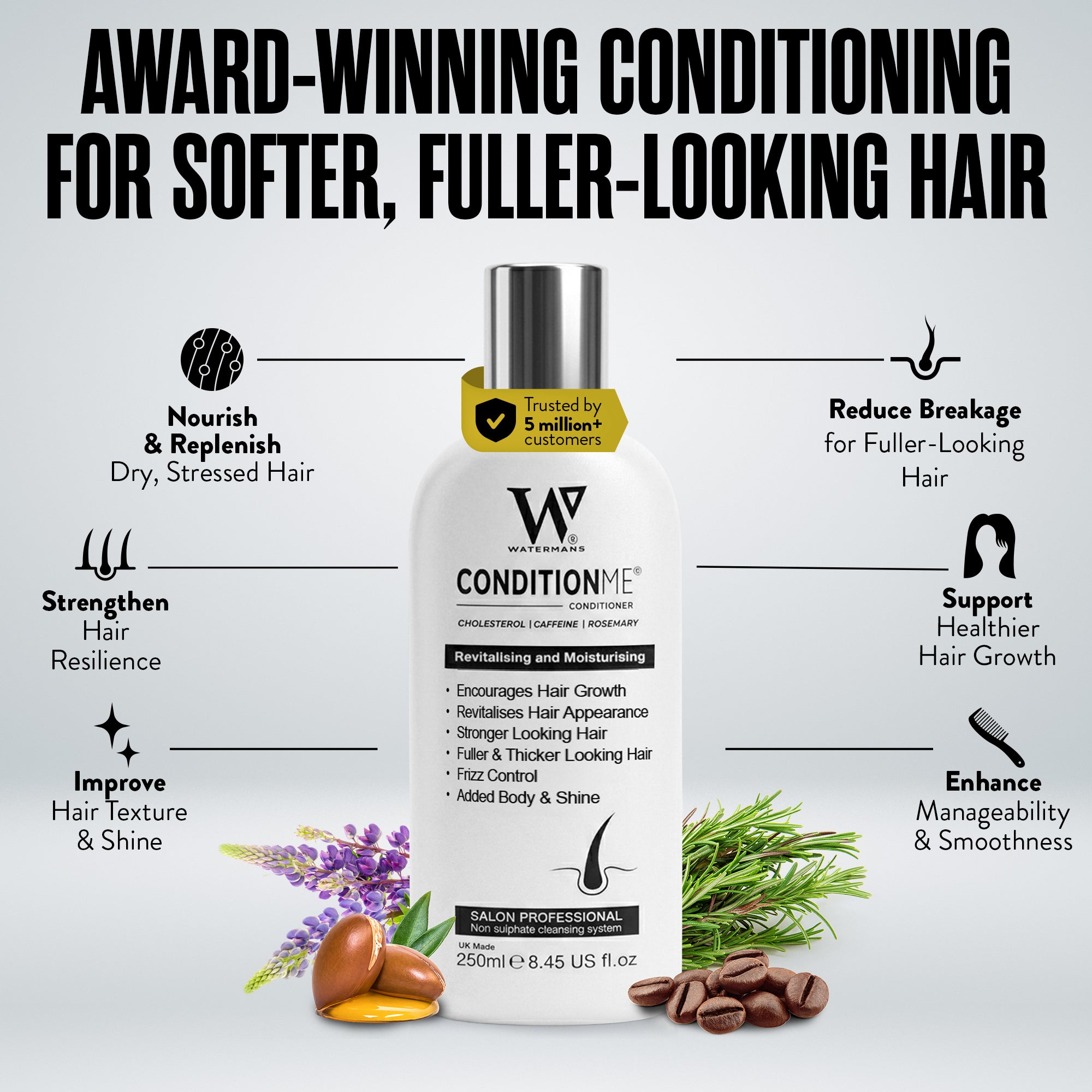
A conditioner with cholesterol, shea butter, glycerin and hydrolysed lupine protein, £13.95 in September 2026. Use it on the lengths after an oil wash so the comb glides through rather than dragging.
How much hair oil should you use?
Use less hair oil than you expect to need: a leave-in needs only a few drops warmed between the palms, and a pre-wash session needs just enough to make the lengths feel coated rather than dripping, because extra oil ends up on pillows and collars and takes more shampoo, and more scrubbing, to remove.
Our own product page for the camellia and black castor oil says a few drops is all it takes, and that over-applying is the only way to make it feel heavy. That applies to any oil. How much your hair can take depends on its thickness and its history, since bleached and heat-styled hair tends to soak up oil faster than untouched hair. Our Gloucester guide to frizz and hair porosity explains why worn, porous lengths behave differently. If you want the detail on that, our guide to how to grow hair faster black male walks through it step by step.
| Hair type | Pre-wash | Leave-in |
|---|---|---|
| Fine or straight | Ends only, a light coat | One drop on the tips, or skip it |
| Medium or wavy | Mid-lengths and ends | One or two drops on the ends |
| Thick, curly or coily | Full length, section by section | A few drops through damp lengths |
| Bleached or heat-styled | Mid-lengths and ends before each wash | A drop on the ends after styling |
Signs you used too much
Flat, stringy roots by lunchtime, a greasy mark on the pillowcase, hair that still feels coated after shampooing, or needing to wash twice as often as before. Cut the amount in half and keep it below the ears.
Get a discount on the dry, breakage-prone hair range
Join the Watermans mailing list and we will email a discount code straight to your inbox, so you can try the dry, breakage-prone hair range for less. Made in the UK, over 6.5 million bottles sold since 2012.
Should hair oil go on the scalp or only on the lengths?
Hair oil belongs mainly on the lengths and ends, where the fibre is oldest and most worn, and should only go on the scalp if the skin there is calm rather than flaky, itchy or greasy, because the scalp already makes its own oil, called sebum, and adding more gives the yeast living on the skin extra to feed on.
DermNet explains the mechanism: enzymes made by Malassezia, a yeast that lives on normal skin, split free fatty acids off the triglycerides in sebum, and those fatty acids may trigger inflammation. Most plant oils are triglycerides too; coconut oil, for example, is mainly a triglyceride of lauric acid. We could not find a study that tested whether hair oils make dandruff worse, so read this as a reason for caution on a flaky scalp rather than as proof.
On a calm, dry-feeling scalp, a small amount of oil worked in with the fingertips before a wash is reasonable, as long as it is shampooed out properly the same day. Leaving oil on the scalp for days at a time, as some traditional routines do, is where problems start for people prone to flaking. Overnight trends such as hair slugging and the inversion method are covered in our guide to viral hair hacks and when to see a trichologist in Folkestone.
- Lengths and ends. The main target. This is the oldest hair and the part most likely to snap.
- Calm, dry scalp. A light pre-wash massage, then a thorough shampoo.
- Flaky, itchy or greasy scalp. Keep oil off it altogether and oil only below the ears.
When does oil make a flaky or oily scalp worse?
Oil makes a flaky or oily scalp worse when the flakes come from dandruff or seborrhoeic dermatitis, because the British Association of Dermatologists links those conditions to Malassezia, a skin yeast found in higher amounts on affected skin, and to an increased sensitivity to the oleic acid that the yeast produces.
The BAD says dandruff, which it describes as seborrhoeic dermatitis of the scalp, affects almost half of all adults. The NHS adds that dandruff is not caused by poor hygiene and may be linked to a type of yeast that naturally lives on the skin.
The sources do not all point one way, though. The BAD notes that some products used to soften thick areas of scalp scale contain coconut oil together with salicylic acid, applied ahead of other products. That is a short, targeted use to lift scale, which is different from leaving a heavy oil on a flaky scalp every day.
Honesty about our own product applies here too. Our camellia and black castor oil is rich in oleic acid, so if your scalp flakes, keep it on your lengths. On an oily scalp, oil near the roots mostly makes hair look lank sooner, which is a cosmetic problem rather than a medical one.
When flakes need a GP, not an oil
The NHS says to see a GP if dandruff is still there after using an anti-dandruff shampoo for at least 4 weeks, if it is bad or your scalp is very itchy, if the scalp is red or swollen, or if flaky, itchy patches appear on your face or body.
If itching and flaking rather than dryness is your main problem, our Chatham guide to an itchy, flaky scalp covers the other causes and what to try first.
How do you patch test a new hair oil?
Patch testing a new hair oil means dabbing a small amount on the inner forearm or behind the ear, leaving it for two days without washing it off, and not using the oil if redness, itching, swelling or blistering appears, because allergic reactions to cosmetic ingredients can take hours or days to show.
The NHS explains that contact dermatitis can come from an irritant, which damages the outer layer of skin directly, or from an allergen, which triggers the immune system, and that a reaction usually occurs within a few hours or days of exposure. DermNet describes allergic contact dermatitis as a delayed reaction and pictures a case caused by lavender oil used on a pillowcase to help with sleep. Hairdressers are among the groups in which DermNet says the condition is especially common.

Blends with added essential oils or fragrance deserve the most care, and even a plain oil can cause a reaction: the 2026 castor oil review lists contact dermatitis as a rare side effect. A few rules:
- Test every new bottle, even of an oil you have used before, if the brand or blend has changed.
- Never oil broken skin. Cuts, scratches or a sore, weeping scalp should be left alone.
- Dilute essential oils. Never put a neat essential oil straight onto your scalp.
- Wash it off at the first sign of a reaction, and speak to your own GP if the rash spreads or keeps coming back. The NHS advises seeing a GP for persistent, recurrent or severe symptoms.
Can hair oiling help with shedding or hair loss?
Hair oiling cannot change shedding or hair loss, because both start in the follicle and its growth cycle, which a cosmetic oil on the surface of the hair does not reach, although oil can reduce the breakage-related hair fall that people often mistake for shedding when dry, weathered ends snap off in the brush.
The British Association of Dermatologists explains that around 15% of scalp follicles are normally in the resting, shedding phase. In telogen effluvium, the medical name for excessive shedding, that rises to 30% or more, often around 3 months after a trigger such as childbirth or physical or mental stress. Oiling does not alter any of those numbers.
Rosemary oil is the oil most often sold as an answer to thinning, and the research is thin. A 2015 trial in the journal Skinmed randomly assigned 100 adults with pattern hair loss to rosemary oil or to a medicated lotion for six months. Neither group changed at three months; at six months both groups had higher average hair counts than at the start, with no difference between them. There was no placebo group, the trial was small, and scalp itching increased in both groups, so it remains a single early study. Our deep dive into what the evidence says about rosemary oil weighs it against the rest of the research. We make no such claim for any of our products. Our Poole guide to rosemary oil and thinning hair goes through that trial, the laboratory work and how to patch test rosemary safely.
| Problem | Where it starts | What you find | Can oil make a difference? |
|---|---|---|---|
| Breakage | The hair fibre | Short, uneven pieces with no bulb | Yes, as part of a gentler routine |
| Shedding | The growth cycle | Full-length hairs with a small pale bulb | No; usually settles once the trigger passes |
| Hair loss | The follicle | A wider parting, a receding hairline or patches | No; speak to your own GP |

An 8-in-1 deep conditioning mask with argan oil, provitamin B5, rosemary and hydrolysed lupine protein, £24.95 in September 2026. A good swap for a weekly pre-wash oil if you dislike the feel of oil in your hair, so dry ends look and feel smoother.
When should you see a GP or one of the trichologists Gillingham has?
See your own GP first when hair loss is sudden, patchy or heavy, when the scalp is sore, red, swollen or weeping, or when flakes last beyond four weeks of anti-dandruff shampoo, and consider one of the trichologists Gillingham has when dry, snapping hair persists after a gentler routine and you want the hair shaft examined.
The NHS advises seeing a GP to get an idea of what is causing hair loss before thinking about going to a commercial hair clinic, and a GP visit is free. Because iron deficiency is on the NHS list of causes of temporary hair loss, a GP can look into it, which no oil or trichologist can replace.
Speak to your own GP before any oil if
You have smooth bald patches, a receding hairline or a widening parting; you are losing handfuls of whole hairs; your scalp is painful, red, swollen or weeping; a rash appears where you applied an oil; or hair changes come with tiredness, weight change or other shifts in your health.
Watermans does not run clinics and does not offer consultations. We make cosmetic hair care, so for anything beyond dry or snapping lengths, the people to talk to are your GP and, where it fits, a registered trichologist. If your question is about products or a routine rather than a medical one, you can talk to Gail Waterman, our co-founder, as an AI avatar on the Watermans homepage.
How do you check the trichologists Gillingham searches turn up?
Checking the trichologists Gillingham searches turn up starts with professional membership, because trichologists are private practitioners rather than NHS services: ask which body a practitioner belongs to, then confirm it on that body's own website, using the Institute of Trichologists register or the Trichological Society, before you pay for anything.
The Institute of Trichologists says its register is accredited under the Accredited Registers scheme run by the Professional Standards Authority, and that it provides a two and a half year distance learning Level 5 course. The Trichological Society, with an office on Gray's Inn Road in London, is the other main UK body. Gillingham sits within Medway, so it can help to widen a register search to nearby towns. If oiling is part of the reason you are going, ask three things:
- Will you look at my scalp and the hair shaft before suggesting any oil?
- If my flaking looks like seborrhoeic dermatitis, will you send me back to my GP?
- Are the oils you recommend ones you sell, and can I keep using my own?
A word on where we stand: Watermans sells cosmetic hair care, made in the UK, with over 6.5 million bottles sold since 2012. Our oil can help dry lengths feel softer and snap less, and it does nothing to the follicle.
What are the most frequently asked questions about hair oiling?
Should I see one of the trichologists Gillingham lists before trying a hair oil?
Not for dry or snapping lengths. A patch-tested oil used before washing is a reasonable first step. See your own GP first for bald patches, heavy shedding or a sore, red scalp, and consider a registered trichologist if dryness and breakage continue after a few months of gentler care.
Is coconut oil good for all hair types?
Coconut oil has the best lab evidence of the common hair oils: in a 2003 study it was the only one of three oils tested that markedly reduced protein loss from hair. It can feel heavy on fine hair, so use it sparingly on the ends, and keep it off a flaky scalp.
How long should I leave oil in my hair before washing?
We found no study that compared timings. The lab studies applied oil before washing, and many people leave it on for an hour or overnight. Longer is not proven to be better, so choose what fits your routine and shampoo it out thoroughly.
Can hair oil make dandruff worse?
It can. The British Association of Dermatologists links dandruff and seborrhoeic dermatitis to Malassezia, a skin yeast, and to sensitivity to the oleic acid it produces from skin oils. We found no study testing hair oils directly, but keeping oil off a flaky scalp is the cautious choice.
Does castor oil make hair thicker?
There is no good evidence that castor oil makes hair thicker. A 2026 review found support for its use in hair care for improving lustre, and noted rare contact dermatitis and hair felting. It is very thick, so blend it with a lighter oil and keep it on the ends.
Does rosemary oil work for thinning hair?
The evidence is limited. A 2015 trial of 100 adults compared rosemary oil with a medicated lotion over six months and found similar hair counts in both groups, but it had no placebo group and was small. Speak to your own GP about thinning hair rather than relying on an oil.
How do I wash hair oil out properly?
Lather shampoo at the roots and let it run through the oiled lengths, then rinse and repeat on the scalp if hair still feels coated. Follow with conditioner on the lengths so the comb glides through without pulling on weakened strands.
Sources & references
- NHS, Hair loss
- NHS, Dandruff
- NHS, Contact dermatitis
- British Association of Dermatologists, Seborrhoeic dermatitis
- British Association of Dermatologists, Telogen effluvium
- DermNet, Seborrhoeic dermatitis
- DermNet, Allergic contact dermatitis
- Rele AS, Mohile RB. Effect of mineral oil, sunflower oil, and coconut oil on prevention of hair damage. J Cosmet Sci, 2003
- Ruetsch SB, Kamath YK, Rele AS, Mohile RB. Secondary ion mass spectrometric investigation of penetration of coconut and mineral oils into human hair fibers. J Cosmet Sci, 2001
- Gavazzoni Dias MF. Hair cosmetics: an overview. Int J Trichology, 2015
- Sharifi N et al. Argan oil as a pretreatment of human hair before exposure to oxidative damage. J Cosmet Dermatol, 2022
- Girdler K et al. Use of castor oil in dermatology: a narrative review. Cureus, 2026
- Maduri VR et al. Castor oil, the culprit of acute hair felting. Int J Trichology, 2017
- Panahi Y et al. Rosemary oil in androgenetic alopecia: a randomized comparative trial. Skinmed, 2015
- The Institute of Trichologists
- The Institute of Trichologists, Find a Trichologist
- The Trichological Society
What is the bottom line on trichologists Gillingham?
The bottom line on trichologists Gillingham and hair oiling is that oil is worth using on dry, breakage-prone lengths, where coconut oil has the best lab evidence for cutting protein loss, argan oil has one supportive study and castor oil mostly adds shine, but no oil changes shedding or hair loss. Use a small amount before washing, keep it off a flaky scalp and patch test anything new. Save your GP, and the trichologists Gillingham has, for patches, heavy shedding or a scalp that is sore or keeps flaking. If marula is the oil you have in the cupboard, our step by step guide to using marula oil on hair covers how much to use and where to put it.
For a pre-wash or a finishing drop on dry ends, a nourishing hair oil such as our Camellia & Black Castor blend coats the lengths with camellia and black castor oil, so hair feels softer and snaps less when you style it.
Watermans products are 100% cosmetic and do not treat medical hair loss. Individual results may vary.