Trichologist Chatham: Itchy, Flaky Scalp and Who to See
A trichologist Chatham appointment is a private hair and scalp consultation, typically £50 to £150, with no referral and no waiting list. For an itchy, flaking scalp it is rarely the first thing you need. Most flaking settles with a pharmacy shampoo used properly and a change to how you wash, both of which cost under a tenner. Save the specialist for flaking that will not shift, or for hair that is genuinely thinning as well.
Our hair growth shampoo
Grow Me® Hair Growth Shampoo, £14.95. A sulphate free daily shampoo that supports a healthy scalp environment and helps reduce breakage, so lengths hold on and look fuller.
Key takeaways
- Dandruff and dry scalp are different problems that look similar and need opposite handling.
- Most people using an anti dandruff shampoo get poor results because they rinse it straight off. It needs three to five minutes on the skin.
- A pharmacist in Medway can sort the majority of flaking for a few pounds, without an appointment.
- A trichologist Chatham search makes sense when flaking persists for months, or when there is real thinning alongside it.
- Trichologist is not a title protected by UK law, so check membership of the Institute of Trichologists or the Trichological Society before paying.
- Flaking with hair coming out in patches, weeping skin, or spreading redness is a GP matter, not a shampoo matter.
- Watermans makes no anti dandruff product. On this page we send you to the right shelf even though it is not ours.
What does a trichologist Chatham appointment actually cover?
Trichology is the study of the hair and scalp. In practice a trichologist Chatham appointment means a long history, a close look at the scalp skin under magnification, photographs of the parting and crown, and a written plan. Expect 45 to 60 minutes and expect most of it to be questions. If your scalp feels sore, tight or tender rather than itchy, our Bournemouth guide to a sore scalp covers the likely causes and the warning signs.
What a trichologist adds on a flaking scalp is pattern recognition. They see hundreds of scalps a year and can usually tell scale from dryness, and both of those from the thicker, silvery plaque of a different skin condition entirely. That is genuinely worth something when you have been guessing for a year. Flaking is rarely down to diet, but if you have recently gone plant-based and are also shedding more hair, our Ipswich guide to vegan diets and hair shedding explains which nutrients to ask your GP about.
What they cannot do is order NHS blood tests, refer you into hospital dermatology, or supply anything that needs a doctor's signature. If the honest answer to your scalp is a medicine, the appointment ends with you being sent to a GP anyway. If you have spots or pus bumps rather than flakes, our Middlesbrough guide to scalp spots and bumps covers those instead.
One caution that applies anywhere in Kent: trichologist is not a protected title in the UK, unlike physiotherapist or pharmacist. Anyone may use it. Both the Institute of Trichologists and the Trichological Society run public member directories, and checking one takes two minutes.
What is actually making your scalp flake?
Find your row before you spend anything. The most common mistake is using a drying anti dandruff product on a scalp that was never oily to begin with.
| Cause | What the flakes look like | First move |
|---|---|---|
| Dandruff | Larger, yellowish, slightly greasy, scalp often oily | Medicated shampoo left on for three to five minutes |
| Dry scalp | Small, white, powdery, skin tight elsewhere too | Gentler washing, cooler water, an oil before washing |
| Product build up | Sheets or crumbs rather than fine flakes, worse near the roots | Drop dry shampoo and heavy styling products for two weeks |
| Seborrhoeic dermatitis | Flaking plus redness, often in the brows, nose creases and behind the ears too | Pharmacist, and a long term routine rather than a one off fix |
| Scalp psoriasis | Thick silvery plaques with a clear border, often beyond the hairline | GP. This one needs a medical opinion |
| Contact reaction | Itch and flaking starting days after a new product or dye | Stop it, wait a fortnight, patch test before you reintroduce |
| Winter and indoor heating | Fine flaking that appears every autumn and goes by May | Wash less hot, condition more, and expect it as seasonal |
If you are not sure which of the first two you have, our guide to telling a dry scalp apart from dandruff runs the full diagnostic side by side, and the seborrhoeic dermatitis guide covers the inflammatory end of the range.
What is the free ladder to climb before you pay anyone?
Work down this list over six weeks. Most flaking never gets past step four, and none of it requires a trichologist Chatham appointment or anything else.
One, wash more often, not less. The instinct when the scalp flakes is to leave it alone. That is backwards. Oil and dead skin build up and the flaking gets worse. Two to three washes a week is a reasonable floor.
Two, turn the water down. Hot water strips the skin barrier and drives the tight, itchy feeling that makes people scratch. Warm, not hot, and a cooler final rinse.
Three, use fingertips, never nails. Scratching a flaking scalp breaks the skin, and broken skin is how a manageable problem becomes an infected one.
Four, leave the medicated shampoo on the skin. This single change fixes more failed anti dandruff attempts than any product swap. Lather, then leave it three to five minutes while you do everything else in the shower, then rinse. Actives cannot work in the eleven seconds most people give them.
Five, strip the routine back. Dry shampoo, waxes, strong hold sprays and leave on scalp products all go for a fortnight. Reintroduce one at a time.
Six, alternate rather than commit. Medicated shampoo twice a week, a mild sulfate free shampoo the rest of the time. Using the medicated one every wash tends to dry the scalp and start the cycle again.
Get a discount on your next order
Join the Watermans mailing list and we will email a discount code straight to your inbox. Vegan, made in the UK, over 6.5 million bottles sold since 2012.

Which ingredients are worth looking for?
Four cosmetic actives do most of the work on a flaking scalp, and all four are available over the counter in Medway without speaking to anybody.
Zinc pyrithione is the workhorse in most supermarket anti dandruff shampoos. Reliable, cheap, mild enough for regular use, and the sensible starting point.
Piroctone olamine is the gentler alternative and tends to suit people whose scalp stings with everything else. Common in pharmacy brands and worth asking for by name.
Salicylic acid lifts thicker scale rather than working on the cause, which makes it the right choice when flakes are stuck down in sheets. Best used alongside something else rather than alone. Rubbing that scale off with a gritty scrub is a different matter, and our Guildford guide to when a scalp scrub helps and when it harms explains why broken or inflamed skin should skip it.
Sulfur appears in older formulas, works, and smells like it works. Effective but not pleasant.
What matters more than the choice between them is the contact time and the rotation. If one has done nothing after four honest weeks of three minute contact, switch active rather than switching brand, because most brands sell the same active in different bottles. Our full guide to choosing an anti dandruff shampoo sets out the whole shelf, including the products we do not make.
When is flaking not the real problem?
Two situations get mistaken for dandruff often enough to be worth naming, and both send people to a trichologist Chatham search when something simpler is going on.
The first is a sore scalp with little or no visible flaking. Pain in the scalp is skin pain, not hair pain, and it usually comes from tension or irritated follicles rather than from anything you can wash off. The tender scalp guide covers that pattern properly.
The second is flaking that arrives at the same time as noticeable shedding, which is what sends most people looking for a specialist in the first place. The two are often unrelated and simply coincide during a stressful period. Sorting the scalp out will not change the shedding, and sorting the shedding out is a different conversation with a different professional.
What is the difference between hair loss, hair shedding and hair breakage?
Hair loss means the follicle producing finer hair or stopping. It is gradual, it shows as a widening parting or receding hairline, and it is where medical input matters most.
Hair shedding means more hairs than usual leaving the head because the growth cycle was disturbed, typically two to three months after illness, childbirth, surgery, crash dieting or severe stress. It is alarming and it usually recovers on its own.
Hair breakage means the fibre snapping partway along. Bleach, heat, tight styles and scratching an itchy scalp all cause it. It looks like thinning and is not.
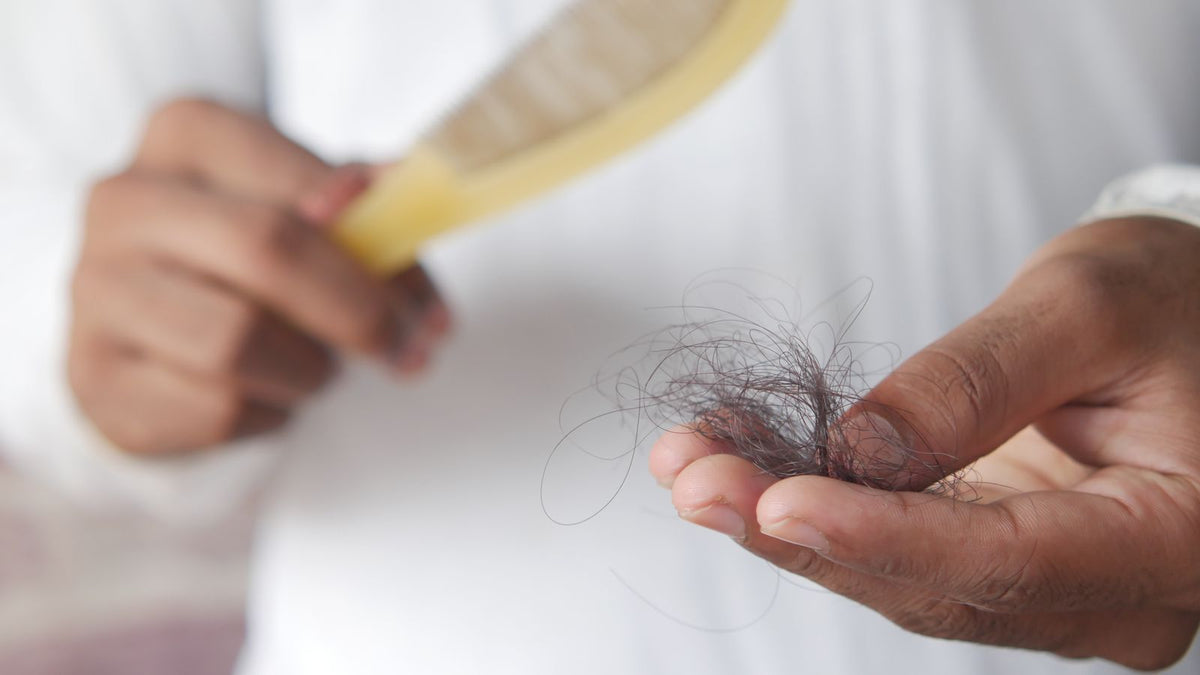
Check the loose hairs. A shed hair has a small pale bulb at the root end. A broken one has a blunt or frayed end and no bulb. That single observation saves a lot of people a lot of money.
Watermans products are 100% cosmetic and do not treat medical hair loss. Individual results may vary.

Where do our products fit, and where do they not?
We do not make an anti dandruff shampoo, so for active flaking the pharmacy shelf is the right shelf and we would rather say so than sell you the wrong thing. Where we are useful is the other days of the week, and the dryness left behind by weeks of medicated washing.

Grow Me Shampoo, the alternating wash
Sulfate free, with biotin, caffeine and rosemary. The point of alternating is that the medicated shampoo keeps its job while the scalp is not stripped every single wash. Fingertips, warm water, and rinse properly.

Camellia and Black Castor Oil, for a genuinely dry scalp
Use it before washing, not after: a light amount on the scalp for twenty minutes, then shampoo out. If your flakes are the small powdery kind and your skin is tight everywhere else, this is the direction to go. If your scalp is oily, skip it entirely.
When should you see a GP instead?
Arrange an ordinary appointment with your own GP, or use NHS 111, if any of the following apply. In Medway the hospital route runs through your surgery and on to dermatology where needed, so the GP is the door either way.
- Round, smooth patches of missing hair rather than even thinning.
- Skin that is weeping, crusting, swelling or spreading, or a raised temperature.
- Thick silvery plaques that continue past the hairline onto the face or body.
- Flaking in a child, which has different causes and some of which pass between people.
- Flaking that has not shifted at all after eight weeks of doing the ladder properly.
- Sudden heavy shedding after illness, surgery, childbirth or a new medicine, where blood tests are the useful next step.
We are a hair care company. We do not run clinics, we cannot examine anybody and we have no consulting rooms in Kent or anywhere else. If your question is about products or a routine rather than a medical one, you can talk to Gail Waterman, our co-founder, as an AI avatar on the Watermans homepage.
Frequently asked questions
Do I need a referral for a trichologist Chatham appointment?
No. Trichology is private and self referred, so you can arrange it directly. The flip side is that nobody has checked the practitioner's credentials for you, so check the Institute of Trichologists or Trichological Society directory yourself.
How much does a trichology appointment cost?
Around £50 to £150 for a first appointment in the south east, with follow ups lower. Ask whether products are included before you attend, because an inexpensive consultation attached to an expensive monthly formula is a common structure.
Is dandruff caused by poor hygiene?
No, and this myth makes it worse by pushing people to wash less out of embarrassment. Dandruff involves a yeast that lives on everybody's skin, the oil it feeds on, and how strongly your own skin reacts. Washing more, not less, is usually the right move.
Can dandruff cause hair loss?
Not directly. Persistent scratching can break hairs and irritate the skin, and severe inflammation is unhelpful for the follicle, but flaking on its own does not cause pattern hair loss. If you are shedding as well, that is a separate question worth answering separately.
How long should an anti dandruff shampoo take to work?
Give it four weeks with proper three to five minute contact time before judging it. Most people who say nothing worked were rinsing it straight off, which is the equivalent of not using it at all.
Is scalp flaking worse in winter?
Very often. Indoor heating, hot showers and less daylight all push the skin towards dryness, and many people find a seasonal pattern that returns each autumn. Adjust the routine seasonally rather than assuming the problem has changed.
Should I see a trichologist or a dermatologist?
Dermatology is the medical specialty for hair and scalp disease and is reached free through your GP. Trichology is private, faster, and gives you more time. For plaques, patches or broken skin, go medical first.
Sources and references
- NHS guidance on dandruff, for the advice on washing frequency, over the counter actives and when to see a GP.
- NICE Clinical Knowledge Summaries on seborrhoeic dermatitis and on psoriasis, for the presentations that separate the two and the referral thresholds.
- British Association of Dermatologists public information on scalp psoriasis and on seborrhoeic dermatitis, for the description of plaques and their distribution.
- The Institute of Trichologists and The Trichological Society, public member directories and qualification structures.
- UK Health and Care Professions Council register of protected titles, for the confirmation that trichologist is not among them.
- Peer reviewed dermatology literature on Malassezia and seborrhoeic dermatitis, for the yeast, sebum and individual susceptibility model, where the relative weight of each factor is still debated.
What is the bottom line on trichologist Chatham?
Identify what you have before you buy anything. Greasy yellowish flakes on an oily scalp point to dandruff, small powdery flakes on tight skin point to dryness, and the two need opposite handling. Wash more often rather than less, turn the water down, use fingertips, and leave any medicated shampoo on the skin for three to five minutes, which is the step almost everyone skips. Alternate it with a mild sulfate free wash rather than using it daily. Give it four honest weeks. A trichologist Chatham appointment earns its £50 to £150 when flaking has outlasted that, or when hair is genuinely thinning too, and it is worth checking the practitioner's professional membership first because the title is not protected in law. Patches, plaques, weeping skin or a flaking child go to a GP, not a shampoo aisle. We look at trichologists Newtownabbey separately, with the practical steps.
For the everyday version of all this, our sulphate free hair growth shampoo does the scalp work while you get on with the rest.
Grow Me shampoo is vegan, Watermans is UK made, and we have sold over 6.5 million bottles since 2012.