Trichologists Newport: How to Read a Shampoo Label for Thinning Hair
A shampoo's front label is advertising; the small print on the back is the part the law makes a brand get right.
If you are searching for trichologists Newport because your hair is thinning, learn to read your shampoo label first. The ingredients list runs in descending order of weight down to 1%, so the first five names are most of the bottle. Words like thickening and volumising describe how hair looks, and a cosmetic cannot legally promise new hair from the follicle. Caffeine, biotin and proteins mostly condition and coat the strand during a short rinse-off contact time.
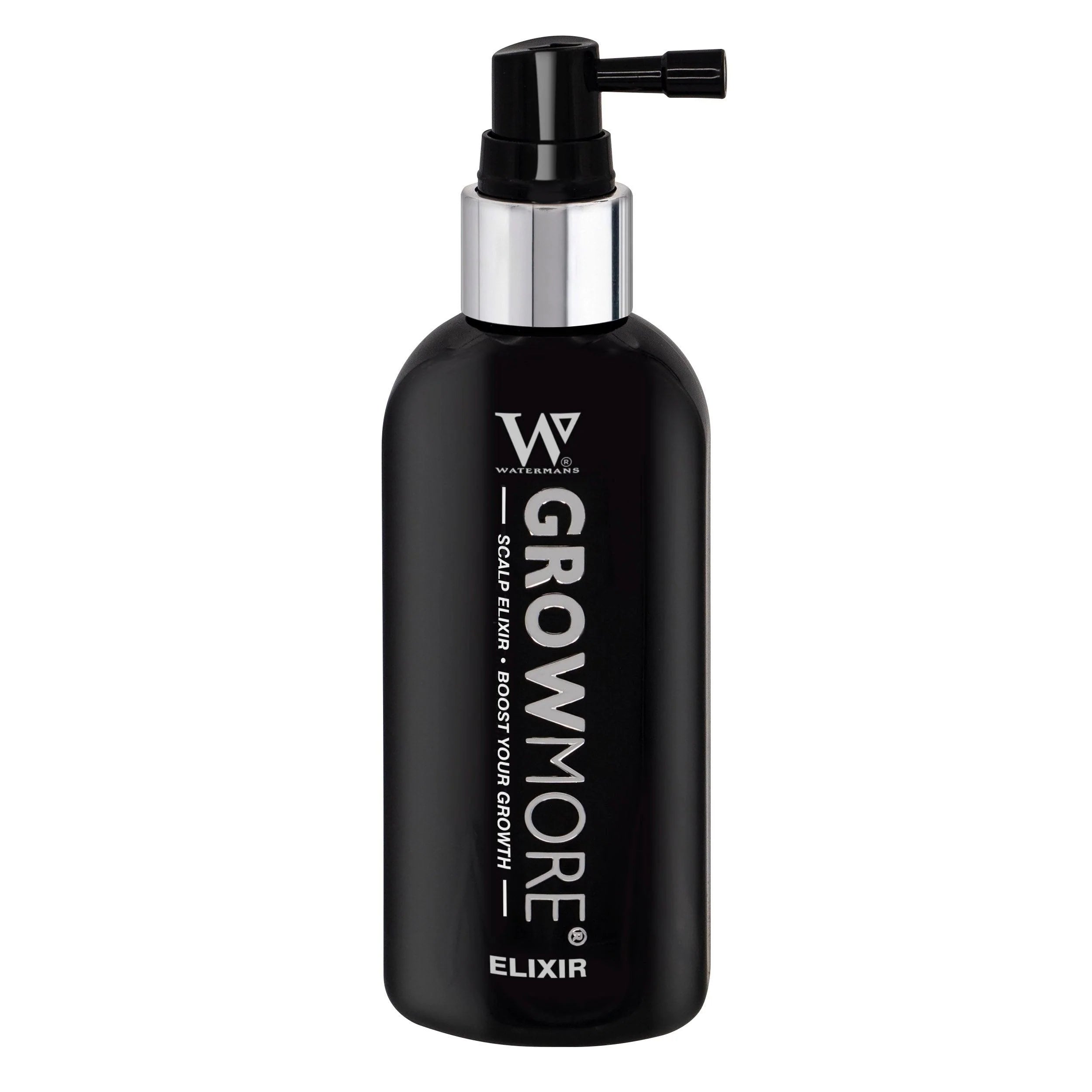
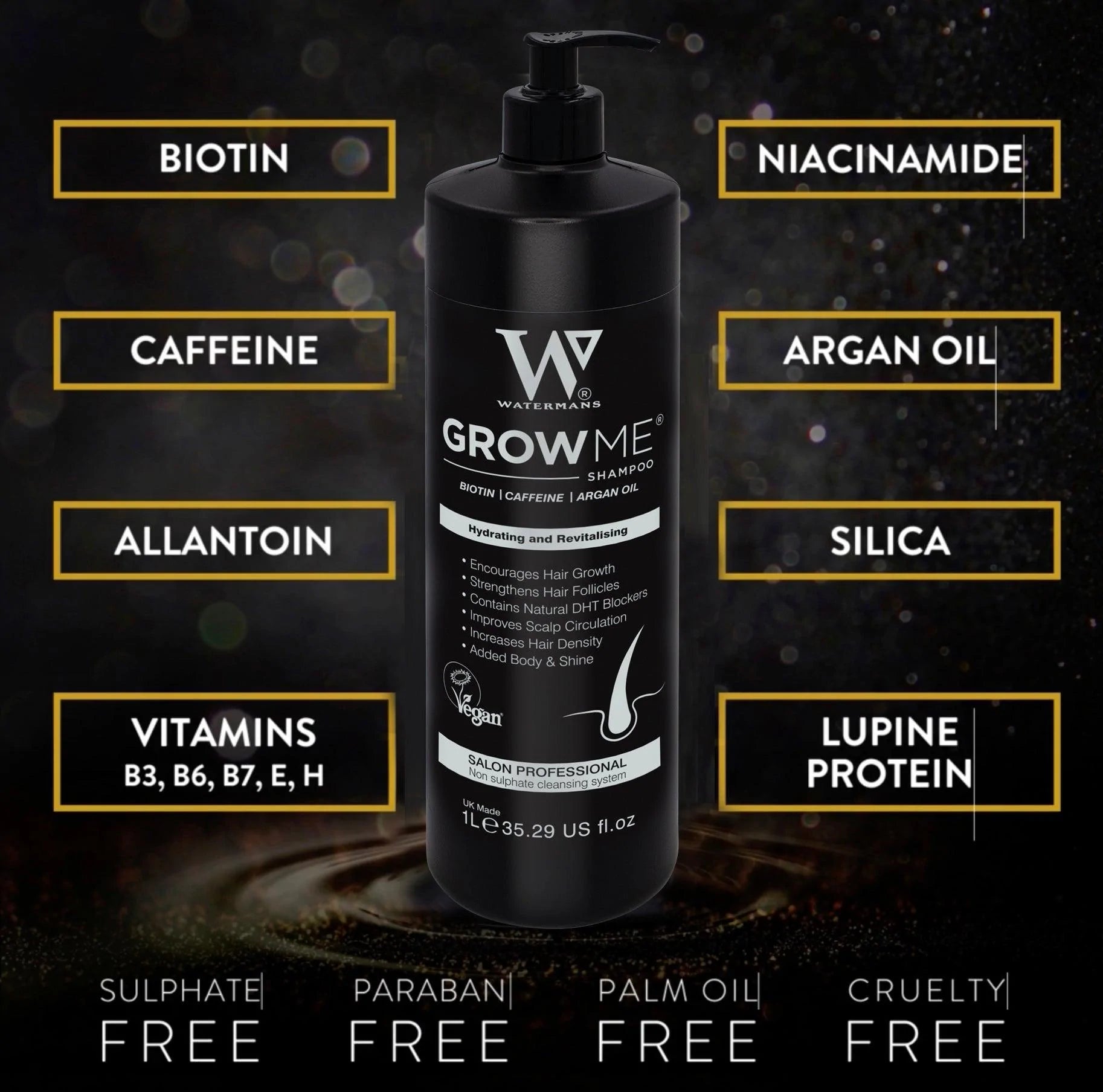
Our hair growth shampoo
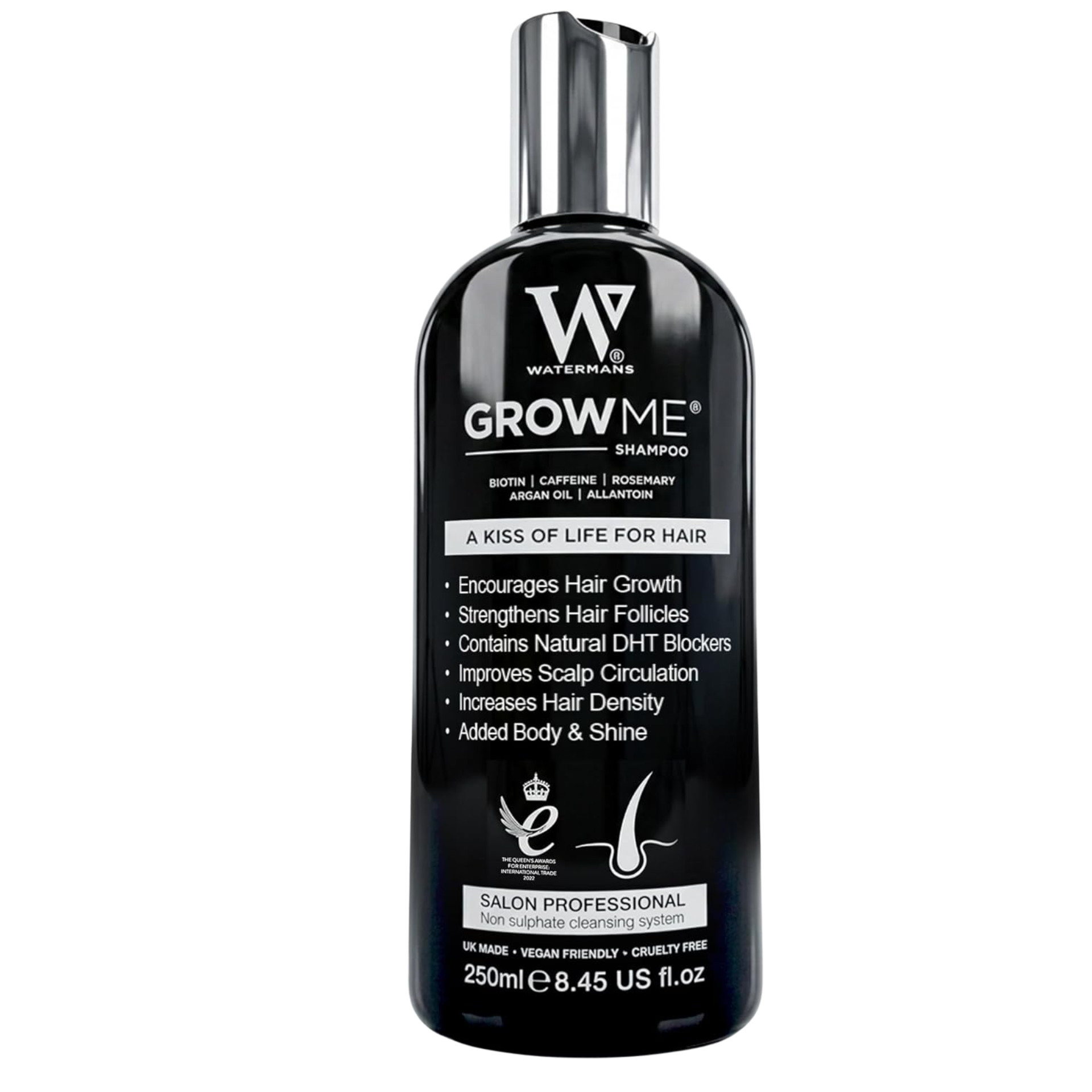
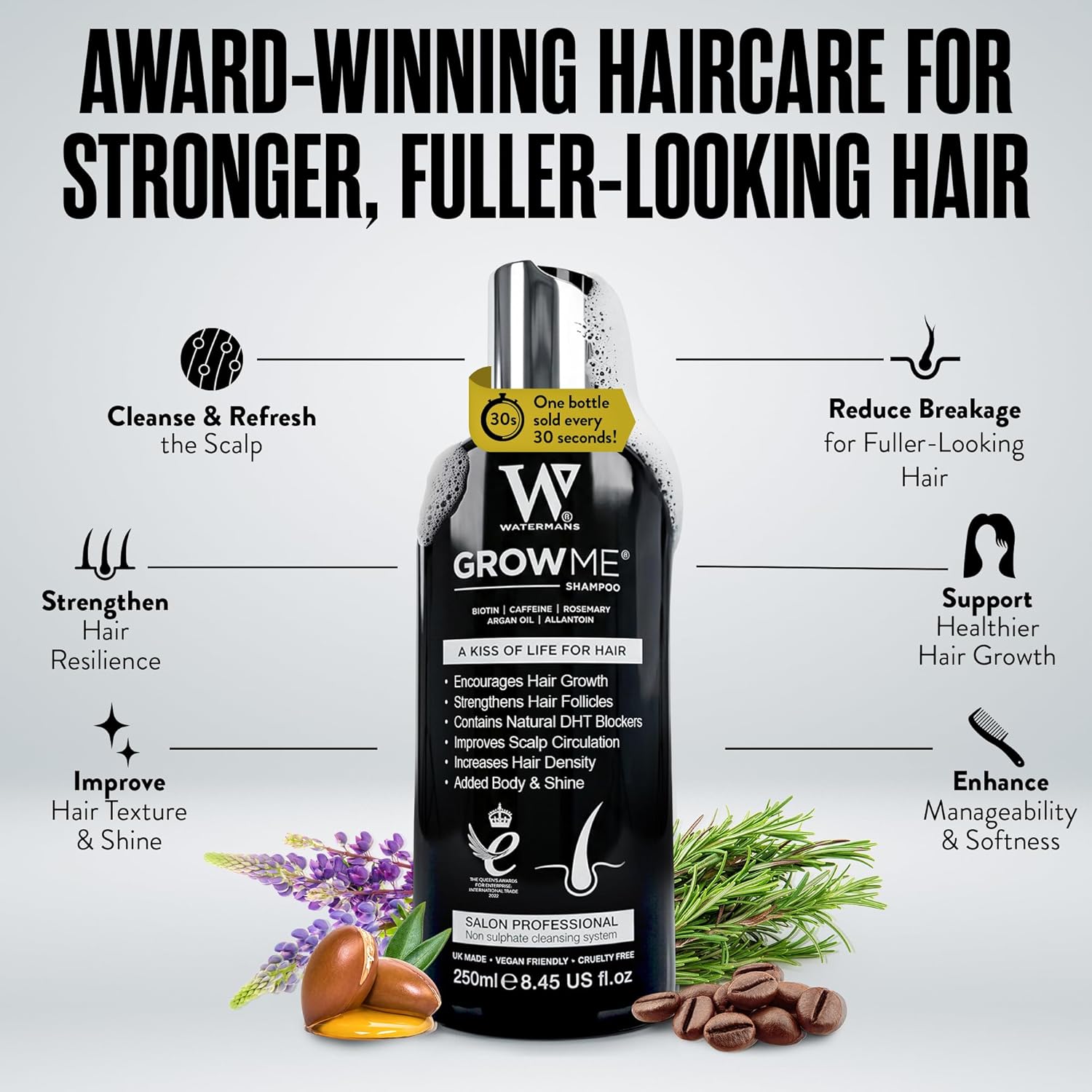
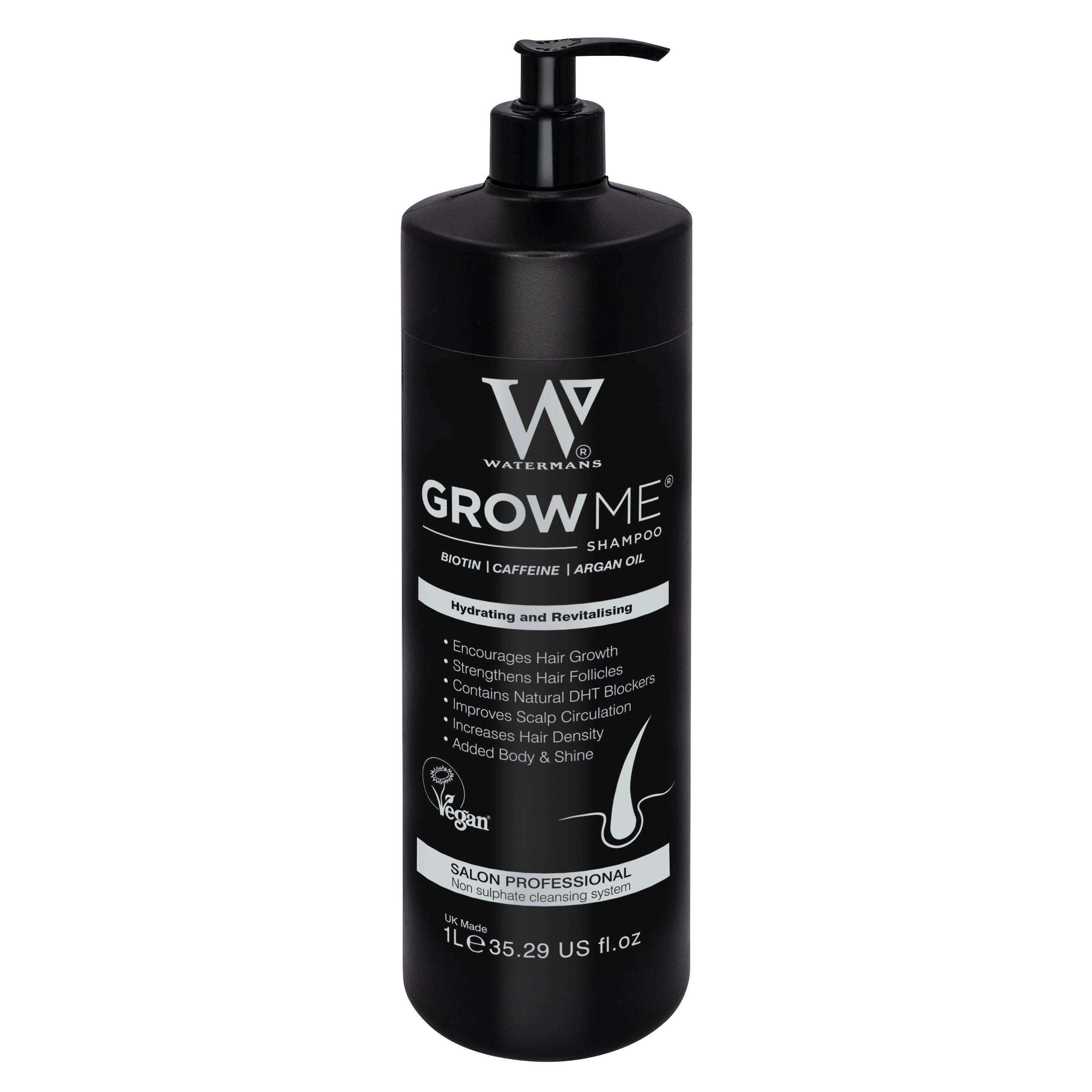
Grow Me® Hair Growth Shampoo, £14.95. A sulphate free daily shampoo that supports a healthy scalp environment and helps reduce breakage, so lengths hold on and look fuller.
Key takeaways
- Under Article 19 of the Cosmetics Regulation, ingredients are listed in descending order of weight when they are added, and anything under 1% may follow in any order.
- A cosmetic exists to clean, perfume, protect, change the appearance of or keep hair in good condition, and Article 20 bans labels that imply functions a product does not have.
- Rule 12.23 of the CAP Code requires scientific evidence, where relevant from trials on people, for any claim that a product improves hair growth or strengthens hair beyond its appearance.
- In a 2007 lab study, caffeine from a shampoo left on for 2 minutes reached the hair follicles, but the study measured absorption, not thicker hair.
- The NHS says losing 50 to 100 hairs a day is normal, so separate breakage from shedding and hair loss, and see your GP before paying the trichologists Newport searches turn up.
What does the INCI ingredients list on a shampoo actually tell you?
The INCI ingredients list on a shampoo tells you what the product is mostly made of, because UK law requires every ingredient to appear under its standard international name in descending order of weight at the time it is added, with anything below 1% allowed in any order after the rest.
That rule sits in Article 19 of Regulation (EC) No 1223/2009 on cosmetic products, which still applies in Great Britain and is published on legislation.gov.uk. INCI stands for International Nomenclature of Cosmetic Ingredients, which is why water appears as "Aqua" and plant extracts appear under their Latin botanical names. The same article says any ingredient present as a nanomaterial must be followed by the word "nano" in brackets, and that the list must be headed by the word "ingredients".
So what does the order tell someone with thinning hair? Trüeb's 2007 review in the Journal of the German Society of Dermatology describes a shampoo as 10 to 30 ingredients built from cleansing agents (surfactants), conditioning agents, special care ingredients and additives. Water and the surfactants usually take the first few places. The ingredients a front label shouts about, such as caffeine or biotin, often sit much further down.
The 1% line is the useful trick. You cannot see exactly where it falls, but preservatives give a clue: phenoxyethanol, a common preservative, is capped at 1% in Annex V of the same regulation, so anything listed after it is present at 1% or less.
| Where it sits on the label | What it usually means | The question to ask |
|---|---|---|
| First three to five names | The bulk of the formula: water, cleansing agents, sometimes glycerin | Is the cleanser gentle enough for my scalp? |
| Middle of the list | Conditioning agents, thickeners, oils and butters | Will this weigh fine hair down at the roots? |
| After the preservative | Ingredients at 1% or less: extracts, vitamins, fragrance allergens | Is the headline ingredient only here in a small amount? |
| "(nano)" after a name | The ingredient is present as a nanomaterial | A legally required disclosure, not a warning sign in itself |
If your worry is sulfates, silicones or parabens rather than claims, our Chelmsford guide to shampoo ingredient scares works through each one. This page stays with what the words and the active ingredients on the bottle can honestly do for thinning hair.

What can thickening, volumising, strengthening and hair growth legally mean on a cosmetic?
On a cosmetic, thickening, volumising, strengthening and hair growth can legally describe how hair looks, feels and holds up, because UK law defines a cosmetic as a product for cleaning, perfuming, protecting, changing the appearance of or keeping the hair in good condition, not for changing how the follicles behave.
Article 2 of the Cosmetics Regulation sets that definition. Article 20 adds that text, names, trade marks and pictures must not be used to imply that a product has characteristics or functions it does not have. Commission Regulation (EU) No 655/2013, which Article 20 points to, lists six common criteria every cosmetic claim must meet: legal compliance, truthfulness, evidential support, honesty, fairness and informed decision-making.
Advertising adds a second layer. Rule 12.23 of the CAP Code, which the Advertising Standards Authority enforces, says marketers must hold scientific evidence, where relevant from trials on people, for any claim that a product can slow baldness, stimulate or improve hair growth, nourish hair roots, or strengthen hair or improve its health as distinct from its appearance. The MHRA, meanwhile, says it decides whether a product is really a medicine by looking at the claims made about it, explicit and implicit, as well as its ingredients.
| Word on the bottle | What it can honestly mean on a cosmetic | What it cannot mean |
|---|---|---|
| Thickening | Each strand looks or measures slightly wider because of a coating or water taken up by the fibre | More hairs on your head |
| Volumising | More lift and body at the roots, often from lighter conditioning | A denser scalp |
| Strengthening | Fewer snapped strands when you comb, because the fibre is smoother and better lubricated | A change inside the follicle |
| Hair growth | Hair you already grow survives to a longer length because less of it breaks | New hairs from inactive follicles |
| Anti hair fall | Less breakage-related hair fall in the brush and the plughole | An answer to heavy shedding or medical hair loss |
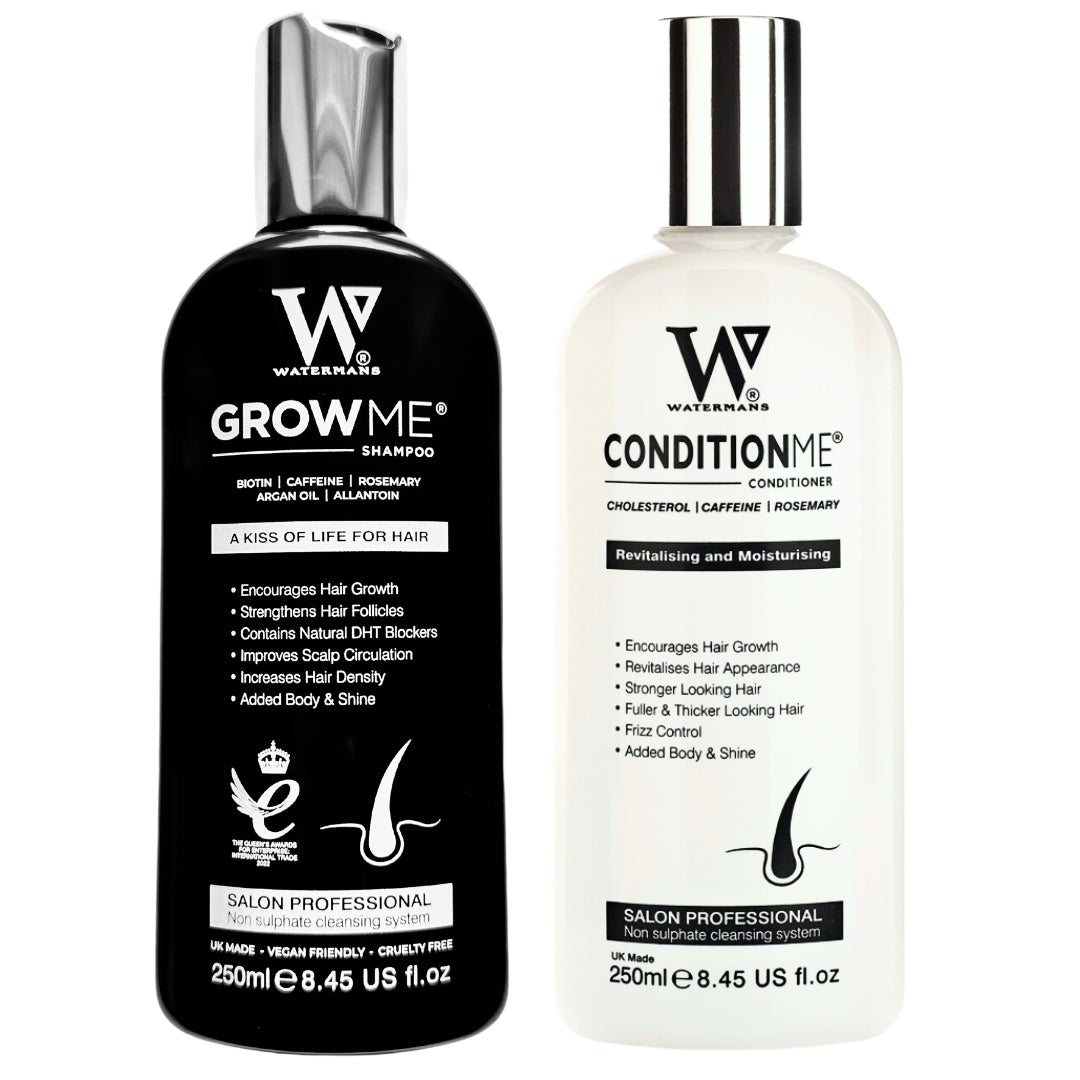
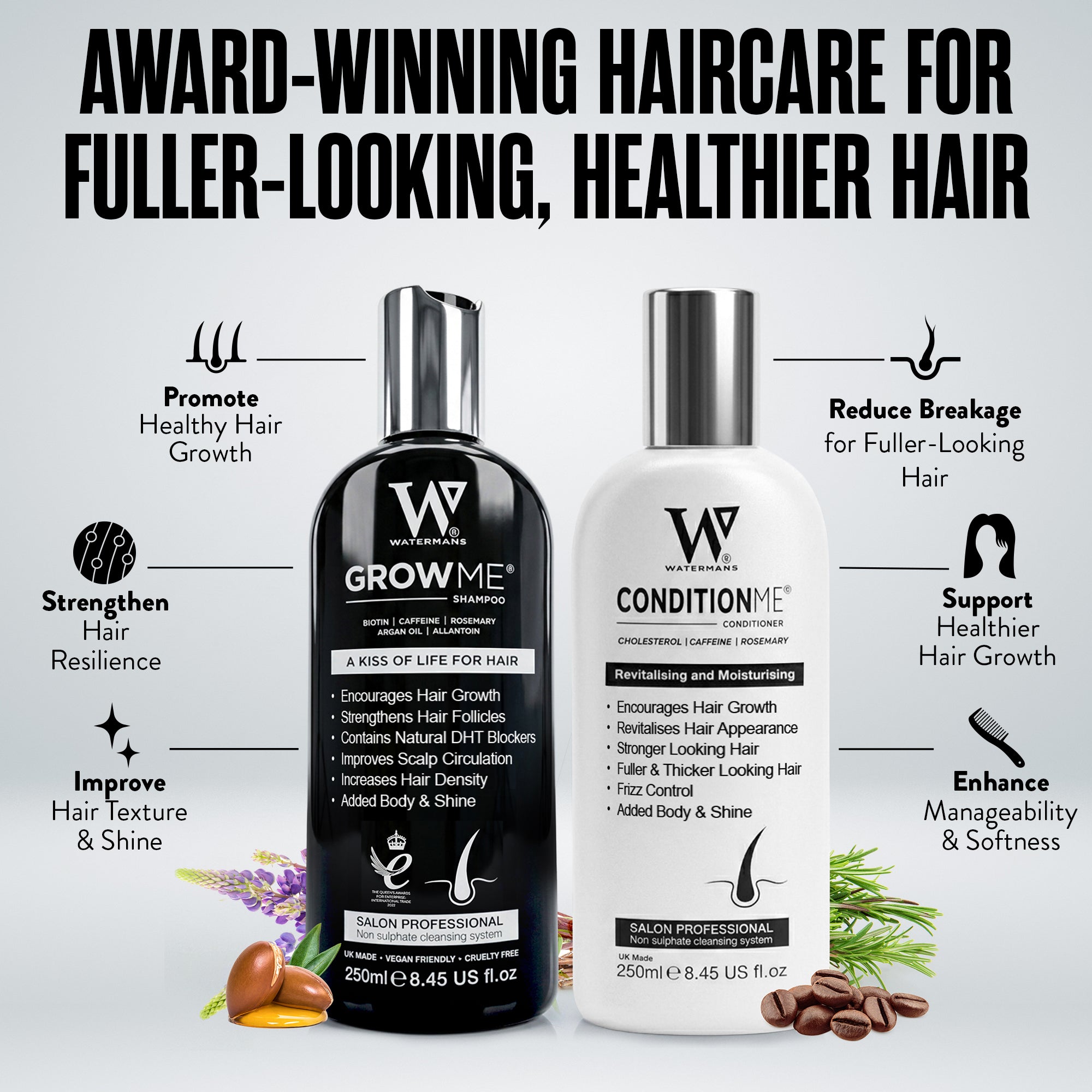
Our own flagship is called a hair growth shampoo, so we hold ourselves to the same reading. Grow Me is sold to reduce breakage and help more of the hair you already grow stay stronger for longer. It is a cosmetic, and it cannot change how a follicle behaves.
What do caffeine, biotin, niacinamide, rosemary and proteins actually do in a shampoo?
Caffeine, biotin, niacinamide, rosemary and proteins in a shampoo mostly work on how the scalp feels and how the strand's surface behaves during a short contact time: caffeine can reach the follicles quickly, proteins bind to and partly enter the fibre, and the rest condition or scent, while evidence for thicker hair from a rinse-off product alone is thin.
- Caffeine. Otberg and colleagues at the Charité in Berlin applied a caffeine shampoo for 2 minutes and found caffeine penetrated through the hair follicles within that time, faster and in greater amounts than through the surrounding skin. The study measured absorption, not hair density, so it shows caffeine can arrive rather than what it does once there.
- Biotin. A 2017 review in Skin Appendage Disorders found 18 reported cases where biotin helped hair or nails, and every one involved an underlying problem. The authors concluded there is not enough evidence for biotin supplements in healthy people. Those were oral supplements; biotin in a rinse-off shampoo has even less behind it, so read it as a supporting ingredient rather than the reason to buy.
- Niacinamide. Niacinamide is vitamin B3. In a 2011 study funded by Procter & Gamble, a leave-on combination of caffeine, niacinamide, panthenol, dimethicone and an acrylate polymer widened existing scalp hairs by 2 to 5 micrometres, roughly 10% more cross-sectional area. That was a leave-on product with five ingredients working together, so it cannot tell you what niacinamide alone does in a shampoo.
- Rosemary. Rosemary extract gives a fresh scent and a cool, clean scalp feel. Most of the popular interest in rosemary comes from rosemary oil massaged in and left on the scalp, which is a very different exposure from an extract rinsed away within minutes.
- Proteins. Hydrolysed proteins are proteins broken into smaller pieces. Using radiolabelled wheat amino acids, Jones and Chahal, working at an ingredient supplier, showed significant penetration into the hair shaft from shampoo and conditioner formulas as well as binding to the surface. Gavazzoni Dias's 2015 review lists hydrolysed amino acids among the five main groups of conditioning agents.
There is also a legal test for how these ingredients are sold. The truthfulness criterion in Regulation 655/2013 says a claim about a specific ingredient must not imply that the finished product has the same properties when it does not. "With caffeine" on the front is a statement of fact; "caffeine for thicker hair" needs evidence about the finished shampoo, not a study of caffeine in a lab dish. The MHRA adds that herbal or "natural" ingredients do not stop a product being judged a medicine if its claims are medical. For what the published research on caffeine shampoo actually found, and why the ASA ruled against one brand, see our Rochdale guide to caffeine shampoo and the evidence.
| Ingredient | Cosmetic job in a shampoo | What the evidence does not show |
|---|---|---|
| Caffeine | Refreshing scalp feel; reaches follicles within 2 minutes | That a rinse-off shampoo alone gives you more hair |
| Biotin | Supporting ingredient in a wider formula | Benefit in healthy people, even as a supplement |
| Niacinamide | Smoother feel and manageability | What it does on its own in a rinse-off product |
| Rosemary extract | Scent and a fresh, clean scalp feel | That minutes of contact match leave-on oil use |
| Hydrolysed proteins | Bind to and partly enter the fibre; conditioning | A permanent change to the strand |

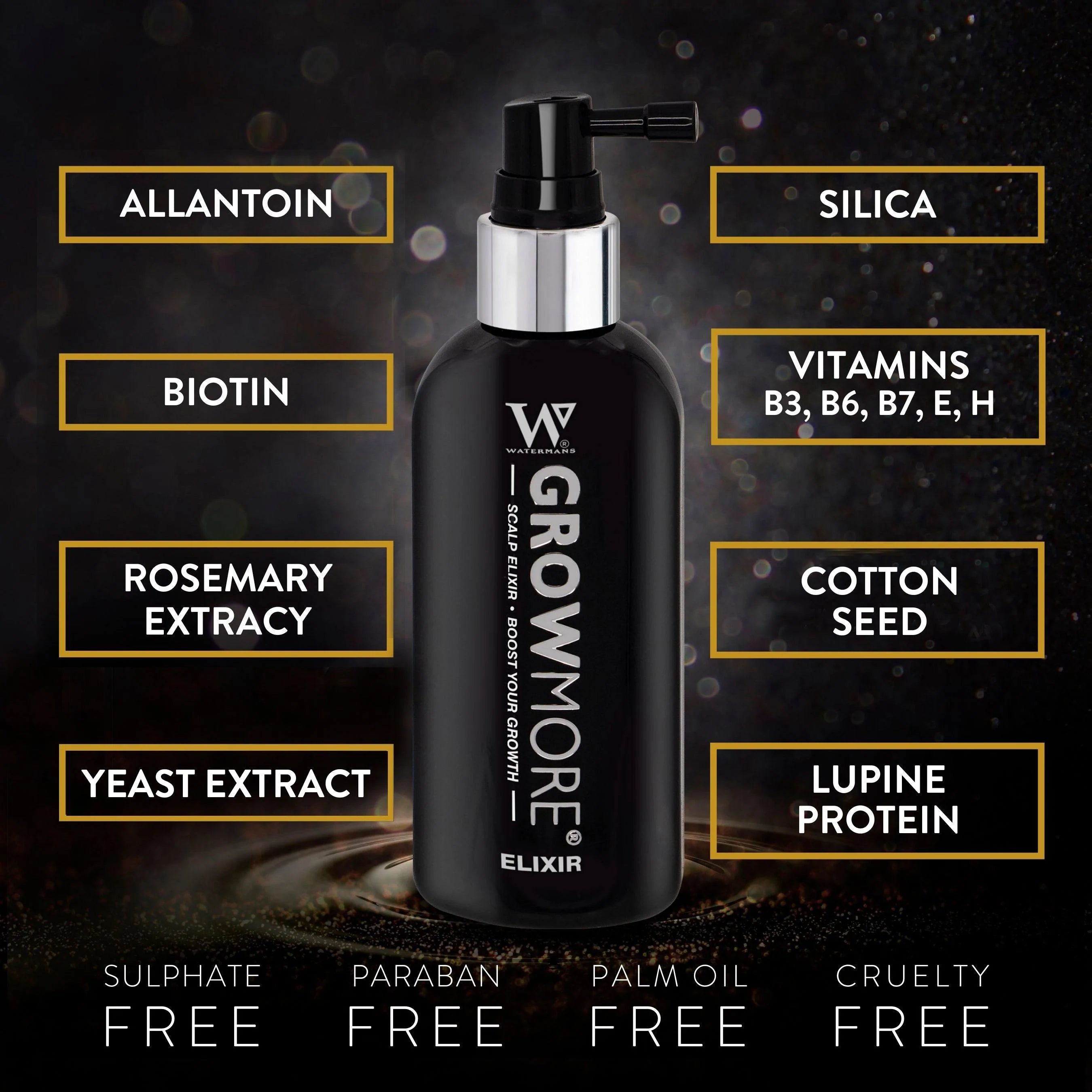
A 250ml sulfate-free shampoo with caffeine, biotin, rosemary, niacinamide, hydrolysed lupine protein and argan oil, £14.95 in September 2026. The directions ask you to massage it into the scalp and leave it for 3 to 4 minutes, to help reduce breakage and leave hair looking fuller.
How do film-forming, fibre-swelling and conditioning make fine hair look thicker?
Film-forming, fibre-swelling and conditioning make fine hair look thicker by changing each strand rather than the scalp: light coatings add a little width and grip, water swells the fibre slightly, and conditioning agents smooth the cuticle so strands separate and move instead of clinging together flat against the head.
Gavazzoni Dias's 2015 review in the International Journal of Trichology explains that hair is porous, damaged hair intensely so, and that water absorption swells the hair shaft. Washing and friction leave the hair surface negatively charged. Conditioners neutralise that charge by adding positive charges and lubricating the cuticle, which cuts friction, detangles and eases combing, and cationic ingredients in some shampoos bond quickly to negatively charged strands to reduce frizz.
The same review notes that some oils leave a film on the cuticle that adds shine and reduces friction, but that thick films can leave hair looking oily and heavy. That trade-off matters on fine hair: too much coating and the roots collapse, which is why a rich, heavy formula can make thinning hair look thinner, not thicker.
All three effects are temporary. The Procter & Gamble study measured 2 to 5 micrometres of extra width from a leave-on product; any coating from a rinse-off shampoo is lighter and washes out at the next wash. That is still a real, visible benefit, as long as the label does not dress it up as more.
- Film-forming. Polymers and light oils coat the strand, adding body and shine.
- Fibre-swelling. Water and humectants such as glycerin are taken up by the porous fibre.
- Conditioning. Positively charged ingredients cancel static so strands stop clinging and flyaways settle.


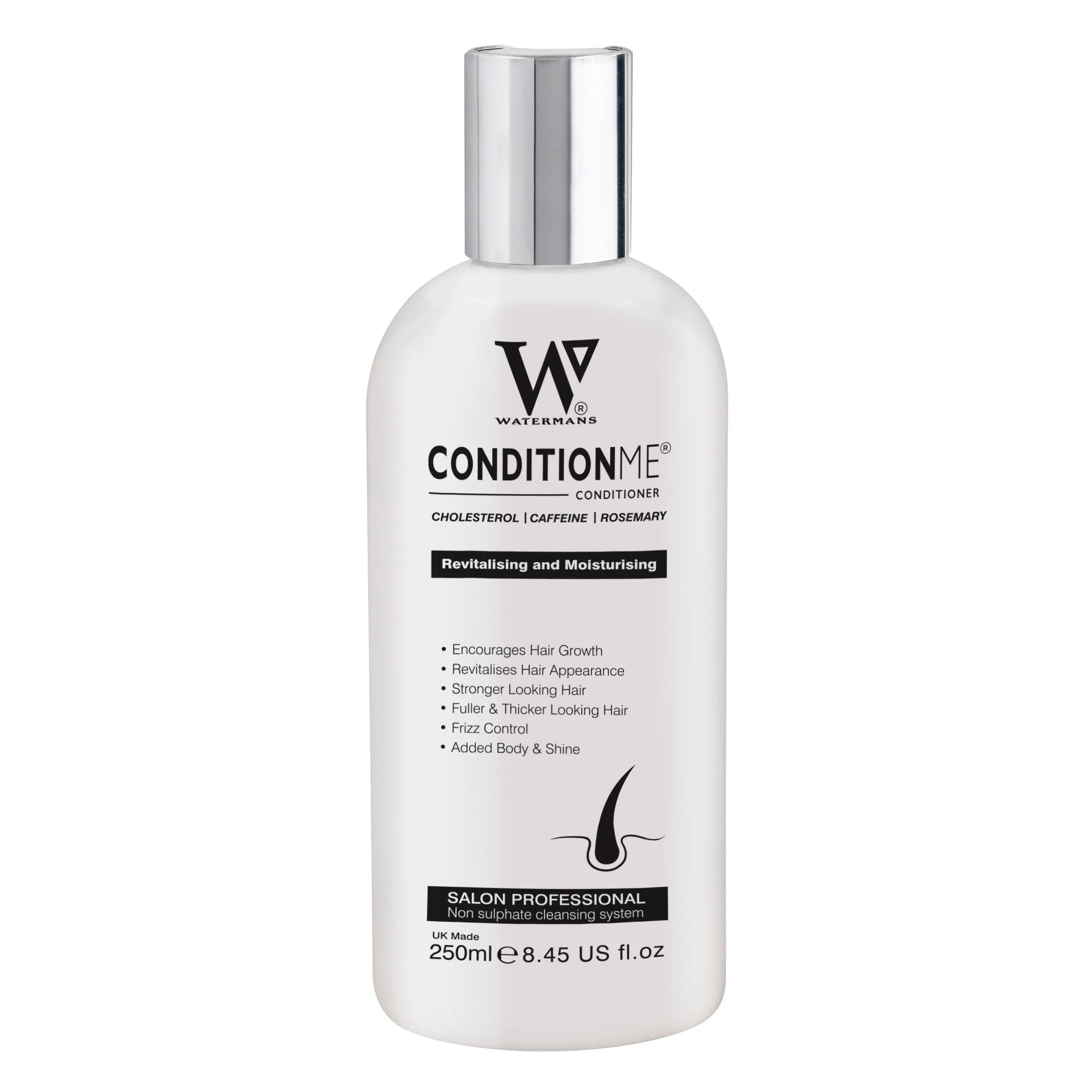
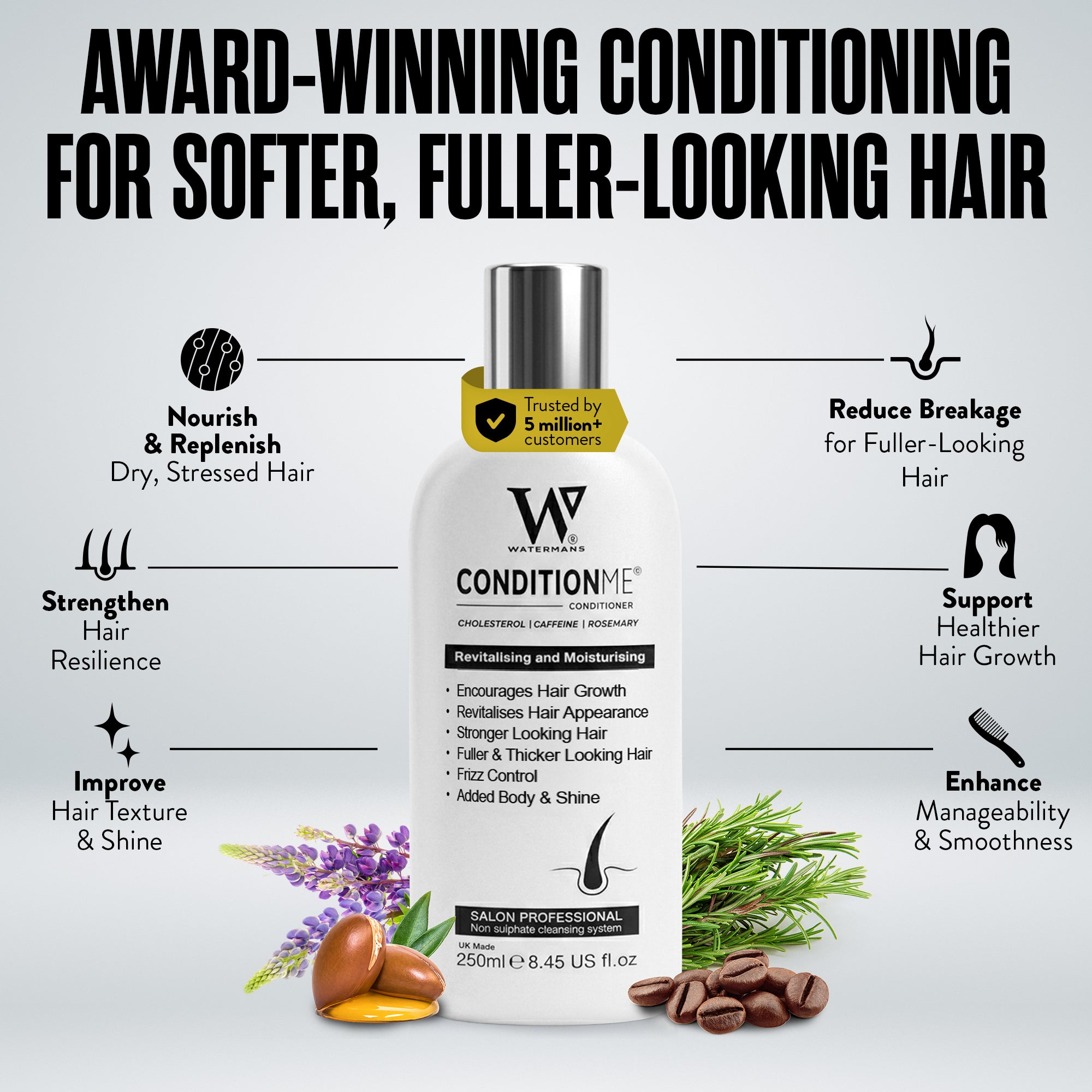
A breakage-defence conditioner with cholesterol, shea butter, glycerin and hydrolysed lupine protein, £13.95 in September 2026. Apply it to the mid-lengths and ends for slip, so strands comb apart instead of snapping and hair looks fuller.
How long does a rinse-off shampoo stay on your scalp, and does contact time matter?
A rinse-off shampoo usually stays on the scalp for only a minute or two unless you deliberately leave it longer, and contact time matters because anything a formula can deliver to the scalp has to arrive before you rinse, which is why some labels give a timed instruction such as three to four minutes.
The Berlin caffeine study used exactly 2 minutes of contact and still detected absorption through the follicles, so a short wash is not wasted. Trüeb's review notes that advances in shampoo technology have allowed anti-dandruff shampoos to work with shorter contact time and less irritation, a reminder that formula design and directions go together.
The law expects the pack to say so. The honesty criterion in Regulation 655/2013 states that if the action of a product is linked to specific conditions, such as use with other products, this must be clearly stated. So a timed instruction, or a note that results depend on using a conditioner or leave-on step as well, is information you should follow rather than ignore.
- Wet thoroughly. Lukewarm water, right down to the scalp.
- Apply to the scalp. A small amount on the roots, not piled onto the lengths.
- Massage with fingertips. Pads of the fingers, never nails, working section by section.
- Time it. Leave it for the time the pack gives; Grow Me says 3 to 4 minutes.
- Rinse completely. Then condition the mid-lengths and ends only.
- Want longer contact? Use a leave-on scalp product, and never leave a shampoo on longer than its directions say.


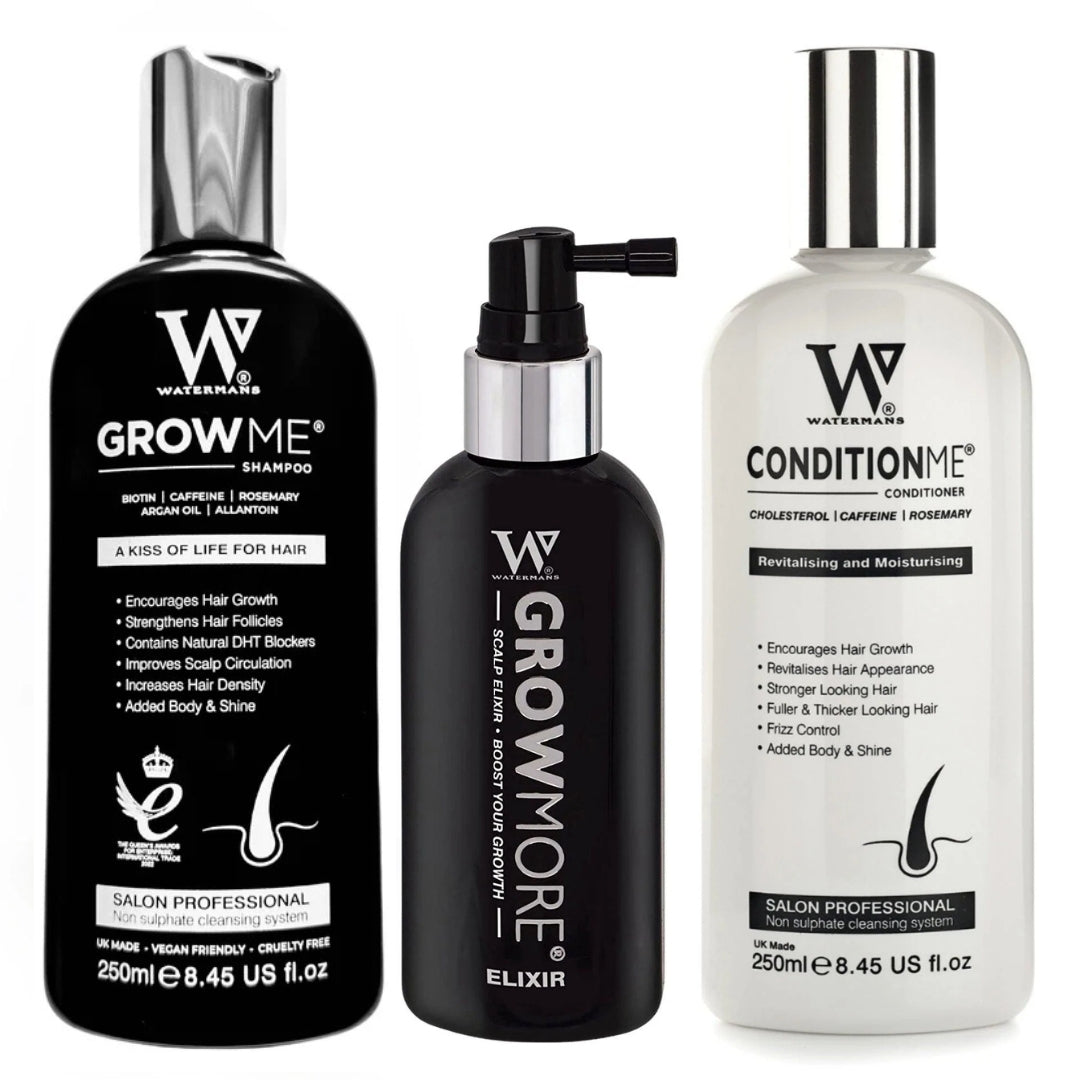
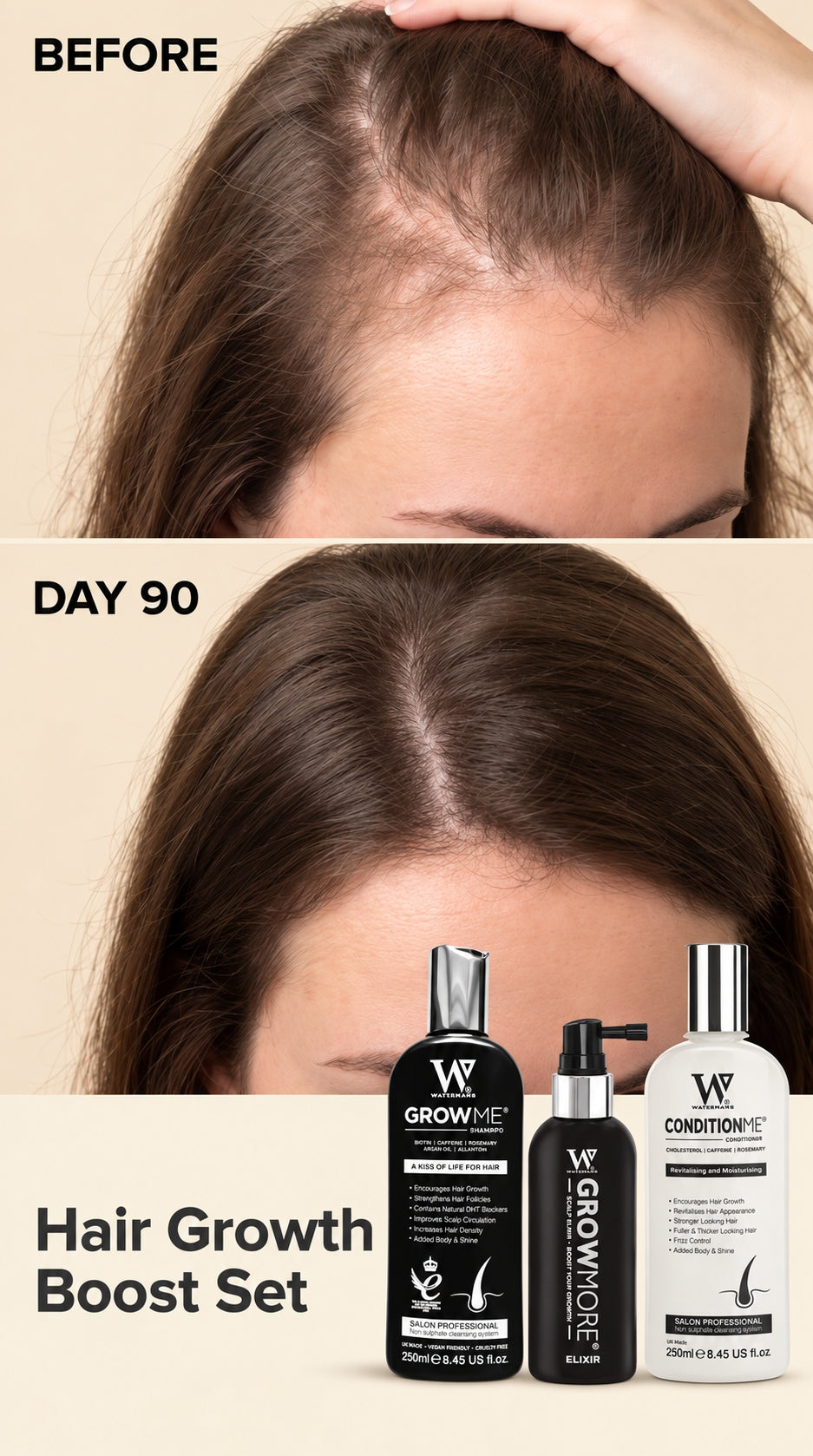
Grow Me Shampoo, Condition Me Conditioner and Grow More Scalp Elixir together, £53.40 in September 2026, with biotin, caffeine, rosemary, niacinamide, argan oil, allantoin and lupine protein. The elixir goes onto the scalp in the evening and stays on overnight, for anyone who wants scalp contact beyond a rinse-off wash.
Get a discount on the thinning hair range
Join the Watermans mailing list and we will email a discount code straight to your inbox, so you can try the thinning hair range for less. Made in the UK, over 6.5 million bottles sold since 2012.
Is it breakage, shedding or hair loss, and what can a shampoo label honestly help with?
Breakage, shedding and hair loss are three different problems, and a shampoo label can honestly speak to the first: breakage is the strand snapping along its length, shedding is whole hairs released at the end of their growth cycle, and hair loss means the follicle itself has changed or stopped producing hair.
- Hair breakage. The fibre snaps and the follicle is untouched. Short pieces with no bulb at either end are the giveaway, and this is where strengthening and conditioning claims genuinely apply.
- Hair shedding. Whole hairs fall out at the end of their cycle. The NHS says losing 50 to 100 hairs a day is normal. The British Association of Dermatologists explains that normally about 15% of scalp hair is in the shedding phase, rising to 30% or more in telogen effluvium, often around 3 months after a trigger such as illness or childbirth.
- Hair loss. The follicle changes, as in male and female pattern hair loss, which the NHS says usually runs in the family. No shampoo label can honestly address this.
Interestingly, the BAD's own leaflet on telogen effluvium mentions a volumising shampoo, alongside hair fibres, as a way to give the appearance of greater hair thickness while shedding settles. That is exactly the honest job of a cosmetic: disguise and care, not a change to the cycle. For the rest of a gentle wash-day routine, from where conditioner goes to heat and a weekly mask, see our Warrington guide to a weekly routine for thinning hair.
| What you notice | Most likely | Label words that fit | Next step |
|---|---|---|---|
| Short snapped pieces with no bulb | Breakage | Strengthening, conditioning, reduces breakage | A gentler routine for a few months |
| More full-length hairs with a small pale bulb | Shedding | Volumising, fuller-looking | Usually settles; GP if heavy or lasting |
| Widening parting, receding hairline or patches | Hair loss | Cosmetic volume only | Speak to your own GP |
If you are not sure whether your hair is fine or genuinely thinning, our Swindon guide to fine versus thinning hair walks through an at-home check.
What red flags on a shampoo label suggest an overpromise?
The red flags that suggest a shampoo is overpromising are medical language on a product sold as a cosmetic, promises of new hair or an end to hair fall, a headline ingredient buried at the bottom of the list, proof you cannot check, and claims that one plant extract or vitamin does what no cosmetic legally can.
- Medical language. Talk of a disease, a named medical condition or what a product does inside your follicles. The MHRA judges whether something is a medicine partly by its claims, so a cosmetic has no business making them.
- Promises of new hair. Wording about filling in bald patches or new hairs sprouting. Under CAP rule 12.23 any growth claim needs scientific evidence, where relevant from trials on people.
- Borrowed proof. A study of an ingredient presented as proof for the whole bottle, which the truthfulness criterion in Regulation 655/2013 rules out.
- Opinions dressed as results. A percentage of users who "saw fuller hair" with no sample size, time frame or method. The same criteria say opinions must not be presented as verified claims.
- The only one. Claims that a shampoo is unique because it contains caffeine or biotin, when many do. Regulation 655/2013 forbids claiming unique characteristics that similar products share.
- Buried actives. The ingredient on the front of the bottle listed after the preservative on the back.
The two-minute label check
Turn the bottle over. Read the first five names to see the base. Find the headline ingredient and note whether it comes before or after the preservative. Reread the front: words about how hair looks and feels are the honest ones. Finally, check the directions for a contact time, and follow it.

Once you can read the labels, our hair thickening shampoo buyer's guide goes deeper on comparing specific formulas side by side. If you are torn between the men's and women's aisle, our St Albans guide to whether men's and women's shampoo really differ shows why scalp type matters more than the label. Our guide to shampoo for older hair is the place to go next on that.
When should you speak to your GP instead of changing your shampoo?
You should speak to your GP instead of changing your shampoo when hair comes out in handfuls, patches or a receding hairline appear, the scalp is sore, scaly or red, or thinning arrives with tiredness or other health changes, because NHS 111 Wales advises seeing a GP about the cause before any commercial hair clinic.
In Newport, NHS services are run by Aneurin Bevan University Health Board, which covers Blaenau Gwent, Caerphilly, Monmouthshire, Newport, Torfaen and South Powys. The route is the same as anywhere in Wales: your GP first, then an NHS referral if one is needed, and our guide to the free NHS Wales route explains each step. If your Newport is on the Isle of Wight or in Shropshire, the NHS in England gives the same advice. Either way, a GP visit costs nothing, while the trichologists Newport searches list are private and charge a fee.
See your GP first if
You have smooth bald patches; your hairline or parting is widening; the scalp is sore, red, scaly or weeping; you are losing handfuls of whole hairs; or thinning comes with other changes in your health. The NHS lists illness, stress, weight loss and iron deficiency among the causes of temporary hair loss.
How do you check the trichologists Newport searches bring up?
Checking the trichologists Newport searches bring up comes down to professional membership: the Institute of Trichologists runs a Find a Trichologist register and the Trichological Society is the other main UK body, so ask which one a practitioner belongs to and confirm it on that body's own website before you pay.
Trichologists are not medical doctors, and most cannot give you medicines. Take your shampoo and conditioner bottles along: a good practitioner will read the labels with you and tell you honestly whether a change is worth making. Three questions help:
- Will you look at my hair and scalp and go through the products I use, label by label?
- If this looks like shedding or hair loss with a medical cause, will you send me back to my GP?
- Are you recommending products you sell, and can I keep using my own?
We sell hair care, so weigh our view accordingly, and we run no clinics, so we cannot look at your scalp. Grow Me is vegan and made in the UK, and Watermans has sold over 6.5 million bottles since 2012. Our products are cosmetic: they help hair look and feel fuller and reduce breakage, but they cannot change how a follicle behaves, and the trichologists Newport practices on the registers can look at things a label never will.
What are the most frequently asked questions about reading shampoo labels?
Should I see one of the trichologists Newport lists before changing my shampoo?
Not necessarily. Read the label first and change one product at a time. See your GP first for patches, a receding hairline, a sore scalp or heavy shedding. A registered trichologist helps most when you want your routine and products reviewed after that.
What does the order of ingredients on a shampoo mean?
Ingredients are listed in descending order of weight at the time they are added, under Article 19 of the Cosmetics Regulation. Anything below 1% may be listed in any order after the rest, so the first few names make up most of the bottle.
Can a shampoo legally claim to make hair grow?
A cosmetic exists to clean, protect, change the appearance of or keep hair in good condition. The CAP Code requires scientific evidence, where relevant from trials on people, for claims that a product improves hair growth or strengthens hair beyond its appearance. On a cosmetic, hair growth is best read as keeping more of the hair you already grow.
Does caffeine shampoo reach the hair follicles?
A 2007 study found caffeine from a shampoo left on for 2 minutes reached the follicles, faster than through the surrounding skin. It measured absorption, not hair density, so it does not show that the shampoo gives you thicker hair.
Is biotin in shampoo worth paying for?
A 2017 review found biotin helped only people with an underlying problem, and those were oral supplements. Biotin in a rinse-off shampoo has little evidence behind it, so judge a shampoo on the whole formula and how your hair looks and feels.
How does a thickening shampoo work?
Thickening shampoos coat each strand with light films and conditioning agents, and water swells the fibre slightly. The effect is real but temporary and washes out, so it changes how each hair looks rather than how many hairs you have.
How long should I leave shampoo on my scalp?
Follow the pack. Many shampoos are rinsed after a minute or two, while some give a timed instruction; Grow Me asks for 3 to 4 minutes. Never leave a shampoo on longer than its directions say.
Sources & references
- Regulation (EC) No 1223/2009 on cosmetic products, Article 2 (definitions), legislation.gov.uk
- Regulation (EC) No 1223/2009, Article 19 (labelling and ingredient order), legislation.gov.uk
- Regulation (EC) No 1223/2009, Article 20 (product claims), legislation.gov.uk
- Regulation (EC) No 1223/2009, Annex V (allowed preservatives), legislation.gov.uk
- Commission Regulation (EU) No 655/2013, common criteria for cosmetic claims, legislation.gov.uk
- ASA and CAP, CAP Code section 12, including rule 12.23 on hair and scalp claims
- MHRA, Borderline products: how to tell if your product is a medicine, GOV.UK
- NHS, Hair loss
- NHS 111 Wales, Hair loss
- Aneurin Bevan University Health Board, About us
- British Association of Dermatologists, Telogen effluvium
- Otberg N et al. Follicular penetration of topically applied caffeine via a shampoo formulation. Skin Pharmacol Physiol, 2007
- Patel DP, Swink SM, Castelo-Soccio L. A review of the use of biotin for hair loss. Skin Appendage Disord, 2017
- Trüeb RM. Shampoos: ingredients, efficacy and adverse effects. J Dtsch Dermatol Ges, 2007
- Gavazzoni Dias MF. Hair cosmetics: an overview. Int J Trichology, 2015
- Jones RT, Chahal SP. Radiolabelling techniques to measure substantivity to, and penetration into, hair of protein hydrolysates. Int J Cosmet Sci, 1997
- Davis MG et al. Leave-on cosmetic study of scalp hair fibre diameter. Br J Dermatol, 2011;165 Suppl 3:24-30
- The Institute of Trichologists, Find a Trichologist
- The Trichological Society
What is the bottom line on trichologists Newport?
Reading a shampoo label takes two minutes and can save you money. Check the first five names for the base, find where the headline ingredient sits, and read words like thickening and hair growth as descriptions of how hair looks and feels, because that is all a cosmetic can legally promise. Separate breakage from shedding and hair loss, speak to your GP first about patches or heavy shedding, and save trichologists Newport for when you want an expert to review your routine in person. If your question is about products or a routine rather than a medical one, you can talk to Gail Waterman, our co-founder, as an AI avatar on the Watermans homepage. We look at hair growth product reviews separately, with the practical steps.
If you want a label that is clear about what it does, a sulfate-free shampoo such as Grow Me lists caffeine, biotin, rosemary and lupine protein and asks for 3 to 4 minutes of scalp contact, to help reduce breakage and leave thinning hair looking fuller.
Watermans products are 100% cosmetic and do not treat medical hair loss. Individual results may vary.