Trichologist in Stevenage: Hair Care Under a Hijab or Headscarf
Covering your hair every day should never cost you your hairline, and with a gentler base underneath it rarely has to.
If you are looking for a trichologist in Stevenage because your hairline feels sore, thin or fuzzy under a hijab, headscarf or wrap, start with how your hair sits beneath the fabric. The covering itself is rarely the problem; a tight bun, a snug underscarf band and pins in the same spot every morning usually are. Loosen the base, move your tie points, choose a smooth lining and cover dry hair. Speak to your own GP about patches, soreness or a receding hairline.
Key takeaways
- The American Academy of Dermatology (AAD) says the constant rubbing of a head scarf or other covering can lead to traction alopecia, especially when hair is pulled back tightly before it is covered.
- The British Association of Dermatologists (BAD) lists tight head scarves and hair clips among the causes associated with traction alopecia, and says early cases can get better once the tension stops.
- The AAD advises pulling hair back loosely beneath any covering, and says a silk or satin covering is gentler on hair than other materials.
- A 2015 review in the International Journal of Trichology found wet hair suffers irreversible changes once stretched beyond 30% of its length, so cover dry hair whenever you can.
- The NHS says losing 50 to 100 hairs a day is normal. Short snapped pieces are breakage, while a receding or sore hairline is a reason to speak to your own GP before looking for a trichologist in Stevenage.
Can wearing a hijab or headscarf every day cause hair loss?
Wearing a hijab or headscarf every day does not harm hair by itself, but the way hair is gathered and fixed underneath can: a tight bun, a snug underscarf band or pins pushed into the same place every morning put steady pull on the hairline, and years of that pull can cause traction alopecia.
The AAD puts head coverings on the same list as sleek ponytails, cornrows and tightly pulled updos. Its guidance says the constant rubbing of a hat, head scarf or other covering can lead to traction alopecia, and that the risk is highest when hair is pulled back tightly before the covering goes on. The same page notes that anyone required to pull their hair back for work is also at higher risk, which takes in hospital caps, food-industry hair nets and uniform wraps as well as faith coverings.
The BAD information leaflet on traction alopecia is careful about who it affects. It says the condition can affect people from all ethnic backgrounds, that it has been seen with cultural, religious and occupational hairstyles, and that hair clips and tight head scarves have been associated with it. The common thread is tension, not fabric and not faith.
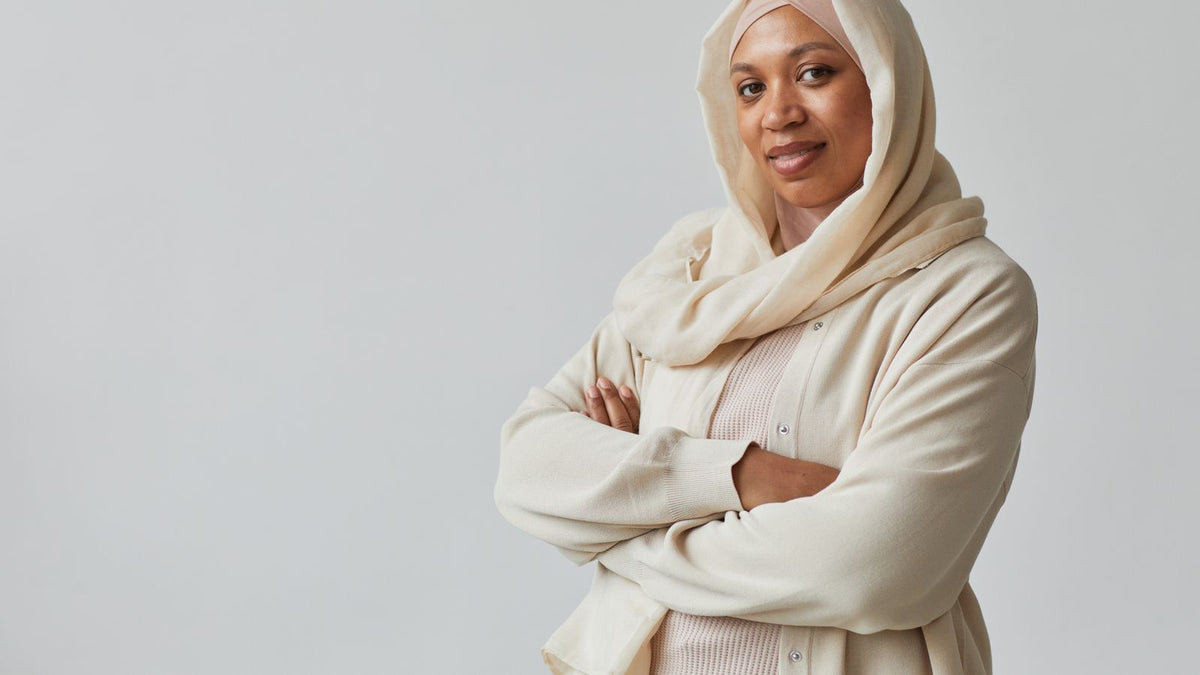
None of this is a reason to change what you wear. Every suggestion on this page works with your covering rather than against it, whether you wear a hijab, a turban-style wrap, a tichel, a durag or a scarf for work in Stevenage or anywhere else.

Where does underscarf and bun tension show up first?
Underscarf and bun tension usually shows up first at the front hairline and the temples, and around the nape if the bun sits low, because the longest hairs at the edge of the scalp take most of the pull; the AAD names the hairline as one of the first places traction alopecia can be seen.
The BAD leaflet maps the pattern to the style. Tight ponytails are linked with hair loss at the front and side margins of the scalp, and tight buns with loss at the sides and back. Because only the longer hairs are tied up, finer short hairs escape the pull and can still be seen inside thinning areas, and a rim of slightly longer hairs, which dermatologists call the fringe sign, often survives right at the edge. Some people notice itching, soreness or extra flaking before any thinning is obvious.
The AAD suggests a monthly check if you wear anything that pulls, looking for broken hairs around the forehead, a receding hairline, or patches where the hair is held tightly. It also says to change the style straight away if you notice pain from tightly pulled hair, stinging, crusts on the scalp, or tenting, where sections of scalp are pulled up like a tent.
| Tie point under the covering | Where the strain tends to show | Gentler swap |
|---|---|---|
| High, tight bun to lift the scarf | Temples, sides and back of the scalp | A loose, low bun or plait held with a soft fabric scrunchie |
| Tight tube or bonnet underscarf band | Front hairline and above the ears | A wider, softer band that leaves no deep mark on the forehead |
| Pins at the temples or behind the ears | The exact spot each pin sits, every day | Pin through fabric only, and move pin positions from day to day |
| Hair scraped back while still wet | The whole hairline, with snapping | Dry hair first, then smooth it back with fingers rather than a brush |
The ache rule
The AAD puts it simply: if a hairstyle feels painful, it is too tight. A dull ache at the temples when you take your covering off at night, or a band mark that lasts into the evening, is your hairline asking for a looser base.
How can you loosen a head covering without changing what you wear?
Loosening a head covering without changing what you wear comes down to the base underneath: a lower, softer bun or plait, an underscarf band that sits flat without gripping, pins that catch fabric rather than hair, and a tie point that moves a little each day, which follows the AAD advice to pull hair back loosely beneath any covering.
- Drop the bun. A bun worn high to give a scarf shape pulls hardest at the temples. A low bun or loose plait at the nape spreads the load, and a volumiser or scrunchie over it can still give height without tension.
- Swap elastics for fabric. Thin rubber bands grip a few hairs very hard. A soft fabric scrunchie or a spiral tie holds the same hair with less pinch.
- Size the underscarf. The band should sit flat without leaving a ridge. If it leaves a deep mark by the evening, try the next size up or a style with a wider, softer edge.
- Pin fabric, not hair. Slide pins through the layers of the scarf and underscarf only, so the weight hangs from the fabric rather than from a clump of hair at the temple.
- Rotate. Move the part, the bun and the pin positions slightly each day so the same follicles are not under strain seven days a week. The AAD recommends switching styles regularly so hair can recover from tension.
- Mind the weight. The BAD notes that very long hair can add to traction simply through its weight, and the AAD says longer braids pull more. Trimming very long lengths is a personal choice, but a lighter bun does sit more easily.
Hours when you are not covering, such as overnight, are the best time to let the hairline rest: a loose plait or hair left down is kinder than sleeping in the same tight bun. If you wear braids, twists or another protective style under your scarf, our Bradford guide to textured hair and traction covers those styles in more depth.
Is silk or satin better than cotton under a headscarf?
Silk or satin is gentler than cotton under a headscarf, according to the American Academy of Dermatology, which says a head covering made of silk or satin is kinder to hair than other materials, because a smooth surface lets strands slide rather than catch on a textured weave each time you turn your head.
The reason sits in the outer layer of the hair. The 2015 review of hair cosmetics in the International Journal of Trichology explains that the overlapping cuticle scales, laid like roof tiles, are responsible for the friction effect in hair, and that everyday grooming and friction can disrupt the layers that hold those scales together. The review adds that the cuticle is 6 to 8 scales thick in Asian hair, slightly thinner in Caucasian hair and thinner still in African hair, and that a thinner cuticle makes hair more prone to breakage. Edges that rub against fabric for ten or more hours a day take a small dose of that wear every day.
The evidence has limits, and it is worth being plain about them. We searched PubMed in September 2026 for studies comparing scarf or underscarf fabrics with hair breakage and found none, so the silk and satin advice rests on expert guidance and on how hair is built rather than on a trial. Adverts that promise a set percentage less breakage from a particular lining go further than any published evidence we could find.
| Fabric against the hair | How it behaves | Best use |
|---|---|---|
| Silk | Very smooth natural fibre, lets hair glide | An underscarf or lining where fabric meets the hairline |
| Satin (often polyester) | Smooth weave at a lower price; can feel warmer on hot days | Linings, bonnets and satin-faced underscarves |
| Cotton | Comfortable and absorbent, but a textured weave can catch dry ends | An outer layer over a smooth lining |
| Stretch jersey underscarves | Grip well, which keeps the scarf in place but can tug at edges | Choose a soft, wide band and check it leaves no deep mark |

Dry edges catch more than soft ones, so a little oil on the lengths and the fine hairs at the hairline helps them glide against whatever lining you choose. Keep it light and away from the scalp itself, since a heavy layer of oil sealed under fabric all day can leave the scalp feeling greasy and itchy. For curls and coils that snap on wash day, our Hastings guide to detangling coily hair gently walks through each step.
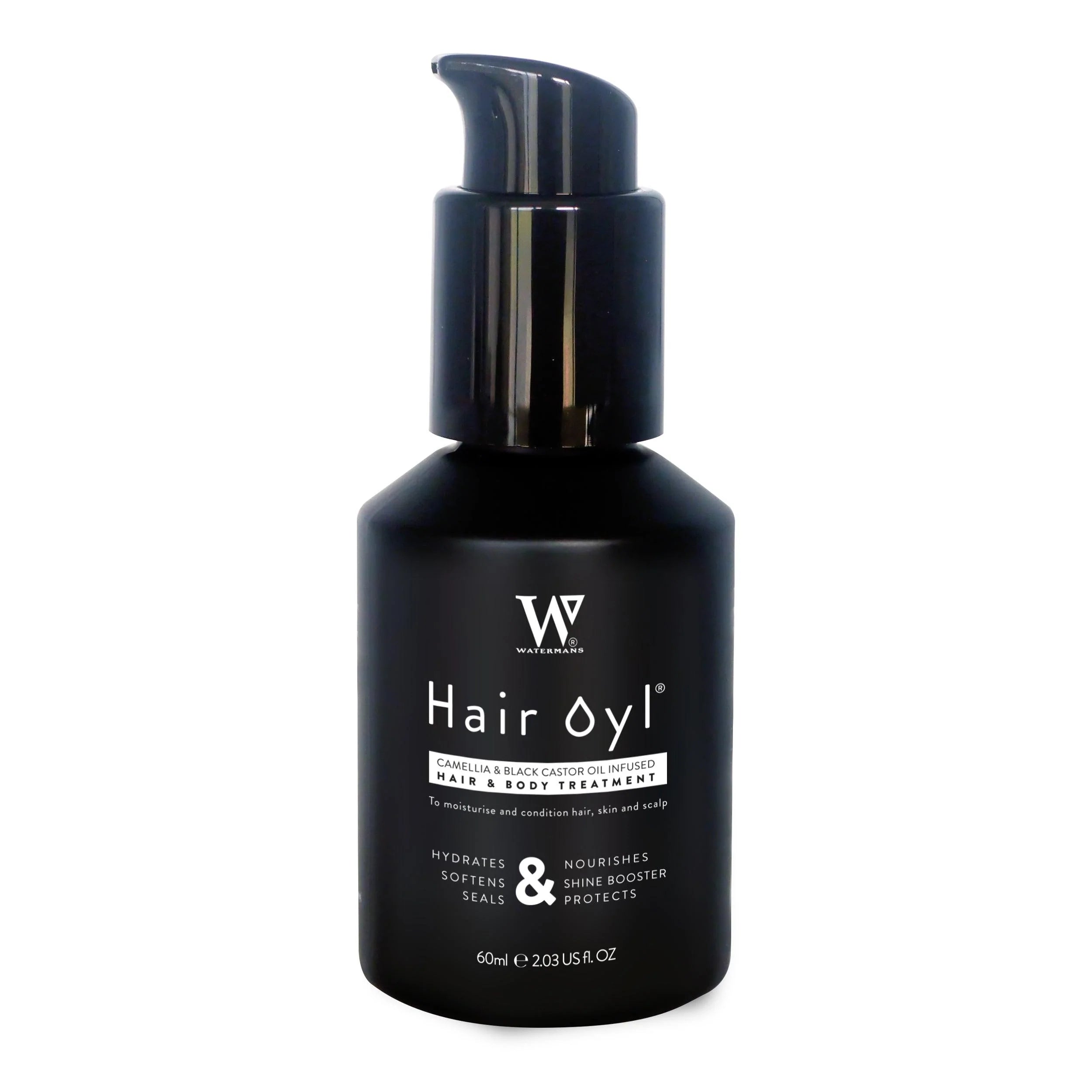
Camellia & Black Castor Hair & Body Oil
A vegan blend of camellia and black castor oils with omega 3, 6 and 9 and vitamins A, B, D and E, £24.95 as of September 2026. Smooth two or three drops over dry ends and edges before you cover, so they feel softer and slide more easily against the lining.
Should you put a headscarf on over damp hair?
Putting a headscarf on over damp hair is best avoided when you can, because water swells the hair shaft and makes each strand stretchier and weaker, so hair that is pulled back tightly while wet and then held under fabric for hours is under strain at exactly the point where it is most fragile.
The 2015 International Journal of Trichology review gives the numbers. Wet, undamaged hair can be stretched by 30% of its original length without damage, stretching it between 30% and 70% causes irreversible changes, and stretching it to 80% breaks it. The same review notes that water absorption swells the hair shaft. A damp bun scraped back and pinned under an underscarf is a textbook way to hold wet hair under stretch for a whole morning.
- Wash when you have time to dry. An evening or a day off gives hair the hours it needs before it goes under fabric.
- Blot, do not rub. Press water out with a soft cotton T-shirt or a microfibre towel rather than scrubbing with a rough towel.
- Use cool air if you need speed. A blow-dryer on a low heat setting, held moving, gets roots dry faster than leaving hair to air-dry under a scarf.
- If you must go out damp, go loose. Gather hair very loosely and let the smooth lining do the work of keeping it tidy, rather than pulling it tight to control it.
How do heat and sweat under a head covering affect your scalp?
Heat and sweat under a head covering mostly affect comfort and flaking rather than the follicles themselves, although a warm scalp that goes unwashed for days can make dandruff more noticeable, and the NHS says dandruff is linked to a yeast that naturally lives on skin rather than to poor hygiene.
The NHS dandruff page is reassuring on the basics. Dandruff is common, not harmful and not catching, and while it is not caused by poor hygiene, it may be more obvious if hair is not washed regularly. Stress and cold weather can make it worse. The NHS suggests trying an anti-dandruff shampoo from a pharmacy or supermarket for up to 4 weeks, and seeing a GP if flaking carries on after that, if the scalp is very itchy, or if it is red or swollen.
Two scalp changes deserve more attention under a covering, because fabric hides them from view. The NHS says ringworm, a common fungal infection, can appear on the scalp as a scaly, dry, swollen or itchy rash, and that its colour can be less noticeable on brown and black skin. Its dandruff page adds that a red or silver rash on the scalp, sometimes with patchy hair loss, can be scalp ringworm. Either is a reason to speak to a pharmacist or your own GP rather than to wait it out.
- Wash as often as your scalp needs. After exercise, a warm commute or a long shift, a sweaty scalp is ready for a wash sooner than the calendar says.
- Rinse well. Shampoo or conditioner left on the scalp sits under fabric all day, so rinse for longer than feels necessary.
- Let the scalp dry. Cover a dry scalp rather than a damp one, for the same reasons as the lengths.
- Rotate underscarves. Wash underscarves and bonnets often, and keep a spare for hot days.

Caps, hard hats and work hats raise many of the same heat and friction questions, and our guide on whether wearing a hat every day is bad for your hair looks at them for anyone who wears one alongside or instead of a scarf.

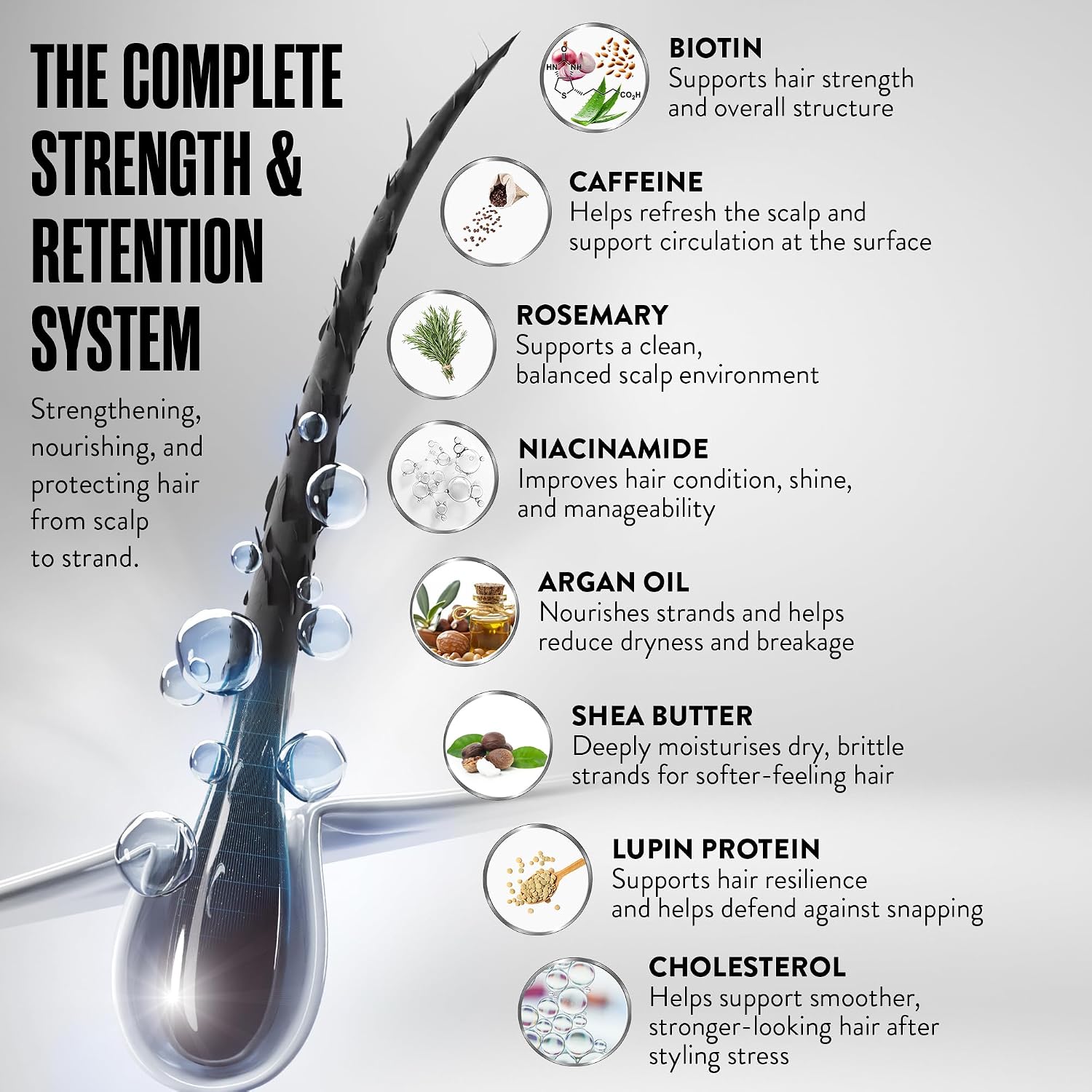
A sulphate-free shampoo with caffeine, biotin, rosemary, niacinamide, lupine protein and argan oil, £14.95 as of September 2026. Massage it into the scalp and leave it for 3 to 4 minutes on wash day, for a fresh-feeling scalp and hair that looks fuller.
Get a discount on the hair breakage range
Join the Watermans mailing list and we will email a discount code straight to your inbox, so you can try the hair breakage range for less. Vegan, made in the UK, over 6.5 million bottles sold since 2012.
What did a 2023 study of women who wear the hijab find?
A 2023 study of women who wear the hijab, run at a single dermatology centre in Detroit, compared 125 hijab wearers with 40 women of matched background who did not cover, and found that the hijab wearers first noticed hair loss younger, at an average age of 31.5 years against 37.3 years.
The study, published in Archives of Dermatological Research by Ceresnie and colleagues, looked at 165 women seen for hair loss between 2015 and 2022. Most had one of two common types: 71 had telogen effluvium, a temporary increase in shedding, and 78 had female pattern hair loss. Only 16 had traction alopecia. Among the hijab wearers, low vitamin D and seborrhoeic dermatitis, a flaky and itchy scalp condition, were both linked with a higher chance of shedding.
16 of 165. In the 2023 study, traction alopecia was the least common of the three hair loss types recorded, well behind shedding and pattern thinning.
Read the findings with care. The study came from one centre, included only women already seen for hair loss, and shows associations rather than causes, so it cannot say that covering the hair leads to any type of hair loss. What it does suggest is that a thinning hairline under a scarf is not automatically traction, and that the whole picture is worth a proper look.
The vitamin D finding lines up with UK advice. The NHS says the Department of Health and Social Care recommends a daily 10 microgram vitamin D supplement all year for adults who usually wear clothes that cover up most of their skin when outdoors, and that people with dark skin should consider one too. If that applies to you and you are also shedding, raise it with your GP or pharmacist.
Is it hair loss, shedding or breakage along your edges?
Hair along your edges is breakage if you find short, snapped pieces with no bulb, shedding if full-length hairs with a small pale bulb come out from all over the head, and hair loss if the hairline itself is moving back, thinning in patches or turning smooth and shiny where hair used to grow.
- Hair breakage. The strand snaps along its length, usually from friction, a tight elastic or handling wet hair. The follicle is untouched, so a gentler routine is the answer.
- Hair shedding. Whole hairs fall out at the end of their growth cycle. The NHS says losing 50 to 100 hairs a day is normal, and lists illness, stress, weight loss and iron deficiency among the causes of temporary hair loss.
- Hair loss. The follicle itself is affected, as in traction alopecia or pattern hair loss. DermNet lists multiple short broken hairs, itching, redness and scaling among the signs of traction alopecia, so snapping at the hairline can be an early clue rather than just breakage.
| What you notice | Breakage | Shedding | Traction hair loss |
|---|---|---|---|
| Hairs you find | Short, uneven pieces with no bulb | Full-length hairs with a small pale bulb | Short broken hairs at the margin |
| Where | Lengths and edges that rub | All over the head | Exactly where the pull sits |
| Scalp | Looks normal | Looks normal, parting may look wider | Receding edge, fringe sign, later smooth and shiny |
| First step | Smoother lining, dry hair, softer ties | Often settles; GP if heavy or ongoing | Loosen the base now and speak to your own GP |
A simple check helps: collect the hairs from your comb and underscarf for a week, lay them on white paper, and sort full-length hairs with a bulb from short pieces without one. Mostly short pieces point to how the hair is handled and covered. For the stages of traction in more detail, read our complete guide to traction alopecia.

What weekly routine keeps covered hair strong and comfortable?
A weekly routine that keeps covered hair strong and comfortable has four parts: a thorough scalp wash on the days your scalp needs it, fully dry hair before covering, a little oil on dry ends and edges, and one longer conditioning session to soften lengths that spend most of the day under fabric.
- Wash days. Shampoo the scalp, not the lengths, and rinse thoroughly. Condition the mid-lengths and ends.
- Every morning. Start with dry hair, a low loose base, a smooth lining and pins through fabric only.
- Every evening. Take the pins out, loosen the bun and let the hairline rest in a loose plait overnight.
- Once a week. A deep conditioning mask on the lengths, then a look at the hairline in the same mirror and the same light, so slow changes are easier to spot.
Night-time friction adds to daytime friction, so a smooth bonnet or pillowcase and a loose plait make sense on top of a good daytime base. Our Slough guide to hair on your pillow covers bonnets, pillowcases and going to bed with dry hair.

A vegan 8-in-1 deep conditioning mask with niacinamide, provitamin B5, rosemary, argan oil and lupine protein, £24.95 as of September 2026. Apply it to clean, damp mid-lengths and ends once a week, leave it for 10 to 15 minutes and rinse, so hair feels softer and looks glossier.
When should you see a trichologist in Stevenage or your GP about your hairline?
You should speak to your own GP first, and consider a trichologist in Stevenage second, when your hairline is visibly receding where fabric or a bun pulls, when patches appear, when the scalp is sore, red, scaly or weeping, or when handfuls of whole hairs come out for weeks rather than days.
The NHS advises seeing a GP to get an idea of what is causing hair loss before thinking about a commercial hair clinic, and says a GP may be able to tell what is going on just by looking at your hair. Timing matters with traction. The BAD says traction alopecia that has been present for only weeks or months can get better if the tension stops, with hair often starting to come back around 3 months later, while long-term, repeated pulling can permanently damage the follicles and leave the scalp smooth and shiny.
Speak to your own GP first if
Your hairline or temples are receding where the covering or bun sits; you find smooth, round bald patches; the scalp under your scarf is sore, red, crusted, scaly or weeping; a rash on the scalp comes with broken hairs; or heavy shedding arrives with tiredness, weight change or other changes in your health. Tell the GP that you cover your hair and how you tie it, because that detail matters. You can ask the practice whether a female GP is available if you would prefer one.
A trichologist is a private hair and scalp practitioner, and most are not medical doctors, so they cannot offer medicines. A good one is most useful once your GP has ruled out a medical cause, or when breakage along the edges carries on after a few months of a gentler routine and you want someone to look closely at the hairline and the way you wear your covering.
How do you find a trichologist in Stevenage who understands head coverings?
Finding a trichologist in Stevenage who understands head coverings starts with the Institute of Trichologists Find a Trichologist register or the Trichological Society, followed by a short phone call to ask whether a female practitioner and a private room are available and how often they see hair worn under a hijab, scarf or wrap.
Stevenage sits in north Hertfordshire, so widen the search to nearby towns such as Hitchin, Letchworth Garden City and Welwyn Garden City, or to London, if the register shows nobody close by. Check membership on the professional body's own website rather than trusting a logo on a salon window, and ask about fees before you go. Four questions help you choose:
- Can I see a female practitioner, in a private room, so I am comfortable during the scalp check?
- Will you look at the hairline and at how I tie my covering? Bring your usual underscarf, pins and scarf so they can see where the tension sits.
- If this looks like traction alopecia or shedding with a medical cause, will you send me back to my GP?
- Are you recommending products you sell, and can I keep using my own?
We sell hair care, so weigh our view accordingly. Watermans makes cosmetic hair care in the UK and has sold over 6.5 million bottles since 2012. We do not run clinics or offer visits of any kind. Our products help hair look and feel healthier and reduce breakage, but they cannot change how a follicle behaves, and no product can undo long-standing traction.
What are the most frequently asked questions about hair care under a hijab?
Should I see a trichologist in Stevenage for a thinning hairline under my hijab?
Not as a first step. Speak to your own GP first about a receding hairline, patches or a sore scalp, and tell them how you tie your covering. A registered trichologist is most useful once medical causes are ruled out, or when breakage along the edges carries on after a few months of a looser base and a smoother lining.
Can wearing a hijab cause traction alopecia?
The hijab itself is not the cause, but the tension underneath can be. The American Academy of Dermatology says the constant rubbing of a head scarf can lead to traction alopecia, especially when hair is pulled back tightly first, and the British Association of Dermatologists lists tight head scarves and hair clips among associated causes. A loose, low base and pins through fabric only reduce that pull.
Is a silk or satin underscarf really better for hair?
The American Academy of Dermatology says a silk or satin covering is gentler on hair than other materials, because smooth fabric lets hair slide instead of catching. We could not find a trial comparing underscarf fabrics, so see the switch as sensible and low risk rather than a measured result.
Is it bad to put a headscarf on over wet hair?
Covering damp hair is best avoided where possible. A 2015 review in the International Journal of Trichology found wet hair suffers irreversible changes once stretched beyond 30% of its length, and a damp bun pulled back under fabric holds hair under strain for hours. Dry it most of the way first, blotting rather than rubbing.
How often should I wash my hair if I cover it every day?
Wash as often as your scalp needs, which may be more often after exercise, long shifts or hot days. The NHS says dandruff is not caused by poor hygiene but may be more obvious if hair is not washed regularly. Rinse well and let the scalp dry before covering.
How can I tell breakage from shedding along my edges?
Collect a week of hairs from your comb and underscarf. Short pieces with no bulb are breakage. Full-length hairs with a small pale bulb are shedding, and the NHS says 50 to 100 a day is normal. A hairline that is moving back or turning smooth is a reason to speak to your own GP.
Will my hairline come back if I loosen my covering?
It often can if the change is recent. The British Association of Dermatologists says traction alopecia present for weeks or months can get better once the tension stops, with hair often starting to return around 3 months later. Long-term pulling can damage follicles permanently, so loosen the base early and speak to your GP if the edge keeps receding.
Sources & references
- NHS, Hair loss
- NHS, Dandruff
- NHS, Ringworm
- NHS, Vitamin D
- British Association of Dermatologists, Traction alopecia leaflet
- DermNet, Traction alopecia
- American Academy of Dermatology, Hairstyles that pull can lead to hair loss
- Ceresnie MS et al. The development of non-scarring alopecia in women who wear the hijab. Arch Dermatol Res, 2023
- Gavazzoni Dias MF. Hair cosmetics: an overview. Int J Trichology, 2015
- The Institute of Trichologists, Find a Trichologist
- The Trichological Society
What is the bottom line on trichologist in Stevenage?
Daily head coverings and healthy hair sit together well once the base underneath is gentle: a low, loose bun, an underscarf that lies flat, pins through fabric rather than hair, a smooth silk or satin lining and dry hair before you cover. Check the hairline once a month, sort breakage from shedding, and speak to your own GP about patches, soreness or a receding edge. Look for a trichologist in Stevenage when edge breakage outlasts a few months of that routine and you want someone to look closely at how you wear your covering.
For edges and lengths that feel dry under fabric, a few drops of nourishing hair oil such as our Camellia & Black Castor blend, smoothed on before you cover, leave them softer and help them glide against the lining.
Watermans products are 100% cosmetic and do not treat medical hair loss. Individual results may vary.