Trichologists West Bromwich: Hair Myths Checked Against the Evidence
A beanie in winter, a daily shampoo, a monthly trim: everyday habits get blamed for thinning hair. Most of that blame is misplaced.
Before you pay one of the trichologists West Bromwich searches bring up, check whether the worry behind it is a myth. Hats, daily washing, trims, shaving and plucking a grey hair do not cause hair loss. Rough brushing and heat do cause breakage, and stress can speed greying and trigger shedding, though never overnight. Speak to your own GP about bald patches, sudden heavy shedding or a sore scalp; a registered trichologist helps most with thinning nobody has explained.
Our hair growth shampoo
Grow Me® Hair Growth Shampoo, £14.95. A sulphate free daily shampoo that supports a healthy scalp environment and helps reduce breakage, so lengths hold on and look fuller.
Key takeaways
- Losing 50 to 100 hairs a day is normal, says the NHS. Hair in the plughole after a wash is mostly hair that was already on its way out.
- In a study of 92 identical twins, daily hat wearing went with slightly less hair loss at the temples, not more.
- Cutting, shaving and plucking act on the hair shaft, not on the follicle that decides how hair grows.
- Stress can speed greying over weeks and months. Hair that seems to go white overnight is usually a patchy hair loss condition shedding the dark hairs first.
- Split ends and 100 brushstrokes are breakage questions, and they are the myths least likely to need one of the trichologists West Bromwich has nearby: gentler handling and a trim come first.
What is the difference between hair loss, shedding and breakage?
Hair loss, hair shedding and hair breakage are three different problems: hair loss means follicles producing thinner, shorter hairs or stopping altogether, shedding means the growth cycle releasing more whole hairs than usual, and breakage means the hair fibre snapping somewhere along its length while the follicle carries on growing normally.
The British Association of Dermatologists explains that around 85% of scalp follicles are actively growing hair at any one time and around 15% are resting. A resting hair stays in place for two to four months until a new hair pushes it out. The NHS puts normal daily fall at 50 to 100 hairs, often without you noticing a single one.
- Hair loss. A change at the follicle, as in pattern hair loss or the patchy condition alopecia areata. You see a widening parting, receding temples or smooth bald patches.
- Hair shedding. Whole hairs, each with a tiny pale bulb at the root, coming out all over the scalp, often about three months after illness, stress or a big life change.
- Hair breakage. Short snapped pieces with no bulb, frayed or split tips, and a ponytail that gets thinner towards the ends.
Most of the myths below are really questions about which of the three you are looking at. Keep that in mind, because the answer decides whether you need a hairdresser, a pharmacist, your GP or a trichologist.
Which hair myths do trichologists West Bromwich hear most often?
The myths that come up most are about hats, washing, cutting, brushing, shaving, plucking greys, stress and split ends, and only two of the eight hold any truth: stress genuinely affects both greying and shedding, and a split end can keep splitting further up a hair that is never trimmed.
| Myth | Verdict | What the evidence says | Loss, shedding or breakage? |
|---|---|---|---|
| Hats cause hair loss | False | A 92-twin study linked daily hat use with less loss at the temples | None, unless headwear pulls tightly |
| Washing daily makes hair fall out | False | Washing dislodges hairs that were already shedding | Shedding you notice, not shedding you cause |
| Cutting makes hair grow faster | False | Growth happens in the follicle, below the skin | None; trims limit breakage |
| 100 brushstrokes a day | False | Friction wears the cuticle; the BAD advises against harsh brushing | Breakage |
| Shaving makes hair thicker | False | Stubble has a blunt tip that feels coarser; the follicle is untouched | None |
| Pluck one grey, two grow back | False | One follicle grows one hair; its neighbours are unaffected | None |
| Stress turns hair white overnight | Mostly false | Stress may speed greying over time; sudden whitening is usually patchy loss of dark hairs | Shedding or hair loss |
| Split ends travel up the hair | Partly true | Lab tests show some splits run lengthways along the fibre | Breakage |
Six of the eight are plainly false, which is good news: none of those habits needs a paid assessment. The two partial truths are covered in detail below, along with the signs that do deserve a professional opinion. For newer social media trends, from onion juice to hanging your head upside down, see our guide to viral hair growth hacks and when to see a trichologist in Folkestone.
Do hats cause hair loss?
Hats do not cause hair loss: a 2013 study of 92 identical male twins found that daily hat wearing was linked with slightly less hair loss at the temples, and the headwear problem dermatologists do recognise comes from constant, tight pulling on the same follicles rather than from simply covering the scalp.
The twin study, published in Plastic and Reconstructive Surgery, compared brothers with identical genes so that lifestyle differences stood out. Longer smoking and dandruff went with more hair loss at the front; daily hat use, a higher body mass index and higher testosterone went with less at the temples. The researchers could only show links, not causes, and nobody should buy a hat to keep their hair. For a related angle, see our guide to is bone broth good for hair growth.
What does harm follicles is traction. DermNet describes traction alopecia as hair loss from prolonged tension, first recorded in 1907 in people who wore tight ponytails for years, and lists tight chignons, cornrows, weaves and braids among the causes. A cap or beanie that sits comfortably does not pull on anything. A band that grips the same line of hair every single day is a different matter, so loosen anything that leaves a red mark.
Hair you find in a hat lining is shed hair that would otherwise have landed on your pillow or collar. For the fuller story on headwear, sweat and scalp comfort, read our guide on whether wearing a hat every day is bad for your hair.

Does washing your hair every day make it fall out?
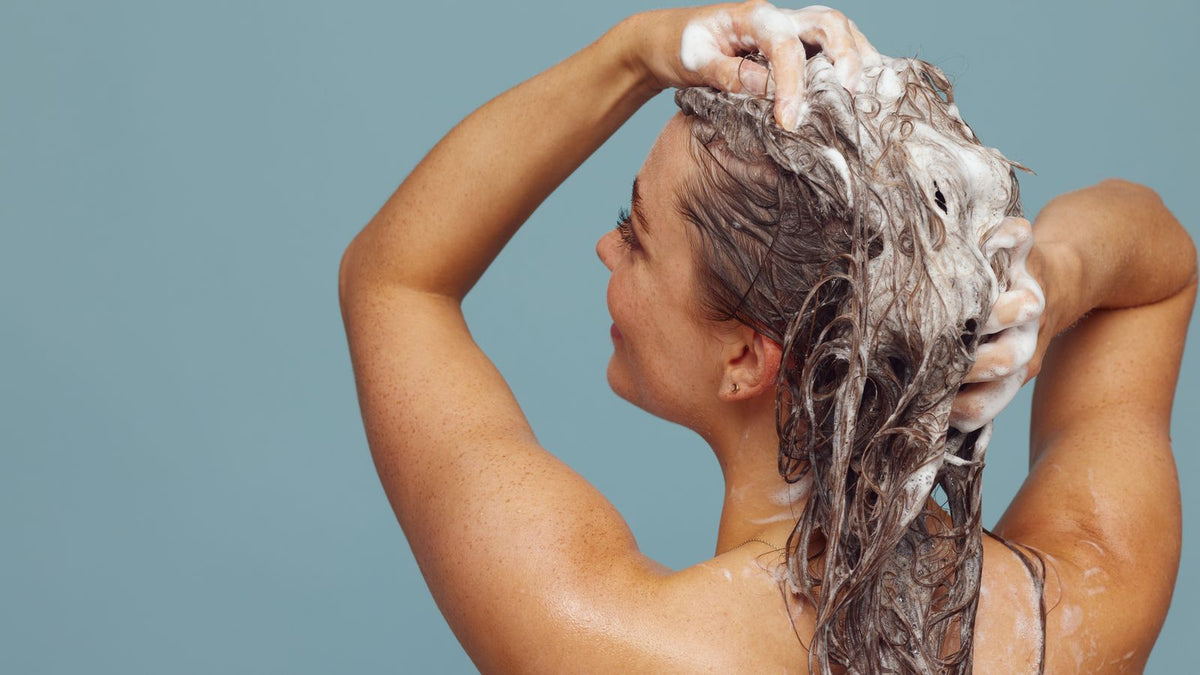
Washing your hair every day does not make it fall out: shampooing and rinsing dislodge hairs that had already finished growing and were sitting loose in the follicle, so you see them in the plughole on wash day instead of finding them on your pillow, clothes and brush over the following days.
The British Association of Dermatologists notes that shedding is most noticeable after washing or brushing. Its leaflet even warns that a hair pull test can look falsely reassuring if hair was washed within the previous 48 hours, because the wash has already cleared the loose hairs. In a 2016 study of 263 women without pattern hair loss, about 40% reported what counted as excessive shedding on hair washing days.
The longer the gap between washes, the bigger the clump on wash day, which is why people who shampoo once a week often think their hair is suddenly falling out faster. The total over a week stays much the same.
On washing frequency itself, a 2021 study in Skin Appendage Disorders found a daily wash beat a weekly wash on every measure, with no objective harm to hair. Procter & Gamble, a shampoo maker, paid the full cost of that work, so weigh it with that in mind. The American Academy of Dermatology is more flexible: straight hair with an oily scalp may want a daily shampoo, while dry, curly or textured hair can go longer. If you are wondering whether a caffeine shampoo changes the picture, our Rochdale guide to what the caffeine shampoo research shows weighs up the lab work and the scalp trials.

A sulfate-free 250ml shampoo with biotin, caffeine, rosemary and niacinamide. Gentle enough for a daily wash, it cleans the scalp and helps hair look and feel fuller, without the worry that washing itself is thinning your hair.
When is wash-day hair a real signal? If the drain fills noticeably more than usual for several weeks, about three months after illness, surgery, a crash diet or a stressful spell, that pattern fits telogen effluvium, which the BAD says usually settles on its own. Our guide to stress and hair shedding explains the timeline.
Does cutting your hair make it grow faster?
Cutting your hair does not make it grow faster, because hair is made by the follicle under the skin and the length you can see is hardened keratin with no way of signalling back to the root, so trimming the ends changes neither the speed of growth nor the number of hairs your scalp produces.
Growth is set by the follicle's own cycle. The British Association of Dermatologists describes around 85% of scalp follicles as actively growing at any one time, each for a long stretch before it rests, and nothing done with scissors at the tips alters that rhythm.
Where trims genuinely help is length retention. A frayed tip catches, tangles and snaps, and each snap takes a little more length. Hair that is never trimmed can end up shorter and wispier at the ends than hair that is trimmed a little and often. That is a breakage point, not a growth one, and it explains why the myth feels true to so many people.

Is brushing your hair 100 strokes a day good for it?
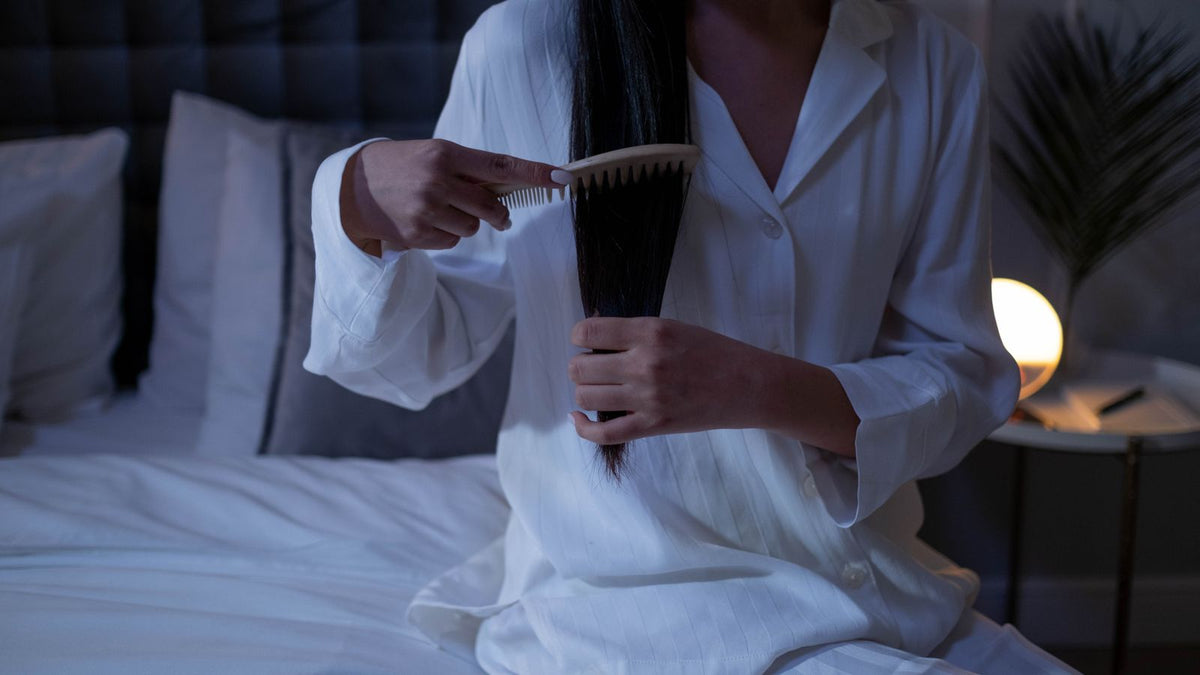
Brushing your hair 100 strokes a day is not good for it: every stroke creates friction that wears the protective outer cuticle, and repeated bending of tangled hair can open up splits, so the old advice mostly produces breakage and frizz while doing nothing for the scalp or for growth.
A 2025 review from Imperial College London explains that brushing and combing, like bleaching and hot styling, strip away the hair's natural fatty coating and raise friction, and that conditioners only restore a slippery surface temporarily. A 2026 laboratory study from Trinity College Dublin used a test that mimics the extreme bending of tangled hair during repeated brushing, and it produced lengthways splits, the lab version of split ends.
Brushing without breakage
Brush only to style and detangle, not to a count. The American Academy of Dermatology says hair is delicate when wet, so use a wide-tooth comb rather than a brush on wet hair, start at the ends and work higher. If you are shedding heavily, the BAD advises avoiding harsh brushing or combing altogether.

A conditioner with cholesterol, shea butter, glycerin and hydrolysed lupine protein. Comb it through the mid-lengths and ends with a wide-tooth comb before rinsing, so tangles slide apart instead of snapping, to reduce breakage.
Get a discount on the hair breakage range
Join the Watermans mailing list and we will email a discount code straight to your inbox, so you can try the hair breakage range for less. Made in the UK, over 6.5 million bottles sold since 2012.
Does shaving make hair grow back thicker or darker?
Shaving does not make hair grow back thicker, darker or faster: a razor cuts each hair at the skin surface and never reaches the follicle, but it slices through the naturally tapered tip, so the stubble that comes through has a blunt end that feels coarser and can look darker than a hair that has never been cut.
Researchers tested the myth directly in a 1970 study in the Journal of Investigative Dermatology. Five healthy men each shaved one leg every week for several months and left the other leg alone. No significant difference in the total weight of hair, the width of individual hairs or their rate of growth could be put down to shaving. Stubble can also look darker simply because it has not yet been lightened by sun and washing, and because short hair shows against the skin.
The same logic applies to a shaved head. Men who clip or shave to hide a receding hairline sometimes worry they have made things worse when the stubble comes back, but the pattern of loss was set by the follicles long before the razor arrived. If the hairline keeps moving back, that is pattern hair loss, and it is worth a conversation with your GP or a registered trichologist rather than a change of razor.

Will plucking one grey hair make more grow back?
Plucking one grey hair will not make more grow back: each follicle produces a single hair at a time and its colour comes from pigment cells inside that particular follicle, so pulling one grey out cannot switch off pigment in the neighbouring follicles or push two replacement hairs through a single opening.
The follicle you plucked will usually produce a new hair, and it will still be grey, because greying happens in the pigment system rather than in the hair shaft. A 2026 consensus of 24 European dermatologists put hair greying down to oxidative stress, the depletion of pigment-making cells and weaker pigment signalling, shaped by genetics, lifestyle and environment. The same panel agreed that cosmetic products can improve how grey hair looks, but no dependable way to bring the colour back exists yet. One of the most repeated of those myths is about styling products, which we unpick in is hair gel bad for your hair.
If greys bother you, snip them close to the root with small scissors or colour them; both avoid tugging at the follicle. And if pulling hair out has turned into an urge you struggle to resist, the NHS describes that as trichotillomania, a recognised condition, and suggests seeing your GP.

Can stress turn your hair white overnight?
Stress cannot turn hair white overnight, because the length already above the scalp is hardened keratin with its pigment locked in, but stress may speed up greying over weeks and months, and a patchy hair loss condition that sheds dark hairs first can make someone look suddenly white within days or weeks.
Sudden whitening, sometimes called Marie Antoinette syndrome after the story told about the French queen, is usually explained by alopecia areata. DermNet notes that it tends to shed pigmented hairs, unmasking grey hairs that were already there, and puts the lifetime risk of alopecia areata at about 2%. The BAD adds that new hairs in a bald patch often come through fine and white before thickening and usually returning to their natural colour. In one 2023 case report, a 39-year-old man whose hair whitened suddenly had his dark hair fully back by six months.
The research on stress and gradual greying is more interesting, and more contested:
- In mice. A 2020 Harvard study in Nature showed acute stress firing nerves that release noradrenaline, which used up the stem cells that supply pigment and turned fur grey permanently.
- In people. A 2021 Columbia University study in eLife mapped colour along single hairs and found some grey hairs got their colour back when the donors' reported stress eased.
- The limits. The human study was small and the mouse result may not carry over, so the fair summary is that stress is a plausible accelerator of greying, not an overnight switch.
Stress does have a well-documented link with shedding. The BAD says telogen effluvium can start around three months after a trigger, lifting the share of resting hairs from about 15% to 30% or more, and the American Academy of Dermatology says hair tends to return to its normal fullness within six to nine months once the stressor passes.
Do split ends travel up the hair shaft?
Split ends can travel further up the hair shaft if they are left alone: laboratory fatigue tests that mimic repeated brushing of tangled hair show some splits running lengthways along the fibre for visible distances, which makes this the one myth that is partly true, and trimming the only way to remove a split.
The 2026 Trinity College Dublin study found cracks start at three different boundaries inside the hair. Cracks that begin near the surface tend to run across the fibre and snap it, while splits that begin deep in the cortex run along the hair. Either way the result is breakage, not hair loss, because the follicle is never involved.
Conditioners and masks smooth the cuticle and cut friction, and the Imperial College review describes that effect as temporary; no product can glue a split back together for good. Heat styling, bleach and rough detangling all speed the process. Our guide on the habits that keep split ends at bay goes through them one by one.

An 8-in-1 deep conditioning mask with argan oil, provitamin B5, niacinamide and hydrolysed lupine protein. Used once a week on the lengths, it smooths dry, split-prone ends between trims and helps hair look and feel healthier.
Which hair worries need a GP rather than a trichologist?
Hair worries that need your own GP before a trichologist include smooth bald patches, sudden heavy shedding, hair loss alongside other symptoms such as tiredness or weight change, a sore, scaly or weeping scalp, and loss that starts after a new medicine, because these can point to a medical cause needing blood tests or a referral.
The NHS advises seeing a GP to get an idea of what is causing hair loss before thinking about going to a commercial hair clinic. West Bromwich sits in Sandwell, and your registered GP practice can arrange blood tests and a referral to NHS dermatology if needed. That is a better first step than any of the trichologists West Bromwich searches list when the signs below appear.
| What you notice | Most likely type | Sensible first stop |
|---|---|---|
| More hair in the drain for weeks, about 3 months after illness or stress | Shedding | Your GP if it lasts beyond 6 months, when the BAD calls it chronic, or sooner if you feel unwell |
| Smooth, round bald patches | Hair loss | Your GP |
| Widening parting or receding temples over years | Hair loss | Your GP or a registered trichologist |
| Short snapped hairs and frayed tips | Breakage | A gentler routine and a trim; a trichologist if it stays unexplained |
| Itchy, flaky or sore scalp | Scalp condition | A pharmacist, then your GP |
| Gradual greys with no other changes | Normal ageing | Nobody, unless patches appear |
Speak to your own GP first if
You have smooth bald patches, hair coming out in handfuls, a scalp that is sore, scaly, weeping or scarred, hair loss with tiredness, weight change or irregular periods, or changes that began after starting a new medicine. Keep taking any medicine you have been given until you have spoken to your GP.
How do you choose between the trichologists West Bromwich has nearby?
The simplest way to choose between the trichologists West Bromwich has nearby is to check membership of a recognised professional body before you pay: the Institute of Trichologists runs a public Find a Trichologist register, accredited under the Professional Standards Authority's Accredited Registers programme, and the Trichological Society is the other main UK body.
Plenty of people in West Bromwich also look in Birmingham, Wolverhampton and Walsall, all a short trip away. Our Birmingham guide to finding a good trichologist covers registration checks and what a first visit involves. If a myth is what worries you, take it along and ask three questions:
- Will you look at my scalp and hair under magnification and tell me whether this is hair loss, shedding or breakage?
- If you suspect a medical cause, will you send me back to my GP?
- Are you recommending products you sell, and can I keep using my own?
A trichologist can take a detailed history of your routine, examine the scalp closely and track change over months. Most are not doctors, so they cannot give you medicines, and anything needing blood tests goes back to your GP. If you are wondering whether a leave-on product is worth trying first, our Solihull guide sets out what scalp serums for thinning hair can and cannot do.
We sell hair care, so weigh our view accordingly. Grow Me shampoo is vegan, and Watermans hair care is made in the UK, with over 6.5 million bottles sold since 2012. They are cosmetic: they help hair look fuller and reduce breakage, but they do not change what your follicles do.
What are the most frequently asked questions about hair myths?
Should I see one of the trichologists West Bromwich searches list about a hair myth?
Usually not for a myth alone. Hats, daily washing, trims, shaving and plucking a grey hair do not cause hair loss, and brushing damage is breakage you can manage at home. A registered trichologist is worth the fee for thinning or shedding that stays unexplained after your GP has ruled out medical causes.
Is it normal to lose hair every day?
Yes. The NHS says losing 50 to 100 hairs a day is normal, often without noticing. You see more on wash days because washing dislodges hairs that had already stopped growing. Weeks of noticeably heavier fall, or hair coming out in handfuls, is worth mentioning to your GP.
Can wearing a cap every day make me go bald?
No. A 2013 study of 92 identical twins linked daily hat use with slightly less hair loss at the temples. Hair loss from headwear only happens through constant tight pulling, known as traction alopecia, so choose hats and bands that sit comfortably rather than grip.
Does trimming my hair help it grow longer?
Not directly. Trimming does not change how fast the follicle grows hair. It helps you keep length, because frayed tips tangle and snap, so removing them little and often means less breakage and fuller-looking ends.
Does shaving my head make my hair grow back thicker?
No. A razor cuts hair at the surface and never reaches the follicle. Stubble feels coarser because the cut leaves a blunt end instead of the natural tapered tip. If a hairline keeps receding after shaving, that is pattern hair loss, not an effect of the razor.
Can grey hair go back to its natural colour?
Occasionally. A small 2021 study in eLife found some grey hairs got their colour back when stress eased, and new hairs after alopecia areata often start white and darken again. For ordinary age-related greying there is no dependable way to bring colour back, so colouring or embracing the grey are the realistic options.
Is hair in my brush a sign I am going bald?
Not necessarily. Look at the hairs. Whole hairs with a tiny pale bulb are shed hairs, which are normal in the dozens every day. Short pieces with no bulb are breakage from friction or heat. A widening parting, receding temples or bald patches over time suggest hair loss worth raising with your GP. If your question is about products or a routine rather than a medical one, you can talk to Gail Waterman, our co-founder, as an AI avatar on the Watermans homepage.
Can stress make my hair fall out?
Stress can trigger telogen effluvium, a temporary increase in shedding that the British Association of Dermatologists says often starts around three months after the trigger. The shedding phase usually lasts 3 to 6 months, and hair tends to return to its usual fullness over the following months once the stress has passed.
Sources & references
- NHS, Hair loss
- NHS, Trichotillomania (hair pulling disorder)
- British Association of Dermatologists, Telogen effluvium
- British Association of Dermatologists, Alopecia areata
- DermNet, Alopecia areata
- DermNet, Traction alopecia
- American Academy of Dermatology, Tips for healthy hair
- American Academy of Dermatology, Do you have hair loss or hair shedding?
- Gatherwright J et al. The contribution of endogenous and exogenous factors to male alopecia: a study of identical twins. Plast Reconstr Surg, 2013
- Kovacevic M et al. Prevalence of hair shedding among women. Dermatol Ther, 2017
- Punyani S et al. The Impact of Shampoo Wash Frequency on Scalp and Hair Conditions. Skin Appendage Disord, 2021
- Lynfield YL, Macwilliams P. Shaving and hair growth. J Invest Dermatol, 1970
- Weiand E et al. Understanding and controlling the friction of human hair. Adv Colloid Interface Sci, 2025
- Samoylenko D et al. Hair anisotropy and damage: Understanding hair cracking and fracture via the moving loop test. J Mech Behav Biomed Mater, 2026
- Saceda-Corralo D et al. Hair Aging Revisited: An Expert Delphi Consensus. Dermatol Ther (Heidelb), 2026
- Zhang B et al. Hyperactivation of sympathetic nerves drives depletion of melanocyte stem cells. Nature, 2020
- Rosenberg AM et al. Mapping of human hair greying in relation to life stress. eLife, 2021
- Pehlivan G et al. Alopecia areata presenting as sudden-onset whitening of hair. Int J Trichology, 2023
- The Institute of Trichologists, Find a Trichologist
- The Trichological Society
What is the bottom line on trichologists West Bromwich?
Most hair myths collapse once you separate hair loss, shedding and breakage. Hats, daily washing, trims, shaving and plucking greys do not thin your hair; rough brushing and neglected split ends cause breakage you can fix at home; stress can nudge greying and trigger shedding but never whitens hair overnight. Speak to your own GP about bald patches, heavy shedding or a sore scalp, and save the trichologists West Bromwich searches bring up for thinning that stays unexplained after those checks.
For the breakage myths, the everyday answer is slip rather than more brushing: a conditioner such as Condition Me, with cholesterol, shea butter and hydrolysed lupine protein, helps a wide-tooth comb glide through so fewer strands snap.
Watermans products are 100% cosmetic and do not treat medical hair loss. Individual results may vary.