Trichologists Blackpool: Does Washing Make Thinning Hair Fall Out?
More hair in the plughole every time you wash? Here is what that hair actually is.
If you are searching for trichologists Blackpool because more hair seems to come out every time you wash, the plughole is usually showing you hairs that had already stopped growing and were waiting to fall. The NHS says losing 50 to 100 hairs a day is normal, and washing less only saves them up for one bigger clump. Wash as often as your scalp needs, be gentle with wet hair, and see a GP if shedding is sudden, patchy or lasts for months.
Our hair growth shampoo
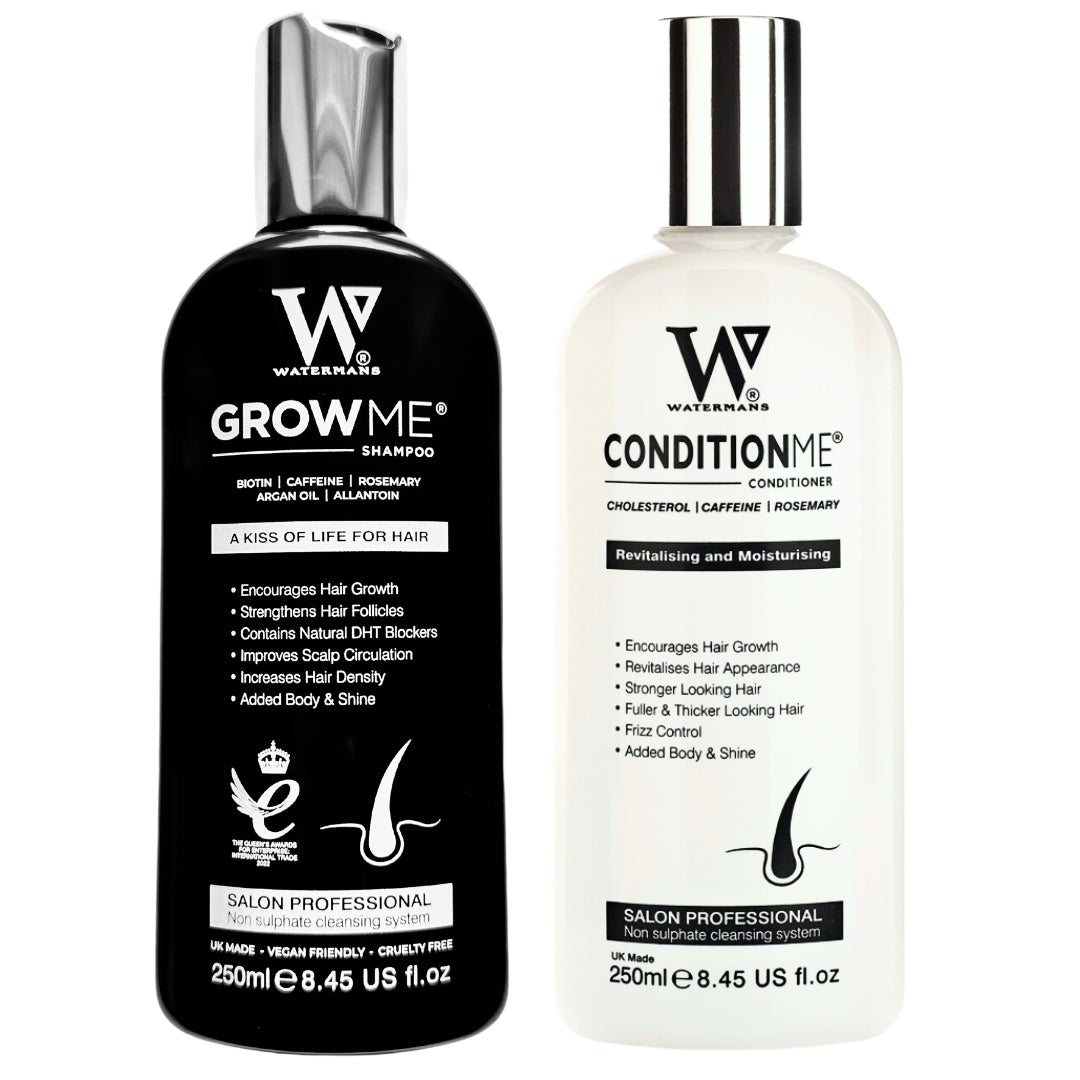
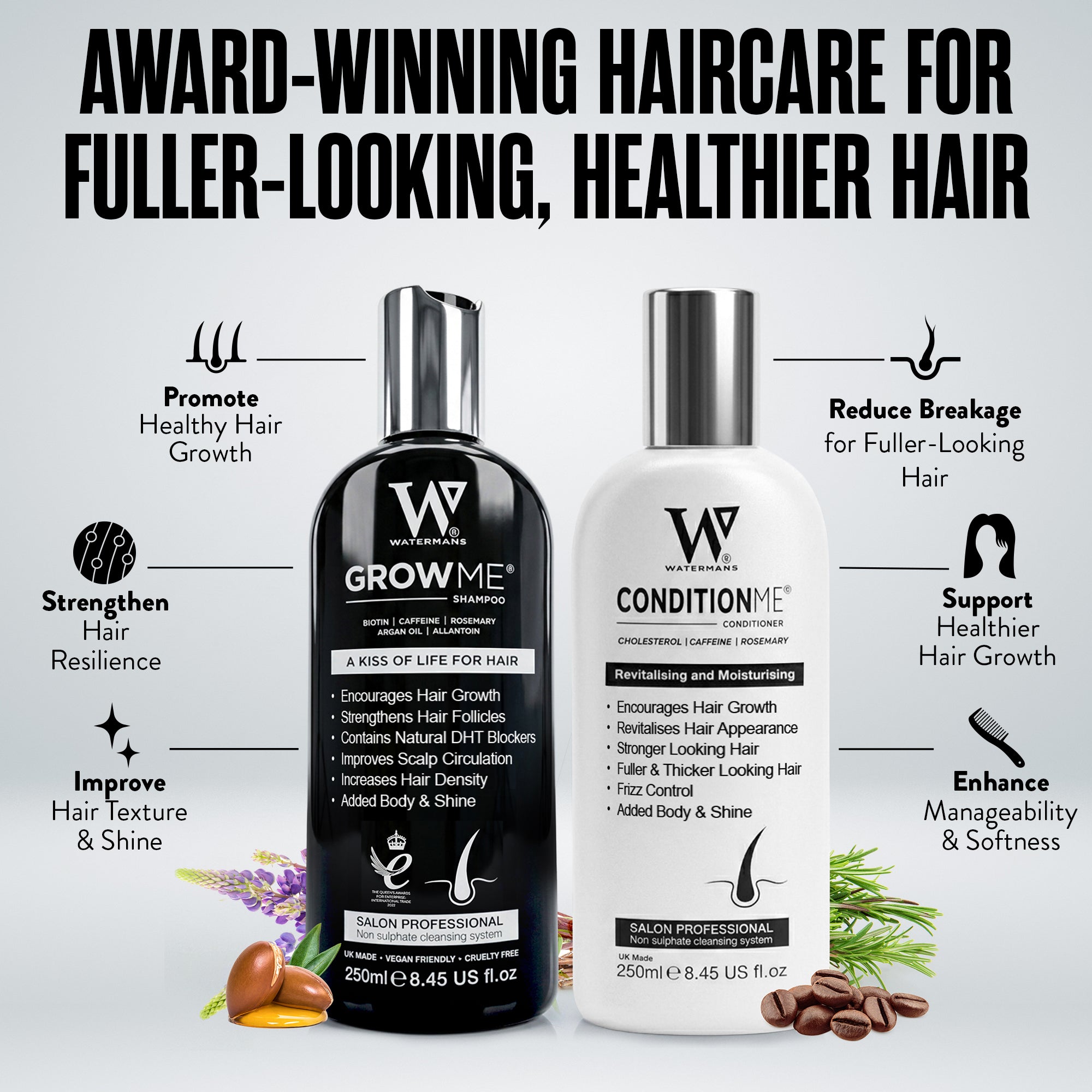
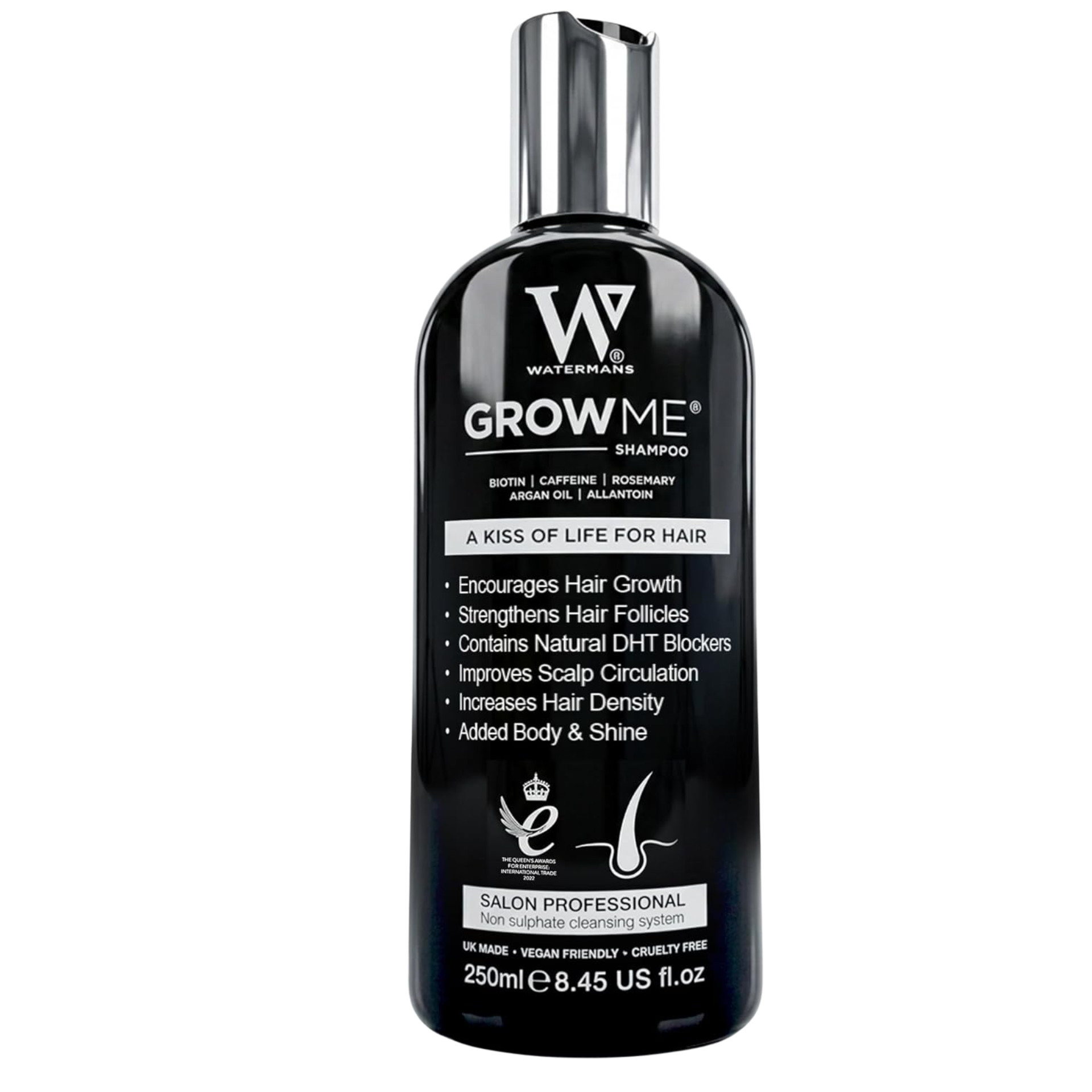
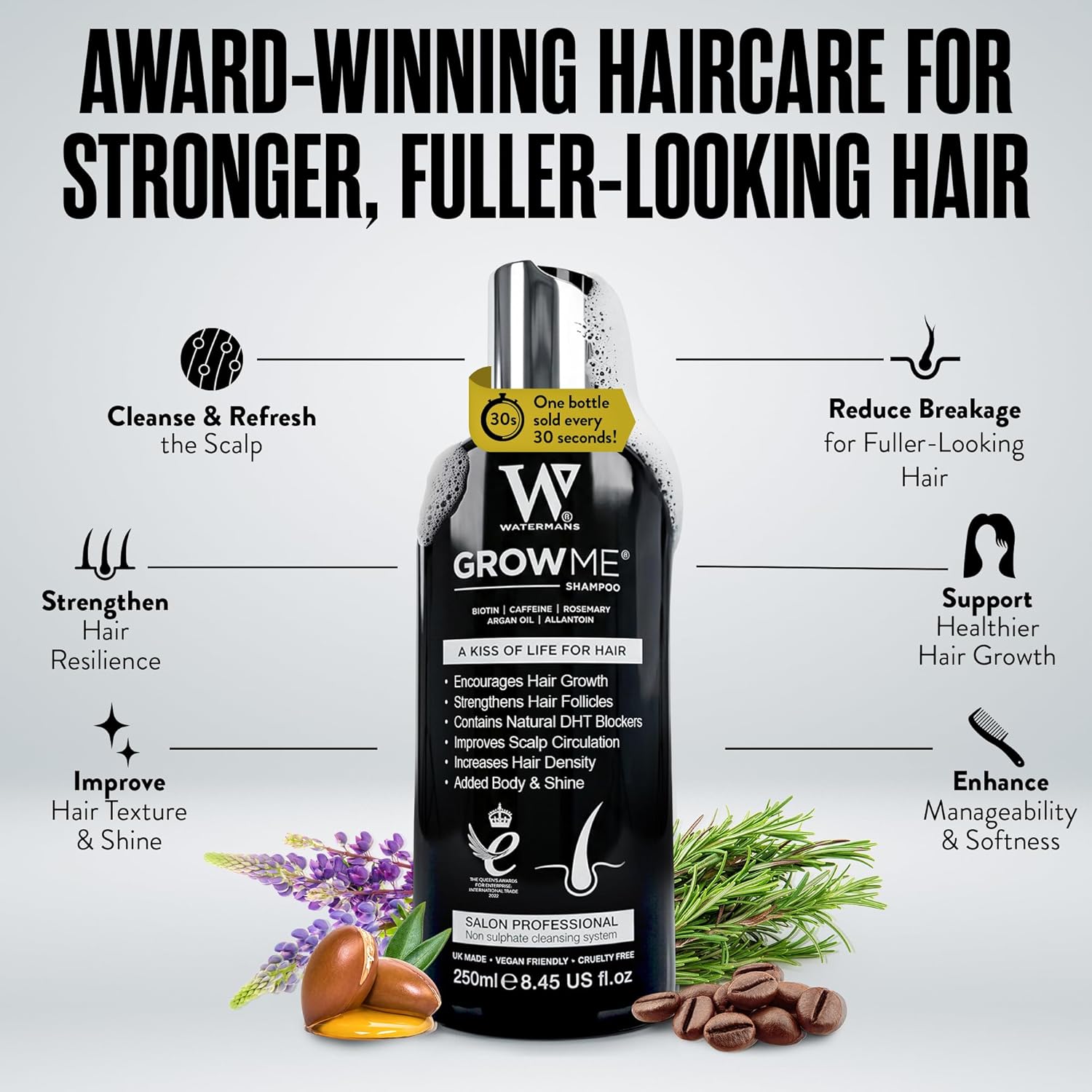
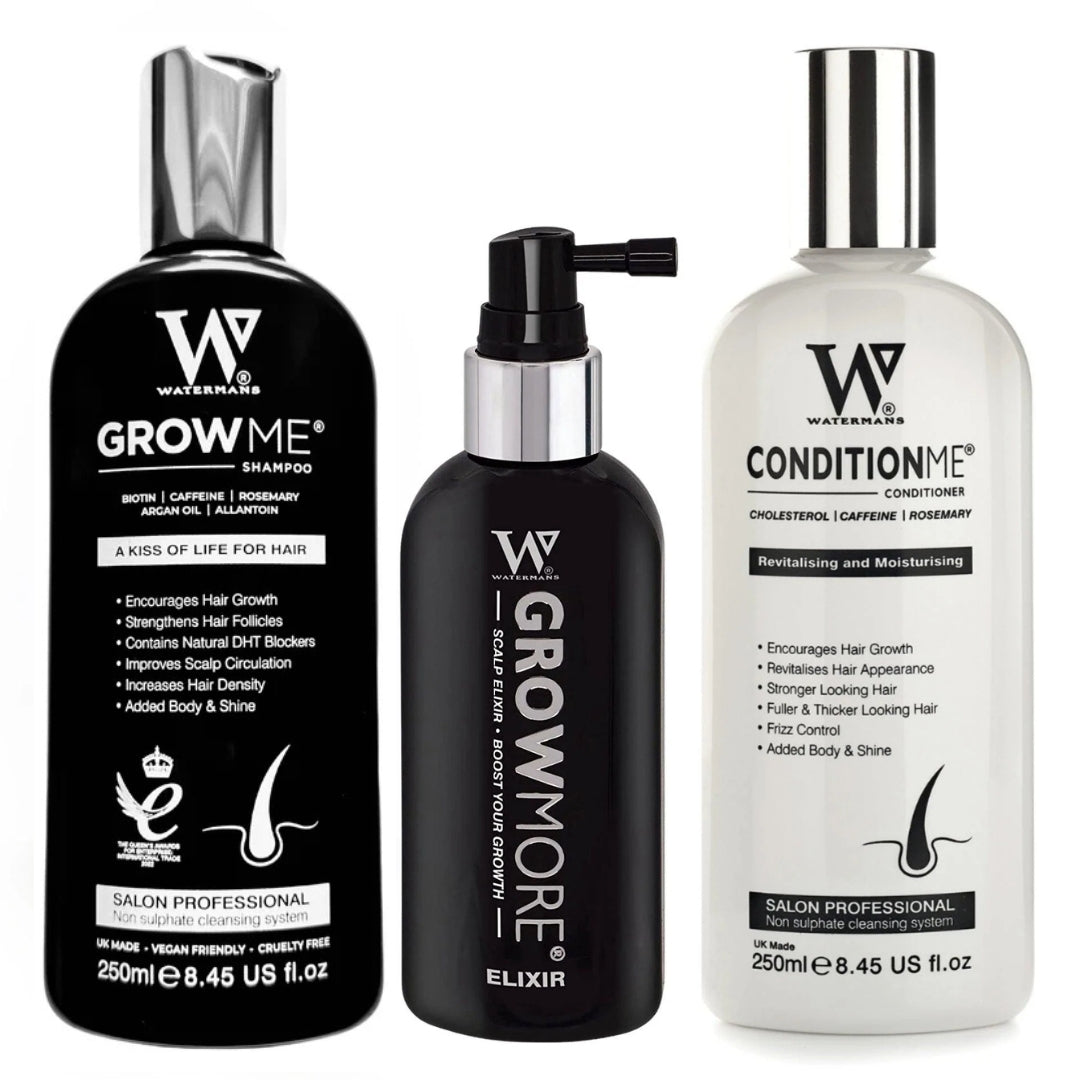
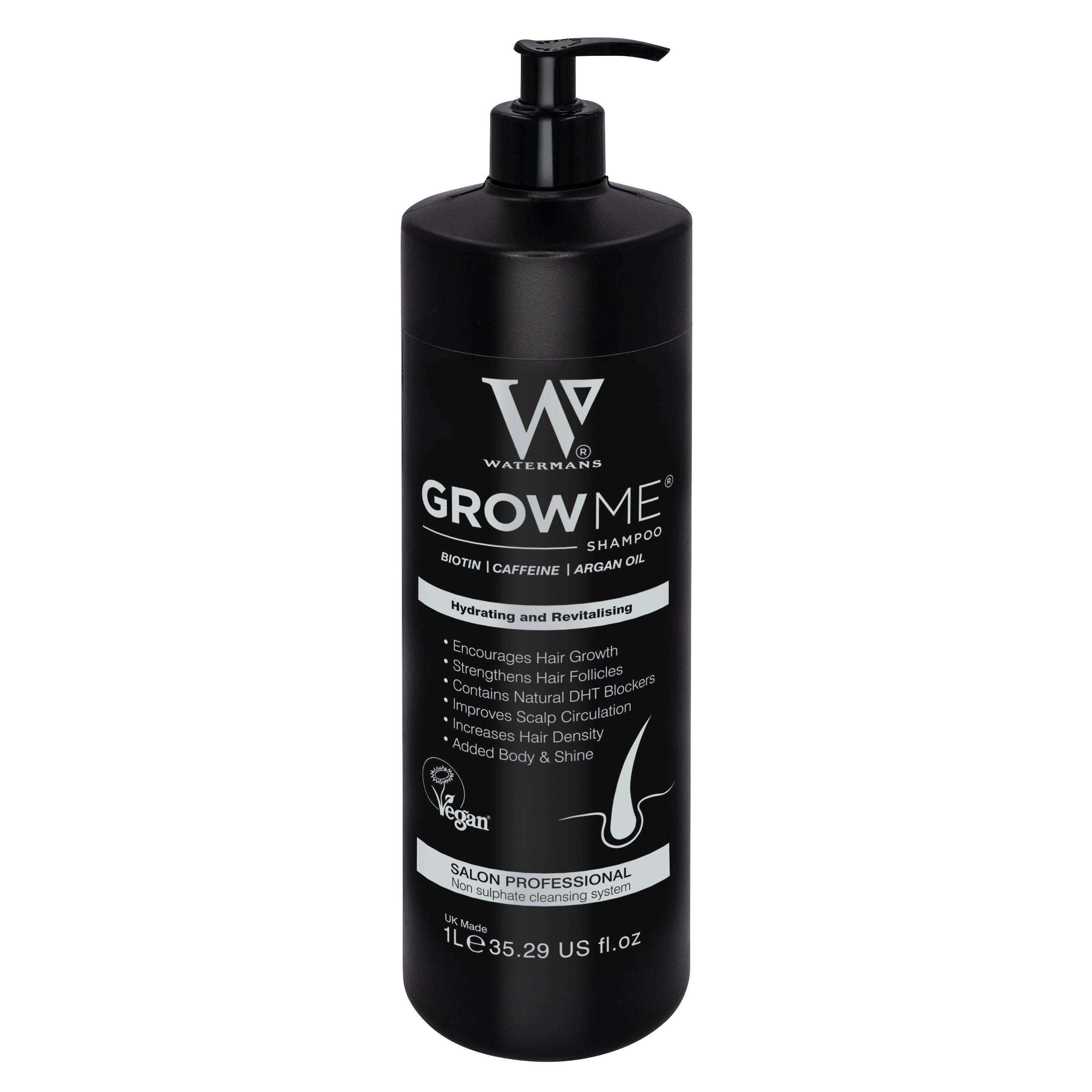
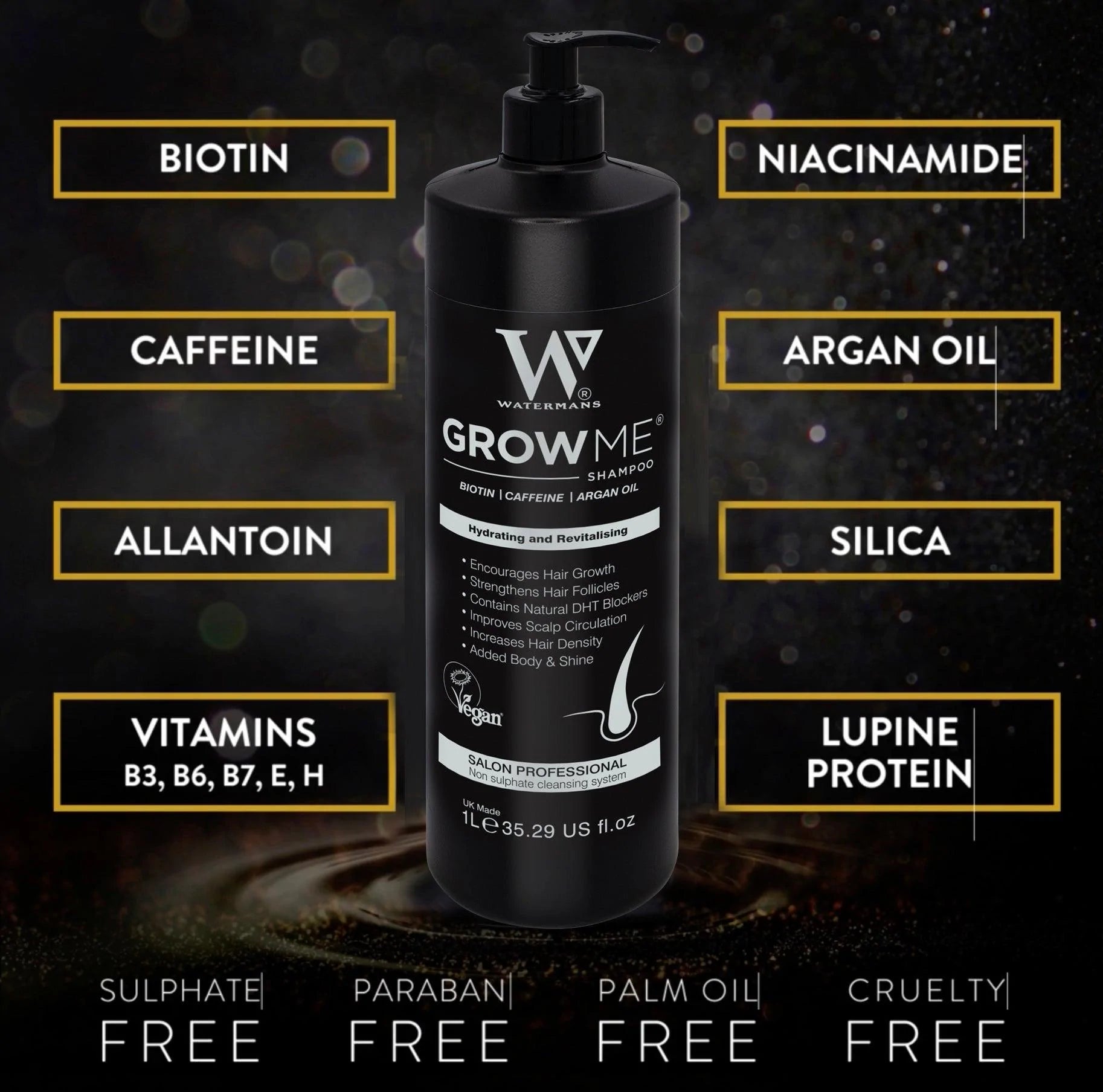
Grow Me® Hair Growth Shampoo, £14.95. A sulphate free daily shampoo that supports a healthy scalp environment and helps reduce breakage, so lengths hold on and look fuller.
Key takeaways
- The NHS puts normal hair fall at 50 to 100 hairs a day; the British Association of Dermatologists gives a range of 30 to 150.
- Washing mostly releases hairs that were already loose, so the longer the gap between washes, the bigger the clump on wash day.
- The American Academy of Dermatology says to wash based on how quickly hair gets oily, and to keep conditioner on the ends of fine or straight hair.
- Full-length hairs with a small pale bulb are shed hairs; short pieces with no bulb are breakage, which gentler towel, comb and dryer habits can reduce.
- Sudden, patchy or long-lasting shedding needs a GP before you contact any of the trichologists Blackpool searches bring up.
How much hair is it normal to lose on wash day?
Losing somewhere between 50 and 100 hairs a day is normal according to the NHS, and the British Association of Dermatologists gives a wider range of 30 to 150, so a small nest of hair in the plughole after a wash is usually the everyday hair cycle at work rather than a sign that something has gone wrong.
According to DermNet, about 85% of scalp follicles are actively growing (anagen) and about 15% are resting (telogen). A new hair grows beneath each resting one and pushes it out, which is why DermNet calls it normal to lose up to about 100 hairs a day on a comb, a brush, in the basin or on the pillow. The resting phase lasts 1 to 4 months, so the hairs you lose today stopped growing weeks ago.
Long, wet hair makes the count look worse: DermNet notes that women with thick, moderately long hair notice shed hair more than people with finer or shorter hair, and twenty wet hairs clumped together can look like a hundred.

Does washing your hair make more of it fall out?
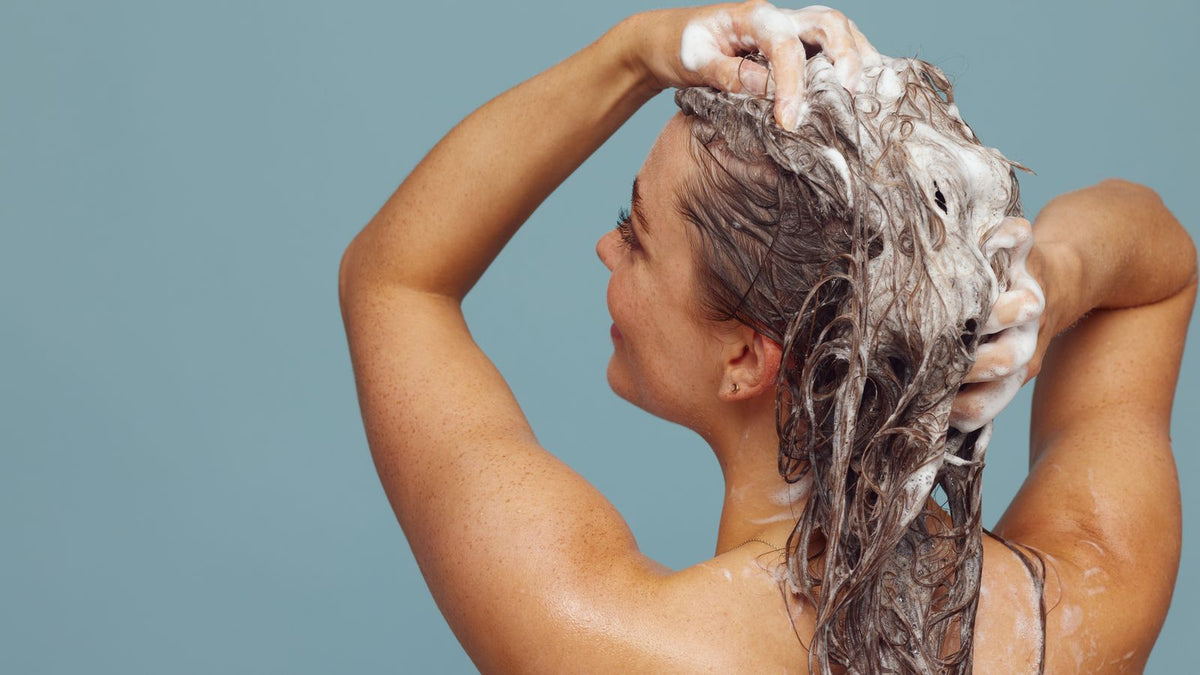
Washing your hair does not make more of it fall out: shampooing and rinsing mostly release hairs that had already finished growing and come loose from the follicle, so a longer gap between washes simply lets more of those loose hairs build up and then arrive together in one alarming clump.
The British Association of Dermatologists notes that shedding is most noticeable after washing or brushing. That is timing, not cause: fingers working through a wet scalp free hairs that were only just holding on.
The plughole maths
Take the NHS figure of 50 to 100 hairs a day. Wash daily and each wash collects part of one day's loose hairs; wash every four days and one wash can collect part of four days' worth. This is a rough illustration, not a measured count, because many hairs also fall on your pillow and brush, but it explains why washing less makes wash day look worse.
Dermatologists use the same effect on purpose. The modified wash test, studied at the University of Genoa, counts the hairs shed during a standardised shampoo to help tell telogen effluvium apart from pattern hair loss. In a 2011 reliability study, 25 people repeated it weekly for 4 weeks, and the authors judged it simple and reliable enough for everyday use. A wash shows shedding; it does not cause it.
How often should you wash fine or thinning hair?
Fine or thinning hair should be washed as often as your scalp gets oily or your hair goes flat, which for many people with fine, straight hair means daily or every other day, because the American Academy of Dermatology advises washing based on how quickly hair gets dirty or oily rather than on a fixed rule.
Fine hair has less bulk to hide oil, so greasy roots clump into strands and show more scalp, which can make healthy hair look thinner than it is. If you are tempted to skip shampoo altogether, our Burnley guide to no-poo, co-washing and water-only washing explains why going without often backfires on an oily or thinning scalp.
| Hair and scalp | How often to wash | Where it comes from |
|---|---|---|
| Straight hair, oily scalp | Possibly every day | American Academy of Dermatology |
| Fine hair that goes flat quickly | Whenever roots look flat or greasy | Our reading of the AAD's wash-when-oily rule |
| Dry, textured, curly or thick hair | When needed, at least once every 2 to 3 weeks | American Academy of Dermatology |
| No scalp condition, any type | 5 to 6 washes a week scored best | Punyani and colleagues, 2021 |
That last row comes from two 2021 studies in Asian adults without scalp conditions, where daily washing also beat once-weekly washing on every measure with no objective harm to hair. Procter & Gamble, a shampoo maker, paid the full cost, so weigh it accordingly. If an oily scalp is your main problem, see our Walsall guide to oily scalps and daily washing.

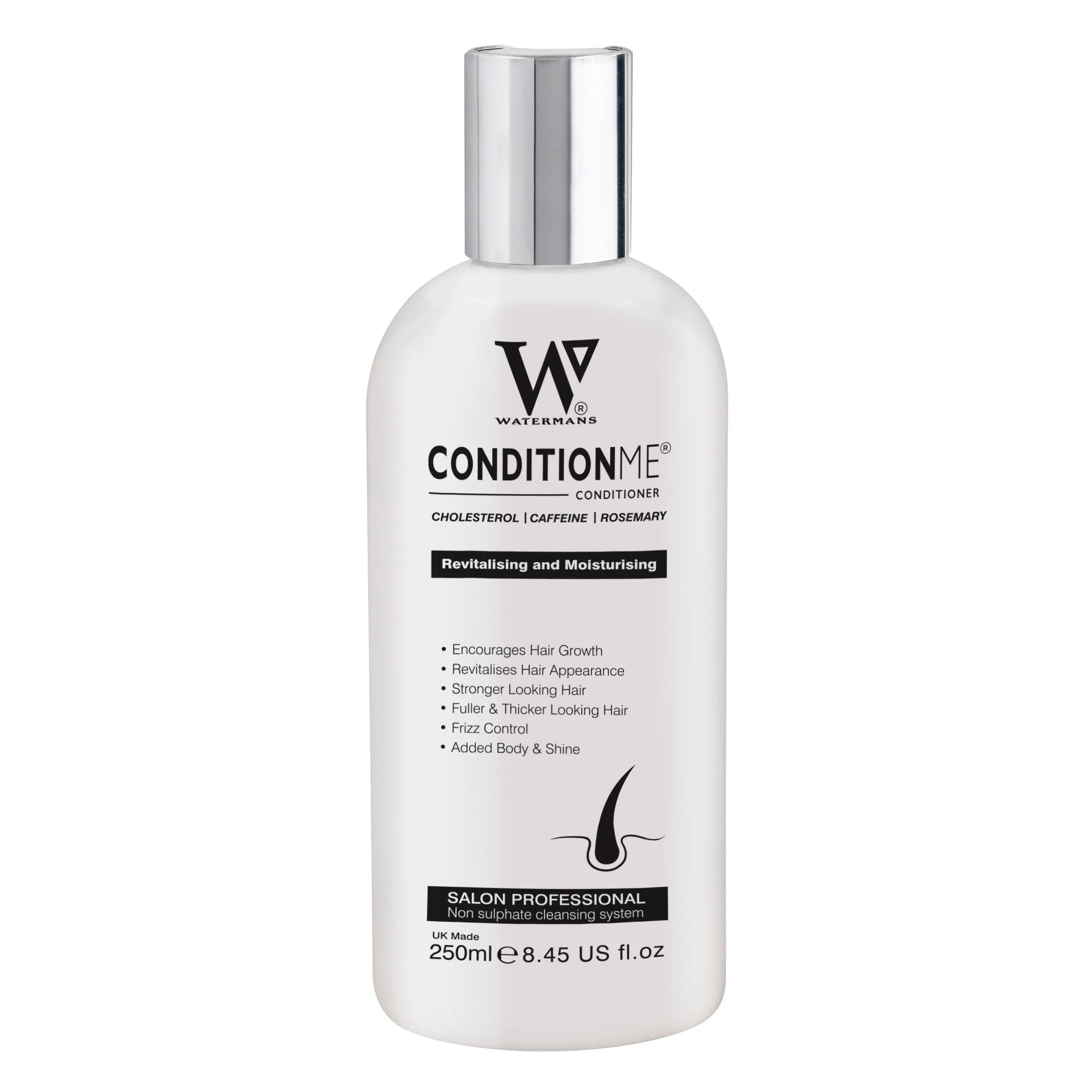
A sulfate-free 250ml shampoo with biotin, caffeine, rosemary and niacinamide, gentle enough for frequent washing. It reduces breakage-related hair fall and helps fine hair look fuller.
Which shampoo suits fine or thinning hair?
The shampoo that suits fine or thinning hair is a gentle, lightweight one you are happy to use as often as your scalp needs, worked into the scalp rather than the lengths, because the American Academy of Dermatology says shampooing the scalp clears built-up product, dead skin and excess oil without drying the hair too much.
A shampoo that leaves your scalp tight will push you towards washing less, which brings back flat roots and bigger clumps. So:
- Pick comfort. If your scalp feels tight or itchy after washing, a milder, sulfate-free formula may suit you better.
- Use fingertips, not nails. Massage the lather into the scalp and let the rinse run through the lengths.
- Rinse thoroughly. Lukewarm water and a longer rinse stop residue sitting at the roots.
Our guide to choosing a sulfate-free shampoo for thinning hair compares the options. To check what the words on the bottle can honestly promise, our Newport guide to decoding shampoo labels explains ingredient order and claim wording.
Get a discount on the thinning hair range
Join the Watermans mailing list and we will email a discount code straight to your inbox, so you can try the thinning hair range for less. Made in the UK, over 6.5 million bottles sold since 2012.
Where should conditioner go on fine or thinning hair?
Conditioner on fine or thinning hair belongs on the mid-lengths and ends rather than the roots, because the American Academy of Dermatology advises people with fine or straight hair to apply it to the ends, where it moisturises and detangles, while dry or curly hair can take conditioner along its full length.
Skipping conditioner when hair feels thin is a common mistake: conditioner lets a comb glide through wet hair instead of catching, and every catch can snap a strand. Work it from the ears down, detangle while it is in and rinse well so the roots stay light.

For a step-by-step method, see our guide on how to use conditioner properly.

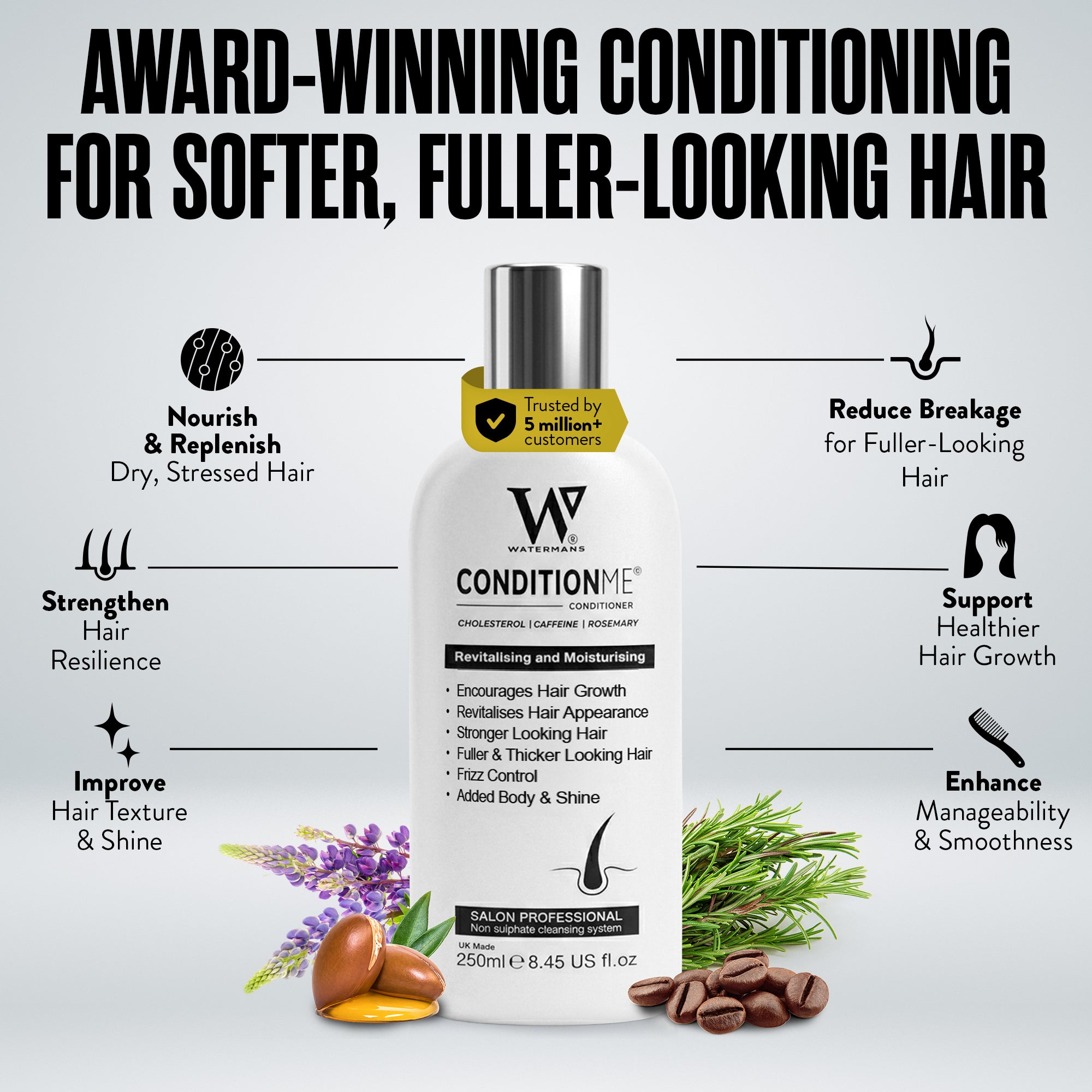
A conditioner with cholesterol, shea butter, glycerin and hydrolysed lupine protein. Keep it on the mid-lengths and ends, where it adds slip and reduces breakage.
Do towels, brushes and hair dryers cause wash-day breakage?
Towels, brushes and hair dryers can all cause breakage on wash day, because the American Academy of Dermatology says hair is delicate when wet, and rough towel rubbing, brushing out wet tangles and high heat snap or roughen strands that fine or thinning hair can least afford to lose.
- Towel. The AAD advises wrapping hair in a towel or T-shirt to absorb water, because rubbing it dry can cause damage.
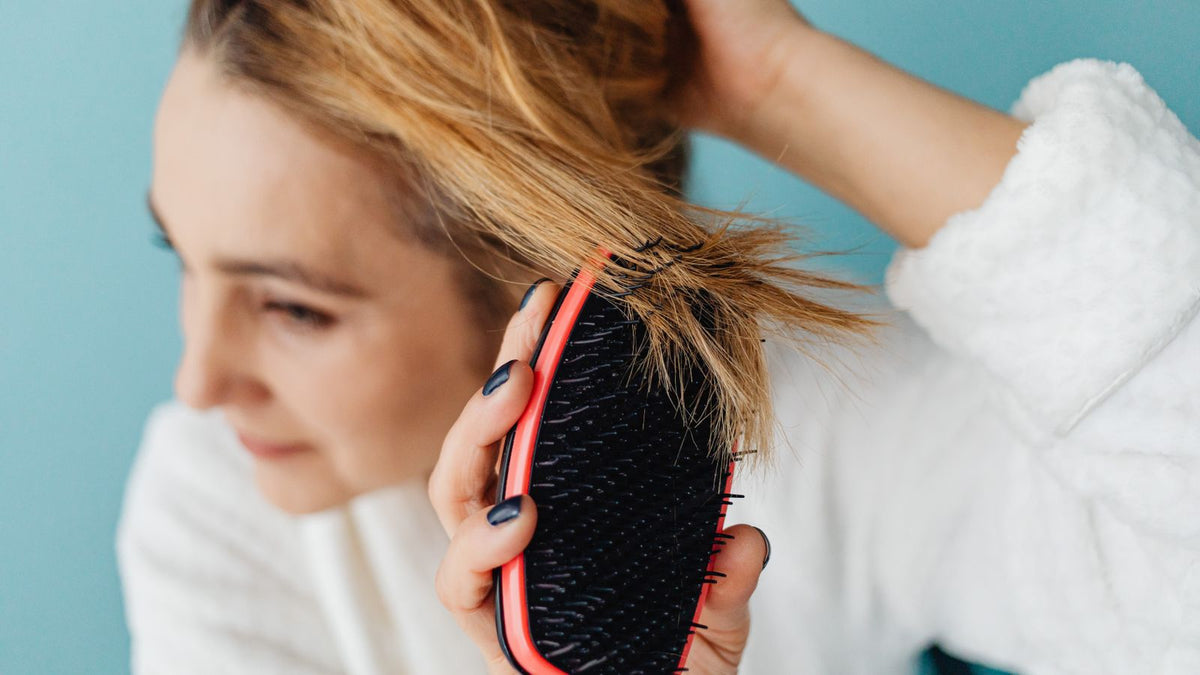
- Comb. Use a wide-tooth comb on wet hair. Straight hair can dry a little first; comb the ends before working upwards.
- Dryer. The AAD recommends limiting blow-drying and using a low or medium setting with a heat protection product.
Air-drying is not automatically gentler. In a 2011 Yonsei University laboratory study, tresses washed and dried 30 times showed more surface damage as dryer temperature rose, from about 47°C at 15 cm to 95°C at 5 cm, yet only naturally dried hair showed damage to the cell membrane complex. The authors concluded that drying at 15 cm with continuous movement did less damage than drying naturally.

The root-end check
Put a few plughole hairs on a white tissue. A full-length hair with a small, pale bulb at one end has shed; DermNet calls it a club hair. A shorter piece with no bulb and a blunt or split end has broken. Mostly bulbs means shedding; mostly short pieces means handling, heat or styling.
Is it shedding, breakage or genuine hair loss?
Shedding, breakage and genuine hair loss are three different problems: shedding is whole hairs released by the growth cycle, breakage is the hair fibre snapping somewhere along its length, and hair loss means follicles producing fewer, finer or no hairs, so what you do about wash-day hair depends on which one you have. If you are heading for a paid appointment, our Greenock guide to what to gather in the two weeks beforehand explains how to log each of the three so the difference is visible on paper.
| Sign | Hair shedding | Hair breakage | Hair loss |
|---|---|---|---|
| What you find | Full-length hairs with a pale bulb | Short pieces with no bulb | Often little in the plughole; finer, shorter hairs over time |
| Where | All over the scalp, says the BAD | Ends, and spots that take heat or tension | Parting, crown or temples, or distinct patches |
| Timing | Around 3 months after a trigger, says the BAD | Soon after rough drying, heat or tight styles | Gradual, over months or years |
| Usual course | Often settles; the AAD says fullness tends to return within 6 to 9 months once the stressor passes | Eases with gentler handling | Pattern hair loss tends to continue; see your GP |
The British Association of Dermatologists explains that around 15% of scalp hairs are normally in the shedding phase, rising to 30% or more in telogen effluvium, and that for 1 in 3 people no trigger is found. DermNet adds that telogen effluvium does not cause complete baldness, though it can unmask an inherited tendency to pattern hair loss. Our guide to how much hair shedding is too much goes through the numbers and timelines.
When is wash-day shedding worth a GP visit?
Wash-day shedding is worth a GP visit when it is sudden and heavy, comes out in patches, leaves a wider parting or a see-through crown, or has carried on for more than a few months, and the NHS advice is simply to see a GP if you are worried about your hair loss.
The NHS says a GP may be able to tell what is causing hair loss by looking at your hair, lists illness, stress, weight loss and iron deficiency among the temporary causes, and advises seeing a GP about the cause before thinking about a commercial hair clinic.
See your GP first if
Hair comes out in handfuls or in smooth, round patches; your parting is widening or your crown shows through; your scalp is sore, red, scaly or weeping; shedding comes with tiredness, weight change or other new symptoms; or shedding has not settled after about six months.
Many people searching for trichologists Blackpool after a frightening wash day are looking at normal shedding made visible by long, wet hair. A GP visit is free, and ruling out low iron or thyroid problems first means any money you spend goes on the right question.
How do you check the trichologists Blackpool searches bring up?
The trichologists Blackpool searches bring up are private practitioners, so check membership of a recognised professional body before you pay: the Institute of Trichologists keeps a searchable Find a Trichologist register, and the Trichological Society is the other main UK body, so ask which one a practitioner belongs to and confirm it yourself.
The Institute of Trichologists says its register is accredited under the Accredited Registers programme run by the Professional Standards Authority, an independent body accountable to Parliament. Most trichologists are not doctors and cannot give you medicines. For wash-day shedding, ask three questions:
- Will you look at my shed hairs and scalp under magnification, and go through how often and how I wash?
- If this looks like telogen effluvium, pattern hair loss or something medical, will you send me back to my GP?
- Are you recommending products you sell, and can I keep using my own?
We sell hair care, so weigh our view accordingly. Grow Me shampoo is vegan, and Watermans hair care is made in the UK, with over 6.5 million bottles sold since 2012. They are cosmetic: they help hair look and feel fuller and reduce breakage, but they do not change how many hairs your follicles release each day.
What wash-day routine suits hair you are worried about?
A wash-day routine for hair you are worried about means shampooing the scalp as often as it needs, rinsing in lukewarm water, conditioning only the lengths, blotting instead of rubbing, detangling from the ends upwards and drying on a low or medium setting, so the only hairs in the plughole are the ones already on their way out. To extend that into a full week, with a leave-on scalp step and a weekly mask, see our Warrington guide to a weekly routine for thinning hair. There is more on how to wash a woman's hair in a separate guide.
Whether or not you end up contacting any of the trichologists Blackpool has, try this for a month:
- Detangle dry. A few passes with a wide-tooth comb stop knots tightening in the shower.
- Wash the scalp. Lather at the roots with your fingertips, daily if your scalp gets oily.
- Condition from the ears down. Comb it through while it is in, then rinse well in lukewarm water.
- Blot, do not rub. Wrap hair in a towel or cotton T-shirt for a few minutes.
- Dry on low or medium heat. Hold the dryer about 15 cm away, keep it moving and use heat protection.
- Do the root-end check weekly. Short pieces tell you which habit to change.

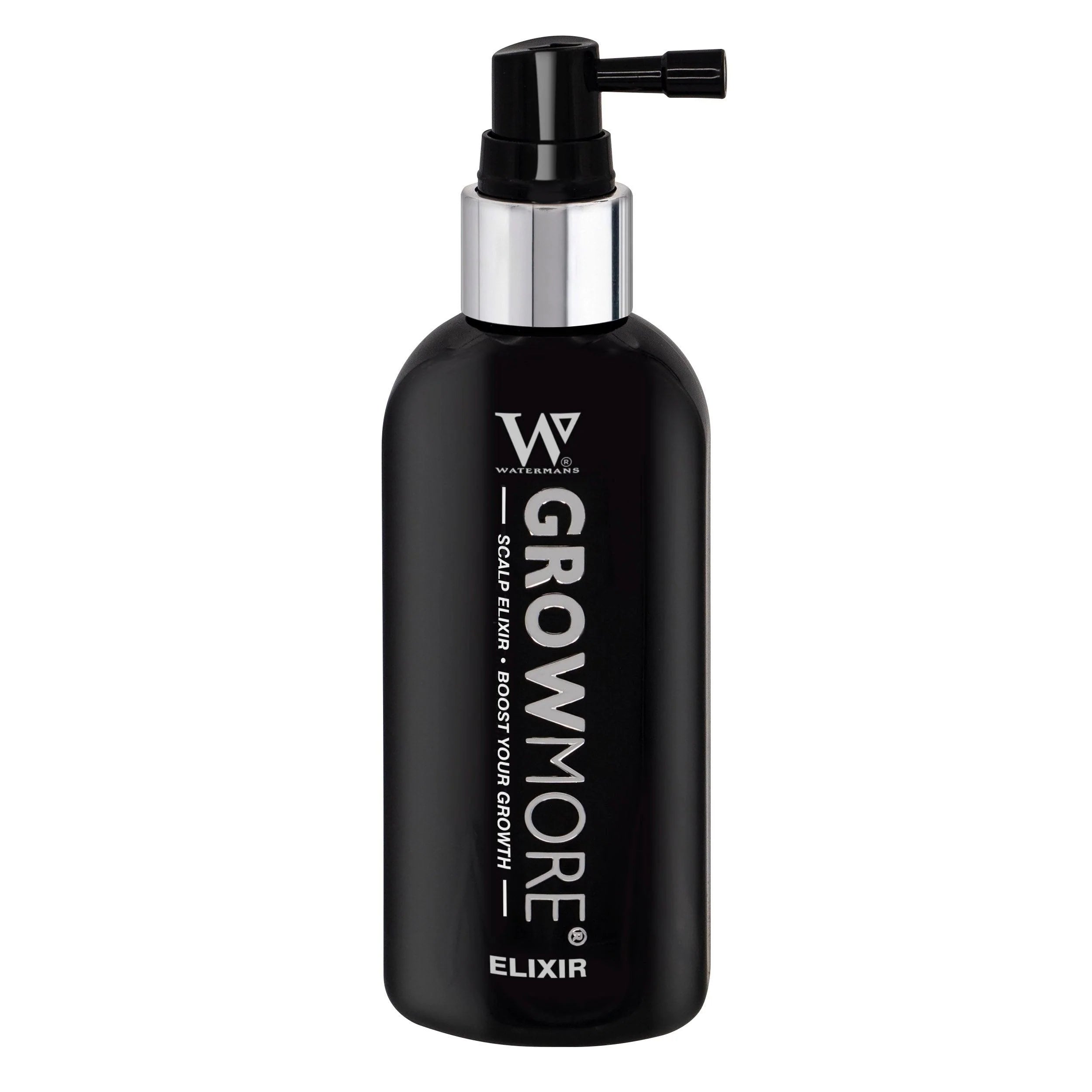
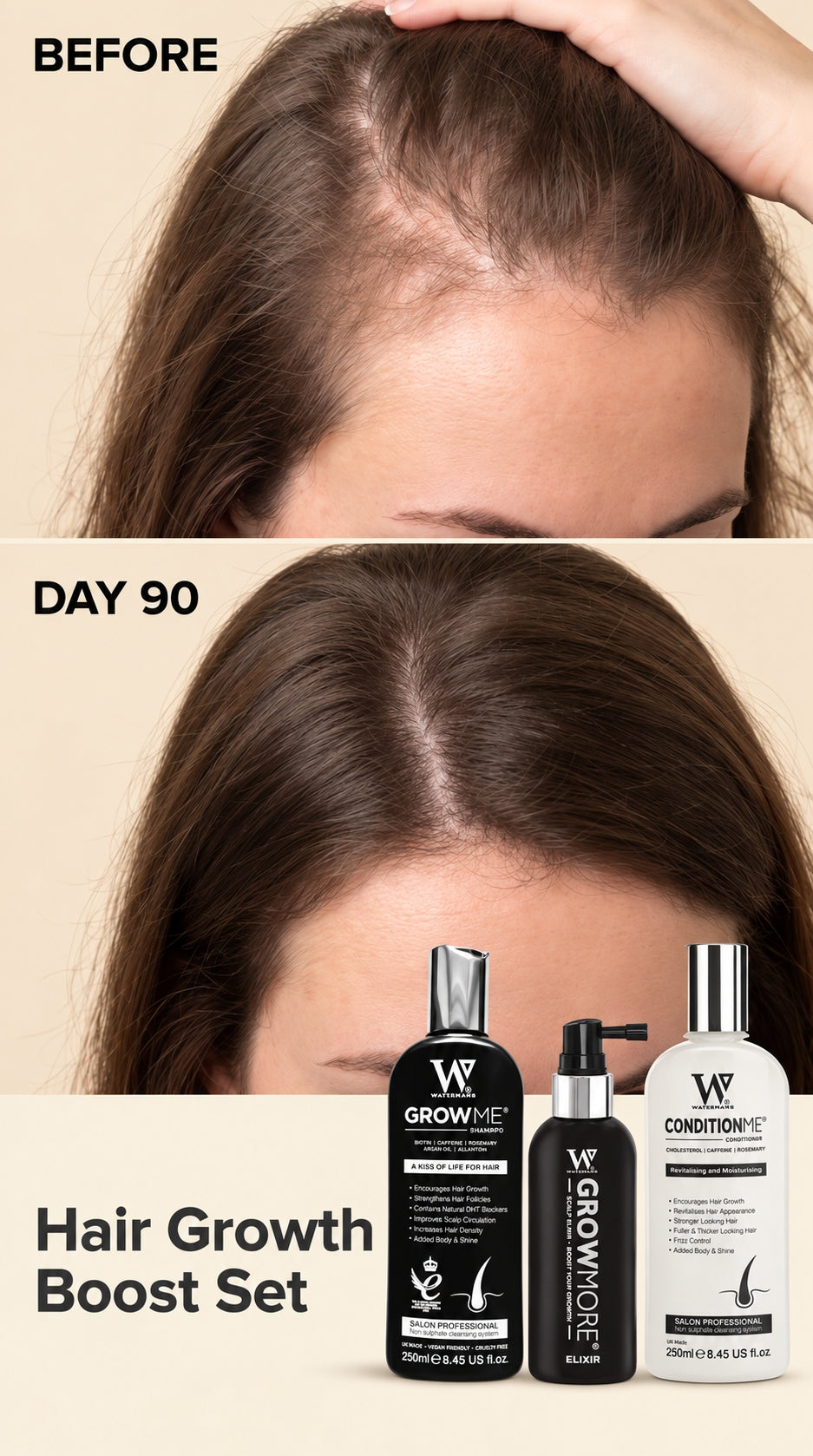
The full three-step routine: Grow Me shampoo, Condition Me conditioner and Grow More scalp elixir, to help fine or thinning hair look fuller and reduce breakage.
What are the most frequently asked questions about washing thinning hair?
Should I see one of the trichologists Blackpool search results list about hair in the plughole?
Not for normal wash-day shedding alone. The NHS says losing 50 to 100 hairs a day is normal, and washing just collects hairs that were already loose. See a GP first for sudden, patchy or long-lasting shedding. A registered trichologist helps most when thinning stays unexplained after those checks.
Does washing hair every day cause hair loss?
We found no good evidence that it does. Washing releases hairs that had already stopped growing. A 2021 study funded by a shampoo maker found daily washing beat once-weekly washing on every measure, with no objective harm to hair, and the American Academy of Dermatology advises washing based on how quickly hair gets oily.
How many hairs is it normal to lose in the shower?
Most people lose 50 to 100 hairs a day, according to the NHS, and the British Association of Dermatologists gives a range of 30 to 150. If you wash every few days, part of several days' worth of loose hairs can come out together, so a bigger clump after a longer gap is expected.
Should I wash less if my hair is thinning?
Washing less does not keep hairs in. Loose hairs simply wait for the next wash and come out together, which looks worse. Fine or thinning hair often looks fuller when the roots are clean, so wash as often as your scalp needs and put your effort into gentle handling instead.
How can I tell shed hairs from broken ones?
Look at the ends. A shed hair is usually full length with a small pale bulb at the root, which DermNet calls a club hair. A broken hair is shorter, with no bulb and a blunt or split end. Lots of short broken pieces point to handling, heat or styling rather than the growth cycle.
When should wash-day shedding worry me?
Speak to your GP if shedding is sudden and heavy, comes out in patches, leaves a widening parting or see-through crown, comes with a sore or scaly scalp, or has not settled after about six months. The NHS advises seeing a GP about the cause before paying for a commercial hair clinic. If your question is about products or a routine rather than a medical one, you can talk to Gail Waterman, our co-founder, as an AI avatar on the Watermans homepage.
Sources & references
- NHS, Hair loss
- British Association of Dermatologists, Telogen effluvium
- DermNet, Telogen effluvium
- DermNet, Hair loss
- American Academy of Dermatology, Tips for healthy hair
- American Academy of Dermatology, Do you have hair loss or hair shedding?
- Punyani S et al. The Impact of Shampoo Wash Frequency on Scalp and Hair Conditions. Skin Appendage Disord, 2021
- Lee Y et al. Hair shaft damage from heat and drying time of hair dryer. Ann Dermatol, 2011
- Guarrera M, Cardo PP, Rebora A. Assessing the reliability of the Modified Wash Test. G Ital Dermatol Venereol, 2011
- The Institute of Trichologists, Find a Trichologist
- The Trichological Society
What is the bottom line on trichologists Blackpool?
The bottom line is that hair in the plughole after a wash is usually the normal hair cycle catching up, because the NHS puts everyday hair fall at 50 to 100 hairs and washing only collects the ones that had already come loose from the scalp. Wash fine or thinning hair as often as your scalp needs, keep conditioner on the lengths, blot, detangle gently and dry on low heat. Save the trichologists Blackpool searches bring up for shedding that is sudden, patchy or long-lasting once a GP has had a look.
For washing as often as your scalp needs, a sulfate-free shampoo for fine hair such as Grow Me cleans gently at the roots, with biotin, caffeine and rosemary in a 250ml bottle to help thinning hair look and feel fuller.
Watermans products are 100% cosmetic and do not treat medical hair loss. Individual results may vary.