Trichologists Ellesmere Port: Perms and Body Waves on Fine Hair
A perm is chemistry you live with for months, and fine or thinning hair leaves that chemistry very little room for error.
If you are searching for trichologists Ellesmere Port because a perm or body wave has left fine hair frizzy, snapping or thinner-looking, start with what the service does: a waving lotion, usually a thioglycolate, breaks the disulphide bonds inside each strand and a neutraliser re-forms them around the rod. Fine, bleached or already-damaged hair has less strength to spare. If the lotion burns, rinse it off at once, and speak to your own GP about any bare, sore or blistered patch.
Our weekly hair mask
Masque Me® Hair Mask, £24.95. A deep conditioning weekly mask for dry, stressed lengths, adding gloss and hydration where heat and colour have taken their toll.
Key takeaways
- A perm works by breaking and re-forming the disulphide bonds in hair; a 2015 X-ray study found a single perm changed the keratin structure deep inside the fibre.
- UK cosmetics law caps thioglycolic acid in hair waving products at 8% for general use and 11% for professional use, ready to use at pH 7 to 9.5.
- Perming and bleaching both loosen the cuticle and turn stable hair protein into protein that washes out, so bleached or highlighted lengths are the riskiest hair to perm.
- Stinging or burning while the lotion is on means washing it off immediately, as the American Academy of Dermatology advises; a chemical burn is a 999 call under NHS first aid advice.
- Perm first and colour at least two weeks later, and have only one chemical service at a time.
- Short snapped pieces after a perm are breakage, whole hairs with a bulb weeks later are shedding, and bare or scarred patches need your GP. Trichologists Ellesmere Port practitioners help with the hair fibre once the skin has settled.
What does a perm actually do to the inside of a hair strand?
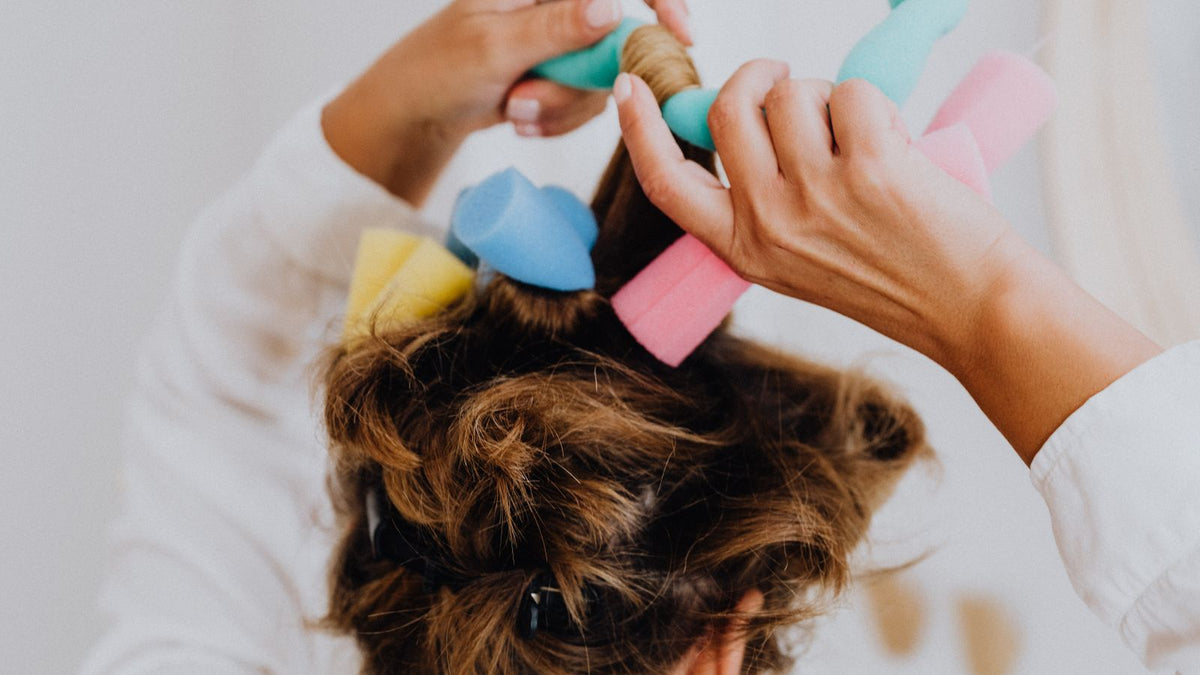
A perm reshapes hair from the inside by breaking the disulphide bonds that hold keratin in its natural shape, using a reducing waving lotion while the hair is wound on rods, then re-forming those bonds with a neutraliser so each strand sets into the curl or wave of the rod it was wound around.
Disulphide bonds are sulphur bridges between the keratin chains of the cortex, the thick middle layer of every strand, and they are the reason hair keeps its shape when it gets wet. Physicists at McMaster University in Canada used X-ray diffraction to compare hair before and after everyday products in 2015. A single use of shampoo and conditioner made no difference to how the keratin was packed. A single application of a perming product was different: it penetrated deep into the hair, reduced the number of coiled-coil keratin structures and changed the arrangement of the intermediate filaments inside the fibre.
Strength follows structure. In a Japanese laboratory study of salon wave lotions, Ueno and Namiki found that the stiffness of hair fibres after waving fell steadily as more of their bonds were broken, then dropped abruptly once reduction reached 80%. The neutraliser rebuilds bonds in the new position, but the fibre does not come back exactly as it was, which is why a perm changes how hair feels as well as how it looks.
| Lotion type | Main active ingredient | What to know |
|---|---|---|
| Alkaline perm | Ammonium thioglycolate, a salt of thioglycolic acid | The classic perm; a UK label must say "Contains thioglycolate" |
| Acid perm | Glyceryl thioglycolate, an ester of thioglycolic acid | The label must warn it may cause sensitisation on skin contact; DermNet lists it as an allergy risk for hairdressers |
| "Neutral" or cysteamine perm | Cysteamine hydrochloride | Used in American salons since 1993; reported as a contact allergen in hairdressers in the US, Sweden and Japan |
A body wave, beach wave or root perm is still a permanent wave. The rod size and technique change, but the bond-breaking chemistry does not. A 2021 review in the Journal of Cosmetic Dermatology notes that permanent waving has come back into fashion, now used to define curls in wavy and curly hair and to create waves in straight hair, with "beach waves" among its popular names.
Why are fine, bleached or already-damaged strands more at risk from a perm?
Fine, bleached or already-damaged strands are more at risk from a perm because perming and bleaching both weaken the cuticle and the cortex, so hair that has already lost protein and strength to bleach, colour or heat reaches its breaking point sooner once a waving lotion breaks another share of its bonds.
Laboratory work shows how the two chemistries overlap. Kizawa and colleagues found that both perming and bleaching made the cuticle, the overlapping scales on the outside of the strand, easier to lift away. Permed cuticle came off in larger sheets, bleached cuticle broke into small fragments, and bleaching permanently oxidised a cuticle protein called S100A3. In a separate study, Inoue and colleagues found that the longer hair spent in either perm lotion or bleach, the more of its stable protein turned into loose, labile protein that the hair then tends to release.
A fine strand simply has less fibre to lose. The same share of broken bonds leaves a thinner hair with less absolute strength, which is why fine hair so often turns frizzy, tangles easily and snaps along the lengths after a strong perm. Ask for a strand test and a gentler approach rather than the tightest curl the lotion can give.
Thinning hair is a separate question. A perm cannot change what a follicle produces, but lift at the root can make a thin ponytail look fuller. The trade-off is that any breakage shows sooner on hair that has less density to hide it.
Hair that should not be permed without a strand test and a frank conversation
- Bleached, lightened or heavily highlighted lengths.
- Hair that stretches like elastic when wet and does not spring back.
- Hair that snapped or went gummy after your last chemical service.
- Hair that has been relaxed or keratin smoothed in the past few months.
- A scalp that is sore, broken, sunburnt or flaking on the day.
Relaxers and keratin smoothing use different straightening chemistry and have their own risks, covered in our Southend-on-Sea guide to relaxers, keratin smoothing and scalp burns.

What are the legal limits on perm lotion strength in the UK?
UK cosmetics law limits thioglycolic acid and its salts in hair waving or straightening products to 8% in products for general use and 11% in professional products, ready to use at pH 7 to 9.5, and requires the label to carry the words "Contains thioglycolate" and "Follow the instructions".
The limits sit in Annex III of the cosmetics regulation, the list of substances allowed only under set conditions, published on legislation.gov.uk. Professional products must also say "For professional use only". The conditions of use tell anyone applying the lotion to avoid contact with the eyes, to rinse the eyes immediately if the product gets in, and to wear suitable gloves. Thioglycolic acid esters, the family behind acid perms, share the same 8% and 11% ceilings at pH 6 to 9.5, and their label must warn that they may cause sensitisation in the event of skin contact.
Legal is not the same as gentle for your hair. A lotion inside the limit can still over-process fine or bleached hair if it is left on too long or used on lengths that were already weak. That is why the American Academy of Dermatology tells people to set a timer so they know when to rinse the perm solution, and to always follow the package instructions.
What the box or the salon's bottle tells you
- "Contains thioglycolate": a thioglycolate waving lotion, the classic perm chemistry.
- "For professional use only": a product allowed up to the higher 11% ceiling and meant for trained hands, not a home kit.
- "May cause sensitisation": a thioglycolic acid ester, the acid perm family.
- "Wear suitable gloves" and "Avoid contact with eyes": conditions of use set out in the regulation.
Can a perm cause scalp irritation, allergy or chemical burns?
A perm can cause scalp irritation, allergic contact dermatitis and, when the lotion is misused or left on too long, chemical burns, and a 2021 review in the Journal of Cosmetic Dermatology lists skin irritation, hair breakage, sensitisation and scarring hair loss among the problems reported, mostly after misuse or failure to follow the product instructions.
Irritation and allergy are different reactions. DermNet explains that irritant contact dermatitis develops when chemical or physical agents damage the skin surface faster than the skin can repair it, so it tends to sting or burn where the lotion sat. Allergic contact dermatitis is a delayed immune reaction that DermNet says typically appears 24 to 72 hours after exposure, which is why an allergic rash can turn up days after a perm that felt fine in the chair.
Most of the data on perm allergy comes from hairdressers, whose hands meet the lotion every working day. In German surveillance data from 2007 to 2012, 4.7% of 824 female hairdressers who were patch tested reacted to glyceryl monothioglycolate, the acid perm ingredient, even though it had been removed from the German market. A 2023 systematic review found hairdressers had on average 3.4 times the risk of allergy to ammonium thioglycolate compared with people outside the trade. Clients are not immune, though: in a Japanese study of 203 people with suspected allergy to hair colouring or perming products at 14 hospitals, cysteamine hydrochloride, the active in "neutral" perms, often gave positive patch test results. The fair reading is that perm allergy is real but uncommon in clients, and most often recorded in the people who apply the lotion.
| What you notice | Irritation | Allergic reaction | Chemical burn |
|---|---|---|---|
| When | During the service or soon after | Typically 24 to 72 hours later, according to DermNet | During the service, often worsening the longer lotion stays on |
| How it feels | Stinging, tightness, redness where the lotion sat | Itchy rash that can spread to the hairline, ears and neck | Severe burning pain, blistering, raw or weeping skin |
| First step | Rinse, then no heat or chemicals until the scalp is calm | Stop using the product and ask a pharmacist or your GP | Running water for about an hour and call 999, as the NHS advises |
Get a discount on the hair breakage range
Join the Watermans mailing list and we will email a discount code straight to your inbox, so you can try the hair breakage range for less. Vegan, made in the UK, over 6.5 million bottles sold since 2012.
What should you do if perm lotion stings or burns your scalp?
If perm lotion stings or burns your scalp, stop the service and rinse the lotion off immediately with plenty of cool or lukewarm running water, because the American Academy of Dermatology says excessive stinging and burning means washing the perm solution off at once, and the NHS says a genuine chemical burn needs immediate first aid and a 999 call.
NHS first aid for a chemical burn
- Call 999 for medical help.
- Whoever helps should wear gloves to protect themselves from the chemical, if possible.
- Carefully remove any clothing, towels or capes with the lotion on them.
- Put the area under cool or lukewarm running water, or pour lots of water over it, for about 1 hour.
- Do not put anything on the burn, such as creams or other chemicals.
The NHS says acid and chemical burns need to be checked and cared for in hospital, and that you should not drive yourself to A&E.
Do not sit it out for a tighter curl. A tingle that fades completely once the lotion is rinsed, leaving no redness, blistering or broken skin afterwards, is irritation rather than a burn. For milder contact reactions the NHS contact dermatitis page suggests rinsing the affected skin with warm water and an emollient as soon as possible. Keep heat, colour and any further chemicals off your head until the skin looks and feels completely normal, and keep the product name so a pharmacist, your GP or a future salon knows exactly what touched your scalp.
If the trouble followed colour rather than a perm, our York guide to an itchy or sore scalp after hair dye covers dye allergy and the 48-hour skin test.

How should you strand test and skin test before a perm?
A strand test before a perm checks whether your hair can take the lotion, and a skin test checks whether your scalp reacts to it, and both matter most on fine, bleached or previously permed hair, where the gap between a good curl and broken lengths is narrow.
- Test a hidden section. Process a small section at the nape, or a cutting, with the same lotion, timing and neutraliser planned for the whole head.
- Judge it wet and dry. A good result springs back into a curl. Hair that feels gummy, stretches without returning or snaps when gently pulled is telling you no.
- Test the lengths you are worried about. If the ends are highlighted or bleached, test there, not just at the darker nape.
- Do a skin check. Follow the product instructions. DermNet advises anyone with known contact dermatitis to test new products on a small patch of skin first.
- Allow for the delay. Allergic reactions typically appear 24 to 72 hours after contact, so a check done minutes before the service tells you little about allergy.
- Share your history. Tell the salon about any colour, bleach, relaxer, keratin smoothing or henna in the past year, and any reaction to a perm or dye.
A strand test is reassurance, not proof. It shows how one small section behaved on one day, and the rest of your head may be more processed at the ends than at the nape. Our Rotherham guide to bond builders, protein masks and breaking hair explains the wet stretch check in more detail, along with how much a bond-building product can realistically do.
How long should you wait between a perm and colour or bleach?
You should perm first and wait at least two weeks before colouring, according to the American Academy of Dermatology, which also advises having only one chemical service at a time and, in dry winter weather, stretching the gap between colour touch-ups to every 8 to 10 weeks or longer. If you colour with henna or another plant dye, tell your stylist before any perm, and see our Banbury guide to henna and plant-based dyes on fine hair.
The reasoning comes back to the chemistry. A perm breaks and re-forms bonds, and colour and bleach add oxidative stress to the same fibre. The laboratory studies above found that perming and bleaching both loosen the cuticle and both turn stable hair protein into protein that leaks out, so stacking them close together asks the same lengths to absorb two lots of damage before they have settled. For the lightening side of the same decision, see how bleach and highlights affect fine hair.
| Your plan | Order and gap | Why |
|---|---|---|
| Perm plus permanent colour | Perm first, colour at least two weeks later | The American Academy of Dermatology's advice when you want more than one service |
| Perm on bleached or highlighted lengths | Strand test the lightest section first, and be ready to hear no | Both chemistries weaken the cuticle and release hair protein |
| Perm after a relaxer or keratin smoothing | Do not combine without a strand test and a stylist's frank view | Straightening chemistry also changes the fibre, and the two pull in opposite directions |
| Touching up a grown-out perm | Avoid re-perming lengths that still hold a wave | Overlapping puts a second dose of lotion on the oldest, weakest hair |
What aftercare helps a perm on fine hair stay soft instead of breaking?
Aftercare that helps a perm on fine hair stay soft instead of breaking means gentle washing focused on the scalp, conditioner after every shampoo, a weekly deep conditioning mask on the lengths, air drying or a low diffuser with heat protection, and slow, unhurried detangling with a wide-tooth comb from the ends upwards.
- Wash the scalp, not the lengths. The American Academy of Dermatology advises gently massaging shampoo into the scalp and letting it flow through the lengths as you rinse, rather than rubbing it into the hair.
- Condition every time. The same guidance says to use conditioner after every shampoo. Permed lengths lose moisture faster and tangle more easily.
- Blot, do not rub. Wrap hair in a towel to absorb the water and let it air dry where you can, as the AAD suggests.
- Go easy on brushing. The AAD lists brushing 100 strokes a day and tugging hair to style it among the habits that damage hair. Scrunch curls with your fingers instead.
- Keep heat low. If you diffuse, use a low setting and a heat protection spray first.
- Cover up in strong sun. The AAD warns that sun can leave hair weak, dry, rough and brittle, especially hair that has been dyed, bleached or permed, and suggests a wide-brimmed hat.

An 8-in-1 deep conditioning mask with argan oil, provitamin B5 and rosemary, £24.95 in September 2026. Smooth it through permed mid-lengths and ends once a week, away from the scalp, so curls look softer and snap less.

A sulfate-free 250ml shampoo with biotin, caffeine, rosemary and niacinamide. Massage it into the scalp and let the rinse carry it through the lengths, for a gentle clean that helps fine hair look and feel fuller.

Protect Me® Heat Protection Spray
A leave-in spray with panthenol, niacinamide and sunflower oil that protects hair from heat up to 230°C, £13.95 in September 2026. Mist it through damp curls before diffusing, to reduce breakage and frizz.
If your perm sits on coloured hair, our guide to caring for dyed hair day to day covers washing, heat and sun for coloured lengths.
Is it breakage, shedding or genuine hair loss after a perm?
Hair that comes away after a perm is usually breakage, meaning short snapped pieces from over-processed lengths, sometimes shedding, meaning whole hairs with a small bulb released weeks or months after a shock to the body, and only rarely genuine hair loss, where the scalp or the follicle itself has been affected.
- Hair breakage. The fibre snaps along its length and the follicle is untouched. Short, uneven pieces in the brush or on your shoulders in the weeks after a perm are the classic sign, and they come from the chemistry described above.
- Hair shedding. Whole hairs fall at the end of their growth cycle. The NHS says losing 50 to 100 hairs a day is normal. The British Association of Dermatologists explains that about 15% of scalp hair is normally in the shedding phase, rising to 30% or more in telogen effluvium, often around 3 months after a trigger such as illness or stress, with the shedding phase lasting 3 to 6 months. A perm does not cause this, but a stressful few months can coincide with one.
- Hair loss. The follicle itself is damaged. The American Academy of Dermatology says colouring, perming or relaxing can damage hair, that over time this damage can lead to hair loss, and that a damaged follicle cannot grow hair again. The 2021 review lists scarring hair loss among reported problems after perms, usually linked to misuse. Any smooth, shiny, scarred or bare patch needs your GP.
| What you see | Breakage | Shedding | Hair loss |
|---|---|---|---|
| The hairs | Short, uneven pieces with no bulb | Full length with a small pale bulb | The change shows on the scalp itself |
| Timing | Days to weeks after the perm, worse when detangling | Around 3 months after a trigger | Patches that stay bare, or a burn that scars |
| First step | Gentler handling, conditioning and a trim | Usually settles; speak to your GP if heavy or ongoing | Speak to your own GP |
Sort the fallen hairs on a sheet of white paper before you spend money. If most are short snapped pieces and breakage carries on for months despite gentler care, that is a sensible point to look for trichologists Ellesmere Port residents can check on a professional register, while anything visible on the scalp itself goes to your GP first.
What should you ask a salon before booking a perm or body wave?
Before booking a perm or body wave, ask the salon which waving lotion it uses, whether it will strand test your hair first, how it times and rinses the lotion, what happens if your scalp stings, and whether your colour, bleach or straightening history makes your hair unsuitable for the service right now.
- Which lotion will you use: an alkaline thioglycolate, an acid perm or a cysteamine perm, and why that one for fine hair?
- Will you strand test my hair first, including the most highlighted section?
- How do you time the lotion, and who checks the curl while it processes?
- What do you do if my scalp starts to sting or burn during the service?
- How long should I leave before colouring, and before the next perm?
- What aftercare do you recommend, and can I keep using my own products?
- Will you tell me honestly if my hair is not in a fit state for a perm today?
A good salon welcomes these questions. The regulation behind UK perm lotions expects the person applying it to follow the instructions, wear suitable gloves and keep the lotion away from the eyes, so a stylist who skips the strand test on bleached hair, or leaves you under a dryer without checking, is cutting corners you are entitled to question.

When should you speak to your own GP or look for trichologists Ellesmere Port?
Speak to your own GP about any burn, blistering, spreading rash, heavy shedding or bare, smooth or scarred patch after a perm, and look for trichologists Ellesmere Port practitioners on a professional register once the skin has settled but breakage, frizz or thin-looking lengths carry on despite gentler care.
| Who | When | What they can do |
|---|---|---|
| 999 or A&E | A chemical burn during or after a perm | Emergency care; the NHS says chemical burns need checking in hospital |
| Pharmacist | Mild itch, dryness or tightness after the scalp has been rinsed | Suggest an emollient and tell you whether you need a GP |
| Your GP | A rash that spreads or lingers, heavy shedding, or bare or scarred patches | Look at the scalp, arrange tests and refer you to a specialist if needed |
| Registered trichologist | After the skin has settled: ongoing breakage, frizz or thin-looking lengths | Look at the hair and scalp under magnification and review your routine and chemical history |
Trichologists are not medical doctors, so an active burn or allergic rash belongs with the NHS first. Where trichologists Ellesmere Port searches turn up genuinely earn their fee is afterwards: hair that keeps snapping months after a perm, a routine that needs rebuilding around fine or thinning hair, or a second opinion before your next chemical service. Ellesmere Port sits in Cheshire West and Chester, with Chester, the Wirral and Liverpool a short drive away, so the right practitioner may be a short journey rather than on your doorstep. Check membership before you pay: the Institute of Trichologists keeps a Find a Trichologist register, and the Trichological Society is the other main UK body.
- Which professional body do you belong to, and can I check your entry on its website?
- If you think my scalp needs a doctor, will you send me back to my GP?
- Do you sell the products you recommend, and can I keep using my own?
We make hair care and run no clinics, so we cannot look at your hair or scalp, and you should weigh our view accordingly. Watermans is made in the UK, with over 6.5 million bottles sold since 2012. Our products are cosmetic: they help permed and fine hair look and feel healthier and reduce breakage, but they cannot undo a chemical burn or change how a follicle behaves. Readers nearer Bangor may find our guide to telling bleach damage from thinning in Bangor more useful.

What are the most frequently asked questions about perms on fine or thinning hair?
Should I look for trichologists Ellesmere Port after a perm has damaged my hair?
Not first if your scalp is burnt, blistered or itchy: rinse, get NHS help for a burn and speak to a pharmacist or your GP about a rash. A registered trichologist helps most once the skin has settled and breakage, frizz or thin-looking lengths carry on despite gentler care. If your question is about products or a routine rather than a medical one, you can talk to Gail Waterman, our co-founder, as an AI avatar on the Watermans homepage.
Is it safe to perm fine or thinning hair?
It can be, with care. A perm breaks and re-forms the bonds inside every strand, so fine hair has less strength to spare. Ask for a strand test, a gentle approach and honest advice, and skip the perm if your lengths are bleached, gummy when wet or snapping already.
Can a perm make your hair fall out?
Most hair lost after a perm is breakage, short pieces snapping from over-processed lengths, not hair falling from the root. The American Academy of Dermatology says perming can damage hair and that over time damage can lead to hair loss, and a chemical burn can scar. Speak to your own GP about any bare or scarred patch.
What should I do if my scalp burns during a perm?
Stop the service and rinse the lotion off straight away with plenty of cool or lukewarm running water. The American Academy of Dermatology says to wash perm solution off immediately if it stings or burns excessively. For a genuine chemical burn the NHS says call 999 and keep the area under running water for about an hour.
How long should I wait between a perm and colouring my hair?
The American Academy of Dermatology advises having one chemical service at a time and, if you want both, perming first and colouring at least two weeks later. Bleached or highlighted lengths need a strand test before any perm, because both chemistries weaken the same cuticle.
What is in perm solution?
Most perm lotions use a thioglycolate, such as ammonium thioglycolate in alkaline perms or glyceryl thioglycolate in acid perms, while some neutral perms use cysteamine hydrochloride. UK law caps thioglycolic acid at 8% for general use and 11% for professional use, and the label must say Contains thioglycolate.
Is a body wave gentler than a perm?
A body wave is a perm with larger rods or a looser technique, so the chemistry is the same: a waving lotion breaks disulphide bonds and a neutraliser re-forms them. How gentle it is depends on the lotion, the timing and the state of your hair, so fine or bleached hair still needs a strand test.
Can I be allergic to perm lotion?
Yes, though it is uncommon in clients. Perm allergy is most often recorded in hairdressers: 4.7% of 824 German hairdressers patch tested reacted to the acid perm ingredient glyceryl monothioglycolate. Allergic rashes typically appear 24 to 72 hours after contact, so tell your salon about any past reaction.
Sources & references
- legislation.gov.uk, Regulation (EC) No 1223/2009 on cosmetic products, Annex III (entries 2a and 2b, thioglycolic acid and its salts and esters)
- NHS, Acid and chemical burns
- NHS, Burns and scalds
- NHS, Contact dermatitis
- NHS, Hair loss
- British Association of Dermatologists, Telogen effluvium
- American Academy of Dermatology, Coloring and perming tips for healthier-looking hair
- American Academy of Dermatology, Stop damaging your hair
- American Academy of Dermatology, What causes hair loss?
- DermNet, Irritant contact dermatitis
- DermNet, Allergic contact dermatitis
- DermNet, Skin problems in hairdressers and barbers
- Zhang Y et al. Effect of shampoo, conditioner and permanent waving on the molecular structure of human hair. PeerJ, 2015
- Ueno Y, Namiki H. Prediction of bending set, wave efficacy and hair damage in extensional permanent waving. J Cosmet Sci, 2015
- Kizawa K et al. Dissimilar effect of perming and bleaching on cuticles: elution and oxidation of S100A3 protein. J Cosmet Sci, 2005
- Inoue T, Ito M, Kizawa K. Labile proteins accumulated in damaged hair upon permanent waving and bleaching. J Cosmet Sci, 2002
- Barreto TM et al. Permanent hair wavings: what dermatologists should know? J Cosmet Dermatol, 2021
- Uter W et al. Contact allergy to ingredients of hair cosmetics: a comparison of female hairdressers and clients based on IVDK 2007 to 2012 data. Contact Dermatitis, 2014
- Uter W et al. Systematic review on skin adverse effects of important hazardous hair cosmetic ingredients with a focus on hairdressers. Contact Dermatitis, 2023
- Ito A et al. A multi-institutional joint study of contact dermatitis related to hair colouring and perming agents in Japan. Contact Dermatitis, 2017
- Landers MC, Law S, Storrs FJ. Permanent-wave dermatitis: contact allergy to cysteamine hydrochloride. Am J Contact Dermat, 2003
- Isaksson M, van der Walle H. Occupational contact allergy to cysteamine hydrochloride in permanent-wave solutions. Contact Dermatitis, 2007
- The Institute of Trichologists, Find a Trichologist
- The Trichological Society
What is the bottom line on trichologists Ellesmere Port?
A perm or body wave works by breaking and re-forming the bonds inside every strand, so fine, bleached or already-damaged hair has the least margin for error. Strand test first, perm before colour with at least two weeks between, rinse at once if the lotion stings or burns, and call 999 for a chemical burn. Most hair lost afterwards is breakage that gentler care and a trim can help. Speak to your own GP about bare, scarred or blistered skin, and save trichologists Ellesmere Port for hair that keeps snapping once your scalp has settled.
Between perms, a deep conditioning hair mask such as Masque Me, used weekly on the lengths, is the simplest way to help permed fine hair feel softer and break less.
Watermans products are 100% cosmetic and do not treat medical hair loss. Individual results may vary.