Paraben Free Shampoo: How to Check the Label Before You Buy
A paraben free shampoo is a shampoo preserved without any ingredient ending in the word paraben, and the only reliable way to confirm that is the ingredients list on the back of the bottle, not the badge on the front. Parabens are legal preservatives in UK cosmetics within set concentration limits, so going without them is a personal preference rather than a safety requirement. This guide shows how to check any label in about thirty seconds, what replaces parabens, and what tells you more about a shampoo than a free from claim.
Our paraben free shampoo
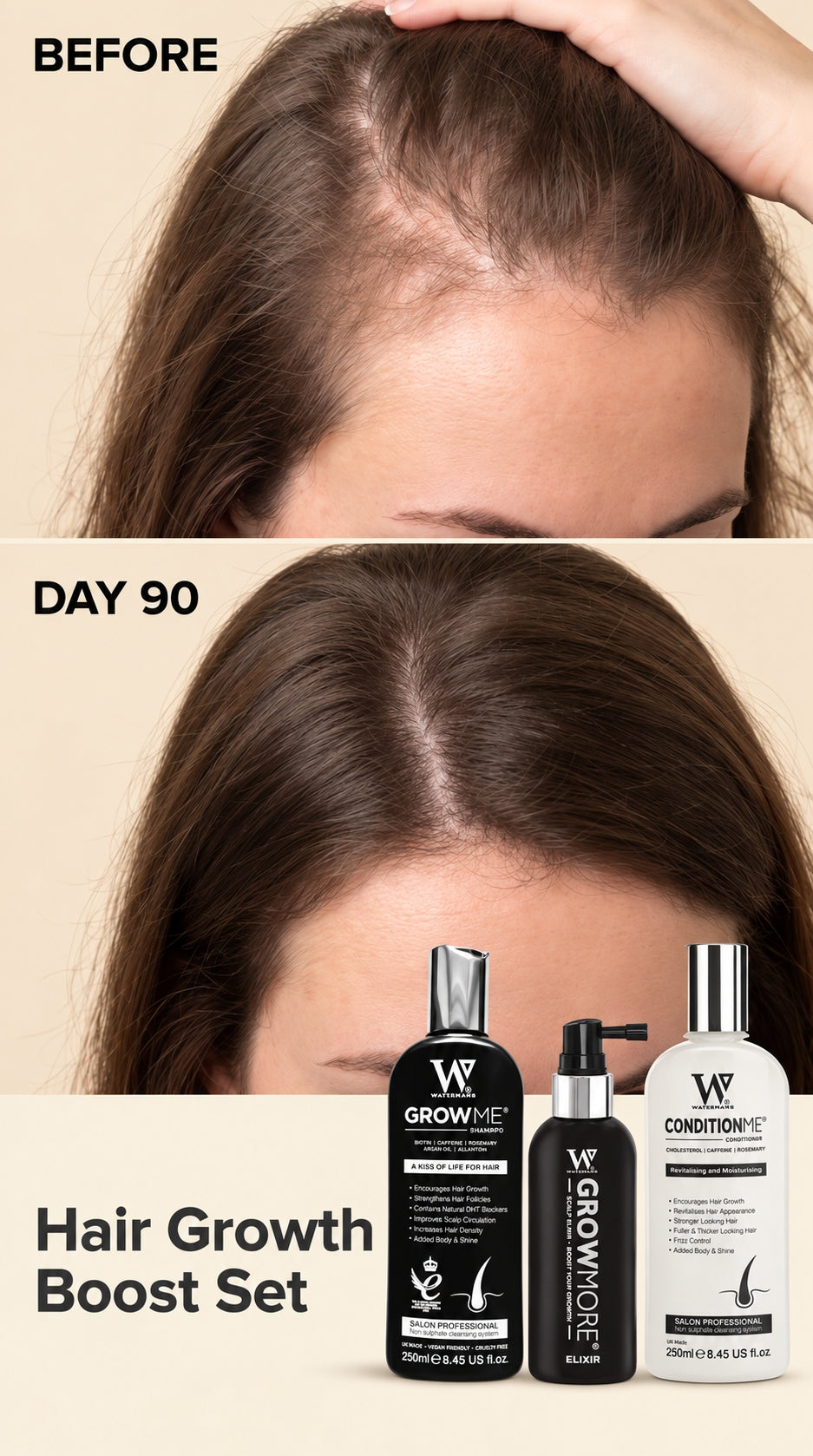
Grow Me® Hair Growth Shampoo, £14.95. A sulphate free daily shampoo with no parabens on its ingredients list. It supports a healthy scalp environment and helps reduce breakage, so lengths hold on and look fuller.
Key takeaways
- Paraben free means no ingredient ending in paraben appears anywhere on the ingredients list. Check the back, because the front badge is a claim and the list is the proof.
- Parabens are permitted preservatives in the UK within legal limits, so avoiding them is a preference and not a safety necessity.
- Ingredients are listed in descending order of quantity, so position tells you roughly how much of something is present.
- Anything listed after the fragrance or the preservatives is almost certainly present at well under one percent.
- A hero ingredient splashed across the front means nothing if it sits second from last in the list.
- "Dermatologically tested" means it was tested. It does not say what the result was.
- Percentages are only meaningful when the brand states what the percentage refers to.
- A free from badge tells you what is absent. It says nothing about what replaced it, so read the preservatives that are there.
What is a paraben free shampoo, and do you need one?
A paraben free shampoo is one whose formula contains no parabens, the family of preservatives that includes methylparaben, ethylparaben, propylparaben and butylparaben. Every water based product needs a preservative, because bacteria, yeast and mould grow readily in a warm, wet bathroom bottle, so a shampoo without parabens is not a shampoo without preservatives. It simply uses different ones, most often phenoxyethanol, sodium benzoate or potassium sorbate.
Whether you need one is a fair question, and the honest answer is that the law does not think so. The UK cosmetics regulation permits methylparaben and ethylparaben at up to 0.4 percent each and 0.8 percent in total, and propylparaben and butylparaben at up to 0.14 percent combined. Five other parabens, including isopropylparaben and isobutylparaben, are prohibited outright. So the parabens you could still meet on a UK shelf are ones the regulation has reviewed and capped. Choosing to avoid them anyway is a perfectly reasonable preference, but it is a preference rather than a safety rule, and it is worth knowing that before paying extra for the badge.
What the badge cannot tell you is whether the shampoo is any good. The table below is the short checklist we would use on any bottle, ours included.
| What to check on the label | What a good answer looks like | Why it matters |
|---|---|---|
| Any word ending in paraben | None, anywhere on the ingredients list | That is the whole definition. A badge without a clean list is only a claim |
| The preservatives used instead | Named ones such as phenoxyethanol, sodium benzoate or potassium sorbate | Every water based shampoo has to be preserved with something |
| The cleansing agents | The first two or three names after water, sulphate free if your scalp runs dry | Cleansers decide how a shampoo feels far more than its preservative does |
| The ingredient the front boasts about | Listed before the fragrance, or the brand states how much is in there | Position shows whether it is a working ingredient or a garnish |
| Price per 100ml | Worked out from the volume printed on the pack | Free from badges often carry a premium the formula does not justify |
| Period after opening symbol | An open jar with a number of months | It tells you how long the product is designed to keep once opened |
Held to that checklist, our own Grow Me shampoo is preserved with phenoxyethanol, sodium benzoate, sorbic acid and potassium sorbate, and no paraben appears anywhere on its list. Judge it against the same table as anything else on the shelf.
How do you check a shampoo label for parabens, step by step?
Reading a label properly takes about thirty seconds once you know the order to do it in. Turn the bottle over first, before the front has a chance to frame your expectations. The sequence below works for shampoos, conditioners, masks, oils and scalp products alike, because UK cosmetic labelling rules require the same core information on all of them.
- Find the INCI list, the block of Latin and chemical names, usually the smallest print on the pack.
- Read the first five ingredients. These make up the overwhelming majority of what is in the bottle.
- Find the fragrance, listed as parfum, and the preservatives. Nearly everything after these is present in tiny amounts.
- Scan the whole list for any word ending in paraben. If there is none, the shampoo is paraben free, whatever the front does or does not say.
- Locate the ingredient the front of the pack is boasting about, and note where it falls relative to that line.
- Check the volume and the period after opening symbol, the small open jar with a number of months in it.
- Only now read the front, and read it as a claim to be checked rather than as information.

The single most useful habit in all of this is checking where the hero ingredient sits. A bottle that shouts about rosemary or caffeine, and then lists it nineteenth out of twenty two, contains a trace. That is not necessarily dishonest, since some ingredients are active at low concentrations, but it does mean the front of the pack is describing a garnish rather than a recipe. If you want to see the method applied to a real range, our guide to moerie hair products walks through it step by step.
What does the ingredients list actually tell you?
The INCI list is ordered by descending quantity, which is the property that makes it useful. Ingredients present at more than one percent must appear in order of how much is in the product, so the first few names genuinely dominate the formula. For most shampoos the opening entries will be water, one or two cleansing agents and a thickener, and that is normal rather than a sign of a cheap product.
Below one percent, the ordering rule stops applying and brands may list the remainder in any order they like. This is the part people misread most often. Once you are past the fragrance and preservatives, the sequence carries no information about quantity at all, so an impressive looking ingredient sitting near the end could be anywhere from a functional trace to a homeopathic gesture. Our guide to choosing a sensitive scalp shampoo sets out what to check on the label.

Ingredient names being unfamiliar is not a warning sign. INCI is a standardised naming system, so water is aqua, vitamin B3 is niacinamide, and shea butter is butyrospermum parkii butter. A long chemical name often just means the substance has been properly identified. Equally, a botanical Latin name does not make something gentle or effective, it only tells you a plant was involved somewhere. Our guide to key ingredients for hair growth goes through the ones worth recognising.
Which claims on the front of the pack mean very little?
Several familiar phrases are technically accurate and practically empty, and knowing which ones they are saves a lot of money. The problem is rarely outright falsehood. It is that the wording is chosen so that a strong impression is created by a weak statement, and the reader supplies the rest.
| What the pack says | What it actually tells you | What to check instead |
|---|---|---|
| Dermatologically tested | A test happened. The result is not stated | Whether the brand publishes what was tested and found |
| Salon quality, professional formula | Nothing. Neither phrase has a legal definition | The first five ingredients |
| With rosemary and caffeine | Both are present in some quantity | Where they sit in the INCI list |
| Up to 90 percent said their hair felt thicker | Self reported opinion, often from a small panel | The panel size and whether felt or measured |
| Free from parabens, sulfates, silicones | Those are absent. It says nothing about what replaced them | Which preservatives and cleansers replaced them |
| Natural, botanical, clean | Nothing. None of these terms is legally defined | The ingredients list, as always |
Percentage claims deserve particular suspicion, because a number feels like evidence. "Contains 5 percent complex" is uninformative unless the brand says what is in the complex and what the 5 percent is measured against. Similarly, a consumer panel result describes what people said, not what was measured on their heads, and a panel of thirty friendly volunteers is not a demanding test. None of this makes the product bad. It makes the claim uninformative.
Be most careful with any wording that implies a medical effect, such as suggestions that a cosmetic product will act on a medical cause of hair loss, or phrasing that asserts a proven clinical outcome. Cosmetics in the UK are not medicines and cannot properly claim to act on a medical condition. Where a hair product describes itself in the language of medicine, that is a reason to be more sceptical rather than more impressed.
Get a discount on your next order
Join the Watermans mailing list and we will email a discount code straight to your inbox. Made in the UK, over 6.5 million bottles sold since 2012.
How do you compare two hair products fairly?
Fair comparison means comparing the same things in the same units, which sounds obvious and is almost never done on a shop shelf. Start with price per hundred millilitres rather than price per bottle, since pack sizes in hair care vary enormously and a larger bottle is not automatically better value. Then compare the first five ingredients of each, which is where the actual formula differences live.

After that, compare the specific claims rather than the general impression. If one bottle says a number and the other says a feeling, they are not comparable and the number is not automatically stronger. And if the two products are for different jobs, a scalp product against a fibre conditioner, then no comparison is meaningful at all, however similar the marketing looks. Knowing how to read a hair product label mostly protects you from comparing two things that were never alternatives.
One last practical test: does the brand tell you how much to use and how often? A label that specifies the amount and frequency is a label written by someone expecting the product to be used properly. Vague instructions often accompany vague claims. If you want the detail on that, see our guide to how much product to use on your scalp.
What does a trustworthy hair product label look like?
Once you know how to read a hair product label, the trustworthy ones start to look alike, because they share a few dull, checkable characteristics. The ingredients list is complete and legible rather than hidden under a peel back sticker in four point type. The claims are specific and modest, describing what the product does to hair rather than what it does to your life. The instructions state an amount and a frequency. And the brand is identifiable, with a real UK address on the pack as the cosmetics rules require.
Applying that standard to our own products is only fair. Our Grow Me® Hair Growth Shampoo is sulfate free, carries no parabens on its ingredients list, and it lists biotin, caffeine, rosemary and niacinamide, so you can check where each sits rather than taking the front of the bottle on trust. What it does is support a healthy scalp environment and leave hair looking fuller and stronger. It is a cosmetic product. It does not act on a medical cause of hair loss, and if a label of ours ever suggested otherwise, you would be right to hold us to the same test as everyone else.

Condition Me® Hair Growth Conditioner
A useful one to practise on, because its job is easy to state and easy to check: cholesterol, shea butter and hydrolysed lupine protein to reduce breakage and make detangling easier. That is a fibre benefit, it shows up within a wash or two, and it is a smaller claim than most conditioners on the shelf make.
Watermans products are 100% cosmetic and do not treat medical hair loss. Individual results may vary. Watermans is a UK made and cruelty free brand, with over 6.5 million bottles sold since 2012.
Frequently asked questions: what else do people ask about paraben free shampoo?
Is paraben free shampoo better for your hair?
Not automatically. Parabens are preservatives, so they affect how long the product keeps rather than how your hair looks or feels. The cleansing agents and conditioning ingredients near the top of the list decide that. Choose paraben free if you prefer it, then judge the shampoo on the rest of its label.
Which ingredients replace parabens in a paraben free shampoo?
Usually phenoxyethanol, sodium benzoate, potassium sorbate, sorbic acid or benzyl alcohol, often two or three together. They do the same job of keeping bacteria and mould out of the bottle, and they sit near the end of the ingredients list because preservatives work at low concentrations.
Are parabens banned in the UK?
Some are. Five parabens, including isopropylparaben and isobutylparaben, are prohibited in UK cosmetics. Methylparaben, ethylparaben, propylparaben and butylparaben remain permitted within set concentration limits, which is why they still appear on some ingredients lists.
How do you read a shampoo label if the print is unreadably small?
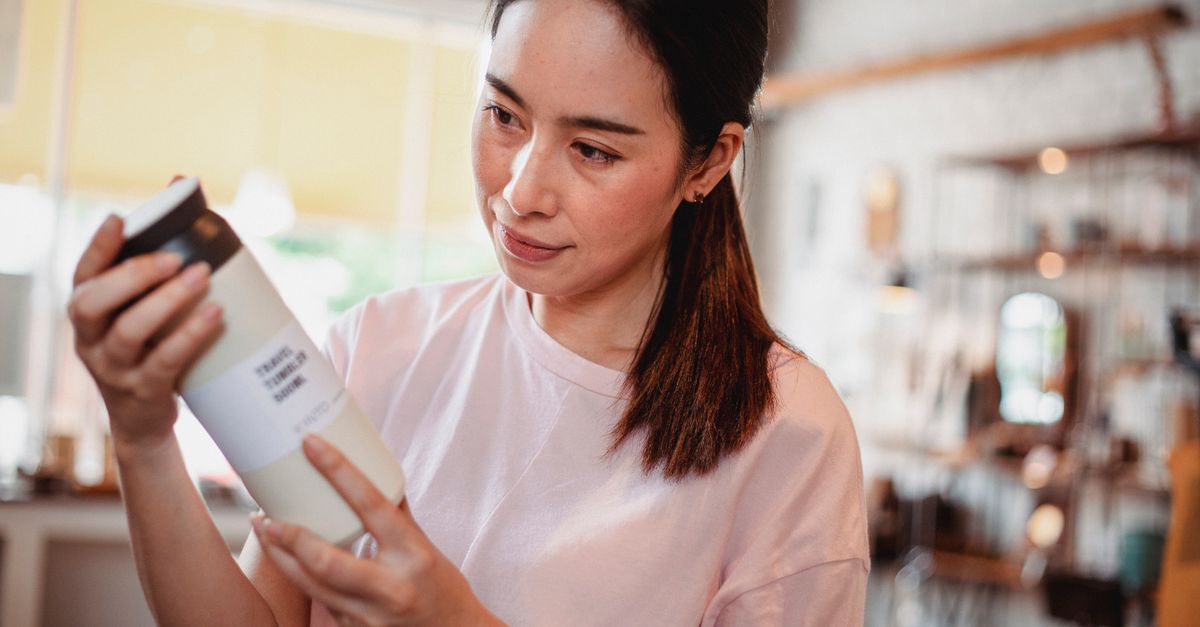
Photograph the back of the pack with a phone and zoom in, which is easier than squinting and lets you compare two products side by side afterwards. Most UK brands also publish the full ingredients list on the product page of their website, and it must match the pack.
Does ingredient order really indicate quantity?
Yes for everything present above one percent, which covers the first several entries. Below one percent brands may list ingredients in any order, so position stops carrying information once you are past the fragrance and preservatives.
Are sulfates and silicones something to avoid?
Not for most people. Sulfates are effective cleansers that some find drying, and silicones smooth the hair surface and wash out with normal shampooing. Free from claims sell an idea of purity rather than a benefit, so choose based on how your hair behaves rather than on the absence of a named ingredient.
What does dermatologically tested mean on a hair product?
It means testing involving skin was carried out. It does not say what was tested, how many people took part, or what the outcome was, and it is not an endorsement by any individual professional. Treated as a claim it is close to empty.
Is a longer ingredients list worse?
No. List length reflects how the product is built, not its quality. A conditioner with twenty five ingredients may be better formulated than one with eight, and a very short list can simply mean a very simple product. Read the first five entries rather than counting the total.
Should I trust percentage claims on the front?
Only when the brand states what the percentage refers to and how it was measured. A percentage attached to an undefined complex, or a consumer panel figure describing what people felt, tells you far less than it appears to.
Where is the expiry information on a hair product?
Look for the small open jar symbol with a number and the letter M, which gives the number of months the product stays good after opening. Products with a life under thirty months carry a best before date instead.
What is the bottom line on paraben free shampoo?
A paraben free shampoo is easy to verify and easy to overrate. To verify it, read the back first: if no word ending in paraben appears on the ingredients list, the claim holds. To keep it in proportion, remember that the permitted parabens are legal and capped in the UK, that every water based shampoo is preserved with something, and that the cleansers and working ingredients near the top of the list tell you far more about how a shampoo will behave. Compare price per hundred millilitres, compare the first five ingredients, and be sceptical of any phrase that sounds like evidence without carrying a number, a method and a result. Apply that to us as readily as to anyone else.
If you want a paraben free shampoo to start with rather than a shelf of labels to decode, that is our sulphate free hair growth shampoo.
Sources & References
- UK Government, Regulation (EC) No 1223/2009 on cosmetic products, Annex V: preservatives allowed in cosmetic products, entries 12 and 12a, on the concentration limits for methylparaben, ethylparaben, propylparaben and butylparaben.
- UK Government, Regulation (EC) No 1223/2009 on cosmetic products, Annex II: substances prohibited in cosmetic products, entries 1374 to 1378, on the five parabens that may not be used.
- UK Government, The Cosmetic Products Enforcement Regulations 2013, on the labelling information cosmetics sold in the UK must carry, including the ingredients list, the responsible person's address and the period after opening.
- Advertising Standards Authority and the Committee of Advertising Practice, The UK Advertising Codes, on marketing claims needing to be substantiated before publication and on cosmetic products not making medicinal claims.