Best Ingredients for Hair Growth: What the Evidence Says
The best ingredients for hair growth fall into two groups that people constantly mix up. On the label, caffeine, rosemary, niacinamide, panthenol and hydrolysed proteins support the scalp environment and reduce breakage. In the diet, protein, iron, zinc, vitamin D and B12 supply the raw material the follicle builds from. Topical ingredients change how hair looks and holds together; nutrition changes what the follicle has to work with.
Our hair growth shampoo
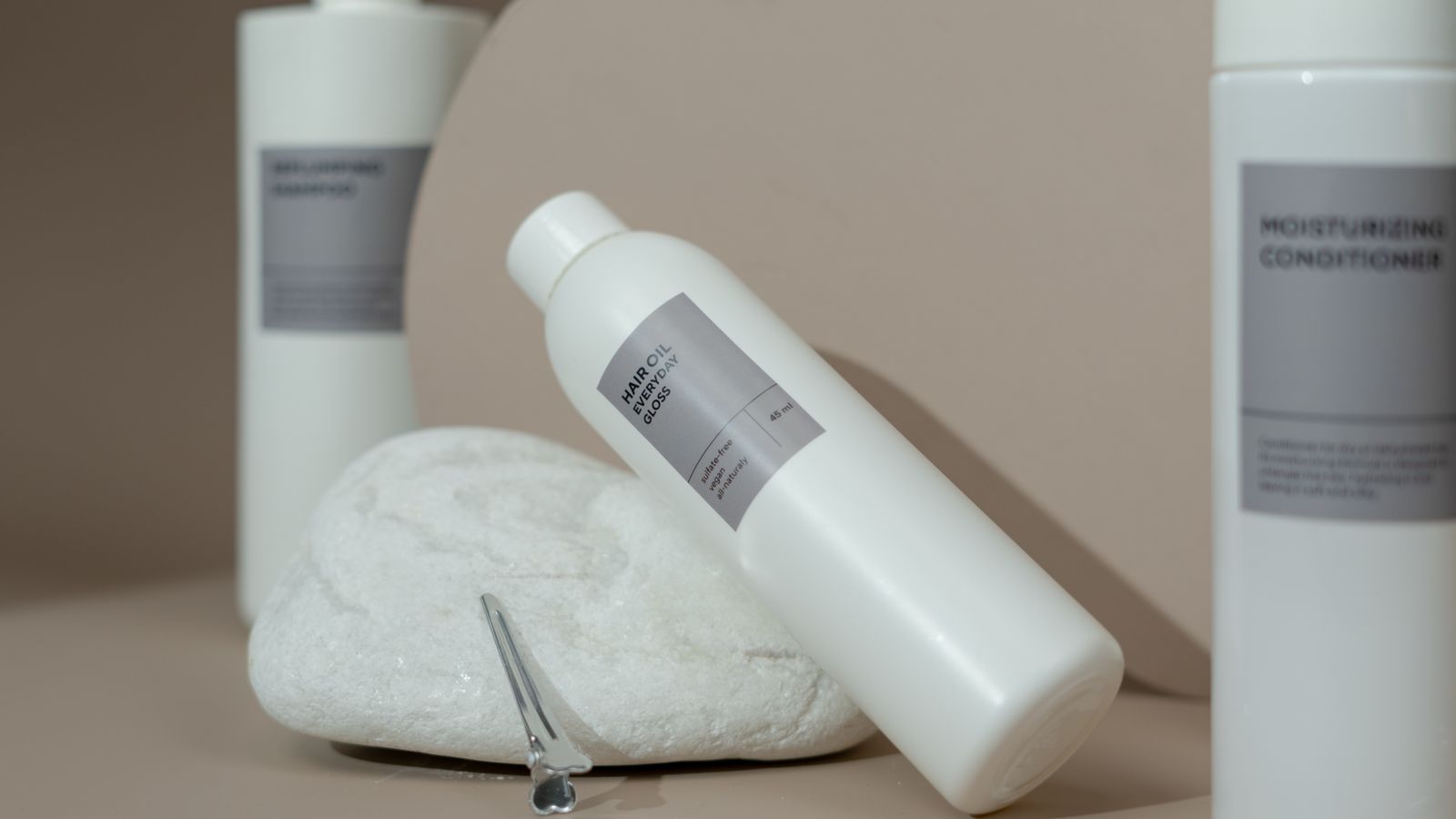
Grow Me® Hair Growth Shampoo, £14.95. A sulphate free daily shampoo that supports a healthy scalp environment and helps reduce breakage, so lengths hold on and look fuller.
Key takeaways
- Two categories: what you put on hair, and what you eat. They do different jobs and neither substitutes for the other.
- Best supported on a label: caffeine, rosemary, niacinamide, panthenol, hydrolysed proteins and good conditioning agents.
- Best supported in the diet: enough protein, plus iron, zinc, vitamin D and B12, but only if you are actually short.
- Contact time matters. A leave-on serum gives an active far longer on the scalp than a shampoo does.
- Judge nothing before three months; density takes six to twelve.
- No cosmetic ingredient changes inherited pattern thinning. That is a GP conversation.
Two of those actives get compared constantly, so we put them side by side in Redensyl vs caffeine. The peptide family gets its own breakdown in what peptides for hair growth actually do.
Why do the best ingredients for hair growth split into two lists?
A hair follicle is a small factory sitting below the skin, and the strand you see is its finished output: dead, keratinised protein with no metabolism of its own. That single fact explains most of the confusion in this category.
Anything you apply to the strand itself is working on a dead fibre. It can smooth the cuticle, add slip, hold moisture and reduce the friction that makes hair snap, all of which make hair look and feel fuller. What it cannot do is instruct the factory. Anything applied to the scalp has a chance of reaching the living part, but only in proportion to how long it stays there and how well it penetrates. And anything eaten reaches the follicle through the bloodstream, which is why nutrition is the route with the most direct access and the least glamour.

Which of the best ingredients for hair growth have the strongest evidence?
Ranked honestly by how much support sits behind each, rather than by how often it appears in advertising.
| Ingredient | What it is doing | Strength of evidence |
|---|---|---|
| Caffeine | Acts on the follicle where it reaches it; widely used as a scalp active | Moderate. Laboratory work plus small human studies |
| Rosemary extract | Botanical active studied for scalp application | Emerging. A few small human studies with real limitations |
| Niacinamide (B3) | Supports the skin barrier of the scalp | Good for skin barrier; indirect for hair |
| Panthenol (provitamin B5) | Humectant; binds water into the fibre, adds flexibility | Strong, for condition and breakage resistance |
| Hydrolysed proteins | Small peptides that fill surface gaps in damaged cuticle | Strong, for reducing breakage. Temporary and rebuilt each wash |
| Argan oil, shea butter | Emollients; reduce friction and moisture loss | Strong, for condition and shine |
| Silica, allantoin | Conditioning and scalp soothing | Limited, but low risk and well tolerated |
The point everyone skips: contact time
An active in a shampoo sits on your scalp for perhaps sixty seconds before it is rinsed away. The same active in a leave-on serum has all night. This is why serious formulators put actives in leave-on products and put cleansing and conditioning in the wash, and why a shampoo alone is rarely the whole answer.

We look at the two best-studied botanicals in more depth in our guides to what the evidence on rosemary oil actually says and whether caffeine shampoo works for women, and at the barrier ingredient in niacinamide for hair.
Get a discount on the hair growth range
Join the Watermans mailing list and we will email a discount code straight to your inbox, so you can try the hair growth range for less. Vegan, made in the UK, over 6.5 million bottles sold since 2012.
Which dietary ingredients matter most for hair growth?
This is the shorter and more consequential list, with one large caveat attached to all of it: correcting a genuine shortfall helps, and adding more of something you already have enough of does not.
- Protein. Hair is roughly 90 per cent keratin. Sustained low protein intake is one of the most reliable ways to trigger a diffuse shed. A palm-sized portion at each main meal is a more useful target than a daily gram count.
- Iron and ferritin. Ferritin is the storage form, and low ferritin is strongly associated with diffuse shedding in women even when a standard blood count looks normal. Test rather than guess, because excess iron is harmful.
- Zinc. Needed for the protein synthesis the follicle runs on. Genuine deficiency is uncommon in the UK but appears in restricted or very limited diets.
- Vitamin D. Widely low in the UK over winter and involved in follicle cycling. Cheap to test and cheap to correct.
- B12 and folate. Relevant to the rapidly dividing cells of the follicle, and commonly low in plant-based diets without supplementation.
- Biotin. Genuinely required to build keratin, genuinely rare to be short of. Useful if you are deficient, inert if you are not, and worth mentioning to your GP because high doses interfere with some blood tests.
Our guides to the vitamins and minerals that matter and what biotin does and does not do go through each of these in more detail.
How should you actually judge a label?
Four questions get you most of the way, and none of them require a chemistry degree.
- Where does the active sit in the ingredients list? Ingredients are listed by descending concentration down to one per cent. An active near the very end, after the preservatives and fragrance, is present in a token amount.
- Is the format right for the job? Actives belong in leave-on products. Cleansing and conditioning belong in the wash. A shampoo advertising six actives is mostly advertising.
- What is the claim, precisely? "Reduces breakage" and "hair looks fuller" are cosmetic claims a company can stand behind. Anything implying a medical outcome should make you more sceptical, not less.
- Does it suit your hair and scalp? A protein-heavy product on hair that is already stiff makes it brittle. A rich oil on fine hair flattens it. The best formula on paper is the wrong one if it does not suit you.
How do you put the ingredients together into a routine?
Putting these ingredients together is less about collecting actives than about placing them correctly. The sensible structure is: cleanse gently, condition every wash, and put the actives in something that stays on. Then leave it alone long enough to judge. Kopexil is one of the actives you will meet in that last step, and our guide to kopexil for hair sets out what it can and cannot do.

Grow Me® Hair Growth Shampoo · £14.95
A sulfate-free everyday shampoo built around biotin, caffeine, rosemary, niacinamide and hydrolysed lupine protein. It cleanses without stripping, supports a healthy scalp environment and reduces breakage so hair looks and feels fuller.

Grow More® Scalp Elixir · £25.50
A leave-on overnight scalp serum with the same active family. This is the format that gives actives real contact time on the scalp rather than sixty seconds in the shower, which is why it is the more sensible place to put them.


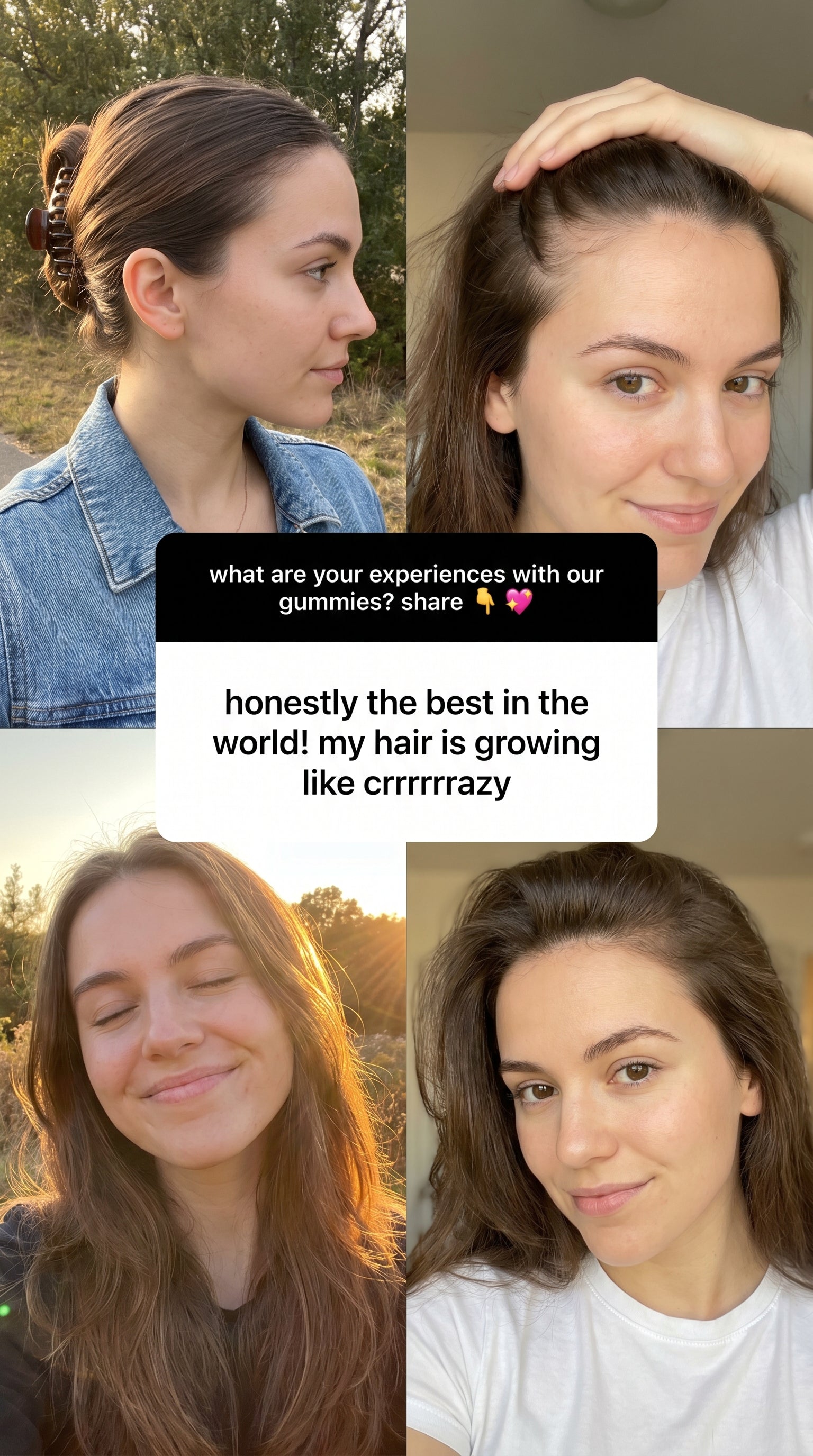
GrowPro® Hair Growth Gummies · £22.95
Sugar-free vegan gummies with biotin, zinc, selenium, and vitamins including D3 and B12. Zinc and selenium contribute to the maintenance of normal hair. Sensible if your diet has genuine gaps, and not a replacement for a blood test if you suspect a deficiency.
How do you shortlist a product by the best ingredients for hair growth?
Shortlisting a product by the best ingredients for hair growth comes down to four checks: the active sits in the top half of the ingredients list, the format gives it enough contact time, the claim on the front is a cosmetic one you can verify, and the price per bottle is one you will keep paying for six months.
| Format | Contact time | Ingredients it suits | Where the Watermans range sits |
|---|---|---|---|
| Shampoo | About a minute, then rinsed | Mild cleansing agents and conditioning, with caffeine and rosemary as supporting actives | Grow Me shampoo, £14.95 for 250 ml |
| Conditioner or mask | Two to ten minutes | Panthenol, hydrolysed proteins, argan and shea emollients | Any conditioner with panthenol and a hydrolysed protein in the top half of the list |
| Leave-on scalp serum | Hours, usually overnight | Caffeine, niacinamide, rosemary and peptides | Grow More elixir, £25.50 |
| Supplement | Daily, through the bloodstream | Iron, zinc, vitamin D, B12 and biotin, only where a test shows a gap | GrowPro gummies, £10 at the time of writing |
The claims on the box are regulated as well as the contents. The Great Britain nutrition and health claims register carries authorised wording for biotin, zinc and selenium, each of which "contributes to the maintenance of normal hair", while iron and vitamin D have no authorised hair claim at all, so a supplement label that hangs a hair promise on its iron content is overreaching. Cosmetics are held to a different standard: a shampoo can say it reduces breakage or leaves hair looking fuller, and anything promising to grow new hair is a medicinal claim a cosmetic is not allowed to make.
We will not claim ours carry the best ingredients for hair growth in some absolute sense, because the right product is the one whose format matches the job and whose price you will still be paying in six months. Use the table to shortlist, then apply the four label questions above to whatever is left.
Where does the evidence genuinely conflict?
Two places, and it is more useful to name them than to smooth them over. The first is rosemary. A small number of human studies have reported outcomes over several months that attracted a lot of attention, but the studies are small, several have methodological weaknesses, and replication is limited. Enthusiasts treat them as settled and sceptics treat them as noise; the fair reading is promising but not yet conclusive.
The second is supplementation in people who are not deficient. Systematic reviews consistently find reasonable support for correcting a documented deficiency and weak or absent support for supplementing people with normal levels, yet the supplement category is sold almost entirely to the second group. Some authors argue the tests used to define adequacy are set too low; others argue the effect simply is not there. Until that is resolved, testing before buying is the only position that does not require you to guess. Copper peptides get their own write up in what GHK-Cu is and what the research actually shows.
Frequently asked questions
Are the best ingredients for hair growth the same for men and women?
Largely yes. The fibre and scalp respond to the same conditioning agents and scalp actives whatever your sex, and the dietary list is identical. The differences are in cause and pattern: low ferritin shows up far more often in women, while inherited pattern thinning is more common and starts earlier in men, and no cosmetic ingredient changes either.
What are the best ingredients for hair growth worth looking for?
On a label, the ones with the most support behind them are caffeine, rosemary extract, niacinamide, panthenol, hydrolysed proteins and conditioning agents such as argan oil and shea butter. In the diet, the list is shorter and more important: enough protein, plus iron, zinc, vitamin D and B12. Diet does more of the heavy lifting than any bottle.
Does biotin actually do anything for hair?
Biotin is genuinely required to build keratin, so a real biotin deficiency causes hair problems and correcting it helps. The catch is that biotin deficiency is rare in people eating a normal mixed diet, and studies do not show benefit in people who already have enough. It is also worth telling your GP if you take high-dose biotin, because it can distort several blood test results.
Is caffeine in shampoo doing anything, or is it marketing?
There is laboratory and small-scale human work suggesting caffeine influences the hair follicle when it reaches it, and it is one of the better-supported cosmetic actives. The honest limitation is contact time: a shampoo is on the scalp for perhaps a minute. A leave-on product gives an active far longer to work, which is why serums tend to be the more sensible format for actives.
What about rosemary oil?
Rosemary is one of the more interesting botanicals, with a small number of human studies reporting outcomes comparable to conventional cosmetic comparators over several months. The evidence base is small and the studies have real limitations, so it deserves cautious interest rather than the certainty it is often sold with. Never apply undiluted essential oil to the scalp.
How long before an ingredient shows a visible difference?
Assume three months before anything is fairly judged and six to twelve months before density reads differently, because hair grows at roughly one centimetre a month. Anything promising a visible change in two weeks is describing conditioning and shine, which is a real effect on the fibre but a different thing entirely.
Do I need a supplement as well as a shampoo?
Only if your diet has a genuine gap or a blood test shows a deficiency. Topical products work on the scalp surface and the fibre; nutrition works on the raw material the follicle builds from. They are complementary rather than interchangeable, but supplementing something you already have enough of does nothing.
Can any ingredient undo inherited pattern thinning?
No cosmetic ingredient does that, and any product claiming it is overstating its case. Inherited pattern thinning is a follicle-level process that needs a GP or dermatologist conversation. Cosmetic ingredients work on the hair you have: reducing breakage, improving condition and supporting a healthy scalp environment so hair looks and feels fuller.
Are natural ingredients better than synthetic ones?
Not inherently. Plenty of plant extracts are irritating and plenty of synthetic molecules are gentle and well studied. What matters is the specific ingredient, its concentration, the format it sits in and whether it stays on the scalp long enough to matter. Natural is a marketing category, not a safety or efficacy category. Capilia Longa is one of the newer names on ingredient lists, and we have an honest read on Capilia Longa and its turmeric origins.
What is the bottom line on the best ingredients for hair growth?
The bottom line on the best ingredients for hair growth is that they sit in two separate lists. On a label, look for caffeine, rosemary, niacinamide, panthenol, hydrolysed proteins and proper conditioning agents, and pay as much attention to the format as to the list, because an active in a leave-on product gets the contact time an active in a shampoo never will. In the diet, protein does the most work, followed by iron, zinc, vitamin D and B12, and only where you are genuinely short. Give any change three months before you judge it, and remember that cosmetic ingredients work on the hair you have rather than on inherited pattern thinning, which is a conversation for your GP. Ingredients are only half the story, so it is worth knowing how to judge hair loss product claims before you weigh a percentage printed on a box. If your question is about products or a routine rather than a medical one, you can talk to Gail Waterman, our co-founder, as an AI avatar on the Watermans homepage.
If you take one thing from this, make it the wash step, and Grow Me hair growth shampoo is built for exactly that. Made in the UK, with over 6.5 million bottles sold since 2012.
Sources & references
- NHS: Vitamins and minerals: UK reference intakes for iron, zinc, vitamin D and B vitamins.
- NHS: Vitamin D: UK guidance on autumn and winter supplementation.
- DermNet NZ: Hair shaft structure and abnormalities: on the hair fibre as keratinised, non-living tissue.
- British Dietetic Association: Iron food fact sheet: dietary sources, absorption and cautions on unsupervised supplementation.
- EFSA: Scientific opinion on health claims for zinc, selenium and biotin: the basis for authorised hair-related nutrient wording in the UK and EU.
- GOV.UK: Great Britain nutrition and health claims (NHC) register: the authorised wording for biotin, zinc and selenium on the maintenance of normal hair.
- US National Library of Medicine: Rosemary oil compared with a topical comparator in androgenetic alopecia: the frequently cited small human trial, useful read alongside its stated limitations.
Important: Watermans products are 100% cosmetic and do not treat medical hair loss. Individual results may vary.