Maca for Hair Growth: What the Evidence Really Shows
Maca for hair growth is one of the most confidently repeated claims in the supplement aisle and one of the least supported. Maca is a genuine Peruvian root vegetable with real nutritional content and a small body of human research on energy, mood and sexual function. There is no human trial showing it grows hair, thickens hair or slows hair loss. What follows is what the evidence does and does not show, and what to do instead. For another plant remedy with recipes and honest limits, see butterfly pea flower for hair.
Our hair, skin and nails gummies
GrowPro® Hair, Skin & Nails Gummies, £22.95. Sugar free daily gummies for people who would rather chew than swallow a tablet, supporting hair care from the inside out.
Key Takeaways
- No published human trial has measured hair density, hair diameter or shedding rates on maca. The claim rests on inference, not on results.
- Maca is a nutritious food, roughly 60 per cent carbohydrate with useful amounts of vitamin C, copper, iron, potassium and fibre in the dried root.
- Human studies on maca consistently report that it does not measurably change serum testosterone or oestrogen, which undercuts the hormonal story used to sell it for hair.
- If your shedding is driven by an iron, vitamin D or protein shortfall, maca does not fix that shortfall. A blood test and the right nutrient will.
- Maca is generally well tolerated in food amounts, but it is a brassica, so talk to your GP first if you have a thyroid condition, are pregnant or breastfeeding, or have a hormone sensitive condition.
- The habits with actual evidence behind them are dull: adequate calories and protein, correcting real deficiencies, gentle handling and a consistent scalp routine.
What is maca root?
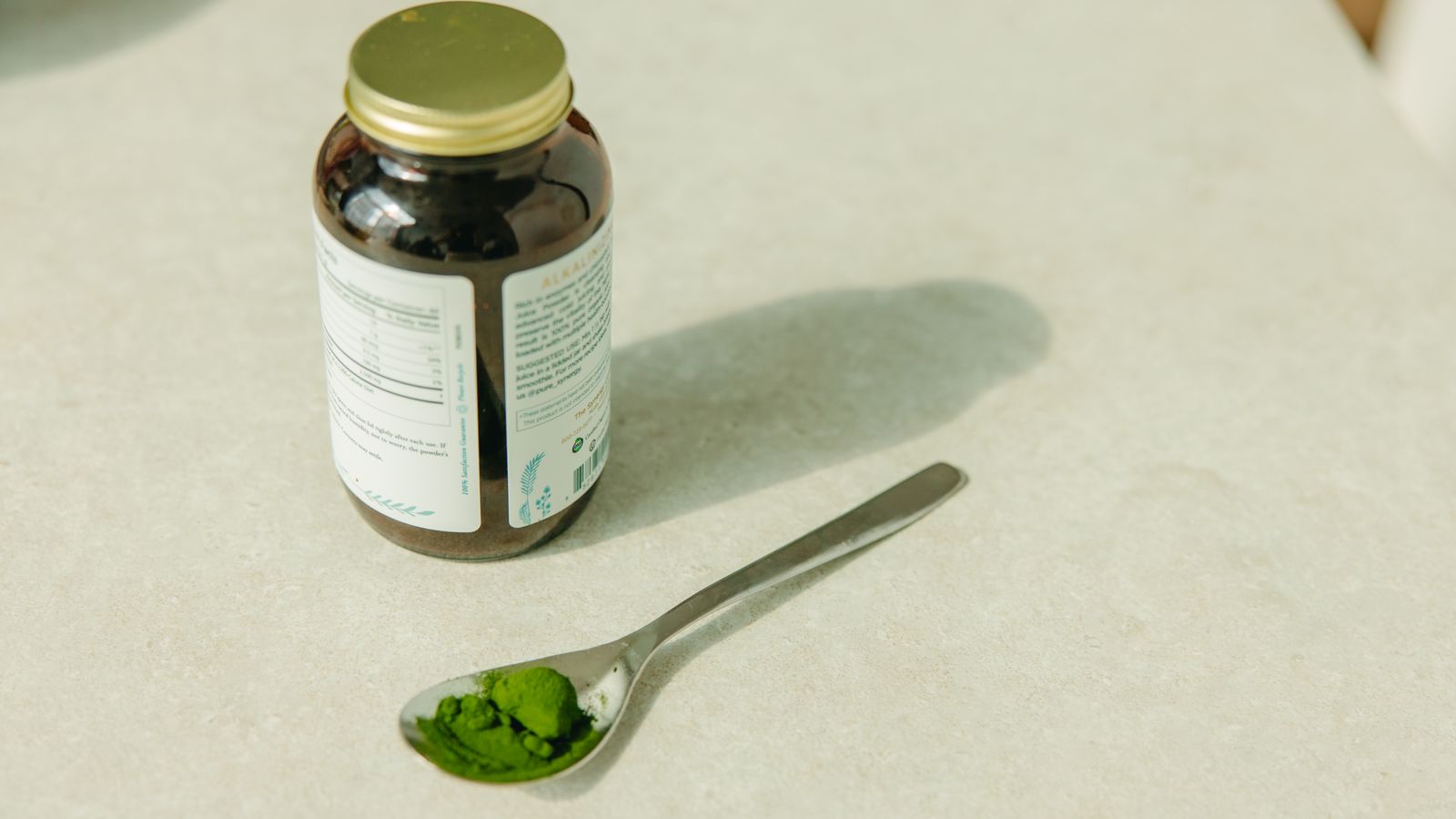
Maca, or Lepidium meyenii, is a root vegetable in the brassica family, related to radish, turnip and broccoli. It grows in the Peruvian Andes at altitudes above 4,000 metres, where very few crops survive, and it has been eaten and dried for storage in the region for centuries. It comes in yellow, red and black varieties, which differ slightly in their chemistry, and it is usually sold in the UK as a dried powder, as capsules, or as a gelatinised powder with the starch pre cooked for easier digestion.
Taste matters more than most people expect: raw maca powder is earthy and slightly malty, which is why it usually ends up in smoothies, porridge or coffee rather than in water. Dried maca root is a food, and treating it as a food is the most sensible framing available.

Does maca for hair growth actually work?
On the current evidence, no one can say that it does. The honest position is that this has not been tested. Searches of the published human literature turn up trials of maca on sexual function, mood, energy, menopausal symptoms and sports performance, and none of them measured a hair outcome. There is no randomised trial with hair counts, no trichoscopy study, no measurement of shaft diameter, and no shedding data. An absence of evidence is not proof that something fails, but it is very different from the confident claims made on the packaging. For a related angle, see our guide to is maca good for hair growth.
What has been studied is instructive in a different way. A 2023 randomised, double blind, placebo controlled trial in men with symptoms of late onset hypogonadism found maca was well tolerated and reported some symptom benefits, while a long standing review of the ethnopharmacology of maca notes the same finding that appears repeatedly across the literature: maca does not appear to raise serum testosterone, oestrogen or other reproductive hormones in humans. That single point deserves attention, because the hormonal argument is the main one used to sell maca for hair growth. If it does not move the hormones, it cannot be working the way the marketing says it is.
Where do the maca for hair growth claims come from?
They come from a chain of reasonable sounding steps, each of which loses a little truth along the way.
- Maca has some evidence for energy, mood and sexual function.
- Those things are loosely associated with hormones.
- Hormones influence hair.
- Therefore maca influences hair.
Step four does not follow. It is the same reasoning that would let you claim any wellbeing supplement supports hair, and it is why so many botanical hair claims sound interchangeable. A second thread comes from maca being labelled an adaptogen, a category that describes a proposed role in the stress response rather than a proven mechanism. Since severe stress genuinely can push hairs into the resting phase, an anti stress framing sounds plausible. But plausible is not the same as measured, and no trial has closed that gap.
A third thread is simply nutritional. Maca contains nutrients hair uses, so the argument becomes that eating it helps hair. That is true in the same limited sense it is true of spinach or eggs, and only if you were short of those nutrients to begin with.
What does maca contain, and does it matter for hair?
Dried maca root is genuinely nutritious. The question is whether the amounts you would realistically eat make a difference.
| Component | Relevance to hair | Honest assessment |
|---|---|---|
| Vitamin C | Supports collagen formation and helps absorb iron from plant foods | Real, but easy to get elsewhere and rarely the limiting factor in the UK |
| Iron | Low iron stores are repeatedly linked to diffuse shedding, especially in women | Present, but non haem and in modest amounts. Not a fix for genuine iron deficiency |
| Copper and zinc | Involved in the enzyme activity and cell division follicles rely on | Useful contributions at food amounts, not therapeutic ones |
| Protein and amino acids | Hair is keratin, so total protein intake matters | A teaspoon of powder adds almost nothing to a daily protein target |
| Glucosinolates and macamides | Maca specific compounds studied for mood and energy effects | Interesting, largely preclinical, no hair data at all |
| Fibre | General health, no direct follicular role | Fine, but not why anyone buys it |
The pattern is consistent. Everything maca offers hair, it offers in food quantities, and a varied diet delivers the same things more cheaply. Our guide to hair vitamins, what actually works and what does not goes through the same reasoning across the whole supplement shelf.
Hair loss, hair shedding or hair breakage: what are you dealing with?
Before spending anything on a supplement, it is worth knowing which of three different problems you have, because only one of them is even theoretically nutritional.
| What it is | What you see | Would nutrition change it? |
|---|---|---|
| Hair shedding (cycle) | More full length hairs all over, each with a small pale bulb, starting months after a trigger | Yes, if a real deficiency or energy shortfall is driving it |
| Hair breakage (fibre) | Short broken stubs of uneven length, rough ends, no bulb | No. This is heat, bleach, tension and friction |
| Hair loss (follicular) | A widening parting, receding temples, or defined patches | No. Inherited sensitivity or an autoimmune process, and worth a GP visit |
Most people who buy a supplement for hair actually have breakage or pattern thinning, neither of which any root vegetable will change. Our explainers on what causes telogen effluvium and the three mechanisms behind thinning hair will help you place yours.
Get a discount on the thinning hair range
Join the Watermans mailing list and we will email a discount code straight to your inbox, so you can try the thinning hair range for less. Vegan, made in the UK, over 6.5 million bottles sold since 2012.
How do you use maca sensibly if you want to try it?
If you like maca for its own sake, for energy, for mood or simply because you enjoy it in a smoothie, there is no reason to avoid it. Just go in with accurate expectations.
- Form. Gelatinised powder is easier on the digestion than raw, since the starch is pre cooked. Capsules are convenient but usually work out more expensive per gram.
- Amount. Human studies have typically used something in the region of 1.5g to 3g a day. More is not better and there is no evidence that higher intakes do more.
- Timing. Morning suits most people, since some find it mildly stimulating. Take it with food if it unsettles your stomach.
- Consistency. Studies run for weeks rather than days. If you are going to judge it, give it 8 to 12 weeks and judge it on energy and mood, which is where the evidence actually lives.
- Quality. Buy from a supplier that gives the origin and the variety. Cheap powders vary widely.
- Do not stack blindly. Adding five supplements at once means you will never know which one, if any, did anything.

Who should be careful with maca?
Maca is generally well tolerated at food amounts, and reported side effects in trials are mild, usually digestive. Some caution is still sensible. If your question is about products or a routine rather than a medical one, you can talk to Gail Waterman, our co-founder, as an AI avatar on the Watermans homepage.
- Thyroid conditions. Maca is a brassica, and brassicas contain goitrogens, which can interfere with iodine uptake in large amounts. Speak to your GP first if you have a thyroid condition, particularly since thyroid problems are themselves a common cause of shedding.
- Pregnancy and breastfeeding. There is not enough safety data to recommend supplemental amounts. Food amounts in a meal are a different matter, but the supplement is best left.
- Hormone sensitive conditions. Evidence that maca changes hormone levels is weak, but if you have a hormone sensitive condition, raise it with your care team rather than assuming.
- Anyone on regular medicines. Botanical supplements can interact. Check with a pharmacist, who will do this for free and in five minutes.
- Anyone using it instead of getting checked. This is the real risk. Months on a supplement while an untested iron or thyroid problem continues is months lost.
What actually supports fuller looking hair?
The unglamorous list has more behind it than any single botanical.
- Get the bloods done if shedding has lasted more than three months. Ferritin, full blood count, thyroid function and vitamin D answer most questions a supplement only postpones.
- Eat enough, and enough protein. Roughly 1.2g to 1.6g per kilogram of bodyweight a day if you are active or losing weight.
- Take vitamin D in autumn and winter, which the NHS advises for adults in the UK.
- Cut the mechanical losses. Lower heat, looser styles, gentler detangling. This is the fastest visible improvement available to most people.
- Keep the scalp comfortable and clean, since the surface hair grows from is not a detail.
- Give it time. The hair cycle works in months. The anagen phase explains why nothing shows up in a fortnight.

GrowPro Hair Growth Gummies, £22.95
Sugar free vegan gummies with biotin, zinc, selenium, copper and bamboo silica. Zinc, selenium and biotin contribute to the maintenance of normal hair, which is a narrower and more defensible claim than anything said about maca. Food first, supplement second.

Grow Me Hair Growth Shampoo, £14.95
A sulphate free daily shampoo with biotin, caffeine, rosemary and niacinamide, formulated to support a comfortable scalp and leave hair looking fuller and thicker. Cosmetic, and honest about being cosmetic.

Frequently Asked Questions
How long does maca for hair growth take to work?
There is no established timeline because there is no established effect on hair. If you are taking maca for energy or mood, where the evidence is stronger, studies generally run 8 to 12 weeks before assessing anything.
Is maca better than biotin for hair?
Neither has strong evidence for hair in people who are not deficient. Biotin at least has a recognised role in keratin production and an approved nutrition claim behind it, while maca has no hair specific data at all. True biotin deficiency is rare in the UK.
Does maca affect hormones?
Human studies have repeatedly failed to find measurable changes in serum testosterone or oestrogen after maca. Some people report symptom changes, which is interesting, but the hormonal explanation used to sell maca for hair is not well supported.
Can maca make hair loss worse?
There is no evidence that it does. The main risk is indirect: spending months on a supplement while an underlying iron, thyroid or hormonal cause goes unchecked.
Which colour of maca is best?
Yellow is the most common, red and black are marketed for specific purposes, and the differences studied so far relate to bone, mood and sperm parameters rather than hair. No variety has hair data behind it.
Can I just eat maca as a food instead?
Yes, and that is arguably the most sensible way to approach it. As part of a varied diet it is a perfectly good root vegetable. The problems begin when it is sold as a solution to a problem it has never been tested against.
What should I try instead if my hair is shedding?
Start with a blood test rather than a supplement. If ferritin, thyroid function or vitamin D come back low, correcting the specific shortfall is far more likely to help than a general botanical, and you will actually know whether it worked.
What is the bottom line on maca for hair growth?
Maca for hair growth is a claim built on inference rather than data. Maca is a nutritious food with modest, genuine research behind it for energy, mood and sexual function, and no research at all on hair. It does not appear to change hormone levels, which removes the mechanism the marketing depends on. Enjoy it if you like it, but if your hair is shedding, get your iron, thyroid and vitamin D checked, eat enough protein, handle your hair gently, and give the cycle the months it needs.
The shampoo is the step you actually repeat, which is why our sulphate free hair growth shampoo is the one worth getting right. Vegan, made in the UK.
Sources and References
- Gonzales GF. Ethnobiology and ethnopharmacology of Lepidium meyenii (Maca), a plant from the Peruvian highlands. Evidence Based Complementary and Alternative Medicine, 2012.
- A randomised, double blind, placebo controlled trial of maca in men with symptoms of late onset hypogonadism. The World Journal of Men's Health, 2023.
- Guo EL, Katta R. Diet and hair loss: effects of nutrient deficiency and supplement use. Dermatology Practical and Conceptual, 2017.
- NHS. Vitamins and minerals.
- NHS. Vitamin D, including the autumn and winter advice for UK adults.
- NHS. Hair loss, on common causes and when to seek help.
Where a supplement has been studied for one outcome and marketed for another, we have said which is which rather than borrowing the credibility of the wrong trial.
Watermans products are 100% cosmetic and do not treat medical hair loss. Individual results may vary.