Terminal Hair Density: What It Is and How to Measure It
Terminal hair density is the number of thick, pigmented, fully grown hairs packed into one square centimetre of scalp. On a healthy adult scalp that figure usually sits somewhere between roughly 150 and 300 hairs per square centimetre, and it falls slowly with age. It is the single measurement that decides how much scalp shows through, which is why it matters far more to appearance than the length or the shine of any individual strand.
Our hair growth shampoo
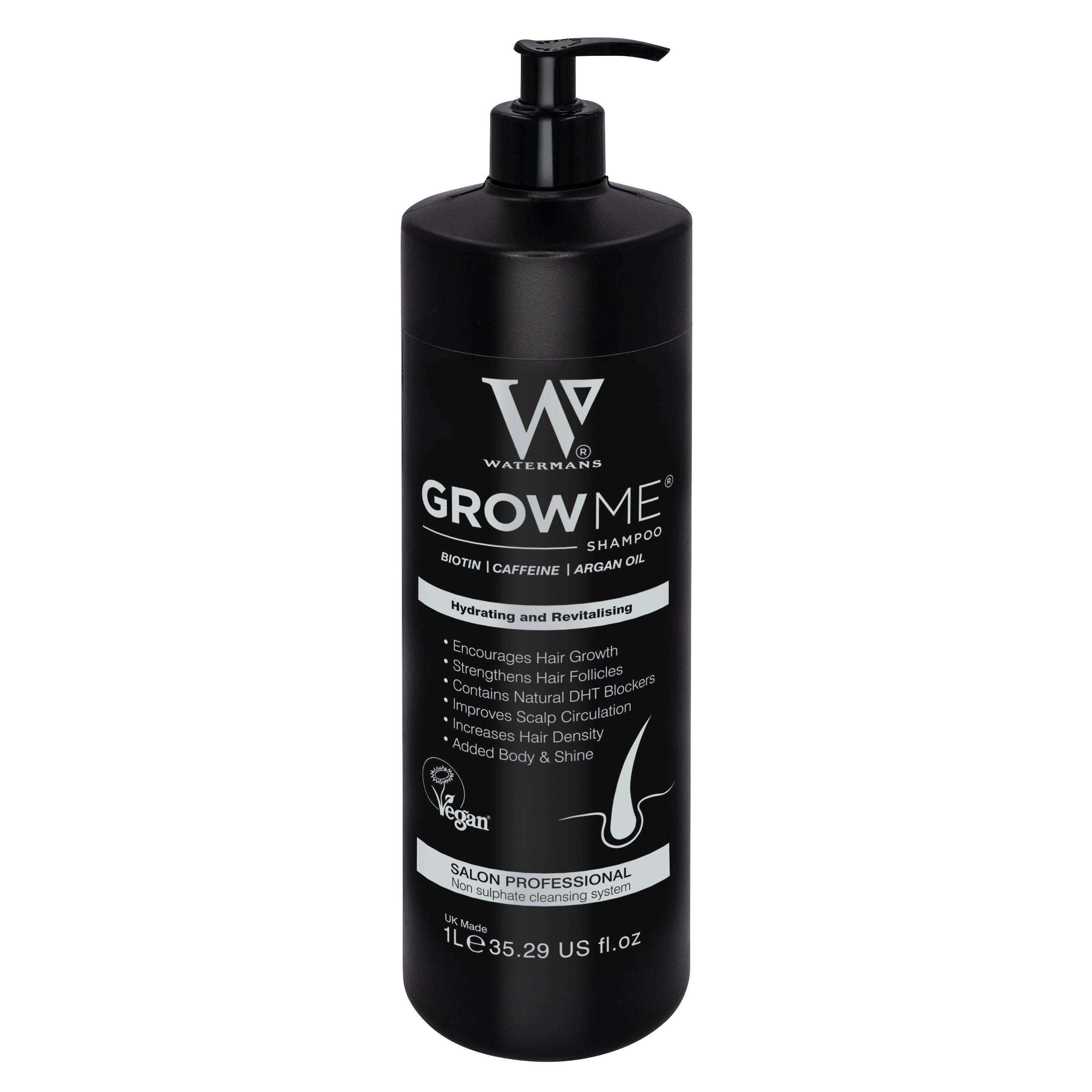
Grow Me® Hair Growth Shampoo, £14.95. A sulphate free daily shampoo that supports a healthy scalp environment and helps reduce breakage, so lengths hold on and look fuller.
Key takeaways
- Density is a count of hairs per square centimetre. Thickness is the width of one hair. They are different numbers and they change for different reasons.
- Typical adult scalps carry roughly 150 to 300 terminal hairs per square centimetre, with the crown usually a little lower than the sides.
- You can lose up to about half the hair in an area before most people notice a change in the mirror, which is why early tracking beats waiting.
- Follicular loss, cycle shedding and fibre breakage all thin the look of your hair, but only one of the three is a change in terminal hair density.
- Nothing cosmetic changes how many follicles you own. Good scalp care and less breakage protect the hairs you already have, so the density you have looks its best.
What is terminal hair density?
Terminal hair density counts the mature hairs growing in a fixed area of scalp. Terminal hairs are the coarse, pigmented, long hairs that make up an adult head of hair. They sit alongside vellus hairs, which are the short, fine, pale hairs you can see on a forearm, and the balance between the two is what changes most visibly in pattern hair loss.
Two numbers describe a head of hair, and people mix them up constantly:
- Density is how many hairs occupy a square centimetre of scalp. This is a count.
- Calibre, often called thickness, is how wide a single hair shaft is, measured in microns. This is a width.
Someone with fine hair can have very high density and still look like they have plenty of hair. Someone with coarse hair can have low density and show scalp at the parting. Because the two move independently, a useful record tracks both.
What counts as a normal terminal hair density?
Published scalp studies put the average adult somewhere around 150 to 300 terminal hairs per square centimetre, and there is genuine disagreement in the literature about the exact figure because measurement methods differ. Studies using phototrichograms on shaved test areas tend to report lower counts than studies using global photography, and results also vary by hair type and by scalp region.
| Scalp region | Typical terminal hairs per sq cm | What to watch for |
|---|---|---|
| Occipital scalp, the back of the head | Usually the highest count on the head | Generally stable in pattern loss, so it works well as your control area |
| Vertex, the crown | Often lower than the back | Usually the first place a widening spot shows in men |
| Mid scalp and parting | Sits between the crown and the sides | Usually the first place a widening parting shows in women |
| Temples and frontal hairline | Naturally lower, with finer hairs at the very edge | A soft, wispy edge is normal, a receding shape is not |
Two practical points follow from this. First, an absolute number pulled off the internet is close to useless on its own. Second, your own number measured in the same spot twice, six months apart, tells you almost everything you need to know. Comparing yourself to yourself removes every source of variation that makes published averages so wide.
The 50 per cent rule. Dermatology texts have long noted that roughly half the hair in an area can be gone before thinning becomes obvious to the naked eye. That single fact is the strongest argument for measuring early rather than waiting until the mirror makes the case for you.

Why are hair loss, hair shedding and hair breakage three different problems?
These three words get used interchangeably and they should not be. Only one of them is a change in the number of follicles producing terminal hair, and the correct response is different in each case.
| Hair loss | Hair shedding | Hair breakage | |
|---|---|---|---|
| What is happening | Follicles shrink and produce finer, shorter hairs, or stop producing terminal hair at all | More follicles than usual move into the resting phase at once and release their hair | The hair fibre snaps along its length while the follicle keeps working normally |
| Effect on density | Genuine, lasting fall in density | Temporary dip, then recovery as the cycle resets | None. The follicle count is unchanged |
| The clue | A changing shape: widening parting, receding corners, thinner crown | A sudden increase in hairs on the pillow and in the shower, usually 2 to 4 months after a trigger | Short broken pieces of hair, rough midlengths, a ponytail that feels thinner at the ends but not at the root |
| What helps | A conversation with your GP, plus gentle care to protect what is growing | Time, plus fixing the trigger such as low iron, illness or a crash diet | Less heat, less tension, more conditioning. Results here are quick |
If your ponytail circumference has shrunk but your parting looks the same, breakage is the likeliest culprit and it is the easiest of the three to improve. If your parting has widened while the back of your head is unchanged, that is a pattern of loss and it is worth a proper conversation with your GP. Our guides to what causes hair shedding and how long it lasts and to telogen effluvium and its usual timeline go into each of these in more detail.
How do you measure terminal hair density at home?
Home measurement will never match a trichoscope, but a consistent home method is far more useful than an accurate one you only do once. The aim is repeatability, not precision.
- Choose a fixed spot and mark it. Pick one area, roughly 2cm by 2cm, in the region you care about. Locate it by a permanent landmark such as the distance from a mole, the top of an ear, or the crown whorl. Write the landmark down.
- Standardise the conditions. Same room, same time of day, same light, hair clean and dry, parted the same way. Changing any of these will move your result more than a real change in your hair would.
- Take the same three photos every time. Straight down on the parting, straight on at the hairline, and the back of the head for comparison. Use a ruler or a coin in frame for scale.
- Count if you want a number. Zoom in on a clearly bounded 1cm square in the photo and count the visible hairs. It will undercount, because hairs overlap, but a consistent undercount still tracks direction correctly.
- Measure the ponytail too. Wrap a tape around your ponytail at a fixed distance from the roots. Circumference picks up breakage and bulk changes that a scalp photo misses.
- Wait three months. Hair grows roughly 1cm a month, so anything shorter than a quarter is noise. Six months is better.
If you want the full method, including how to avoid the lighting mistakes that make people think they are losing hair when they are not, our guide on how to measure hair growth properly covers it step by step.
What causes terminal hair density to fall?
Several distinct mechanisms reduce the count, and more than one is often running at the same time.
- Pattern hair loss. Androgenetic alopecia miniaturises sensitive follicles over successive cycles. Each new hair emerges a little finer and a little shorter until it no longer counts as terminal. This is the commonest cause of a lasting fall in density in both men and women.
- Age. Follicle numbers and the proportion of follicles in the growing anagen phase both decline gradually from around the fourth decade, independently of pattern loss.
- Nutrition. Low ferritin, low vitamin D, insufficient protein and very low calorie dieting all push follicles out of anagen early. Our guide to raising ferritin levels covers the iron side, which is the one most often missed in women.
- Hormonal change. Postpartum, perimenopause and thyroid disorders all shift the cycle. Some of this recovers on its own, some does not.
- Traction. Tight braids, weaves, buns and extensions worn constantly pull follicles out over years. Traction alopecia starts as reversible thinning at the edges and can become permanent if the pulling continues.
- Scarring conditions. Frontal fibrosing alopecia and lichen planopilaris destroy follicles outright. These need medical attention early, because lost follicles do not come back.

Get a discount on the thinning hair range
Join the Watermans mailing list and we will email a discount code straight to your inbox, so you can try the thinning hair range for less. Made in the UK, over 6.5 million bottles sold since 2012.
How can you protect the terminal hair density you already have?
No shampoo, serum or supplement adds follicles to your scalp. What good care does is different and still worth doing: it keeps the hairs you are growing on your head for their full length of life instead of losing them to snapping, and it keeps the scalp environment comfortable. On a head that is already thinning, holding onto existing fibre is the difference between a parting that looks acceptable and one that does not.
Cut breakage before you chase growth
Breakage is the fastest thing on this page to change, because it responds within weeks rather than months. Turn styling heat down and use a heat protectant every single time. Swap tight elastics for soft ties. Detangle from the ends upwards on damp, conditioned hair rather than dragging a brush from the root. Condition every wash without exception, especially the midlengths and ends, which are the oldest and most damaged part of the fibre.
Keep the scalp comfortable
An itchy, flaking or irritated scalp makes people scratch and wash aggressively, and both add mechanical damage. A gentle, sulphate free cleanse that actually removes build up, used often enough to keep the scalp clean, is more useful than an occasional harsh wash.
Eat for the follicle
Hair is protein. Chronic under eating, very low protein intake and low iron stores all shorten the growing phase. Aim for adequate protein at every meal, and if you are a heavy menstruating woman or a vegetarian, get your ferritin checked rather than guessing.
Products that support this routine
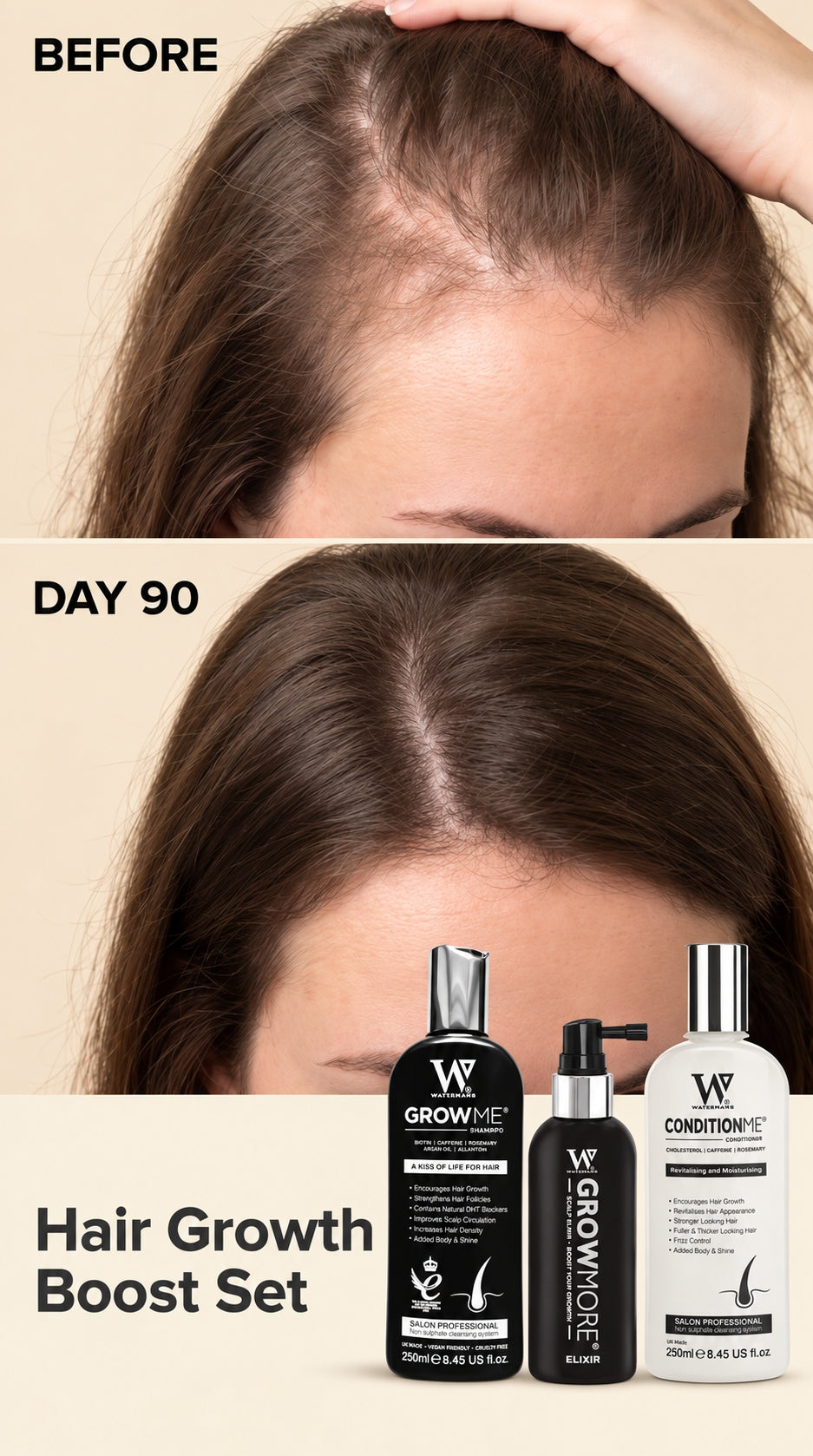
These are cosmetic products. They support the condition of the hair and scalp, and they are the three we would pick for someone whose parting is widening.

Grow Me Hair Growth Shampoo, 14.95 pounds
A sulphate free daily cleanse with biotin, caffeine, rosemary and niacinamide. It cleans the scalp without stripping, which matters when you are washing often to keep build up down.

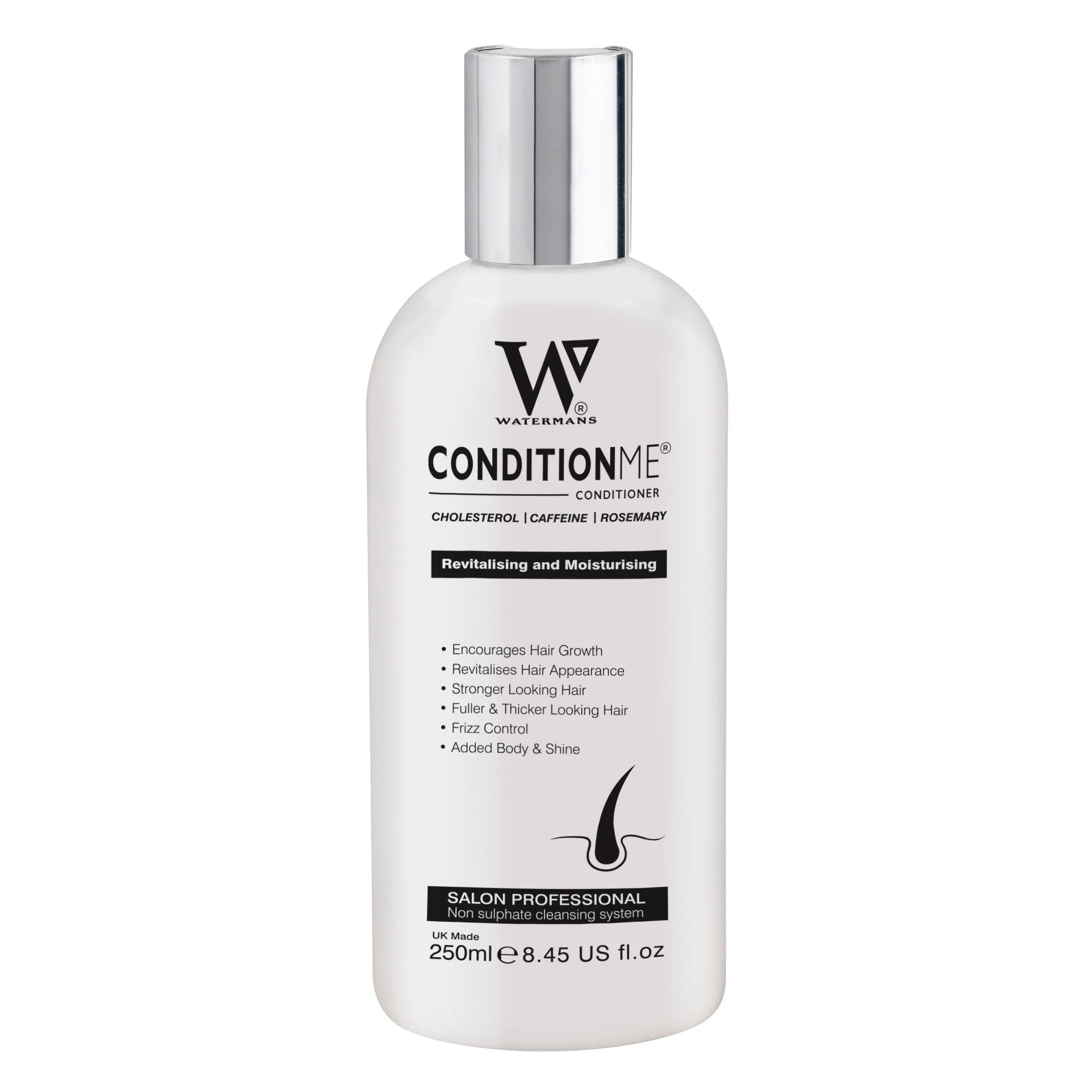
Condition Me Hair Growth Conditioner, 13.95 pounds
The breakage defence half of the routine. Cholesterol, shea butter and glycerin improve slip so combing pulls less, which is where a lot of avoidable fibre loss happens.

Grow More Scalp Elixir, 25.50 pounds
A leave on serum for the parting or crown, applied to the scalp rather than the lengths. Useful if you want something targeted at the specific area you are photographing each month.
Watermans products are 100% cosmetic and do not treat medical hair loss. Individual results may vary.

When should you speak to your GP?
Cosmetic care has a ceiling, and some scalp changes need proper medical attention rather than a better shampoo. Speak to your GP if you notice any of the following, and do it sooner rather than later, because the conditions that destroy follicles permanently are the ones where early action matters most.
- Bald patches with a smooth, clear edge appearing over weeks
- Redness, scaling, burning, pain or a shiny scarred look on the scalp
- Sudden heavy shedding that does not settle after around six months
- Hair loss alongside fatigue, weight change, irregular periods or unusual facial hair
- Any hair change in a child
Your GP can arrange blood tests, including ferritin, thyroid function and vitamin D, and can refer you on to a dermatologist where that is appropriate. That is a conversation about your health, not about shampoo, and it is the right first step. To track whether any of this is changing over time, our guide to hair density measurement sets out a home photo method that is actually repeatable.
Frequently asked questions about terminal hair density
What is a normal terminal hair density?
Published scalp studies generally place adults somewhere in the region of 150 to 300 terminal hairs per square centimetre, with the back of the head usually higher than the crown. The range is wide because measurement methods differ and because hair type and scalp region both shift the number. Your own count measured twice in the same spot is far more informative than a published average.
Is terminal hair density the same as hair thickness?
No. Density counts how many mature hairs occupy a square centimetre of scalp. Thickness, properly called calibre, is the width of one individual hair shaft. Someone can have fine hair at high density or coarse hair at low density, and the two change for different reasons, so it is worth tracking both.
How much hair can I lose before it shows?
Dermatology sources have long noted that roughly half the hair in a given area can be gone before thinning is obvious to the naked eye. That is the main reason for photographing a fixed spot every few months rather than relying on the mirror.
Can shampoo increase the number of follicles on my scalp?
No. Follicle number is set early in life and no cosmetic product adds to it. What a good routine can do is reduce breakage, keep the scalp comfortable and help the hair you are already growing stay on your head for its full lifespan, which protects the density you have.
Why does my parting look wider in some bathrooms than others?
Overhead lighting throws shadows down through the parting and exaggerates any gap, while diffuse side lighting hides it. This is why a consistent photograph in the same room and the same light is more reliable than a mirror check, and why people often think their hair changed overnight when only the lighting did.
Does hard water affect hair density?
Hard water deposits mineral scale on the hair fibre, which makes hair feel rough and more prone to snapping. That is a breakage effect rather than a follicle effect, so it changes how full your hair looks without changing how many hairs you have. A clarifying wash and good conditioning usually resolve it.
How long before I can tell whether anything is working?
Hair grows roughly one centimetre a month, and a follicle that changes phase takes months to show it. Breakage improvements can be visible in four to six weeks. Anything involving the growth cycle needs at least three months and preferably six before a fair comparison is possible.
Is losing density with age inevitable?
Some decline with age is normal and happens to almost everyone, separate from pattern hair loss. The rate varies between individuals. What is within your control is protecting the fibre you grow, keeping the scalp healthy and getting nutritional or hormonal causes checked rather than assuming age explains everything. For the practical home version of this measurement, see how to measure your own hair density at home.
Sources & References
- NHS, Hair loss. Overview of common causes, what is normal, and when to see a GP.
- StatPearls via NCBI Bookshelf, Androgenetic Alopecia. Mechanism of follicular miniaturisation and how pattern loss progresses.
- StatPearls via NCBI Bookshelf, Physiology, Hair. Follicle structure, terminal versus vellus hair, and the phases of the growth cycle.
- DermNet, Female pattern hair loss. Presentation, staging and assessment of thinning at the parting.
- DermNet, Telogen effluvium. Why shedding follows a trigger by two to four months and usually settles.
- NHS, Iron deficiency anaemia. Symptoms, testing and the link with hair changes.
Where good sources disagree, we have said so. The normal range for density is genuinely contested in the literature, because phototrichogram and global photography methods produce different figures on the same scalp.
What is the bottom line on terminal hair density?
Terminal hair density is a count of mature hairs per square centimetre, and it is the number that decides how much scalp shows. Typical adults sit somewhere around 150 to 300 per square centimetre, though the published range is wide. Because up to half the hair in an area can go before anyone notices, the useful move is to photograph one fixed spot in consistent light and compare it with itself six months later, rather than comparing yourself to an average.
Separate the three problems before you spend money on any of them. Follicular loss changes the shape of your hairline or parting and deserves a conversation with your GP. Shedding is a temporary cycle change that usually settles. Breakage is fibre damage, it does not touch your follicle count, and it is the one that improves fastest with gentler handling and proper conditioning. If your question is about products or a routine rather than a medical one, you can talk to Gail Waterman, our co-founder, as an AI avatar on the Watermans homepage.
Watermans is made in the UK, and has sold over 6.5 million bottles since 2012. If your parting is the thing you keep checking, the Grow Me shampoo and Condition Me conditioner are the sensible place to start, and worth pairing with the fixed spot photo so you can actually see what changes.