Trichologists in Banbury: Henna and Plant Dyes on Fine or Thinning Hair
Henna has a gentle, natural reputation, and on fine or thinning hair that reputation is only half the story.
If you are searching for trichologists in Banbury because you want to colour fine or thinning hair with henna, read the ingredients before anything else. Pure henna (Lawsonia inermis) binds to the keratin in each strand and stains it orange, red or copper, indigo darkens it, and cassia adds only a soft gold. "Black henna" usually relies on PPD, and compound henna may carry metallic salts that clash with later bleach. Skin test 48 hours ahead, and speak to your own GP about heavy shedding.
Our hair growth conditioner
Condition Me® Hair Growth Conditioner, £13.95. Detangles and strengthens the hair fibre so lengths snap less on the brush and look thicker through the ends.
Key takeaways
- Lawsone, the orange-red colour molecule in henna leaves, reacts with the keratin in hair at a slightly acidic pH of 4.5 to 6.0, according to a 2022 review of plant hair dyes in the journal Molecules.
- Only about 60% of the henna hair products tested in a 2025 Polish study met a basic 0.5% lawsone quality mark, and up to 36% of the samples contained PPD.
- Plant dyes colour the hair you already have. They cannot change what a follicle produces, and hair loss, shedding and breakage are three separate problems.
- The NHS advises testing any dye at least 48 hours before you use it, and not going ahead if you react or feel unwell.
- Swollen lips, tongue or throat or trouble breathing after colouring means calling 999. Dry, snapping hair once the scalp is calm is where trichologists in Banbury on a professional register can help.
What do pure henna, indigo and cassia actually do to the hair fibre?
Pure henna, indigo and cassia are powdered leaves that work as direct dyes, colouring the strand without the peroxide that permanent dyes rely on: henna's lawsone bonds to keratin and gives orange, red or copper, indigo adds a blue that pushes henna towards brown or black, and cassia tints only light hair gold.
A 2022 review of natural plant colorants in Molecules, by Cui and colleagues, describes how plant hair dyes first diffuse into the fibre and then form hydrogen, ionic and covalent bonds with the amino and sulfhydryl groups of keratin. For henna, the review explains that at a slightly acidic pH of 4.5 to 6.0 the reduced form of lawsone (2-hydroxy-1,4-naphthoquinone) reacts with amino groups in the hair, giving a red-orange colour. The same review notes that the hydrogen peroxide in many synthetic dye formulations breaks the disulfide bonds of keratin and lifts the cuticle so colour can reach deeper. Henna colours without that step.
How much colour you get depends on how much lawsone is in the pot. Almeida and colleagues measured 1.85% to 1.87% lawsone in a batch of henna leaves. When Sienkiewicz-Szłapka and colleagues tested henna sold for hair colouring in Poland, the good-quality products held between 0.5% and 1.0%, and only about 60% reached that level at all. A weak powder can leave you with a faint, uneven shade and a temptation to reapply.
Indigo, from the leaves of Indigofera plants, is the blue dye indigotin, used for thousands of years on cloth as well as hair. A 2025 review of hair dyes in ACS Omega lists henna combined with indigo as a traditional way of dyeing hair dark black. Cassia, often sold as "neutral henna", is actually a senna, Cassia obovata. In a laboratory study in the International Journal of Cosmetic Science, Forestier found that cassia components bound to keratin and turned bleached, light and white hairs a golden light brown, but did not diffuse into dark hair at all.
| Plant dye | Main colour compound | Shade on its own | What the research shows |
|---|---|---|---|
| Henna (Lawsonia inermis) | Lawsone | Orange, red or copper | Bonds to amino groups in keratin at pH 4.5 to 6.0 (Cui, 2022) |
| Indigo (Indigofera) | Indigotin | Blue; brown to black when used with henna | A traditional partner to henna for dark black shades (de Souza, 2025) |
| Cassia (Cassia obovata) | Several leaf compounds | Golden on light, white or bleached hair; little change on dark hair | Bleached hair took up 25% less water after cassia (Forestier, 1981) |

Does henna make fine or thinning hair look thicker?
Henna can make fine strands feel smoother and a little fuller because its colour bonds in and on the outer layers of each hair, but henna does not add hairs, change what the follicle produces or alter thinning, so any extra body is a surface effect on the strands you already have.
The research on the feel of plant-dyed hair is small but consistent. Cui and colleagues cite electron-microscope work suggesting henna dyestuffs may smooth damaged cuticle and give dyed hair a moisture-rich appearance. Forestier's cassia work found that after a heavy application the hair took up 25% less water, its cuticle scales opened a little and the hair crimped, while its strength when stretched and twisted changed very little. A strand that is slightly crimped and less water-hungry can feel less flat and slippery in the hand, which may explain why plant-dyed fine hair can seem to have more body.
What henna cannot do is change density. The NHS explains that some types of hair loss, such as male and female pattern baldness, are permanent, and no dye alters that. A richer colour can make a fine ponytail look healthier, but if your parting is widening or the ponytail is getting smaller, that question belongs with your own GP rather than with a bag of powder.
Fine hair and plant dye: a realistic promise
Expect colour, shine and a fuller feel to each strand. Do not expect more hairs. Anyone selling henna, indigo or any other dye as a way to thicken a thinning scalp is selling a claim no dye can keep.
Why is "black henna" a different and risky product?
Black henna is not a stronger version of henna but a different product, usually coloured with PPD (paraphenylenediamine), the chemical behind many permanent hair dyes, and DermNet explains that natural henna only stains a light brown to orange, so any "henna" promising jet black on its own deserves a hard look.
The British Skin Foundation says real henna is orange or brown and that most so-called black henna temporary tattoos are not based on henna at all but on PPD. PPD is permitted in hair dye, but using it in skin-contact products such as temporary tattoos is illegal in the UK and the EU. The NHS adds that a past black henna tattoo can raise your risk of reacting to hair dye that contains PPD, because the tattoo paste carries high levels of it. In a Dutch questionnaire study of 70,987 adults by Rosenberg and colleagues, 63.1% had used hair dye, 6.8% of those users reported a skin reaction, and people who had reacted to henna tattoos were more likely to react to hair dye.
Black henna matters here for one reason: some powders sold for hair as "henna" contain PPD too, which is why the Polish study above found it in up to 36% of samples, with only three of the five PPD products properly labelled. The full story on PPD reactions, itching and sore scalps sits in our York guide to an itchy or sore scalp after hair dye.
What is compound henna, and why does it clash with bleach or permanent colour?
Compound henna is henna blended with other ingredients, sometimes metallic salts, to deepen or shift the shade, and metals left in the hair can react with the hydrogen peroxide used in bleach and permanent colour, which is why colourists ask about any past henna before lightening and why a strand test should always come first.
Metal-based colour is older than most people think. The 2025 ACS Omega review describes mineral or metallic dyes that use salts such as silver nitrate and lead salts to darken hair gradually, and notes that lead acetate kits were sold for daily application. The Cui review lists iron (II) sulfate, copper (II) sulfate and alum as common mordants, the fixing agents that lock plant dyes onto hair. It also warns that iron and copper can build up in hair and have been reported to cause photooxidative damage through Fenton chemistry, the reaction between those metals and peroxide.
You cannot always tell from the pot. Rubio and colleagues analysed 34 commercial henna and jagua products, including seven henna hair dyes, and noted that synthetic dyes, solvents or metallic salts may be added to intensify the colour. Most of the samples had no label describing their composition, and none of the 34 complied with the European Cosmetics Regulation on the metals measured. Almeida's team found PPD in two of 11 commercial henna preparations, at 2% and 12%.
| What the pack says | What may be inside | Before later bleach or permanent colour |
|---|---|---|
| Pure henna, Lawsonia inermis only | Plant dye, lawsone | Tell your colourist and strand test a lock |
| Henna with indigo or cassia listed | Plant dyes only | As above |
| "Black henna" or jet black in one step | Often PPD or a close relative | Avoid entirely if you have ever reacted to hair dye |
| No ingredient list, or "herbal" with metal salts named | Possible metallic salts or undeclared dyes | Do not bleach without a strand test and a frank talk with the colourist |
How to read a henna label
GOV.UK guidance from the Office for Product Safety and Standards says cosmetics sold in Great Britain must name a Responsible Person with a UK or EU address and carry a list of ingredients, so people with allergies can check the contents. Look for plant names such as Lawsonia inermis, Indigofera tinctoria and Cassia obovata. Put back anything listing lead acetate, silver nitrate, iron or copper sulfate, p-phenylenediamine or toluene-2,5-diamine, and anything with no list at all. Be wary of "PPD-free" claims on synthetic dyes too: a 2026 US study by Needle and colleagues found PPD in five of 51 hair dyes that did not list it.
How should you patch test and strand test a plant dye?
Patch test a plant dye by applying a little of the mixed paste to your skin as the pack describes at least 48 hours before colouring, and strand test it on a small snipped lock of hair, because the NHS advises testing every dye 48 hours ahead and allergy to pure henna and indigo, while uncommon, has been confirmed.
Sources genuinely disagree on how allergenic pure henna is. DermNet states that natural pure henna does not cause allergic reactions, and the Cui review describes lawsone as having a very low allergic potential, with most reactions caused by synthetic additives. But a 2026 systematic review by Ben Yahia and colleagues found 13 studies reporting allergy to pure henna confirmed by patch testing, and concluded it is uncommon but possible. A 2016 case report by Swan and colleagues described a 50-year-old woman allergic to PPD who went on to react to pure henna, black tea and indigo powder in turn, and a 2025 French case series reported contact dermatitis from natural indigo in hair dye preparations. If you have reacted to a permanent dye before, plant dye is not automatically the safe swap.
- Mix a small amount. Prepare a little paste exactly as the pack says, including any resting time.
- Patch test the skin. Apply it where the instructions say, commonly behind the ear or inside the elbow, and leave it for the stated time.
- Watch for 48 hours. Look at 24 and 48 hours for itching, redness, bumps or swelling. The NHS notes that on brown and black skin a reaction may look darker brown, purple or grey, or be harder to see.
- Strand test a lock. Snip a small section from the nape, or gather hair from your brush, colour it, rinse and dry it, and judge the shade in daylight.
- Include processed hair. If your lengths have had bleach or permanent colour, test a lock that has had it too, so you see how that hair reacts.
- Any reaction means no. The NHS says not to use a dye if you react to a test or feel unwell, to wear gloves, and not to leave it on longer than recommended.

Get a discount on the coloured hair range
Join the Watermans mailing list and we will email a discount code straight to your inbox, so you can try the coloured hair range for less. Made in the UK, over 6.5 million bottles sold since 2012.
How does henna fit with covering grey hair?
Henna covers grey by staining white strands that have no pigment of their own to compete with, so grey hairs often come out noticeably brighter orange or copper than the hair around them, while combining henna with indigo moves the result towards brown or black and cassia gives white hair only a soft golden tint.
The research backs up that pattern. Forestier found cassia coloured white and light hairs but did not diffuse into dark hair, and the Cui review describes plant dye blends of henna, curcumin and marigold (Tagetes erecta) colouring grey hair brown when applied directly. The same blends gave black when combined with iron (II) sulfate as a mordant, which is worth knowing, because that route brings back the metallic salts discussed above. The ACS Omega review describes henna with indigo as the classic plant route to dark black.
- A few grey hairs at the temples. Pure henna blends them into warm highlights against darker hair.
- Mostly grey, wanting brown. Henna with indigo, strand tested first, because the ratio changes the shade.
- Grey you want to keep, with a little warmth. Cassia on its own gives white hair a pale gold without covering it.
- Planning to lighten later. Choose pure plant dyes with a full ingredient list, and tell your colourist before any bleach.
If you would rather let the grey come through than cover it, our guide to transitioning to grey hair with highlights explains how lighter pieces soften the line. Highlights use bleach, so if henna is anywhere in your lengths, the strand test comes first.

How should you care for hair that has been coloured with henna?
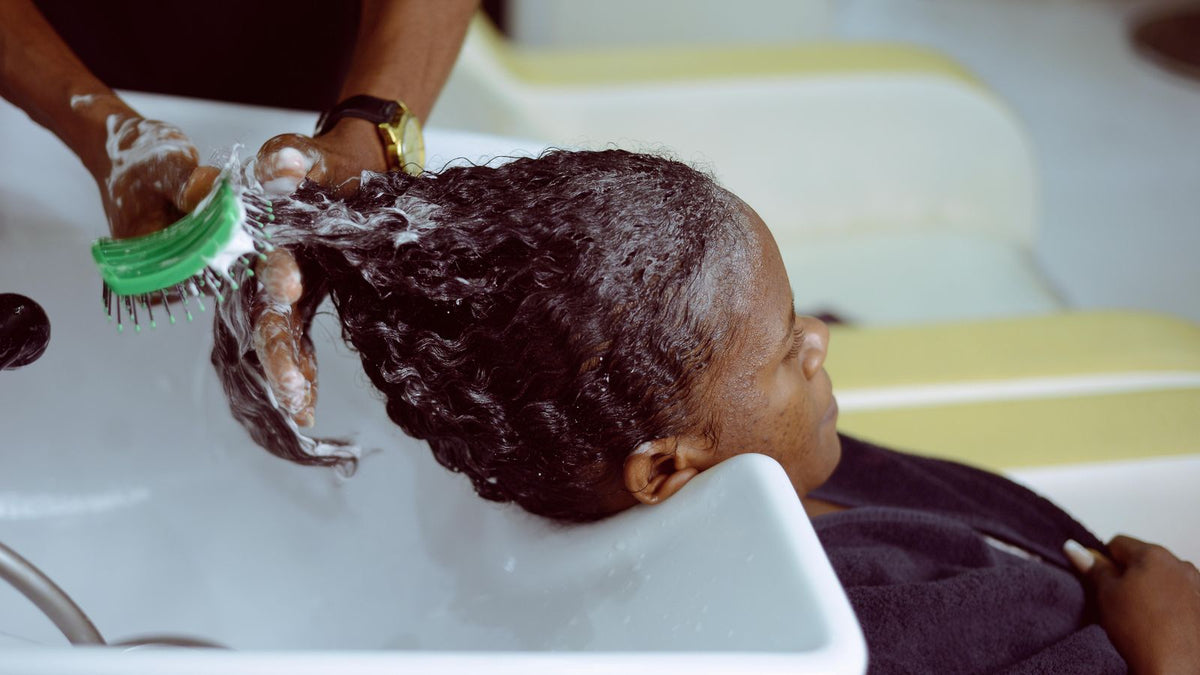
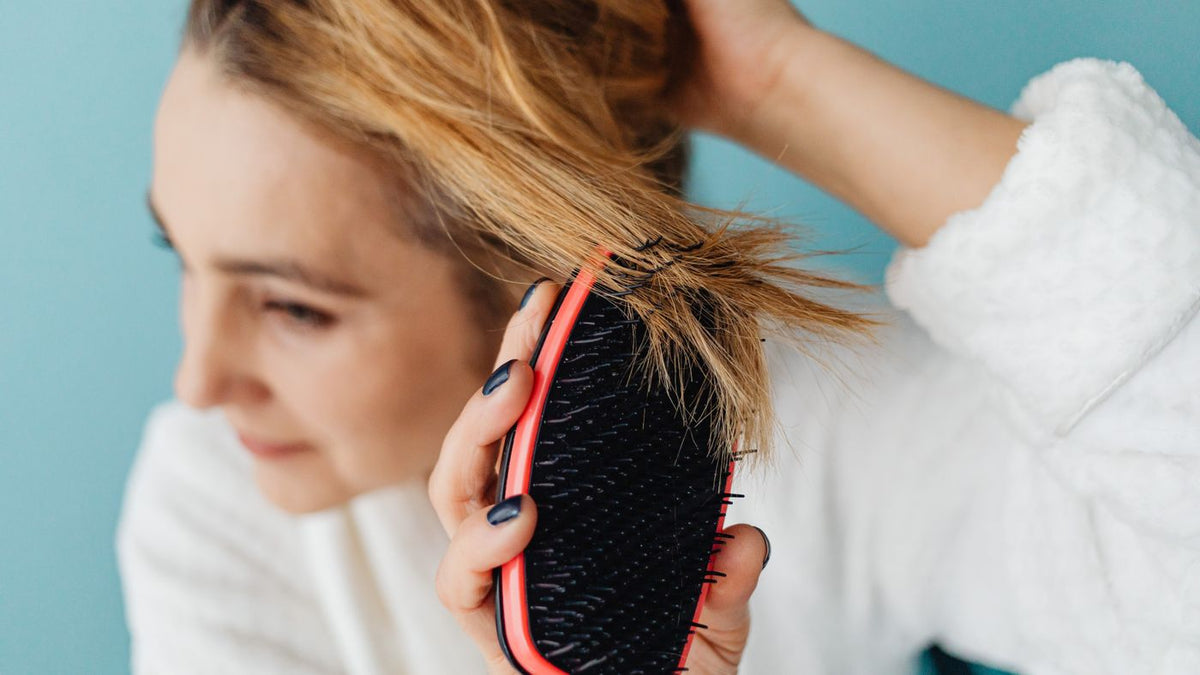
Care for hennaed fine hair with a mild sulfate-free shampoo, conditioner on the lengths after every wash, a weekly mask, a few drops of oil on dry ends and low heat, because fine hair has little fibre to spare and the British Association of Dermatologists advises avoiding harsh brushing and limiting heated styling tools.
Plant-dyed hair can feel drier and a little rougher than before, partly because of the slightly lifted, crimped cuticle the cassia research describes. The aim of aftercare is slip: strands that glide past each other snap less when you comb them, and on fine hair every strand that stays in place counts.
- Wash gently. Lather at the scalp with your fingertips and let the suds run through the lengths rather than scrubbing them.
- Condition every time. Keep conditioner on the mid-lengths and ends, where plant dye leaves hair feeling driest.
- Mask once a week. A richer mask on the lengths adds softness between colours.
- Oil the ends. A few drops smoothed over dry ends adds shine and helps a comb glide.
- Detangle from the ends up. Work upwards in short sections with a wide-tooth comb while conditioner is still in.
- Keep heat low. Air dry when you can, and use a cool or medium setting when you cannot.

A breakage-defence conditioner with cholesterol, shea butter, glycerin and hydrolysed lupine protein, £13.95 in September 2026. Smooth it through the mid-lengths and ends after every wash so fine, plant-dyed hair detangles with less snapping.

An 8-in-1 deep conditioning mask with argan oil, provitamin B5, rosemary and hydrolysed lupine protein, £24.95 in September 2026. Leave it on the lengths once a week to help hennaed hair look glossier and feel softer.

Camellia & Black Castor Hair & Body Oil
A 100% natural blend of camellia oil and black castor oil, rich in oleic acid, in a recyclable glass bottle, £24.95 in September 2026. Warm a few drops between your palms and smooth them over dry ends for shine and softness.
For a fuller routine covering washing, heat and sun, see our guide on caring for dyed hair day to day. Skin test new hair products too, especially if your scalp has reacted to a dye before: our conditioner and mask contain botanicals such as rosemary, so the same 48-hour rule applies.

Is it hair loss, shedding or breakage after colouring with henna?
Three different things can follow a colour: breakage, where the shaft snaps and leaves short uneven pieces; shedding, where whole hairs with a small white bulb fall at the end of their cycle; and hair loss, where follicles make finer hair or none, a change that shows on the scalp rather than in the sink. If you are weighing up a lighter shade instead, read what bleach does to fine hair and how to space services.
- Breakage. Short pieces on the towel or brush, often worse on dry, processed ends. The follicle is untouched, so gentler handling and more conditioning are the first steps.
- Shedding. The NHS says losing 50 to 100 hairs a day is normal. The British Association of Dermatologists explains that about 15% of scalp hair is normally in the resting, shedding phase, rising to 30% or more in telogen effluvium, often around 3 months after a trigger such as a severe skin problem affecting the scalp, with the shedding phase lasting 3 to 6 months.
- Hair loss. A widening parting, a shrinking ponytail or patches that do not fill in. This needs your own GP, not a new colour.
An inflamed scalp can set off shedding months after the itch has gone. In a six-month study at the University of Bologna, Tosti and colleagues followed women with allergic contact dermatitis of the scalp confirmed by patch testing: 4 of the 7 who completed the study had increased shedding, appearing 2 to 4 months after the dermatitis. In a rare, severe case, Ishida and colleagues described a 41-year-old woman who lost around 90% of her scalp hair after reacting to a PPD hair dye six days earlier. These are reactions to dye allergy, not to henna itself, but they explain why an itchy scalp after any colour deserves attention.
| What you notice | Breakage | Shedding | Hair loss |
|---|---|---|---|
| The fallen hair | Short, uneven, no bulb | Full length with a small white bulb | The change is on the scalp itself |
| Timing after colour | Days, when combing or brushing | 2 to 4 months after an inflamed scalp | Gradual, or patches that stay |
| First step | Conditioning, slip, less heat | Usually settles; GP if heavy or lasting | Speak to your own GP |
Sort a morning's fallen hairs on a sheet of white paper before deciding what you are dealing with. If most are short and snapped, and the breakage carries on for months despite gentler care, that is the point where trichologists in Banbury who are listed on a professional register can look at the fibre closely.
When do scalp itching or shedding after colouring need a pharmacist or a GP?
Rinse straight away with a mild shampoo if your scalp stings, itches or burns after henna or any dye, ask a pharmacist about a mild rash, see your GP if symptoms get worse, and call 999 for swelling of the lips, mouth, tongue or throat or any difficulty breathing, as the NHS advises.
Call 999 if, after colouring:
- your lips, mouth, throat or tongue suddenly swell
- you are breathing very fast or struggling to breathe
- your throat feels tight or you are struggling to swallow
- you suddenly feel very confused, drowsy or dizzy
The NHS says these can be signs of a serious allergic reaction that may need hospital care, and not to drive yourself to A&E.
Most reactions are much milder. The NHS says symptoms of a hair dye reaction can take up to 72 hours to appear, and lists stinging and burning, an itchy rash, dryness, tightness and soreness, and blisters. For mild symptoms, a pharmacist can suggest a moisturising cream (emollient) or an antihistamine to ease itching. If symptoms get worse, see a GP, who may refer you to a dermatologist for a patch test to pin down the exact ingredient. Take the henna packet with you, because the ingredient list is the most useful thing you can bring.
Shedding needs a GP when it is heavy, comes out in clumps, leaves patches, or carries on beyond 6 months, which the British Association of Dermatologists describes as chronic. Speak to your own GP too if your scalp looks scaly, weepy or scarred, or if thinning comes with tiredness or other changes in your health.
Who should you see in Banbury: a pharmacist, your GP or trichologists in Banbury?
In Banbury, match the problem to the person: 999 for swelling or breathing trouble, a pharmacist for a mild itch, your own GP for a worsening rash, heavy shedding or patches, and trichologists in Banbury for hair that stays dry, brittle or snapping after plant dye once any skin reaction has fully settled.
Banbury Town Council describes Banbury as a historic market town on the River Cherwell in Oxfordshire, with a population of approximately 55,000. Trichologists are not medical doctors, and an active rash belongs with a pharmacist or GP first. Where a trichologist earns the fee is afterwards: lengths that keep breaking after henna, a scalp that stays flaky once a reaction has passed, or a routine that needs rebuilding around a known allergy. Before you pay any of the trichologists in Banbury a search turns up, check the name against the Institute of Trichologists' Find a Trichologist register or the membership of the Trichological Society, the two main UK bodies.
- Which professional body are you registered with, and can I check your entry online?
- Will you look at the henna packet and tell me what is in it?
- If this looks like an allergy or true hair loss, will you send me back to my GP?
- Do you sell the products you recommend, and can I keep using my own?
We make hair care and run no clinics or consultations, so we cannot look at your hair, and you should weigh our view with that in mind. Watermans is made in the UK, with over 6.5 million bottles sold since 2012. Our products are cosmetic: they help hair look and feel healthier and reduce breakage, but they do not change a dye allergy or thinning hair.
What are the most frequently asked questions about henna on fine hair?
Should I see trichologists in Banbury before using henna on thinning hair?
Not necessarily. Thinning that is new, patchy or getting worse should go to your own GP first. A registered trichologist helps most later, if plant dye leaves your hair dry or snapping. Whatever you decide, skin test any henna 48 hours ahead and read the ingredients for PPD or metallic salts.
Is pure henna safe for fine hair?
Pure henna colours without peroxide, and DermNet says natural pure henna does not cause allergic reactions. A 2026 systematic review still found 13 studies of confirmed allergy to pure henna, so a reaction is uncommon but possible. Skin test first, and strand test to check the shade on your own hair.
What is the difference between henna, indigo and cassia?
Henna holds lawsone, which gives orange, red or copper tones. Indigo is a blue plant dye that, used with henna, gives brown to black. Cassia, sold as neutral henna, is a senna that turns light, white or bleached hair golden and leaves dark hair largely unchanged.
Can I bleach or use permanent colour over henna?
Only after telling your colourist and strand testing. Some henna products contain metallic salts, and iron and copper building up in hair have been linked to oxidative damage through their reaction with peroxide. Pure henna is less of a worry than an unlabelled compound mix, but a test lock settles it.
Why is black henna dangerous?
Black henna usually relies on PPD rather than the henna plant. The British Skin Foundation says using PPD in skin-contact products such as temporary tattoos is illegal in the UK and EU, and the NHS says a past black henna tattoo raises your risk of reacting to hair dye.
Will henna cover grey hair?
Yes, but grey strands take henna brightly and often come out more orange or copper than the rest. Adding indigo moves the result towards brown or black. A 2022 review describes plant blends colouring grey hair brown, and black when iron sulfate is added, which is itself a metallic salt.
How many hairs a day is it normal to lose?
The NHS says we lose between 50 and 100 hairs a day, often without noticing. The British Association of Dermatologists explains that shedding can rise around 3 months after a trigger and usually lasts 3 to 6 months. Speak to your GP if it carries on or leaves patches.
How do I look after hair once it has been hennaed?
Wash with a mild sulfate-free shampoo, condition the lengths every time, use a mask once a week and smooth a little oil onto dry ends. Keep heat low, detangle from the ends up, and tell your colourist about the henna before any bleach or permanent colour.
Sources & references
- NHS, Hair dye reactions
- NHS, Hair loss
- British Association of Dermatologists, Telogen effluvium
- DermNet, Black henna tattoo reaction
- DermNet, Allergy to paraphenylenediamine
- British Skin Foundation, The dangers of black henna temporary tattoos
- GOV.UK, Office for Product Safety and Standards, Consumer products: cosmetics
- Banbury Town Council
- Cui H et al. Recent advancements in natural plant colorants used for hair dye applications: a review. Molecules, 2022
- de Souza JC et al. Comprehensive review of hair dyes: physicochemical aspects, classification, toxicity and detection. ACS Omega, 2025
- Forestier JP. A cosmetic senna, Cassia obovata: neutral henna. Int J Cosmet Sci, 1981
- Almeida PJ et al. Quantification of p-phenylenediamine and 2-hydroxy-1,4-naphthoquinone in henna tattoos. Contact Dermatitis, 2012
- Sienkiewicz-Szłapka E et al. Quantification of lawsone and p-phenylenediamine in natural henna products for hair colouring available in Poland. Contact Dermatitis, 2025
- Rubio L et al. The chemistry behind the body art: elemental profile and heavy metal content of natural tattoos and dyes by ICP-MS. RSC Advances, 2022
- Needle CD et al. Contact allergens in "PPD-free" hair dyes. Dermatitis, 2026
- Ben Yahia M et al. Allergic contact dermatitis to pure henna: a systematic review. Contact Dermatitis, 2026
- Swan BC et al. Allergic contact dermatitis to substitute hair dyes: pure henna, black tea and indigo powder. Australas J Dermatol, 2016
- Charansol A et al. Contact dermatitis from natural indigo (Indigofera tinctoria leaf extract) contained in hair dye preparations: a case series. Contact Dermatitis, 2025
- Rosenberg FM et al. Insights into hair dye use and self-reported adverse skin reactions in the Dutch general population. Contact Dermatitis, 2025
- Tosti A et al. Telogen effluvium after allergic contact dermatitis of the scalp. Arch Dermatol, 2001
- Ishida W et al. Severe hair loss of the scalp due to a hair dye containing para phenylenediamine. ISRN Dermatol, 2011
- The Institute of Trichologists, Find a Trichologist
- The Trichological Society
What is the bottom line on trichologists in Banbury?
Henna can give fine hair rich colour and a fuller feel to each strand, but it cannot add hairs, and only a genuinely pure plant dye comes without extra baggage. Read the label for Lawsonia inermis, indigo and cassia, walk away from black henna and anything listing PPD or metallic salts, skin test 48 hours ahead and strand test before bleach. Keep breakage, shedding and hair loss apart: your GP for patches or heavy shedding, a pharmacist for a mild itch, and trichologists in Banbury for dry, snapping lengths once your scalp is calm. If your question is about products or a routine rather than a medical one, you can talk to Gail Waterman, our co-founder, as an AI avatar on the Watermans homepage.
Once your colour has settled, a weekly deep conditioning hair mask such as Masque Me keeps hennaed lengths soft, glossy and easier to comb.
Watermans products are 100% cosmetic and do not treat medical hair loss. Individual results may vary.