Trichologist Skegness: Is It the Sea Air, Hard Water or Your Follicles?
Anyone looking up a trichologist Skegness option usually has the same suspicion: something about living here is wrecking my hair. Sometimes that is right. Salt, wind, summer sun and hard water all work on the hair fibre, and all of them cause breakage. What they do not do is change what is happening inside the follicle, and that is a different problem with a different fix. Pool chlorine belongs on the same list, and our guide to chlorine shampoo covers what a swimmers' wash does and does not do.
Our weekly hair mask
Masque Me® Hair Mask, £24.95. A deep conditioning weekly mask for dry, stressed lengths, adding gloss and hydration where heat and colour have taken their toll.
Coastal conditions damage the hair fibre rather than the follicle, so salt, wind and hard water cause breakage rather than hair loss. A trichologist Skegness consultation can assess hair and scalp condition, but only a GP can arrange the blood tests behind genuine shedding. Work out which of the three you have before spending anything, because the fixes do not overlap.
Key takeaways
- Salt, wind and hard water cause breakage. They do not shrink follicles.
- Anglian Water supplies a hard water region, where water picks up calcium and magnesium from chalk and limestone.
- DermNet lists excessive sun exposure among the triggers of telogen effluvium, so summer matters more than people think.
- Hair grows around 1 cm a month, so shoulder-length ends have survived two or three coastal summers.
- Losing 50 to 100 hairs a day is normal, so volume in the plughole proves very little on its own.
Does sea air actually damage hair?
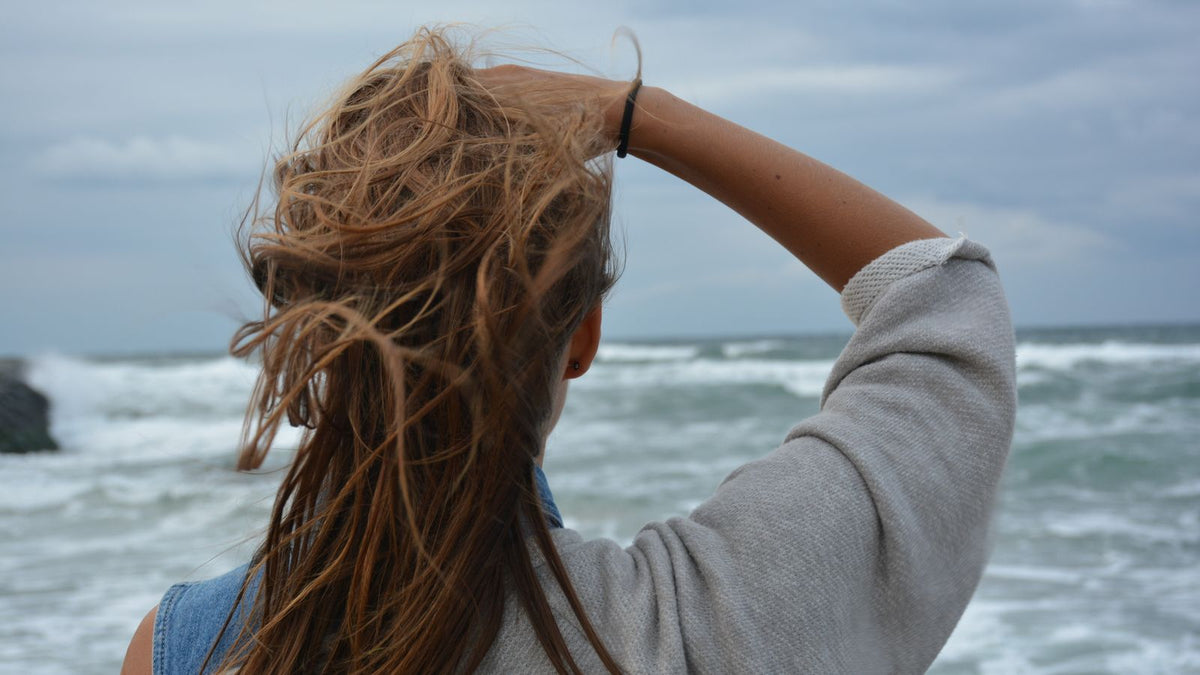
Sea air damages the hair fibre through salt and abrasion rather than through anything systemic. Salt water draws moisture out of the hair shaft and leaves crystals behind that roughen the cuticle, and wind tangles hair so it is pulled harder at the brush. The result is mid-length breakage and split ends, concentrated where hair is oldest.
Age is the part people miss. Hair grows at roughly one centimetre a month for around three years, as DermNet describes, so the ends of shoulder-length hair have been through two or three Lincolnshire summers already. Those ends are not damaged because of one windy weekend, they are damaged cumulatively.

Is hard water the real problem here?
Hard water is a genuine factor on this coast. Anglian Water supplies the Lincolnshire region and explains that water picks up minerals such as calcium and magnesium as it passes through chalk and limestone, which is what makes it hard. It also offers a postcode checker so you can confirm the hardness where you live rather than guessing.
What hard water does to hair is mechanical, not medical. Minerals deposit on the cuticle, shampoo lathers less well so people use more of it, and hair ends up feeling coated, dull and rough. That combination increases friction, and friction is what breaks hair.
| Factor | What it affects | What you notice | What actually helps |
|---|---|---|---|
| Salt water | The hair fibre | Rough, dry mid-lengths and ends | Rinse with fresh water straight after the beach |
| Wind | The hair fibre | Tangles, split ends, breakage at the brush | Tie hair loosely outdoors, detangle from the ends up |
| Hard water | The cuticle surface | Dull, coated feel, poor lather | Conditioner every wash, a weekly mask |
| Summer sun | The fibre, and occasionally the cycle | Lightened, brittle ends | A hat between 11am and 3pm, March to October |
| Follicular thinning | The follicle | A gradually widening parting | A GP conversation, then cosmetic support |
| Shedding | The hair cycle | Sudden diffuse fall, 2 to 4 months after a trigger | Blood tests with a GP |
How do you tell coastal breakage from genuine shedding?
Look at what is actually coming out. Broken hairs are short fragments with no bulb at either end, and they cluster in the mid-lengths and around the crown as a halo of short pieces. Shed hairs come out full length with a small pale bulb at the root, across the whole scalp, and usually follow a trigger by 2 to 4 months.
The NHS puts normal daily loss at 50 to 100 hairs, so a handful in the shower after three days without washing is not evidence of anything. What matters is whether the pile is growing week on week, and whether the hairs in it have bulbs.

The thirty second bulb test
Pick ten hairs out of the brush and look at the root end against a light surface. A tiny pale club-shaped bulb means the hair was released by the follicle, which points to shedding. No bulb, and a blunt or frayed end, means the hair snapped, which points to breakage.
Get a discount on the hair breakage range
Join the Watermans mailing list and we will email a discount code straight to your inbox, so you can try the hair breakage range for less. Made in the UK, over 6.5 million bottles sold since 2012.
Does summer sun affect the hair on your head?
Sun affects hair in two separate ways, and the second one surprises people. It bleaches and weakens the fibre, which is ordinary weathering. DermNet also lists excessive sun exposure among the triggers that can push hair into telogen effluvium, which means a genuinely brutal summer can produce a diffuse shed two to four months later.
The NHS advice is to spend time in the shade when the sun is strongest, which in the UK is between 11am and 3pm from March to October, and to consider protecting skin whenever the UV index is 3 or higher. A hat covers both the scalp skin and the hair fibre and costs nothing to reapply.
What does a coastal wash routine look like?
A coastal routine is mostly about rinsing and conditioning rather than about buying more products. Rinse with fresh water as soon as possible after sea swimming, condition the mid-lengths every single wash, use a deeper mask weekly if hair feels rough when wet, and detangle from the ends upward with the hair supported in your other hand.

Masque Me® Deep Conditioning Hair Mask £24.95
A deep conditioning mask for hair that feels rough or coated after hard water and salt. Once a week is enough for most coastal hair.

Condition Me® Hair Growth Conditioner £13.95
Everyday conditioning for the mid-lengths and ends, which is where coastal breakage concentrates. Less friction at the brush means fewer hairs in it.

Protect Me® Heat Protection Spray £13.95
Heat protection before the dryer or straighteners, because heat damage stacks on top of salt and wind rather than replacing it.
For the fuller versions, read the four step routine for dry hair, how to use conditioner properly and how to prevent split ends.

Over 6.5 million bottles of Watermans hair care sold since 2012, made in the UK.
What does a trichologist Skegness appointment add?
It adds a close, unhurried look at the scalp and hair under magnification, plus care advice tailored to what is actually there. Trichology is not a statutorily regulated profession in the UK, so the Institute of Trichologists voluntary register is the sensible thing to check before booking a trichologist Skegness appointment.
What it does not add is a blood result. The NHS advises seeing a GP to get an idea of what is causing hair loss before thinking about a commercial hair clinic, and for a sudden diffuse shed that GP appointment is the one that changes the plan. For pure coastal breakage, a good conditioner and a hat will outperform any consultation. If your question is about products or a routine rather than a medical one, you can talk to Gail Waterman, our co-founder, as an AI avatar on the Watermans homepage.
When is it not the sea air at all?
It is not the sea air when the hair coming out has bulbs, when the parting is widening rather than the ends fraying, or when hair change comes with other symptoms. Constant tiredness, feeling cold, unexplained weight change, heavy periods, an itchy or painful scalp, or a defined bald patch all belong with a GP rather than with a bottle.
Our guides to the four causes of hair damage and the three clue self-check for thinning hair both go through the difference in more detail.
Frequently asked questions
Does sea water make you lose hair?
Sea water damages the hair fibre and causes breakage, but it does not affect the follicle, so it does not cause follicular hair loss. Rinsing with fresh water straight after swimming removes most of the salt before it dries onto the cuticle.
Is hard water causing my hair to fall out?
Hard water leaves mineral deposits on the cuticle, which makes hair feel coated, dull and rough and increases breakage at the brush. It is a fibre problem rather than a follicle problem, so it changes how hair looks and feels rather than how much of it grows.
Is a trichologist Skegness appointment worth it for coastal damage?
For straightforward salt, wind and hard water breakage, a trichologist Skegness appointment is rarely necessary, because the fixes are rinsing, conditioning and gentler styling. It becomes worthwhile when you cannot tell breakage from shedding, or when GP tests have already come back normal.
Should I use a water softener for my hair?
A softener changes how water behaves in the whole house and some people find hair feels smoother. It is an expensive first move for a hair problem, so try conditioning every wash and a weekly mask before spending anything on plumbing.
Why is my hair fine at the roots and wrecked at the ends?
Because the ends are years older. At roughly one centimetre of growth a month, the ends of shoulder-length hair have been exposed to salt, sun, wind and heat styling for two or three years longer than the roots.
Can too much sun cause hair shedding?
DermNet lists excessive sun exposure among the triggers of telogen effluvium, so an extreme summer can contribute to a diffuse shed appearing two to four months later. That is separate from the bleaching and weathering sun does to the hair fibre itself.
How often should I wash my hair in a hard water area?
As often as your scalp needs, which for most people is every two to three days. Washing less does not protect hair from hard water, and a greasy or flaky scalp creates its own problems.
What is the bottom line on trichologist Skegness?
The bottom line on a trichologist Skegness search is to separate fibre problems from follicle problems first. Salt, wind, sun and hard water break hair, and conditioning, rinsing and a hat fix that cheaply. Bulbs on the shed hairs, a widening parting or other symptoms point at the follicle, and that starts with a free GP appointment.
If the ends are the problem, start there: Masque Me deep conditioning hair mask, made in the UK, once a week for coastal hair that feels rough and coated.
Sources & references
- Anglian Water: Hard water, calcium and magnesium picked up from chalk and limestone, and the postcode hardness checker
- NHS: Hair loss, normal daily loss of 50 to 100 hairs and the advice to see a GP before a commercial hair clinic
- DermNet: Telogen effluvium, excessive sun exposure listed among the triggers, and the 2 to 4 month lag
- DermNet: Female pattern hair loss, the 1 cm a month growth rate and the roughly three year growing phase
- NHS: Sunscreen and sun safety, the 11am to 3pm March to October window and the UV index 3 threshold
- The Institute of Trichologists, the voluntary UK register to check a trichologist against
Watermans products are 100% cosmetic and do not treat medical hair loss. Individual results may vary.