Trichologists Scunthorpe: Does Air Pollution Affect Your Hair and Scalp?
Scunthorpe has lived beside its steelworks for generations, so it is fair to wonder whether the air here shows up in your hair.
If you are searching for trichologists Scunthorpe because your hair feels dull, gritty or thinner and you suspect the air, here is the honest position. Dust, traffic fumes and fine particles can settle on hair and scalp, and large Korean studies link long-term particle exposure with more pattern hair loss, but that is an association, not proof that pollution causes it. Wash as often as your scalp needs, condition the lengths, and speak to your own GP about sudden, patchy or heavy hair loss before paying for a trichologist.
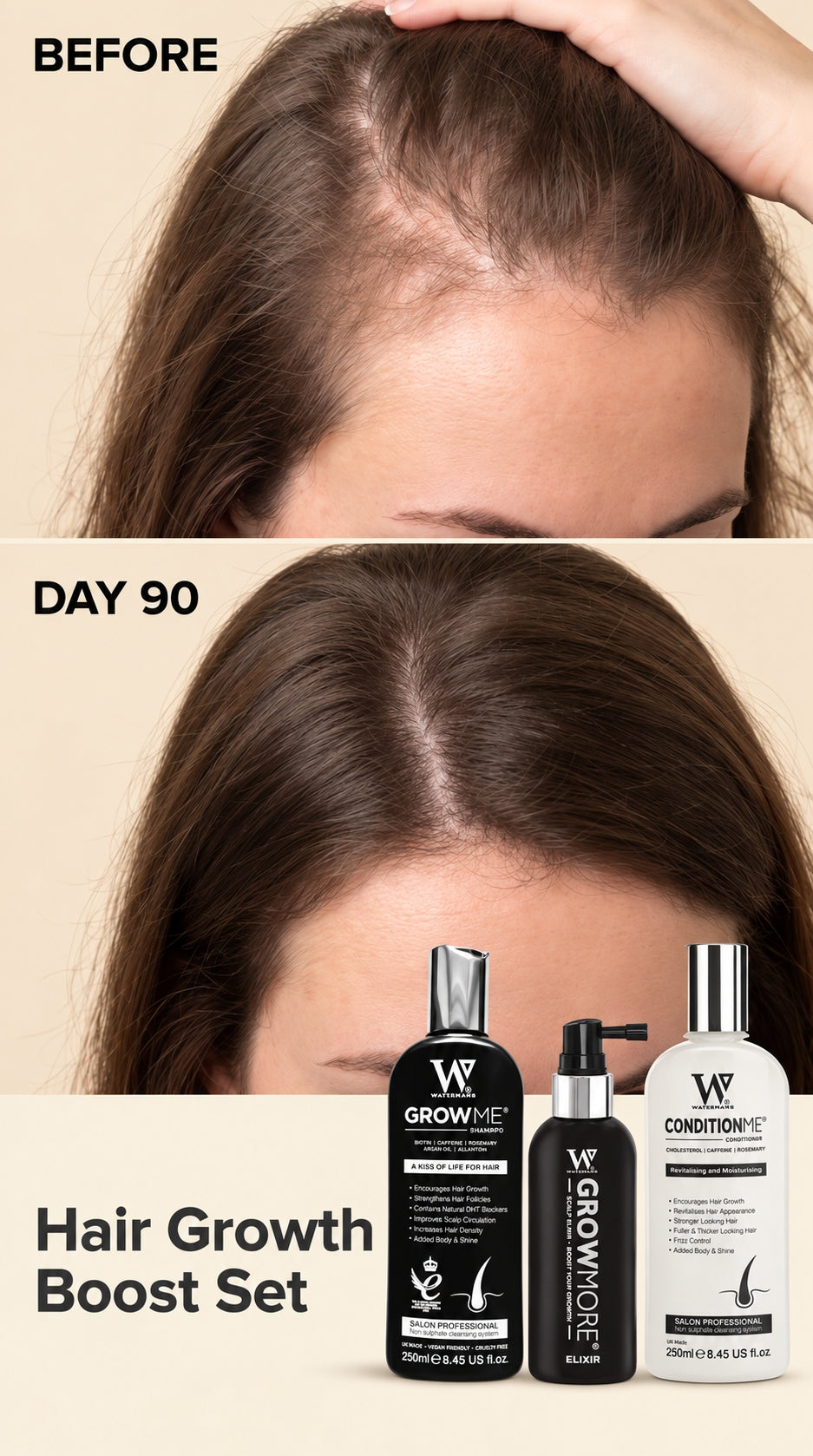
Our hair growth shampoo
Grow Me® Hair Growth Shampoo, £14.95. A sulphate free daily shampoo that supports a healthy scalp environment and helps reduce breakage, so lengths hold on and look fuller.
Key takeaways
- DEFRA's UK-AIR register lists a Scunthorpe Air Quality Management Area for coarse particles (PM10), first declared in November 2005 and covering part of the town and the steelworks site.
- A 2026 Korean study of 5,591,500 adults found each 10 µg/m3 rise in long-term fine particle (PM2.5) exposure went with a 44% higher risk of pattern hair loss, but the study was observational and cannot show cause.
- Most of what dust and fumes do day to day happens on the surface: residue, dullness and a gritty-feeling scalp, which regular gentle washing deals with.
- Normal shedding is 50 to 100 hairs a day according to the NHS, breakage leaves short snapped pieces, and pattern hair loss is mainly genetic and hormonal, as the British Association of Dermatologists explains.
- Patches, clumps, a sore or red scalp, or shedding that will not settle: speak to your own GP first. For scalp and hair-fibre questions that remain afterwards, check trichologists Scunthorpe against a professional register.
What is in the air in Scunthorpe, and which pollutants matter?
Air pollution in Scunthorpe, as in any UK town, is a changing mix of fine particles and gases from traffic, industry, home heating and natural sources, and DEFRA's UK-AIR register lists a Scunthorpe Air Quality Management Area for coarse particles, known as PM10, whose recorded source is industrial.
The register records the Scunthorpe AQMA as declared by North Lincolnshire Council on 1 November 2005 for the 24-hour mean of PM10, and amended on 19 March 2018. The area described takes in part of the town and an area to the east including the site of the steelworks. A second, much smaller AQMA at Low Santon, around three houses beside the integrated steelworks, was declared in December 2008. The listing shows where the council has declared a management area. It is not a live reading for your street, and it says nothing either way about hair.
Public Health England's Health matters guidance explains what the labels mean. PM10 describes particles less than 10 microns across and PM2.5 particles less than 2.5 microns, and the strongest evidence for effects on health is for PM2.5, which can be drawn deeper into the lungs. The guidance lists the main man-made sources as burning fuel in vehicles, industry and homes, plus tyre and brake wear, with wind-blown soil and dust, sea spray and vegetation fires among the natural ones. Nitrogen dioxide, a gas mostly from traffic, is the other major urban pollutant, and the guidance says there is no clear evidence of a safe level of exposure below which there is no risk.
DEFRA's air quality statistics, updated on 30 June 2026, estimate that around 41% of the particulate matter people in the UK are exposed to comes from UK human activity such as domestic wood burning and tyre and brake wear. About 21% arrives from other European countries and international shipping, and most of the rest comes from natural sources such as pollen, sea spray and vegetation. The legal limits are an annual average of 40 µg/m3 (micrograms per cubic metre) for PM10 and 20 µg/m3 for PM2.5, and England has a target of 10 µg/m3 of PM2.5 or lower by the end of 2040.

Can dust and fumes make hair look dull or leave build-up on the scalp?
Dust and fumes can leave hair looking duller and feeling rougher, because airborne particles settle on the hair surface and scalp alongside natural oil, sweat and styling products, and researchers routinely measure metals in hair samples from people with heavy exposure, although very little research looks at how that changes the everyday look and feel of hair.
Hair is a good collector of whatever it meets. A 2025 study measured metal elements in the hair of taxi drivers in Kerman, Iran, and another 2025 study in Erbil analysed heavy metals in roadside dust and in the scalp hair of petrol station workers to judge how the stations affected local air quality. Studies like these use hair as a record of exposure, which confirms that particles and metals end up on and in the hair fibre. What they do not measure is shine, softness or scalp comfort.
Shine comes from light bouncing off a smooth, flat cuticle, the overlapping outer layer of each hair. A film of dust, grease and product scatters that light, so hair looks flatter and feels coarse between the fingers, much as it does after a dusty shift or a few days without washing. On the scalp, the same residue mixes with sebum and shed skin cells. The NHS is clear that dandruff is not caused by poor hygiene, but says it may be more obvious if you do not wash your hair regularly, and that stress and cold weather can make it worse.
If your work is dusty
Wash your hair at the end of the shift rather than the next morning. Residue left overnight ends up on the pillow and sits on the scalp for longer, and a quick rinse and lather after work is easier on hair than scrubbing at a day's build-up later.
What does the research say about air pollution and hair loss?
Research on air pollution and hair loss is young and mostly observational: a 2024 review found particulate matter has been associated with alopecia areata, a condition that causes patches of hair loss, and polyaromatic hydrocarbons with pattern hair loss, while two 2026 Korean studies tied higher long-term particle exposure to more of both.
The 2024 review, by dermatologists at the University of Miami in the journal Skin Appendage Disorders, sets out why hair follicles might be vulnerable. Follicles divide quickly and have a rich blood supply, and they meet pollutants both directly through the skin and indirectly through the bloodstream after we breathe or swallow them. The review also covers tobacco smoke, phthalates, pesticides, heavy metals and UV light, and concludes that the effects of pollutants on hair remain incompletely characterised and deserve more research.
The largest human study so far is a research letter published in JAAD International in 2026. The Korean team followed 5,591,500 adults who had no pattern hair loss at the start for a median of 12.5 years, estimating each person's exposure from modelled air pollution at their home address. Over that time 5,179 people were recorded with pattern hair loss through repeated outpatient health insurance claims. After adjusting for age, sex, area, temperature, humidity, income, body mass index, smoking and metabolic syndrome, each 10 µg/m3 increase in PM2.5 went with a 44% higher risk, and each 10 µg/m3 increase in PM10 with a 61% higher risk. Risk rose step by step across exposure bands, and the PM2.5 link was stronger in men than in women.
A sister study in the British Journal of Dermatology in 2026 looked at alopecia areata using national health screening records from 2006 to 2022, and found each 10 µg/m3 rise in PM2.5 went with a 45% higher risk. The same group exposed cells from the outer root sheath of human hair follicles to PM10-like fine dust in the laboratory for 24 hours and saw more reactive oxygen species and more inflammatory signalling.
| Study | Type of evidence | What it found | What it cannot tell you |
|---|---|---|---|
| Samra and colleagues, 2024 | Review of earlier research | Particulate matter associated with alopecia areata; polyaromatic hydrocarbons linked to pattern hair loss | Whether any single pollutant produces hair loss in people |
| Park and colleagues, 2026 | Cohort of 5,591,500 Korean adults | 44% higher risk of pattern hair loss per 10 µg/m3 of PM2.5 | Whether the particles, or something that goes with living near them, is responsible |
| Kim and colleagues, 2026 | National records plus laboratory cells | 45% higher risk of alopecia areata per 10 µg/m3 of PM2.5; inflammation in follicle cells | How laboratory dust levels compare with what a real scalp meets |
| Jung and colleagues, 2026 | Mice and cell lines | Mice that breathed PM2.5 for 4 weeks lost more scalp hair after giving birth | Whether the same happens in women |
Does a link between pollution and hair loss mean pollution causes it?
A link between pollution and hair loss does not prove that pollution causes it, because people living with more polluted air can also differ in income, work, smoking, stress and how readily they seek medical care, and the Korean team names healthcare-seeking behaviour and imprecise address-based exposure estimates among their study's main limitations.
The researchers did adjust for income, smoking and several health measures, and they report that their sensitivity analyses gave consistent results. That strengthens the association without turning it into proof. Their own conclusion is that long-term particle exposure is associated with pattern hair loss, and they call for further studies to find out whether particles act on androgen-dependent thinning directly or set off a more general inflammation that simply looks similar. We have a separate guide to hair strengthening products uk if that is the part you need.
Laboratory work suggests possible mechanisms but not real-life risk. In the 2026 mouse study in Frontiers in Endocrinology, female mice breathed PM2.5 through the nose for four weeks before mating, and after giving birth they showed more scalp hair loss, fewer hair follicles and higher inflammatory markers than unexposed mice. A mouse inhaling concentrated particles is a long way from a person walking to work along a busy road, which is why results like these raise questions rather than settle them.
How to read "44% higher risk"
A relative figure describes how much more common something was in one group than another; it is not your personal chance. In the Korean study, 5,179 of 5,591,500 adults were recorded with pattern hair loss over a median of 12.5 years, and because the count relied on repeated insurance claims, the researchers say it probably underestimates how many people had it. Pattern hair loss is the most common type of hair loss in both men and women, according to the British Association of Dermatologists, with or without polluted air.
Get a discount on the thinning hair range
Join the Watermans mailing list and we will email a discount code straight to your inbox, so you can try the thinning hair range for less. Vegan, made in the UK, over 6.5 million bottles sold since 2012.
How can you tell pollution effects from shedding, breakage or pattern hair loss?
Pollution effects, shedding, breakage and pattern hair loss look different: residue from dust and fumes makes hair dull and gritty without reducing how much you have, shedding releases whole hairs with a tiny bulb at the root, breakage leaves short snapped pieces, and pattern hair loss is a gradual thinning over the top of the scalp or at the hairline.
- Surface residue. Hair looks flat and feels coarse, the scalp feels gritty or itchy, and both improve after a thorough wash. The amount of hair on your head does not change.
- Hair shedding. Whole hairs fall at the end of their growth cycle. The NHS puts normal loss at 50 to 100 hairs a day, and the British Association of Dermatologists gives a range of 30 to 150. Normally about 15% of scalp hairs are in the resting phase, rising to 30% or more in telogen effluvium, which often starts around 3 months after a trigger such as illness, childbirth or major stress. For about 1 in 3 people with telogen effluvium, no cause is found.
- Hair breakage. The fibre snaps along its length and the follicle is untouched, so you see short, uneven pieces on the brush or the floor. Rough towelling, heat, colouring and a dry, weathered surface all add to it.
- Pattern hair loss. Genetic and hormonal factors make affected follicles produce progressively finer, shorter hairs. In women the British Association of Dermatologists describes diffuse thinning over the top of the scalp and a widening parting, usually beginning in the 50s or 60s, though sometimes earlier. In men it describes a receding hairline and thinning on top, with over 190 genes identified as contributing.
| What you notice | Residue | Breakage | Shedding | Pattern hair loss |
|---|---|---|---|---|
| The hairs you find | None extra; hair just looks dull | Short, uneven pieces | Full-length hairs with a small bulb | Finer, shorter hairs over time |
| Timing | Builds over a day or two between washes | When brushing or styling | Often around 3 months after a trigger | Gradual, over years |
| Where | All over, often worse at the roots | Lengths and ends | Across the whole scalp | Top of the scalp, parting or hairline |
| First step | Regular, thorough washing | Gentler handling and conditioning | Usually settles; your GP if heavy or ongoing | Speak to your own GP |
More than one can happen at once. Someone with early pattern thinning who works in a dusty yard may notice both flatter, grittier hair and a wider parting, and blame the air for both. For a fuller look at how hair thins, our guide to what causes thinning hair and the three ways it happens goes into each one.

Which hair and scalp habits help in a dusty or industrial town?
The habits that help hair and scalp in a dusty or industrial town are simple: wash as often as your scalp needs, lather at the roots with your fingertips, condition the lengths, rinse after dusty or sweaty work, keep pillowcases and hats clean, and avoid layering fresh products over an unwashed scalp. If you wash every day, keep the water warm rather than hot; our Havant guide to shower temperature and thinning hair explains why.
- Wash to your scalp, not a calendar. An oily scalp or a dusty job can mean washing daily, and that is fine. The British Association of Dermatologists notes that shedding is most noticeable after washing or brushing, but those hairs had already come loose; skipping washes only saves them for later.
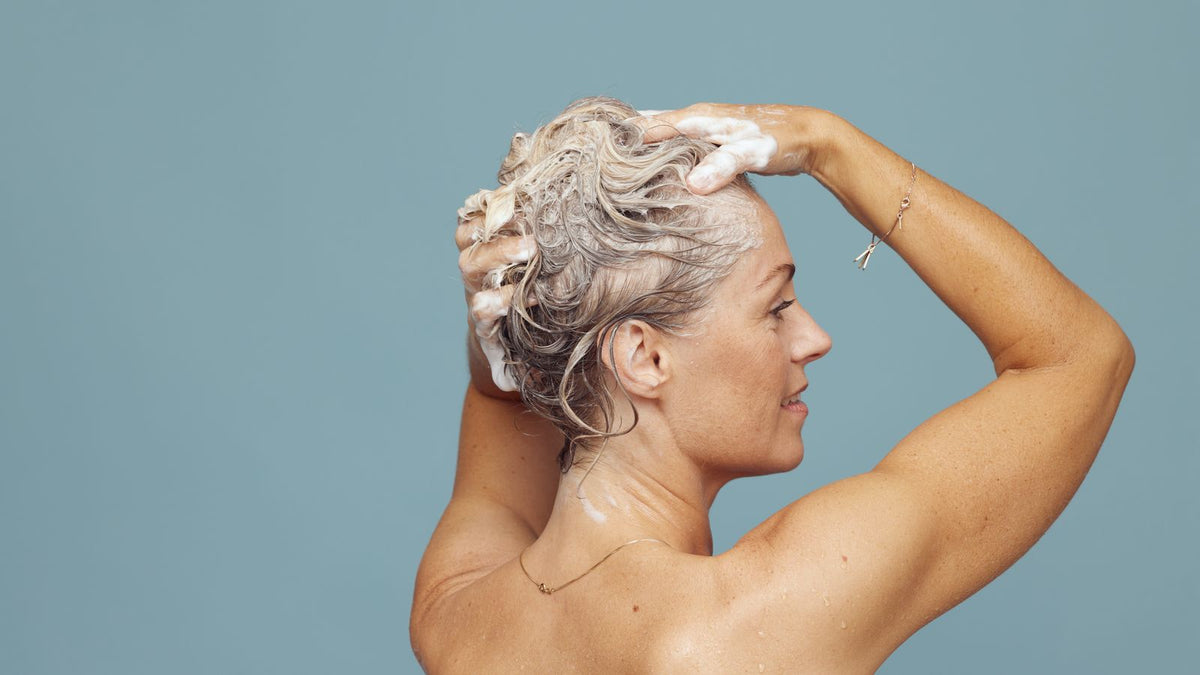
- Lather at the roots. Work shampoo into the scalp with your fingertips, not your nails, rinse in lukewarm water, and let the lather run through the lengths rather than scrubbing them.
- Condition every wash. Put conditioner on the mid-lengths and ends, where weathering shows, and use a richer mask once a week if your hair feels dry and rough.
- Go easy on dry shampoo. Powder on top of a day's dust adds to the film on your scalp. Our guide to dry shampoo, scalp build-up and an itchy scalp covers how to use it without overdoing it.
- Cover up for dust and strong sun. A hat or hood keeps dust off at work, and the 2024 review notes that UV exposure causes oxidative damage around the follicle. For a thinning parting, see our advice on protecting a thinning parting or scalp from the sun.
- Leave cigarettes out of it. Tobacco smoke is one of the pollutants the same review discusses, and it is the one you control. Our piece on how smoking, sleep and exercise relate to hair looks at that evidence.
- Clean what touches your hair. Wash pillowcases, hats, hoods and combs regularly so residue is not pressed straight back onto a clean scalp.
If flakes are the main problem, the NHS suggests an anti-dandruff shampoo from a pharmacy or supermarket, used for up to 4 weeks, and says you may need to try more than one type before finding one that suits you.


A vegan, sulfate-free 250ml shampoo with biotin, caffeine, rosemary, niacinamide and argan oil, £14.95 in September 2026. Massaged into the scalp and left for 3 to 4 minutes, as the product page suggests, it gives a thorough clean after a dusty day and helps hair look fuller.

An 8-in-1 deep conditioning mask with rosemary, caffeine, niacinamide, provitamin B5 and argan oil, £24.95 in September 2026. Once a week on the mid-lengths and ends, it brings back softness, shine and manageability to hair that feels dry and weathered, and helps reduce breakage.
Can shampoos and scalp products protect hair from pollution?
Shampoos and scalp products cannot build a shield against air pollution, but a thorough, gentle wash removes the dust, oil and residue that collect on hair and scalp, conditioning restores smoothness to weathered lengths, and cosmetic scientists are still exploring ingredients for pollution-reducing formulas, as a 2026 paper in the journal Gels shows.
That paper looked at natural adsorbents, materials that hold particles on their surface, as possible ingredients for cosmetics designed to reduce pollution on skin and hair. Work of that kind is at the exploration stage. In practice, anything sold as anti-pollution hair care is doing ordinary cleansing and conditioning, and the useful questions are the everyday ones: does the shampoo clean well enough that you are happy to use it often, and does your conditioner or mask go where the weathering is, on the lengths?
Our own products are not sold as anti-pollution products, and we would rather be plain about that. Grow Me is a sulfate-free shampoo for a regular, thorough wash. Grow More is a leave-on scalp step for anyone who wants a fuller-looking parting or crown, and it makes most sense applied to a freshly washed scalp in the evening, so it is not sitting under a day's dust.

A vegan, non-greasy leave-on scalp elixir with biotin, caffeine, rosemary, niacinamide and allantoin, £25.50 in September 2026. Applied straight onto the scalp at the parting or crown at night, with no rinsing, it supports a comfortable scalp and a fuller-looking finish.

When should you see your own GP rather than trichologists Scunthorpe?
You should see your own GP before contacting trichologists Scunthorpe if hair comes out in patches or clumps, shedding is heavy or will not settle, your scalp is red, swollen, very itchy or sore, or the change arrives alongside tiredness, weight loss or feeling unwell, because the NHS advises finding out the cause with a GP first.
The NHS says to see a GP if you are worried about your hair loss, and to get an idea of what is causing it before thinking about a commercial hair clinic. It lists illness, stress, cancer care, weight loss and iron deficiency among the causes of temporary hair loss, and says hair loss caused by a medical condition usually settles once you have recovered. A GP can arrange blood tests where they are needed, which no hair specialist outside the NHS can replace.
For flaking, the NHS says to see a GP if symptoms continue after using an anti-dandruff shampoo for at least 4 weeks, if the scalp is very itchy, red or swollen, or if flaky, itchy patches appear on your face or elsewhere on your body.
Think about your lungs as well as your hair. Public Health England notes that short-term exposure to high air pollution can affect lung function and make asthma worse, so if dust or fumes at work or on your commute leave you wheezy, coughing or short of breath, raise that with your GP. Your chest matters more than your hair.
What can trichologists Scunthorpe add, and how do you check one?
Trichologists Scunthorpe residents find through the professional registers add most once medical causes are ruled out, by looking at your scalp and hair under magnification, telling residue, breakage and shedding apart, and reviewing your washing routine, products and working environment, but they are not medical doctors and cannot replace your GP.
Check membership before you pay. The Institute of Trichologists keeps a Find a Trichologist register with a UK list and an international one, and says its registrants have completed education programmes to qualify and subscribe to a code of professional practice and ethics each year. The Trichological Society is the other main UK body. Useful questions to ask at the first contact:
- Which register are you on, and can I check your entry online?
- If something looks medical, will you send me back to my GP?
- Can you tell whether what I am seeing is residue, breakage, shedding or pattern thinning?
- Do you sell the products you recommend, and can I keep using my own?
When you go, take a list of the products you use, how often you wash, and what your job or commute exposes you to. That turns "I think it's the air" into something a practitioner can actually look at.
We make hair care and run no clinics, so we cannot look at your scalp, and you should weigh our view with that in mind. Grow Me and Grow More are vegan, our products are made in the UK, and we have sold over 6.5 million bottles since 2012. They are cosmetic: they help hair look and feel healthier and reduce breakage, and they do nothing about a medical cause of hair loss.
What are the most frequently asked questions about pollution and hair?
Should I see one of the trichologists Scunthorpe has if the air seems to be making my hair dull?
Usually not first. Dullness from dust and fumes normally improves with regular, gentle washing and conditioning. If your hair is thinning, coming out in clumps or your scalp is sore, speak to your own GP first. A registered trichologist is most useful afterwards, for scalp or hair-fibre questions that remain.
Does air pollution cause hair loss?
Nobody has shown that it does. A 2026 Korean study of 5,591,500 adults linked higher long-term particle exposure with more pattern hair loss, and a 2024 review associated particulate matter with alopecia areata, but these are associations. Genes, hormones, illness, stress and marked weight loss remain the well-recognised influences on hair.
What is PM2.5?
PM2.5 means particles less than 2.5 microns across, small enough to be drawn deep into the lungs. Public Health England says the strongest evidence for health effects is for PM2.5. The main man-made sources are burning fuel in vehicles, industry and homes, plus tyre and brake wear.
Is there an Air Quality Management Area in Scunthorpe?
Yes. DEFRA's UK-AIR register lists the Scunthorpe AQMA for PM10, declared by North Lincolnshire Council on 1 November 2005 and amended on 19 March 2018. It covers part of the town and an area to the east including the steelworks site, and its recorded source is industrial.
How often should I wash my hair if I work in dust?
As often as your scalp and hair need, which for dusty or sweaty work can mean every day. Washing does not pull out healthy hair; the British Association of Dermatologists notes that shedding is simply most noticeable after washing or brushing. Use a gentle shampoo and condition the lengths.
How many hairs a day is normal to lose?
The NHS says 50 to 100 hairs a day is normal, and the British Association of Dermatologists gives a range of 30 to 150. Shedding well above your usual level, especially around 3 months after an illness or a major stress, is worth mentioning to your GP.
Does a hair mask help dull, rough lengths?
A conditioning mask smooths the outer surface of the hair so it reflects more light and feels softer, which helps lengths that look dull and rough after weathering. A mask works on the hair fibre only, so it does nothing for shedding or pattern hair loss, which start at the follicle. If you take regular medicines, our Worksop guide explains the medication review worth asking a pharmacist for. If your question is about products or a routine rather than a medical one, you can talk to Gail Waterman, our co-founder, as an AI avatar on the Watermans homepage.
Sources & references
- NHS, Hair loss
- NHS, Dandruff
- British Association of Dermatologists, Telogen effluvium
- British Association of Dermatologists (skinhealthinfo.org.uk), Female pattern hair loss
- British Association of Dermatologists (skinhealthinfo.org.uk), Male pattern hair loss
- Public Health England (GOV.UK), Health matters: air pollution
- DEFRA (GOV.UK), Air quality statistics in the UK: particulate matter (PM10/PM2.5)
- DEFRA UK-AIR, Scunthorpe AQMA details
- DEFRA UK-AIR, AQMAs declared by North Lincolnshire Council
- World Health Organization, Ambient (outdoor) air quality and health
- Samra T, Lin RR, Maderal AD. The effects of environmental pollutants and exposures on hair follicle pathophysiology. Skin Appendage Disord, 2024
- Park JY et al. Long-term particulate matter exposure and risk of androgenetic alopecia: a nationwide cohort study. JAAD Int, 2026
- Kim M et al. Long-term particulate matter exposure and risk of alopecia areata: a nationwide epidemiological study with preliminary in vitro evidence. Br J Dermatol, 2026
- Jung GS et al. Particulate matter exposure and maternal scalp hair loss after birth in a mouse model. Front Endocrinol, 2026
- Ebrahimi-Khusfi Z et al. Metal elements in the hair of Kerman taxi drivers: association with influencing factors. Environ Geochem Health, 2025
- Yasin SA et al. Assessing air quality impacts of gas stations through heavy metal analysis in dust and employees' scalp hair in Erbil City. Environ Monit Assess, 2025
- Kaspute G et al. Exploration of natural adsorbents for applications in pollution-reducing cosmetic formulations. Gels, 2026
- The Institute of Trichologists, Find a Trichologist
- The Trichological Society
What is the bottom line on trichologists Scunthorpe?
Air in an industrial town can leave hair duller and a scalp grittier, and new research links long-term particle exposure with more pattern hair loss and alopecia areata, but those links come from observational and laboratory studies that cannot show pollution causes it. Keep washing and conditioning simple and regular, learn the difference between residue, breakage, shedding and pattern thinning, and speak to your own GP about anything patchy, painful or sudden. Save trichologists Scunthorpe for the scalp and hair questions that remain once the medical side is clear.
For a thorough wash that lifts the day's dust and keeps the routine simple, a sulfate-free shampoo such as Grow Me is a good place to start.
Watermans products are 100% cosmetic and do not treat medical hair loss. Individual results may vary.