Skin Purging vs Breakout: How to Tell the Difference
Skin purging vs breakout comes down to three checks. Purging only happens with ingredients that speed up skin cell turnover, it appears in the areas you already break out rather than in new ones, and it is clearly improving by around six weeks. If your spots fail any of those three conditions, this is probably not purging, and pushing on through it is likely making your skin worse rather than better.
That distinction matters more than it sounds. Get it wrong in one direction and you abandon a product two weeks before it would have started working. Get it wrong in the other and you spend two months irritating your skin barrier while telling yourself it is part of the process.
Key takeaways
- The skin purging vs breakout question is settled by the ingredient first: purging is congestion that was already forming under the surface being brought up faster, and it never creates new blockages.
- Only turnover accelerating ingredients can cause it: retinoids, AHAs, salicylic acid, benzoyl peroxide and similar. A moisturiser or a vitamin C serum cannot.
- Purging happens where you usually get spots. Spots in a brand new area point to something else.
- Expect four to six weeks, peaking around weeks two to four. Beyond eight weeks, stop calling it purging.
- Itching, burning, stinging, swelling or a spreading rash is a reaction, not purging. Stop and rinse.
- The most common mistake is stopping and restarting repeatedly, which resets the adjustment period every time.
What is skin purging, and why does it happen?
Skin purging is the surfacing of congestion that already existed, which is why the skin purging vs breakout distinction rests on the ingredient. Spots do not appear overnight. A blocked pore begins as a microcomedone, a plug of dead skin cells and oil deep inside the follicle that is invisible from the outside. Left alone, it takes weeks to develop into something you can see.
Ingredients that accelerate skin cell turnover shorten that timeline. Retinoids change how skin cells mature and shed, and exfoliating acids loosen the bonds between them. The blockages that were quietly forming under your skin, and that would have surfaced over the following two months anyway, all arrive at once instead.
That is the whole mechanism, and it explains everything useful about purging. It explains why it only happens with certain ingredients. It explains why it happens where you already tend to break out, because that is where the microcomedones already were. It explains why it is self limiting, because once that backlog has cleared there is nothing left to bring forward. And it explains why the skin underneath is usually better afterwards.
What are the four tests for skin purging vs breakout?
Test one: the ingredient
The ingredient test is the fastest and the most decisive of the four. If the new product does not accelerate turnover, you cannot be purging, whatever else is happening.
Can cause purging: retinol, retinaldehyde and other retinoids, including the stronger versions a clinician can provide, glycolic acid, lactic acid, mandelic acid and other AHAs, salicylic acid, benzoyl peroxide, azelaic acid to a lesser degree, and professional chemical peels.
Cannot cause purging: hyaluronic acid, niacinamide, vitamin C, peptides, ceramides, moisturisers, cleansers and sunscreen. If spots appeared after starting one of these, look for a different explanation.
There is an important alternative explanation that gets missed here. A product can break you out because of its base rather than its active. Rich, occlusive formulas can cause what is sometimes called acne cosmetica, spots that develop where a product sits on the skin. That is a genuine breakout caused by the product, and continuing will not resolve it.
Test two: the location
Location is the second test in skin purging vs breakout, and it is close to decisive. Purging surfaces existing congestion, so it shows up in your usual problem areas. If you normally break out along the jaw and chin, that is where purging will appear.
Spots appearing somewhere you have never had them, particularly if the pattern matches where you applied the product rather than where you normally break out, points towards irritation or acne cosmetica instead.
Test three: the timeline
Timing is the third test in skin purging vs breakout, and two aspects of it matter. Individual purge spots come up and settle faster than your usual spots do, because they were already most of the way through their development. And the whole episode is self limiting: it typically peaks somewhere in weeks two to four and is clearly improving by six.
A reaction, by contrast, tends to start within hours to a few days of application and does not improve while you keep using the product. And a genuine breakout follows your usual spot lifecycle, with no particular reason to settle down. We have a separate guide to hairline breakouts if that is the part you need.
Test four: the character of what you are seeing
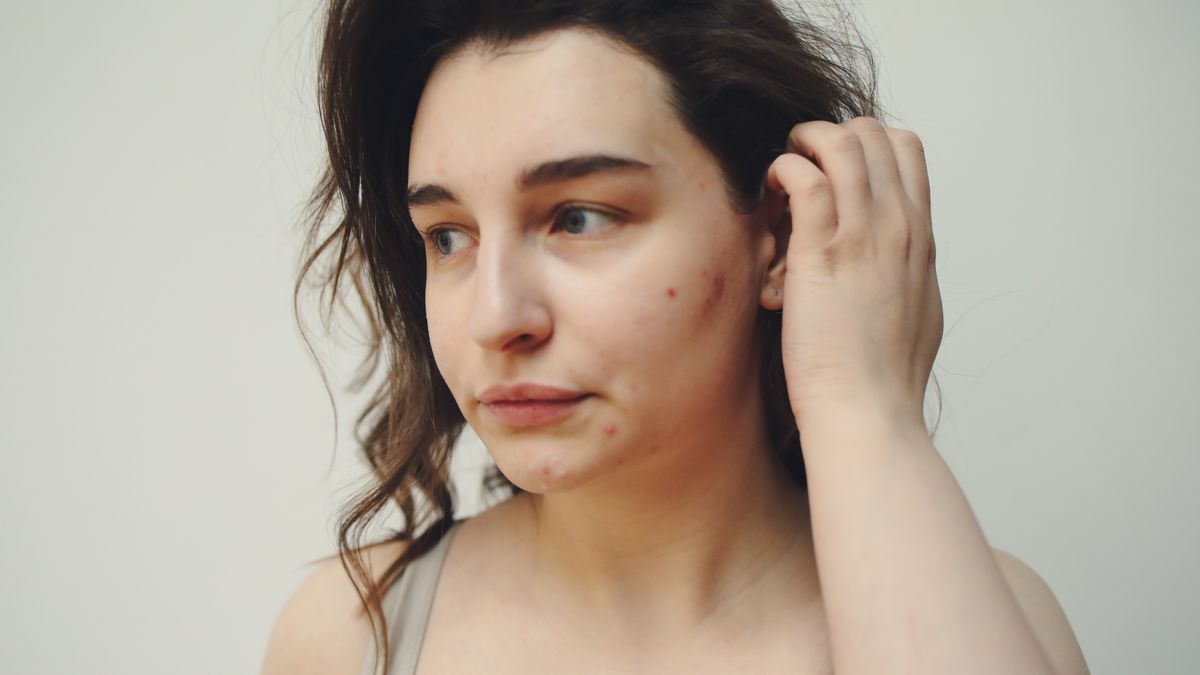
Purging usually looks like small whiteheads and surface pustules coming through in familiar areas, with skin that otherwise feels much as it always does. It can be annoying and it can be visible, but it is not painful.
Irritation feels different, and the feeling is the giveaway. Stinging, burning, tightness, a rough sandpapery texture, diffuse redness, flaking, and skin that suddenly reacts to products it used to tolerate. That is barrier damage, not adjustment.

Skin purging vs breakout: how do they compare side by side?
| Purging | Breakout or acne cosmetica | Irritant or allergic reaction | |
|---|---|---|---|
| Trigger | Only turnover accelerating actives | Any product, often a rich or occlusive base | Any product, commonly fragrance or a strong active |
| Onset | Within the first 1 to 2 weeks | Any time, often builds gradually | Hours to a few days |
| Where | Your usual problem areas | Wherever the product sits | Wherever it was applied, can spread |
| What it feels like | Normal spots, not itchy | Normal spots, sometimes tender | Itching, stinging, burning, tightness |
| Duration | 4 to 6 weeks, then improves | Continues while you use the product | Continues and often worsens |
| What to do | Continue, possibly less often | Stop and switch to a lighter formula | Stop now, rinse, look after the barrier |
What should you do while you are purging?
The most useful thing you can do while purging is reduce frequency rather than stop, because the single most common mistake is not carrying on too long, it is stopping and restarting. Every time you stop for a fortnight and then begin again, you reset the adjustment period, so you experience the worst part repeatedly and never reach the point where the product is actually helping.
- Reduce frequency rather than quitting. Two or three nights a week is a legitimate long term schedule for a retinoid, not a failure.
- Buffer. Apply moisturiser first, then the active on top of it, which slows delivery and takes the edge off. Some people find the sandwich method easier, with moisturiser both before and after the active.
- Do not add anything else. Not a second active, not an exfoliating toner, not a scrub. Your skin is already doing one adjustment.
- Stop physical exfoliation entirely while you settle in.
- Do not pick. Squeezing during a purge is the main route to marks that outlast the spots by months.
- Sunscreen every morning, without exception. Retinoids and acids increase sun sensitivity, and post inflammatory pigmentation is the thing most likely to still be visible a year later.
A schedule that usually works for a new retinoid
Two nights a week for the first fortnight. If your skin is comfortable, move to three nights for a fortnight. Then alternate nights. Only go nightly if your skin is genuinely happy there, and plenty of people never do. Apply to dry skin, a pea sized amount for the whole face, and keep it away from the corners of the nose, the eyelids and the corners of the mouth, which are where most of the stinging comes from. Slow beats strong.

When is it not purging, and when should you stop straight away?
It is not purging when the feeling is wrong rather than the spot count. Itching, burning, swelling or a spreading rash points to an irritant or allergic reaction, and those are not something to work through. Stop using the product and rinse your skin with cool water if you develop any of the following.
- Burning or stinging that continues beyond the first minute or two, or that gets worse with each use
- Itching, or raised weals that look like hives
- Swelling, especially of the eyelids or lips
- Weeping, crusting or blistering skin
- A rash spreading beyond where you applied the product
- Deep, painful lumps under the skin rather than surface spots
- Any reaction accompanied by feeling unwell, or by difficulty breathing or swallowing, which needs emergency help immediately
For anything persistent, a pharmacist is a genuinely useful first stop and can usually tell you whether you need a GP. Contact dermatitis from a cosmetic is common and manageable, but it will not settle while you keep applying the cause.
Get a discount on the sensitive skin range
Join the Watermans mailing list and we will email a discount code straight to your inbox, so you can try the sensitive skin range for less. Made in the UK, over 6.5 million bottles sold since 2012.
How do you introduce a new product so this does not happen?
- One new product at a time. Add nothing else for at least two weeks. If you start three products together and your skin objects, you have learned nothing about any of them.
- Patch test properly. Apply a small amount to the same spot, on the inner forearm or just in front of the ear, once daily for five days. Most irritant reactions show up in that window. It is not proof of safety, but it catches a lot.
- Start low and infrequent. Lower strengths exist for a reason, and going straight to the strongest version buys you irritation rather than speed.
- Write down when you started. This sounds trivial and it is the thing people most often cannot answer. Four weeks feels like eight when your skin is misbehaving.
- Take a photograph in the same light on day one. Memory is unreliable and skin change is slow.

How long before you can judge a product?
| Ingredient | Can it cause purging? | When to judge it |
|---|---|---|
| Retinoids | Yes, commonly | 12 weeks for acne, longer for texture and fine lines |
| Salicylic acid | Yes | 6 to 8 weeks |
| Benzoyl peroxide | Yes | 6 to 8 weeks |
| AHAs | Yes | 8 to 12 weeks |
| Azelaic acid | Mildly | 12 weeks |
| Niacinamide | No | 8 weeks |
| Vitamin C | No | 8 to 12 weeks |
| Moisturisers and cleansers | No | Days for comfort, and that is all they promise |
Note the pattern. The things that can cause purging are also the things that take the longest to judge. That is not a coincidence, it is the same turnover cycle showing up at both ends.
When should you see a GP or pharmacist instead of trying another product?
See a GP or pharmacist once acne is leaving marks, producing deep painful lumps, or failing to shift after about three months of consistent use. Skincare handles mild spots and nothing more, and there is no prize for persisting past that point. If your question is about products or a routine rather than a medical one, you can talk to Gail Waterman, our co-founder, as an AI avatar on the Watermans homepage.
- Acne that leaves marks or scars. Scarring is permanent, and it is far easier to prevent than to correct, so this is a reason to go early rather than wait.
- Deep, painful nodules or cysts rather than surface spots.
- No meaningful improvement after around three months of consistent use of a suitable over the counter product.
- Acne that is affecting your mood, your social life or your willingness to leave the house. This is a legitimate medical reason on its own, and a good GP will take it as one.
- Adult acne appearing alongside other changes, such as irregular periods, unwanted facial hair growth or thinning scalp hair, which together may point to an underlying hormonal cause worth investigating. Our guide to PCOS related hair loss covers the hair side of that picture.
NICE guidance on acne sets out a stepped approach that goes well beyond anything on a shop shelf, and in the UK a prescription costs a standard charge in England and nothing in Scotland, Wales and Northern Ireland. We are a cosmetics company and do not advise on medicines, but the arithmetic is worth naming: continuing to buy serums for a year when a GP appointment is free is a common and expensive detour.
Why we are not recommending our own cream here
We make one skin cream, and it is a rich butter based formula designed for dry skin and dry hands. That is the wrong texture for acne prone facial skin, so recommending it on this page would be selling rather than advising. If you need a moisturiser while adjusting to an active, look for a light, fragrance free one instead. You can read more about the ingredients that matter in our guide to whether expensive skincare is worth it.
Frequently asked questions
How long does skin purging last?
Usually four to six weeks, peaking somewhere around weeks two to four. It should be clearly improving by six weeks. If spots are still appearing at the same rate after eight weeks, it is no longer reasonable to call it purging.
Can moisturiser or hyaluronic acid cause purging?
No. Purging requires an ingredient that accelerates skin cell turnover. If spots appeared after starting a moisturiser, a hyaluronic acid serum or a cleanser, the likely explanations are a rich or occlusive base clogging pores, an irritant reaction, or a coincidence with your normal spot cycle.
Should I stop using retinol if I am purging?
Usually not, but reduce the frequency rather than stopping altogether. Repeatedly stopping and restarting resets the adjustment period each time, so you experience the worst of it over and over without ever reaching the benefit.
Is purging a sign the product is working?
It is a sign the product is doing something to your turnover rate, which is a necessary step rather than proof of a good outcome. Plenty of people get excellent results from a retinoid without purging at all, so its absence is not a bad sign either.
Skin purging vs breakout or an allergic reaction: what is the difference?
Purging produces spots in your usual problem areas and does not itch. An allergic or irritant reaction typically involves itching, stinging, burning, redness or swelling, appears within hours to days, and can spread beyond where you applied the product. A reaction is a reason to stop immediately.
Can I use two actives at once while purging?
It is a bad idea. Adding a second active during an adjustment period increases the chance of barrier damage and makes it impossible to tell which product is responsible for what. Establish one, then consider the next.
Why did my skin get worse and then much better?
That is the classic purging pattern. The blockages that were going to surface over the next two months arrive within a few weeks instead, and once that backlog has cleared there is nothing left to bring forward, so the skin underneath looks better than the starting point.
Does purging happen on the body too?
Yes, wherever you use an accelerating active and have existing congestion, which most often means the back, chest and shoulders. The same tests apply, and body skin generally tolerates actives better than facial skin does.
Will the marks left behind fade?
Flat red or brown marks left once a spot has settled usually fade over months, and sun exposure is the main thing that prolongs them, which is why daily sunscreen matters more during this period than at any other time. Indented or raised scars are a different matter and need professional assessment.
What is the bottom line on skin purging vs breakout?
Skin purging vs breakout is decided by the ingredient, the location and the clock. Only turnover accelerating actives such as retinoids, AHAs, salicylic acid and benzoyl peroxide can purge; purging appears where you already break out; and it peaks in weeks two to four and is clearly improving by six. Anything that itches, stings, swells or spreads is a reaction rather than an adjustment, and that means stop. If spots are still arriving at the same rate after eight weeks, or if they are deep, painful or leaving marks, a GP or pharmacist is the next step rather than another serum.
We make one skin cream and it is a rich butter based formula for dry skin and dry hands, so it is the wrong texture for acne prone facial skin and we are not going to pretend otherwise. If you want the discount for when you do need a Watermans product, the mailing list above is the honest offer on this page.
Sources & references
- Acne, NHS, for symptoms, self care and when to get help.
- Acne vulgaris, NICE Clinical Knowledge Summaries, for the stepped approach and review intervals.
- Acne vulgaris, DermNet, for the microcomedone stage that purging brings forward.
- Topical retinoids, DermNet, for the irritation and adjustment period.
- Fragrance mix allergy, DermNet, for distinguishing contact allergy from congestion.
- Sunscreen and sun safety, NHS, for sun sensitivity while using actives.
Watermans products are 100% cosmetic and do not treat medical hair loss. Individual results may vary. Watermans has sold over 6.5 million bottles since 2012 and our products are made in the UK. This article is general information about cosmetic products and is not medical advice. See a pharmacist or GP for persistent or painful acne.