Trichologists Wokingham: Heatless Curls on Fine or Thinning Hair
Heatless curls spare fine hair from hot tools, but an overnight set can bring breakage problems of its own.
If you are searching for trichologists Wokingham because heatless curls leave short snapped pieces on your pillow, check the set before anything else. Heatless methods avoid heat damage, but hair set soaking wet swells and stretches more easily, tight rollers and pins pull on the same spot all night, and pillow friction roughens the ends. Set hair damp rather than dripping, keep every anchor loose and move it from night to night. See your GP about patches or heavy shedding.
Key takeaways
- Wet hair is weaker: a 2015 review in the International Journal of Trichology says wet hair can stretch by 30% of its length without damage, with irreversible changes between 30% and 70%.
- Hygral fatigue, the wear caused by repeated swelling and drying, is described in laboratory research, but no study has measured an overnight heatless set directly, so the wet-set risk is an inference.
- The British Association of Dermatologists links tight buns and hair clips with traction alopecia, which can become permanent with long-term, repeated pulling.
- Robe curls, loose sock buns and soft plaits spread the hold across more hair than small, tight rollers or pin curls anchored at the hairline.
- The NHS says losing 50 to 100 hairs a day is normal. Short pieces with no root bulb are breakage, not hair loss, so try a gentler set before you look up trichologists Wokingham.
Are heatless curls kinder to fine or thinning hair than hot tools?
Heatless curls are kinder to fine or thinning hair than hot tools in one important way, because no curling iron or straightener touches the fibre, but they swap heat for hours of damp setting, tension from rollers or pins and friction against a pillow, and each of those can snap fragile strands too.
Heat damage is well documented. When researchers at TRI Princeton curled hair with a curling iron in 2004, dry fibres showed cracking and fused cuticle edges under the microscope, and wet fibres fared worse, with the cuticle bubbling and buckling as steam escaped from inside the strand. The American Academy of Dermatology (AAD) suggests letting hair air-dry when possible and using a curling iron less often, aiming for once a week or less.
That makes a heatless set a sensible swap for anyone whose fine hair already looks frazzled. The catch is that a heatless set only removes the heat, not the handling. If you still reach for hot tools on some days, our guide to heat protection sprays for fine hair covers how to shield the strands when you do.
| Heat styling | Heatless setting | |
|---|---|---|
| Main stress on the hair | High temperature, worst on damp hair | Time spent damp, pulling tension and friction |
| How long the stress lasts | Seconds per section | Several hours, often a whole night |
| Typical damage on fine hair | Cracked, fused or bubbled cuticle | Snapped mid-lengths and frayed ends; pulling at the anchor point |
| The simplest fix | Lowest setting, dry hair, fewer heat days | Damp not dripping, a loose hold, a new anchor point each night |
Why is wet or damp hair more fragile when you set it overnight?
Wet or damp hair is more fragile than dry hair because water soaks into the keratin, swells the shaft and softens it, so a wet strand stretches further and snaps under a lighter pull, and a set that holds hair wet all night keeps it in that weaker state far longer than a normal wash.
The 2015 review in the International Journal of Trichology puts figures on the stretch: wet, undamaged hair can be stretched by 30% of its length without harm, stretching it by between 30% and 70% causes irreversible changes, and stretching it to 80% breaks it. The same review notes that water absorption swells the hair shaft. A 2024 physics paper from Dalhousie University in Canada adds that protein fibres swell far more in width than in length when they take up water: a collagen fibril's radius grows by about 40% while its length grows by only 5%, and single hair shafts show a similar effect.
Robbins and Kamath at the Textile Research Institute in Princeton found that water lowers the load needed to break hair, and that wet strands clump together and catch, which produced more long breaks when tresses were combed wet. Winding soaking hair tightly around a roller, then tugging it straight in the morning, puts a similar kind of pull on a weakened fibre, although no study has tested heatless sets directly.
Hygral fatigue is the name researchers give to the wear caused by repeated swelling and drying. The 2015 review describes it as a factor that can damage hair, and a 2001 TRI Princeton study named swelling and deswelling as one cause of hair damage by hygral fatigue. That evidence comes from laboratory fibres rather than real heads, so read it as a sensible precaution rather than a measured effect of sleeping in curls.
The closest clue comes from a 2011 study at Yonsei University in Korea, which washed and dried hair tresses 30 times. Hair left to dry naturally was the only group to show damage to the cell membrane complex, the layer that binds hair cells together, and the researchers concluded that a dryer held 15 cm away and kept moving did less damage than natural drying. Setting hair damp rather than dripping, after a blot with a towel and a short air-dry, shortens that wet stage without adding much heat.
Damp, not dripping
Set hair when it feels cool and damp but no longer drips or darkens a towel. Thick or curly hair usually needs more moisture to take a set than fine, straight hair, so test one section first. If the set is still wet in the morning, it went in too wet for your hair.
Which heatless curl methods are gentlest on fine or thinning hair?
The gentlest heatless curl methods for fine or thinning hair are the ones that spread the hold across a wide section and sit away from the hairline, such as robe curls, a loose sock bun or soft plaits, while small tight rollers, velcro rollers and pin curls concentrate the pull on a few strands at a time.
No study has ranked heatless methods for breakage, so the comparison below rests on the two things research does link with damage: pulling tension, which the British Association of Dermatologists (BAD) connects with traction alopecia, and friction, which the 2015 review lists among the everyday actions that strip the protective lipid layer from the cuticle.
| Method | How it sets | Tension and friction | Tips for fine hair |
|---|---|---|---|
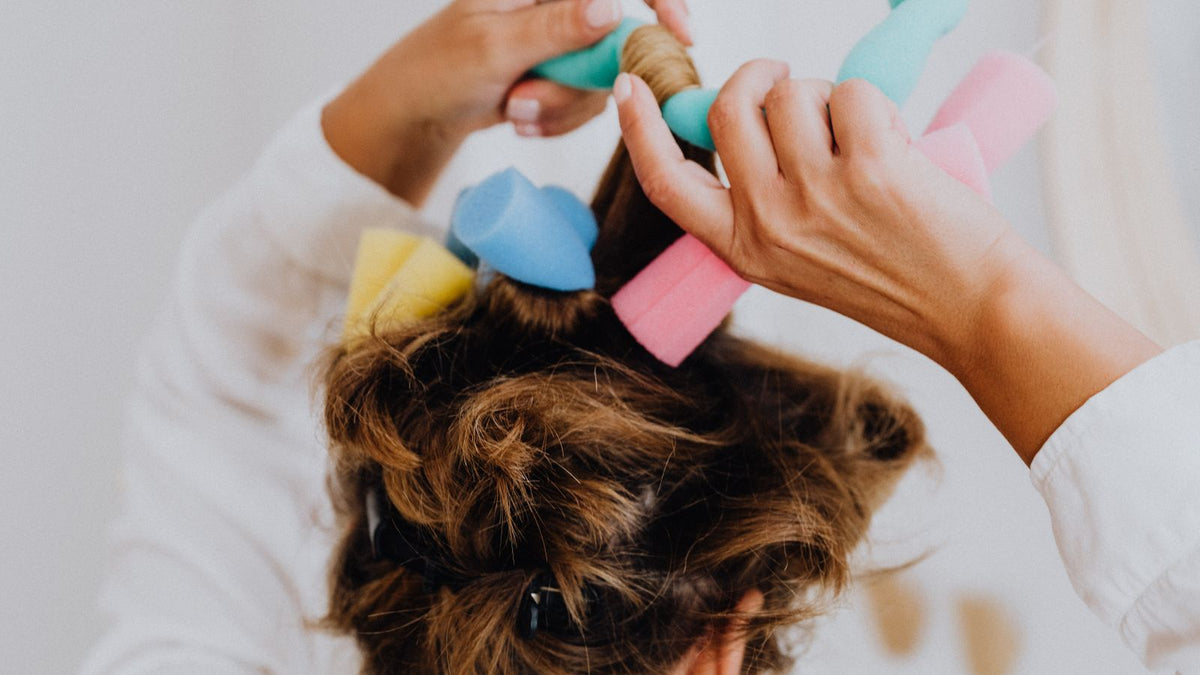
| Robe or rod curls | Hair wrapped around a soft dressing-gown belt or foam rod laid over the crown | Low if wrapped loosely; the tied ends pull at the crown if knotted tight | Secure the ends with a soft scrunchie and keep the rod behind the front hairline |
| Sock bun | Hair rolled around a rolled-up sock into a bun | Moderate; a high, tight bun pulls on the sides and back | Keep the bun loose and low, and alternate between crown and nape |
| Flexi rods | Bendy foam rods, each holding a small section | Moderate; many small sections mean many anchor points | Choose wider rods and fewer sections near the parting |
| Pin curls | Small coils of hair flattened and held with clips or pins | Higher; each pin grips the same few strands all night | Make larger coils and pin across the coil, not through the root |
| Overnight plaits | Two or more braids made on damp hair | Low to high, depending on how tight the plait starts | Plait loosely from below the ears and never braid dripping hair |
| Foam rollers | Soft foam cylinders that clip shut | Low to moderate; the clip can crease and grip | Roll without stretching the hair and avoid sleeping on the clips |
| Velcro rollers | Hooked rollers that grip hair without clips | Moderate; the hooks can snag fine strands | Use on nearly dry hair and unwind them slowly rather than pulling |

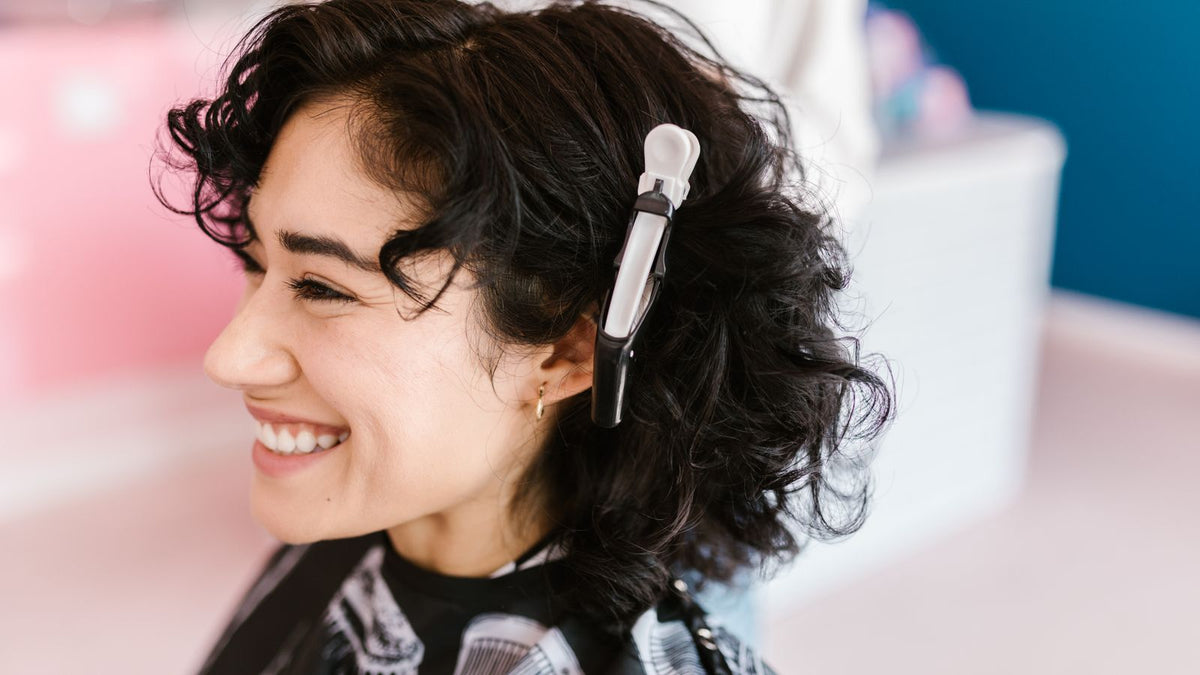
The BAD traction alopecia leaflet names tight ponytails, tight buns, hair clips and tight head scarves among the styles associated with the condition, and DermNet includes rollers in its list of causes. Whichever method you choose, the aim is a set you cannot feel pulling when you lie down.
Can tight rollers, pins and plaits pull hair out at the roots?
Tight rollers, pins and plaits can pull hair out at the roots if the same tension lands on the same spot night after night, because constant pulling causes traction alopecia, a genuine form of hair loss that the British Association of Dermatologists says can become permanent when the pulling is long-term and repetitive.
The BAD explains that the pattern depends on where the tension is highest: tight ponytails are linked with hair loss at the front and side margins of the scalp, and tight buns with loss at the sides and back. Traction alopecia that has been present for only a few weeks or months can get better once the tension stops, and the leaflet says hair may start growing again around 3 months after the tight styling ends. Some people notice itching, soreness or increased flaking of the scalp first.
A 2018 review from the University of Miami, published in Clinical, Cosmetic and Investigational Dermatology, says the risk rises with how hard and how long hair is pulled, and names tight buns or ponytails, weaves or extensions and tight braids as the highest-risk styles. The review repeats a slogan proposed by two dermatologists, "Tolerate pain from a hairstyle and risk hair loss", and notes that in one study only 18.9% of people with traction alopecia said they had never had painful symptoms during or after hairdressing.

Signs a heatless set is too tight
Your scalp aches or feels tender in the morning; there is redness or small spots where a tie or pin sat; you see short broken hairs along the hairline; or you notice little white casts clinging to hairs at the edge of the set. DermNet and the BAD both list signs like these in traction alopecia, so loosen the set and move it straight away. Heatless styling still relies on fastenings, so our ranking of which hair ties are kindest to fine hair is worth reading alongside this.
For the wider picture on hairline thinning from tight styles, see our guide to traction alopecia causes and early signs.
Does sleeping on heatless curls cause friction breakage on the pillow?
Sleeping on heatless curls can add friction breakage, because every turn of the head rubs the set and the ends against the pillow, and friction wears the protective lipid layer on the cuticle, although no study we could find has measured pillowcase fabric and breakage directly, so the size of the effect is uncertain.
A PubMed search we ran in September 2026 for pillowcase friction and hair returned no studies at all. What laboratory work does show is that the ends are the most vulnerable part of a strand: in Robbins and Kamath's dry-combing tests, short breaks near the tips rose with every extra comb stroke as damaged ends wrapped around each other. A night on a cotton pillowcase is not the same as combing, but the ends of a set are exactly where the rubbing lands.
- Tie it up loosely. Gather the set loosely on top of the head so you lie on less of it, with a soft scrunchie rather than an elastic band.
- Tuck the ends in. The ends take the most wear, so fold them into the roller, rod or bun.
- Try a smooth cover if you like. Many people find a silk or satin scarf or pillowcase feels gentler, but there is no good-quality trial behind it.
- Go to bed damp, not wet. Less swollen fibre means less soft hair to rub against the pillow.

Our Slough guide to hair on your pillow and night-time breakage goes further into sleep positions, scrunchies and pillowcase fabrics.
How should you prepare fine hair before a heatless set?
Preparing fine hair for a heatless set means conditioning the mid-lengths and ends, detangling from the ends upwards with a wide-tooth comb, blotting rather than rubbing, and adding a little slip so the hair winds without catching, which matches the AAD's advice on conditioner, combing and towel drying.
The AAD recommends conditioner after every shampoo, applied to the ends if your hair is fine or straight and along the full length if it is dry or curly. It also advises a wide-tooth comb for wet hair, starting at the ends, and wrapping hair in a towel or T-shirt instead of rubbing it dry, since rough rubbing can cause damage. For fine hair that needs to lose some water before setting, our Grimsby guide to blow-drying or air-drying fine hair compares the options.
Oils deserve a careful word. The 2015 review reports that some oils can soak into hair and reduce how much water it absorbs, lowering swelling and so hygral fatigue, and a 2003 study by Rele and Mohile found coconut oil reduced protein loss from hair while sunflower and mineral oils did not. Those results apply to particular oils, so do not assume every oil behaves the same way. What most oils can offer is lubrication: the same review describes tests in which oil treatments lowered the force needed to comb wet hair. A drop or two on the ends of fine hair is plenty, since more will weigh curls down. For the step straight after washing, read how to towel-dry wet hair without causing breakage.

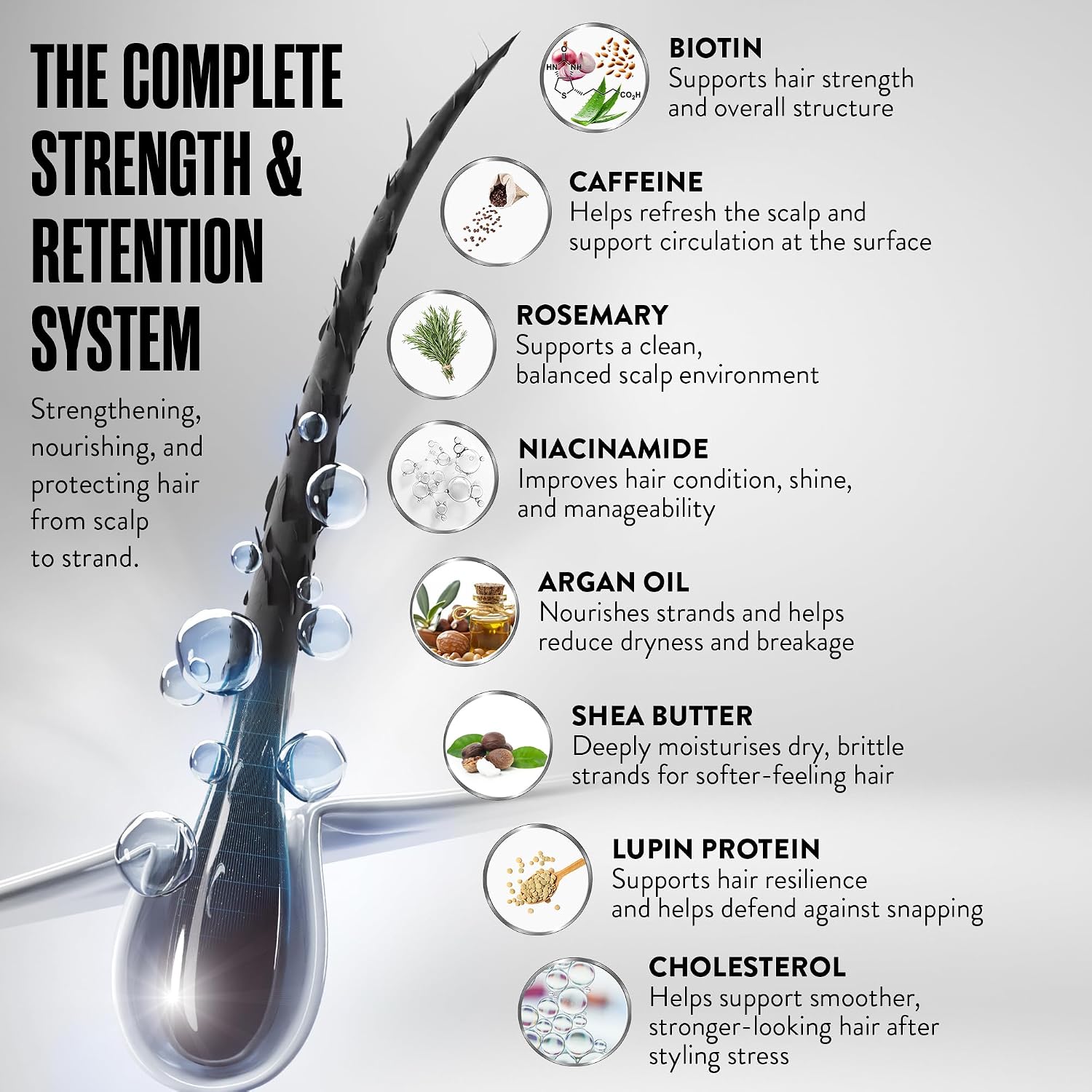
An 8-in-1 deep conditioning mask with argan oil, provitamin B5 and rosemary, vegan, £24.95 in September 2026. Use it after washing and before you set, so damp lengths feel softer and wind around a rod or roller without snagging.

A detangling conditioner with cholesterol, shea butter and niacinamide, £13.95 in September 2026. Smooth it onto the ends of fine hair and comb through from the ends upwards, so damp lengths slip apart instead of snapping before you set them.
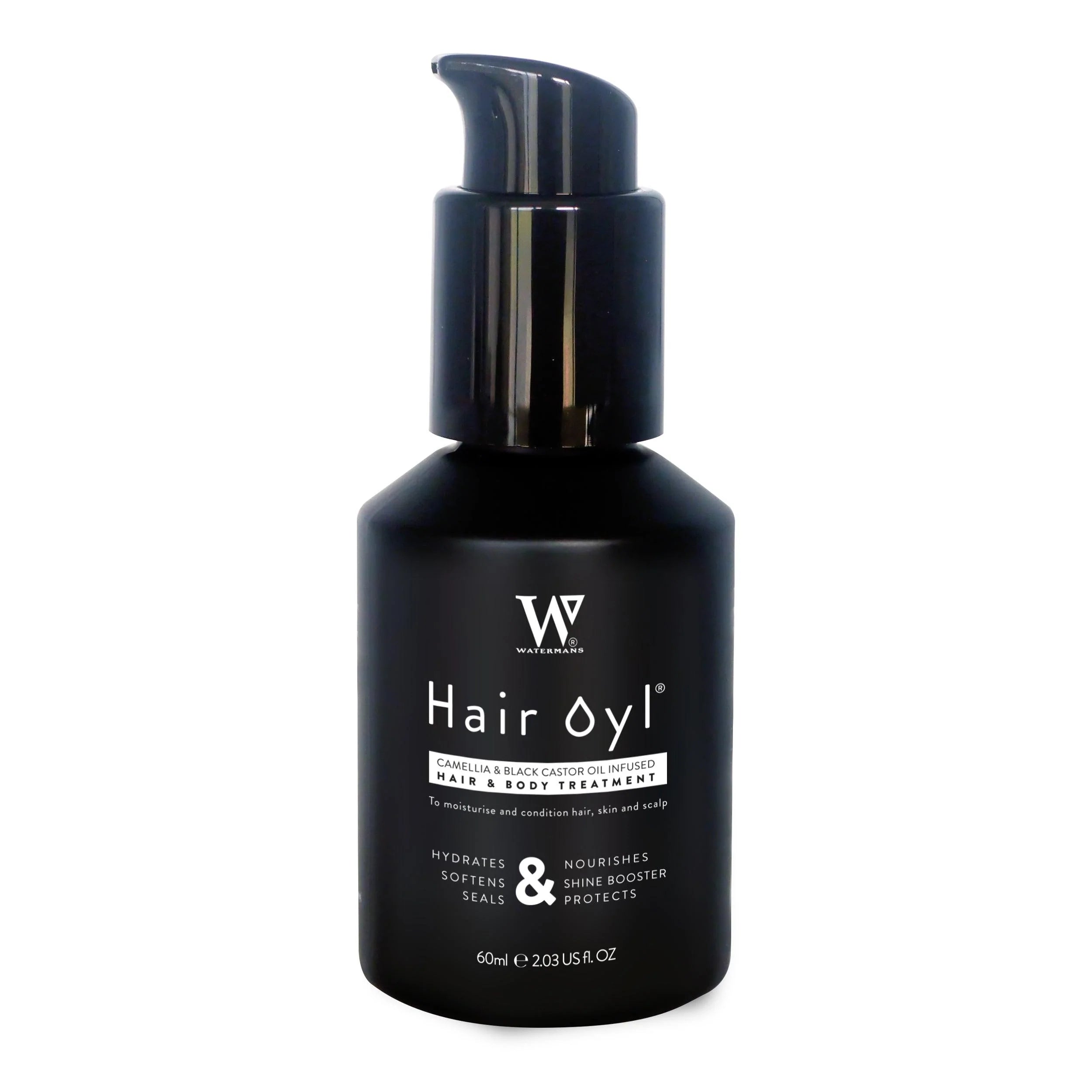
Camellia & Black Castor Hair & Body Oil
A lightweight oil made with camellia oil and black castor oil, vegan and made in the UK in a glass bottle, £24.95 in September 2026. Warm one or two drops between your palms and smooth them over the ends before winding, for slip and shine without weighing fine curls down.
Get a discount on the fine hair breakage range
Join the Watermans mailing list and we will email a discount code straight to your inbox, so you can try the fine hair breakage range for less. Made in the UK, over 6.5 million bottles sold since 2012.
What does a gentle overnight heatless curl routine look like?
A gentle overnight heatless curl routine for fine or thinning hair washes early in the evening, blots and air-dries the hair until it is damp, adds conditioner or a drop of oil to the ends, sets it loosely away from the hairline, and unwinds it with the fingers in the morning rather than a brush.
- Wash earlier. Shampoo the scalp in the early evening so the hair has time to lose its drips before bed.
- Blot, do not rub. Press the water out with a towel or cotton T-shirt, as the AAD advises.
- Detangle from the ends. Use a wide-tooth comb with conditioner still in, working from the tips up to the roots.
- Check it is damp, not dripping. If it still drips, give it longer, or use a dryer on a low setting held about 15 cm away and kept moving, as in the 2011 Yonsei study.
- Set loosely. Wind without stretching the hair taut; you should be able to slide a finger under any tie.
- Anchor away from the hairline. Keep ties, pins and clips off the front and temples, and move them each night.
- Protect the set for sleep. Gather it loosely on top, tuck the ends in and add a smooth scarf if you like one.
- Take it down gently. Unwind each section with your fingers and separate the curls by hand. The AAD calls brushing 100 strokes a day a myth, and a set needs no brushing at all.
Give your hair nights off
Alternate heatless sets with loose, unstyled nights so the same patch of hairline is not pulled every night. In the morning, run your fingertips along the hairline and wherever a tie sat; tenderness, redness or short broken hairs there mean the last set was too tight.
Is it breakage, shedding or genuine hair loss after heatless curls?
Hair that comes out after heatless curls is breakage if the pieces are short and uneven with no bulb at either end, shedding if the hairs are full length with a small pale bulb at the root, and a sign of genuine hair loss only when the scalp itself changes, with thinning, patches or a receding hairline.
- Hair breakage. The fibre snaps somewhere along its length and the follicle is untouched. A damp, tight or rubbed set shows up here.
- Hair shedding. Whole hairs fall out at the end of their growth cycle. The NHS says losing 50 to 100 hairs a day is normal. The BAD explains that in telogen effluvium the share of hairs in the shedding phase rises from about 15% to 30% or more, often around 3 months after a trigger such as illness, childbirth or major stress.
- Hair loss. The follicle itself changes or is damaged, as in pattern hair loss or long-standing traction alopecia.
| What you see | Breakage | Shedding | Hair loss |
|---|---|---|---|
| Length of the hairs | Short pieces of uneven length | Full length | Often normal; the change shows on the scalp |
| Root end | No bulb; blunt or frayed | Small pale bulb | Varies |
| Where you find them | Pillow, set rollers, around the ends | Pillow, plughole, brush, all over | Thinning at the parting, temples or crown |
| Likely link | Wet sets, tension, friction | Illness, childbirth or stress months earlier | Genes, hormones, long-term traction |
| First step | A gentler set for a few months | Usually settles; see a GP if heavy or ongoing | Speak to your own GP |
The BAD notes that people with shedding often find more hair on the pillow in the morning, so hair on the pillow alone does not tell you which one you have. Try a paper test: collect the hairs from your pillow and rollers for a few days, lay them on white paper and sort them into full-length hairs with a bulb and short pieces without one. Mostly short pieces point to how the hair is set. Keep the sorted hairs if you later contact trichologists Wokingham searches turn up, because they show exactly what you are losing.
When should you speak to your own GP or look for trichologists Wokingham?
Speak to your own GP first if you notice bald patches, a receding hairline where rollers or ties sat, a sore or scaly scalp or handfuls of whole hairs, and consider trichologists Wokingham searches turn up when breakage carries on after a few months of looser sets on damp rather than soaking hair.
The NHS advises seeing a GP to get an idea of what is causing hair loss before thinking about going to a commercial hair clinic, and lists illness, stress, weight loss and iron deficiency among the causes of temporary hair loss. The BAD's telogen effluvium leaflet explains that a blood test may be arranged to rule out other causes, such as thyroid conditions and iron deficiency.
Speak to your own GP first if
You have smooth bald patches; your hairline or temples are receding where a set is anchored; the scalp is sore, red, scaly or has small pus spots; you are losing handfuls of whole hairs; or the change comes with tiredness, weight loss or other changes in your health.
A trichologist is a hair and scalp specialist rather than a doctor. If you do look for trichologists Wokingham residents can reach, whether in Wokingham itself, Bracknell or Reading, check the practitioner on the Institute of Trichologists' Find a Trichologist register or with the Trichological Society before you pay anything. Ask whether they will look at your hair shaft under magnification, go through how you set and sleep on your hair, and send you back to your GP if the pattern looks medical.
Watermans runs no clinics and cannot look at your hair. We make cosmetic hair care in the UK, with over 6.5 million bottles sold since 2012, and Masque Me and our Camellia & Black Castor oil are vegan. Our products can help strands look and feel smoother and reduce breakage during styling, but no mask or oil changes how a follicle behaves, so weigh our view accordingly.
What are the most frequently asked questions about heatless curls on fine hair?
Is it bad to sleep with wet hair in heatless curls?
Sleeping on a soaking-wet set is harder on hair than sleeping on a damp one. Wet hair swells and stretches more easily, and in a 2011 lab study only hair left to dry naturally showed damage to the layer that binds hair cells together. Blot well, let the hair air-dry for a while and set it damp rather than dripping.
Are heatless curls better for thinning hair than a curling iron?
Heatless curls avoid heat damage, which lab studies link with cracked and bubbled cuticles, so they suit fine hair that already looks frazzled. They only stay the kinder choice when the set is loose and not soaking wet, because tension and a long wet stage can cause breakage too.
Can heatless curlers cause traction alopecia?
Heatless curlers can if they pull tightly on the same spot night after night. The British Association of Dermatologists links tight buns and hair clips with traction alopecia, and DermNet lists rollers among its causes. Keep sets loose, move the anchor point and drop any style that leaves your scalp sore.
Do silk or satin pillowcases help heatless curls without breakage?
We found no good-quality study measuring pillowcase fabric and hair breakage. A smooth pillowcase or scarf may feel gentler, but a loosely tied set, tucked-in ends and hair that is damp rather than wet at bedtime are the steps with a clearer rationale.
How can I tell if hair on my pillow is breakage or shedding?
Look at the ends. Short, uneven pieces with no bulb are breakage from the set or from friction. Full-length hairs with a small pale bulb are shed hairs, and the NHS says losing 50 to 100 hairs a day is normal. The British Association of Dermatologists notes shed hairs often show up on the pillow too.
Should I put oil on my hair before heatless curls?
A drop or two on the ends adds slip, so the hair winds without catching. A 2015 review says some oils can reduce how much water hair absorbs, and a 2003 study found coconut oil reduced protein loss from hair, but those findings apply to particular oils. Too much oil weighs fine curls down.
When is it worth contacting trichologists Wokingham searches turn up about curl breakage?
Consider it when breakage has not settled after a few months of looser sets on damp rather than wet hair, or when you want the hair shaft examined under magnification. Speak to your own GP first about bald patches, a receding hairline, a sore scalp or handfuls of whole hairs, and check any trichologist on the Institute of Trichologists register.
Sources & references
- NHS, Hair loss
- American Academy of Dermatology, Tips for healthy hair
- American Academy of Dermatology, 10 hair-care habits that can damage your hair
- American Academy of Dermatology, Do you have hair loss or hair shedding?
- British Association of Dermatologists (skinhealthinfo.org.uk), Traction alopecia
- British Association of Dermatologists (skinhealthinfo.org.uk), Telogen effluvium
- DermNet, Traction alopecia
- Gavazzoni Dias MF. Hair cosmetics: an overview. Int J Trichology, 2015
- Gouws XA, Mastnak A, Kreplak L, Rutenberg AD. Anisotropic swelling due to hydration constrains anisotropic elasticity in biomaterial fibers. J Mech Behav Biomed Mater, 2024
- Robbins C, Kamath Y. Hair breakage during combing. III. The effects of bleaching and conditioning on short and long segment breakage by wet and dry combing of tresses. J Cosmet Sci, 2007
- Ruetsch SB, Kamath YK, Rele AS, Mohile RB. Secondary ion mass spectrometric investigation of penetration of coconut and mineral oils into human hair fibers. J Cosmet Sci, 2001
- Rele AS, Mohile RB. Effect of mineral oil, sunflower oil, and coconut oil on prevention of hair damage. J Cosmet Sci, 2003
- Ruetsch SB, Kamath YK. Effects of thermal treatments with a curling iron on hair fiber. J Cosmet Sci, 2004
- Lee Y et al. Hair shaft damage from heat and drying time of hair dryer. Ann Dermatol, 2011
- Billero V, Miteva M. Traction alopecia: the root of the problem. Clin Cosmet Investig Dermatol, 2018
- The Institute of Trichologists, Find a Trichologist
- The Trichological Society
What is the bottom line on trichologists Wokingham?
Heatless curls can be the kinder choice for fine or thinning hair, but only when the set goes in damp rather than soaking, loose rather than tight, and anchored somewhere different each night. Condition and detangle first, protect the ends from the pillow and take the curls down with your fingers. Short snapped pieces point to the set; patches, a receding hairline or heavy shedding are a reason to speak to your own GP before you contact trichologists Wokingham searches bring up.
To soften fine lengths before they are wound, a deep conditioning hair mask such as Masque Me adds argan oil and provitamin B5, so damp hair winds smoothly around a rod or roller instead of snagging.
Watermans products are 100% cosmetic and do not treat medical hair loss. Individual results may vary.