Trichologist in Guildford: Scalp Scrubs, Build-Up and Thinning Hair
Gritty scrubs, fizzing toners and silicone brushes all promise a cleaner scalp. Some help. Some leave you sorer than before.
Before you pay a trichologist in Guildford for a flaky, coated scalp, know that most build-up is sebum, old product and dead skin that a thorough, scalp-first shampoo lifts. Scalp scrubs and salicylic acid exfoliants can loosen stubborn flakes, but scrubbing hard or often irritates the skin and can snap hairs. Skip scrubs on sore, broken or inflamed skin and speak to your own GP or pharmacist first. No scrub can make hair grow.
Our hair and body oil
Camellia & Black Castor Hair & Body Oil, £24.95. Adds hydration and shine to dry lengths and smooths the hair before a blow dry, without weighing fine hair down.
Key takeaways
- Scalp build-up is mostly sebum, leftover product and shed skin, and the American Academy of Dermatology says shampooing the scalp itself is how you wash it away.
- Physical scrubs work by friction; chemical exfoliants such as salicylic acid soften keratin. DermNet notes salicylic acid can sting broken skin and irritate healthy skin.
- No guideline sets a schedule. Start at once a week at most, never scrub and use an acid on the same day, and stop at the first sign of soreness.
- Skip scrubs on broken, sore or inflamed skin and on suspected psoriasis or seborrhoeic dermatitis; DermNet lists skin injury among the triggers for psoriasis.
- A scrub cannot change how follicles grow. If thinning or shedding is the real worry, speak to your own GP first, then consider a registered trichologist in Guildford.
What is scalp build-up actually made of?
Scalp build-up is a mix of sebum, the oil your glands release, leftover styling and conditioning products, sweat and flakes of dead skin, all held together at the roots between washes, which is why the American Academy of Dermatology tells people to put shampoo on the scalp to wash away built-up products, dead skin and excess oil.
The scalp is an unusually oily patch of skin. A 2026 study of adults with self-reported oily, flaky scalps found that scalp skin carried more sebum, held less water and had a weaker barrier than the skin at the front hairline or the nape. A single wash with an anti-dandruff shampoo significantly lowered the sebum on the surface and inside the pores. That weaker barrier is worth remembering before you reach for anything abrasive. Where the water is hard, a soap-based shampoo bar can leave a layer of scum on top of that oil, which our Batley guide covers in how shampoo bar residue affects fine hair.
- Sebum. Oil collects at the roots, so fine, straight hair shows it first. The AAD says people with straight hair and an oily scalp may want to shampoo every day.
- Product residue. Dry shampoo powder, waxes, silicone serums and hairspray all leave a film if a quick wash never reaches the skin.
- Dead skin. The scalp sheds skin cells like everywhere else. In dandruff they come away as visible white flakes, which the NHS says are more noticeable in darker hair.
- Sweat. Exercise, hats and helmets add salt and moisture that sit on the scalp until the next wash.
The AAD also says that when you see flakes, common reasons are not shampooing often enough, or not using the right conditioner, oil or scalp moisturiser for your hair type. So before buying a scrub, check the simpler thing: how often, and how thoroughly, you wash the scalp itself. Dry shampoo is the most common culprit, and our Woking guide to dry shampoo build-up and an itchy scalp covers it in depth. Skipping shampoo altogether is another route to build-up, as our Burnley guide to no-poo, co-washing and water-only washing explains.
If greasy roots rather than flakes are your main complaint, our Walsall guide to an oily scalp and flat hair explains why oil output varies so much from person to person.
How do physical scalp scrubs differ from chemical exfoliants?
Physical scalp scrubs use grains such as sugar, salt or ground seeds, or the soft tips of a silicone brush, to lift flakes by friction, whereas chemical exfoliants use acids such as salicylic acid to soften the keratin that holds dead skin cells together, so the flakes rinse away without any rubbing at all. If you want the detail on that, our guide to epsom salt for hair walks through it step by step.
DermNet describes salicylic acid as a keratolytic: it softens keratin, a protein in the outer skin, which loosens dry, scaly skin and makes it easier to remove. Preparations range from 0.5% up to 30% strength, with shampoos and cleansers at the gentle end, and DermNet notes that mild stinging can occur, especially on broken skin and at higher strengths.

One UK rule shapes what you will find in a gritty scrub. Since 19 June 2018, retailers in England and Scotland have not been allowed to sell rinse-off cosmetics containing plastic microbeads, the tiny beads once common in face scrubs, soaps and shower gels, following a ban on making them that January. Scalp scrubs now rely on sugar, salt, ground seeds, shells or powders instead.
| Option | How it works | Main downside | Best suited to |
|---|---|---|---|
| Grainy scalp scrub | Friction from sugar, salt or ground seeds lifts loose flakes and residue | Easy to overdo; grains can be hard to rinse out of thick or curly hair | Occasional use on a calm, oily scalp with product residue |
| Silicone scalp brush | Soft tips move lather across the skin and through the roots | Pressing hard turns a massage into scratching | Spreading shampoo evenly; people who like the feel of a massage |
| Acid exfoliant | Salicylic acid softens keratin so stuck-on scale lifts; DermNet also lists lactic acid and urea as scale-lifting agents | Stinging, dryness and irritation, especially on broken skin | Stuck-down flakes, ideally after a word with a pharmacist |
| Plain shampoo, done well | Lather massaged into the scalp lifts oil, residue and loose skin | Dries the lengths if you lather them hard every time | Most people, most of the time |
The research on scalp scrubs specifically is thin, so take the advice on this page as sensible skin-care practice. A scrub can lift loose flakes, but washing often enough with a gentle shampoo and massaging with your fingertips usually does the same job without scratching an already weak skin barrier.

How often should you exfoliate your scalp?
How often to exfoliate your scalp has no agreed answer, because no guideline sets a schedule, so a cautious starting point is once a week at most with a scrub or acid product, less often for dry, curly or coily hair, and stopping altogether at the first sign of soreness, stinging or redness.
The closest thing to a benchmark comes from dandruff advice. The American Academy of Dermatology suggests that people with fine or straight hair or an oily scalp may wash daily and use a dandruff shampoo twice a week, while people with coarse, curly or coily hair use it about once a week, if tolerated, and apply it only to the scalp because the active ingredients can dry the hair. DermNet gives a similar twice-weekly rhythm for medicated shampoos in seborrhoeic dermatitis.
Irritation also adds up. DermNet explains that irritant reactions are often the cumulative result of several irritants, so a weekly scrub, a salicylic acid shampoo and a fragranced toner in the same week can tip a scalp over even if each seems fine alone. Its salicylic acid guidance goes further, listing abrasive soaps and cleansers, and cosmetics designed to peel or exfoliate, among the products to be careful combining with it. In plain terms: choose a scrub or an acid, never both on the same day.
- Oily, straight hair, calm scalp. Daily or near-daily shampoo; an exfoliating step once a week if you enjoy it.
- Dry, curly, coily or textured hair. Wash when needed, which the AAD puts at least once every 2 to 3 weeks; exfoliate rarely, if at all, and keep products on the scalp.
- Heavy product users. Aim for a thorough double lather first; many people find that removes the need for a scrub.
- Sensitive or reactive skin. Skip scrubs and acids and stick to a mild shampoo.
Get a discount on the scalp care range
Join the Watermans mailing list and we will email a discount code straight to your inbox, so you can try the scalp care range for less. Vegan, made in the UK, over 6.5 million bottles sold since 2012.
What does over-exfoliating the scalp look and feel like?
Over-exfoliating the scalp usually shows up as a tight, hot or stinging feeling after washing, redness or discolouration, tenderness when you touch or brush, and sometimes more flaking rather than less, because rough friction and harsh products strip away the oils and moisture that keep the outer layer of skin intact.
DermNet describes irritant contact dermatitis as inflammation caused by substances or conditions that injure the skin and damage its barrier, and names mechanical trauma such as scrubbing, along with friction and heat, among the triggers. Irritants remove oils and natural moisturising factor from the outer layer, which then lets other irritants in. The NHS adds that contact dermatitis is most often caused by irritants such as soaps, detergents, solvents or regular contact with water, and usually appears within a few hours or days of exposure.
| What you notice | What it usually means | What to do |
|---|---|---|
| Tight, stinging or burning scalp after washing | An irritated skin barrier | Drop scrubs and acids for at least two weeks; mild shampoo, lukewarm water |
| Finer, drier flakes than before | Over-dried skin rather than build-up | Cut back and rinse more thoroughly |
| Red, pink or darker patches that itch | Irritation, a product reaction or a scalp condition | Stop exfoliating; ask a pharmacist, then your GP if it lasts |
| Scratches, scabs or weeping skin | Broken skin | Nothing abrasive or acidic until it has fully settled; GP if it crusts, weeps or spreads |
| Short, snapped hairs in the sink | Breakage from friction | Lighter hands, fingertips not nails, a wide-tooth comb on wet hair |

Speak to your own GP if
Your scalp is red or swollen or very itchy; flakes have not settled after at least 4 weeks of anti-dandruff shampoo; the skin weeps, crusts or oozes; you have a red or silver rash with patchy hair loss, which the NHS lists as a sign of ringworm; or you notice sudden, heavy shedding. A pharmacist is a good first stop for irritation and, the NHS says, can suggest emollients to stop the skin drying out.
Who should skip scalp scrubs altogether?
Anyone with broken, sore, weeping or inflamed scalp skin should skip scalp scrubs altogether, as should people who suspect psoriasis or seborrhoeic dermatitis, because friction on irritated skin can make things worse, and those conditions are best sorted out with your own GP or pharmacist before any exfoliating product goes near the scalp.
The NHS describes psoriasis as dry, itchy, sore, flaky patches of skin that look like silvery-white scales. DermNet estimates that psoriasis affects about 2% of people worldwide and that roughly 80% of them have it on the scalp, often at the back of the head or spreading past the hairline. DermNet lists harsh chemical products or soaps, and trauma or injury to the skin, among the triggers, and advises against picking or scratching the scalp. Scrubbing at thick scale risks exactly that kind of injury.
Seborrhoeic dermatitis brings greasy yellow or white scale with redness and itch in oily areas such as the scalp, eyebrows and the creases beside the nose. DermNet puts it at 3% to 12% of the population, and the British Association of Dermatologists says dandruff, its mildest form on the scalp, affects almost half of all adults. Both sources list salicylic acid among the options for lifting thick scale, which is why a pharmacist, not a gritty scrub, is the sensible first stop.
- Broken, cut or scabbed skin, including skin you have scratched raw.
- A sore, burning or tender scalp, even without anything visible.
- Suspected psoriasis: well-defined patches with silvery-white scale.
- Suspected seborrhoeic dermatitis, or dandruff that has not settled after 4 weeks of anti-dandruff shampoo, the point at which the NHS suggests seeing a GP.
- Pregnancy or breastfeeding, if the product contains salicylic acid: DermNet advises telling your doctor first, because it can be absorbed through the skin.
If itch and flakes are the main problem, our Chatham guide to an itchy, flaky scalp sets out which over-the-counter ingredients to try first and in what order.
How do you exfoliate your scalp gently if you still want to?
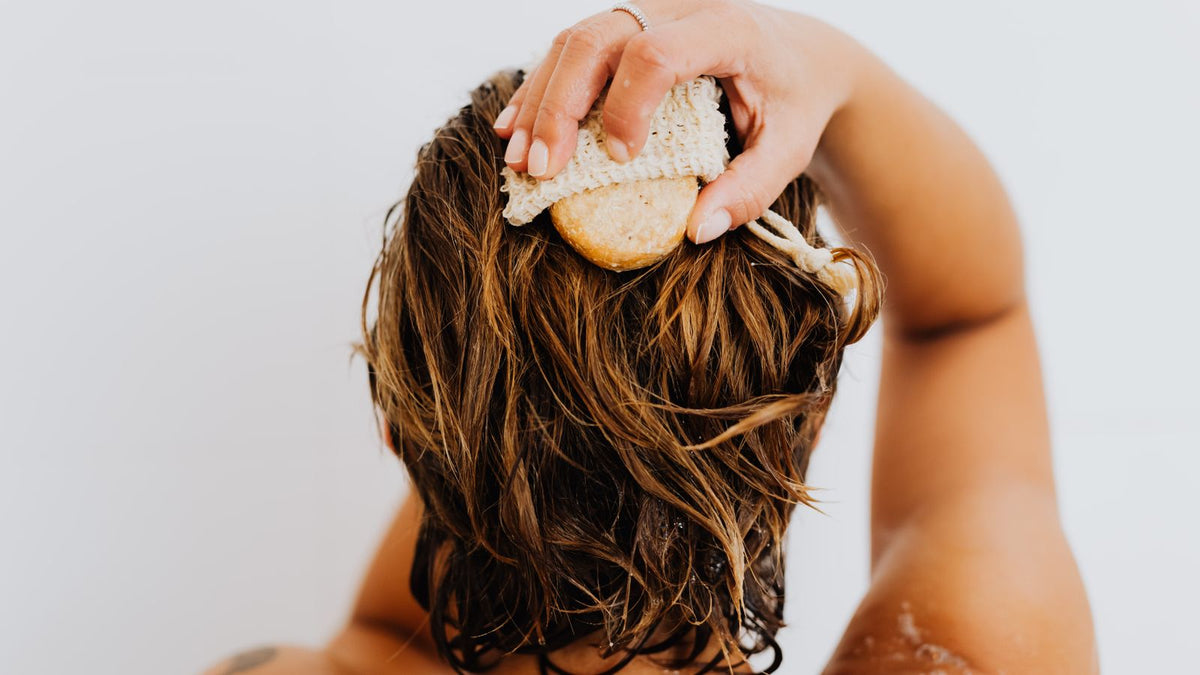
Gentle scalp exfoliation starts with a mild shampoo lathered into wet hair and worked over the scalp with the pads of your fingers or a soft brush in small circles for a minute or so, then a thorough lukewarm rinse, and only on a calm scalp a mild scrub or acid product, no more than once a week.
- Detangle before you wet it. The AAD says hair is delicate when wet and recommends a wide-tooth comb rather than a brush for wet detangling.
- Soak the hair fully in lukewarm water. Lather spreads more easily and you need less pressure.
- Use fingertips, never nails. Small circles, light pressure, section by section from the hairline back.
- Give the shampoo time. Contact time does more than force: many anti-dandruff shampoos need 5 to 10 minutes on the scalp, according to the AAD, and the Grow Me label suggests leaving it on for 3 to 4 minutes.
- If you use a scrub, part the hair, apply a small amount to the scalp only, move it in light circles for under a minute, then rinse twice.
- If you use an acid product, follow the label, keep it on the scalp and away from the eyes, and never pair it with a scrub on the same day.
- Rinse for longer than feels necessary, especially with grains in thick or curly hair.
- Condition the lengths. The AAD suggests conditioner on the ends only for fine or straight hair, and along the full length for dry or curly hair.

Some people prefer a pre-wash oil massage to a scrub. A few drops warmed between the palms and worked over dry lengths, with what is left on your fingertips massaged lightly into the scalp, gives your hands slip without grit. If your flakes are greasy and yellow, keep oils off the scalp until you have spoken to a pharmacist.

Camellia & Black Castor Hair & Body Oil
A vegan hair and body oil with camellia oil and black castor oil, rich in oleic acid and omega 3, 6 and 9. Comb a small amount through dry lengths before washing and massage the rest from your fingertips into the scalp, for softness and shine with nothing gritty. £24.95.
For the wider routine, from washing habits to sun protection, see our guide to keeping your scalp healthy for stronger-looking hair.

A vegan, sulfate-free 250ml shampoo with caffeine, biotin, rosemary, niacinamide, lupine protein and argan oil. Massage it into the scalp with your fingertips and leave it for 3 to 4 minutes before rinsing, for a thorough clean that helps hair look and feel fuller and reduces breakage. £14.95.
What can a scalp scrub do for thinning hair, and what can it not do?
A scalp scrub can lift flakes, residue and oil so roots look cleaner and feel lighter, which can make fine hair look a little fuller for a day, but a scrub cannot change how follicles grow, cannot bring back hair lost to pattern thinning and, used roughly, can add breakage to the hairs you already have.
Three different problems get lumped together as hair loss, and a scrub touches only one of them:
- Hair loss. Follicles gradually make finer, shorter hairs, as in pattern hair loss, which DermNet says is apparent in about 50% of people by the age of 50. No scrub alters that process.
- Hair shedding. Whole hairs, each with a small pale bulb at the root, leave the scalp. The British Association of Dermatologists says around 15% of scalp hair is normally in the shedding phase, rising to 30% or more in telogen effluvium, often around 3 months after a trigger such as illness, childbirth or major stress.
- Hair breakage. The fibre snaps partway along its length, leaving short hairs with blunt or frayed ends and no bulb. Rough scrubbing, scratching and harsh brushing all cause it, and the BAD advises against harsh brushing or combing when hair is shedding.
A scrub day can look alarming for a simple reason. The BAD notes that shedding is most noticeable after washing or brushing, and the NHS says losing between 50 and 100 hairs a day is normal, often without noticing. Hairs that were already loose tend to come out together when you massage the scalp for longer than usual. Check what is in the drain: bulbs mean shedding, blunt ends mean breakage.
Where a scalp condition and thinning overlap, the scalp condition comes first. DermNet lists psoriasis, seborrhoeic dermatitis and fungal scalp infection among the scalp conditions that can cause hair loss, and those need your GP rather than a stronger scrub.

A vegan leave-on scalp serum with biotin, caffeine, rosemary, niacinamide, allantoin, lupine protein and argan oil. Apply it straight onto the parting or crown at night with no rinsing and nothing to scrub, for fuller-looking hair over time. £25.50.
When is it worth seeing a registered trichologist in Guildford?
A registered trichologist in Guildford is worth the fee once your GP or pharmacist has ruled out a skin condition but you still have flaking, build-up or itch that a gentler routine has not settled, or thinning and shedding you cannot explain, and you want an unhurried, independent look at your scalp, habits and products.
The NHS advises seeing a GP to get an idea of what is causing your hair loss before thinking about going to a commercial hair clinic. Many people who look for a trichologist in Guildford because of build-up alone would do better starting with the wash routine above for a month.
- What a trichologist can do. Take a detailed history of your routine and products, look closely at your scalp and hair, often under magnification, and track changes over several months.
- What a trichologist cannot do. Supply medicines. Most trichologists are not doctors, so anything that needs medicines or blood tests goes back to your GP.
Check credentials before you pay. The Institute of Trichologists runs a Find a Trichologist register of its members, and the Trichological Society is the other main UK professional body, so ask which one a practitioner belongs to and confirm it on the body's own website. The Institute of Trichologists says its register is accredited under the Accredited Registers scheme run by the Professional Standards Authority. For a scrub or build-up problem, three questions help:
- Will you look at my scalp under magnification and go through every product I use, including scrubs and acids?
- If this looks like psoriasis or seborrhoeic dermatitis, will you send me back to my GP?
- Are you recommending products you sell, and can I keep using my own?
If you do go ahead with a trichologist in Guildford, take your products, or photos of their ingredient lists, and a note of how often you scrub or use an acid. We sell hair care, so weigh our view accordingly: Watermans does not run clinics or offer scalp assessments. The products on this page are made in the UK, and Watermans has sold over 6.5 million bottles since 2012. They are cosmetic, helping hair look and feel fuller and reducing breakage, and none of them is a scrub. If your question is about products or a routine rather than a medical one, you can talk to Gail Waterman, our co-founder, as an AI avatar on the Watermans homepage.
What are the most frequently asked questions about scalp scrubs?
Should I see a trichologist in Guildford for scalp build-up?
Not for build-up alone. Most build-up is sebum, old product and dead skin that a thorough, scalp-first shampoo lifts. Try a month of better washing first, see a pharmacist or GP for redness, soreness or flakes that outlast 4 weeks of anti-dandruff shampoo, and save a registered trichologist for problems that stay unexplained.
Are scalp scrubs good for thinning hair?
A scrub can make roots look cleaner and lighter, so fine hair may look a little fuller for a day, but it cannot change how follicles grow. Scrubbing hard can snap hairs, so it may make thinning look worse. If you are losing density, speak to your own GP about the cause.
How often should I use a scalp scrub?
No guideline sets a schedule. Once a week at most is a cautious start for a calm, oily scalp, less often for dry, curly or coily hair. Never use a scrub and an acid exfoliant on the same day, and stop at the first sign of stinging, redness or soreness.
Is salicylic acid safe on the scalp?
Salicylic acid is widely used in anti-dandruff shampoos to soften and lift scale, and DermNet says it is usually well tolerated. It can sting broken skin and irritate healthy skin, so keep it on the scalp, follow the label, and avoid it on sore or inflamed skin. If you are pregnant or breastfeeding, tell your doctor first.
Can I use a scalp scrub if I have dandruff or psoriasis?
Skip gritty scrubs. DermNet lists skin injury among the triggers for psoriasis, and friction can inflame a flaky scalp further. For dandruff, the NHS suggests an anti-dandruff shampoo for up to 4 weeks and a GP visit if it does not settle. Speak to your own GP or pharmacist about suspected psoriasis.
Are silicone scalp brushes better than scrubs?
A soft silicone brush is usually gentler than a grainy scrub because it spreads lather rather than grinding particles into the skin, but pressing hard still turns it into scratching. Use light pressure and small circles, and stop if your scalp feels hot or sore afterwards.
Why is there more hair in the drain after I scrub my scalp?
Mostly because a longer massage releases hairs that were already loose. The British Association of Dermatologists notes that shedding is most noticeable after washing or brushing, and the NHS says losing 50 to 100 hairs a day is normal. Hairs with a pale bulb are shed; short hairs with blunt ends are broken.
Sources & references
- NHS, Dandruff
- NHS, Psoriasis
- NHS, Contact dermatitis
- NHS, Hair loss
- British Association of Dermatologists, Seborrhoeic dermatitis
- British Association of Dermatologists, Telogen effluvium
- DermNet, Salicylic acid
- DermNet, Irritant contact dermatitis
- DermNet, Scalp psoriasis
- DermNet, Seborrhoeic dermatitis
- DermNet, Hair loss
- American Academy of Dermatology, Tips for healthy hair
- American Academy of Dermatology, Dandruff tips from dermatologists
- GOV.UK, World-leading microbeads ban comes into force (19 June 2018)
- Chen K et al. Physiological Characteristics of Scalp Skin With High Sebum Production and the Impacts of Shampoo Cleansing. Skin Res Technol, 2026
- The Institute of Trichologists, Find a Trichologist
- The Institute of Trichologists, PSA accredited registration
- The Trichological Society
What is the bottom line on trichologist in Guildford?
Most scalp build-up is sebum, product and dead skin that a thorough, scalp-first shampoo lifts, and a scrub or salicylic acid product is an optional extra for a calm scalp rather than a necessity. Go gently, no more than weekly and never both on the same day, and skip them on sore, broken or inflamed skin or suspected psoriasis or seborrhoeic dermatitis, which belong with your own GP or pharmacist. A scrub cannot make hair grow, so save a trichologist in Guildford for flaking or thinning that stays unexplained after those checks. Before you buy anything, learn to read your own skin using our guide to what a healthy scalp looks like.
For the everyday scalp-first wash that makes most scrubbing unnecessary, a sulfate-free shampoo such as Grow Me, massaged in with your fingertips and left for 3 to 4 minutes, cleans the scalp gently and helps hair look and feel fuller.
Watermans products are 100% cosmetic and do not treat medical hair loss. Individual results may vary.