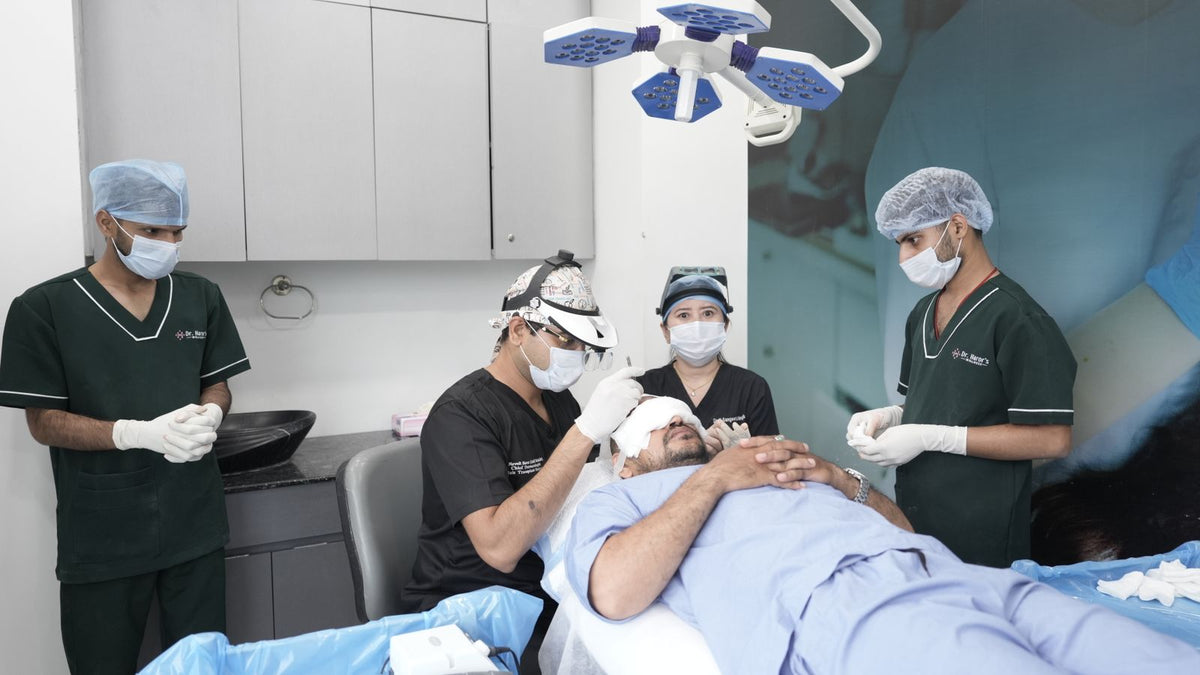
Hair Transplant Cost in the UK: What You Really Pay For
The NHS puts the typical hair transplant cost in the UK at anywhere between £1,000 and £30,000, depending on how much hair loss there is, which procedure you have and the quality of the clinic and its team. That range is wide for good reasons. This guide explains what drives the price, the costs that sit outside the headline quote, and how to check a clinic before you pay anything.
Our hair building fibres
InstaHair Hair Building Fibres, £19.95. Cosmetic fibres that cling to the hair you already have, covering a visible parting or thin patch in seconds. They wash out.
A UK hair transplant usually costs between £1,000 and £30,000, according to the NHS, and it is not available on the NHS because it is cosmetic surgery. The price depends on the size of the area, the method (FUT strip or FUE) and the clinic. Budget too for 1 to 2 weeks off work, aftercare and possibly a second session, and remember full results take 10 to 18 months.
Key takeaways
- The NHS gives a UK range of £1,000 to £30,000 for a hair transplant, which is not available on the NHS.
- The biggest price drivers are how much area needs covering, the method used and the clinic's team.
- Hidden costs include time off work (the NHS says 1 to 2 weeks), travel, aftercare and any future procedures.
- In England, a clinic doing cosmetic surgery must be registered with the Care Quality Commission, and every doctor with the GMC.
- Results take time: the NHS says new hair usually appears after about 4 months, with full results at 10 to 18 months.
What is the typical hair transplant cost in the UK?
The typical hair transplant cost in the UK is between £1,000 and £30,000, according to the NHS page on hair transplants. The NHS explains that the final figure depends on the extent of your hair loss, the type of procedure you have, and the quality of the clinic and its team. It also confirms that hair transplants are not available on the NHS, because they are classed as cosmetic surgery, so the full cost is paid privately. Before you commit to surgery it is worth reading about the non-surgical routes open to men.
That range covers very different jobs. At the lower end you might be looking at a small area such as a temple or a scar. At the upper end, a large area of the crown and front may need many grafts, sometimes over more than one session. Two quotes that look far apart can both be fair if they describe different amounts of work, which is why the useful question is never simply "how much?" but "how much for what, exactly?"

Why does the price of a hair transplant vary so much?
The price of a hair transplant varies because three things change the amount of skilled work involved: the size of the area, the method, and who does it. The NHS names all three. A larger thinning area needs more grafts, and each graft has to be removed, prepared and placed by hand. The method changes how that work is done, and the experience of the surgeon and team changes both the price and the risk.
The NHS describes two main methods. In follicular unit transplantation (FUT, or the strip method), a thin strip of skin with hair is removed from the back of the head and divided into grafts of 1 to 4 hairs, leaving a single scar that should not be visible unless hair is very short. In follicular unit extraction (FUE), the back of the head is shaved and hairs are removed one by one, leaving many tiny scars that are not very noticeable. Our comparison of FUE and FUT sets out which suits whom.
| Price driver | Why it changes the cost | What to ask |
|---|---|---|
| Size of the area | More grafts means more hours of skilled work | How many grafts are planned, and for which areas? |
| Method (FUT or FUE) | The harvesting technique and time involved differ | Which method do you recommend for me, and why? |
| Surgeon and team | Experience and staffing levels vary between clinics | Who performs each step, and how many have they done? |
| Number of sessions | Some plans need more than one procedure | Is a second session likely, and is it included? |
| Location | Clinic overheads differ across the UK and abroad | What aftercare is included if I live far away? |

What costs sit outside the headline quote?
The costs that sit outside a headline hair transplant cost quote are usually time off work, travel, aftercare and any future procedures, and the NHS advice before any cosmetic procedure is to understand all the costs involved, including aftercare and anything you might need later to maintain the look. A quote that covers only the day of surgery can be the start of the bill rather than the whole of it.
Time is the cost most people forget. The NHS says you may need 1 to 2 weeks off work after a hair transplant, that the grafts are not secure for the first 2 weeks, and that you may be told to cut down on exercise in the first month to reduce scarring. For the self-employed, that is lost income. Add travel to and from follow-up appointments, any aftercare products the clinic expects you to buy, and the possibility of a second session if your hair loss continues to progress around the transplanted area.
Get the whole number in writing
Ask for a written quote that lists the number of grafts, the method, the follow-up appointments included, what aftercare is supplied, and what happens (and costs) if some grafts fail. The NHS also says you should be offered a cooling-off period after any consultation.
How do you check a clinic before you pay?
You check a clinic by confirming its registration and the surgeon's credentials before you pay a deposit, because the NHS is clear that all independent clinics and hospitals providing cosmetic surgery in England must be registered with the Care Quality Commission (CQC). Look the clinic up on the CQC website and read its latest inspection report. Then check the surgeon, since the NHS says all doctors must be registered with the General Medical Council (GMC) and hold a licence to practise.
The NHS also suggests checking the British Association of Hair Restoration Surgery (BAHRS) to see whether the surgeon is a full or affiliate member, and asking the surgeon directly about their qualifications and experience, how many transplants they have performed, how many had complications, which method they would recommend for you and why, what follow-up to expect, and what happens if things go wrong. A good clinic answers those questions easily. If you feel rushed, offered a time-limited discount, or steered away from the question of who will actually hold the instruments, walk away.

Is a cheaper hair transplant abroad worth it?
A lower hair transplant cost abroad can look attractive, but the saving has to be weighed against what happens after you fly home. CQC registration applies to clinics in England, so a clinic in another country sits outside that system, and the protections you would have at home may not apply. The NHS stresses that your surgeon should explain how likely problems are and how they would be dealt with, which is harder to act on from another country.
If you are considering it, compare like with like: the number of grafts, who does each step, what follow-up is included, and what you would pay, and where you would go, if an infection or a poor result needed attention in the UK. Add flights, accommodation and time off work. Once those are included, the real difference between a UK quote and an overseas one is often smaller than the advert suggests. Our guide to hair transplant timing also covers why booking too early can mean paying twice.
Get a discount on the thinning hair range
Join the Watermans mailing list and we will email a discount code straight to your inbox, so you can try the thinning hair range for less. Made in the UK, over 6.5 million bottles sold since 2012.
What does the money buy, and how long do results take?
The money buys moved hair, not new hair, and the result takes more than a year to show fully. The NHS describes a hair transplant as moving hair to an area that is thin or bald. Donor hair from the back and sides is relocated, so the total number of hairs on your head does not increase, and the donor area limits how much can be done in a lifetime.
| Time after surgery | What the NHS says usually happens |
|---|---|
| 2 to 5 days | Bandages can usually be removed, but you should not touch the grafts |
| First 2 weeks | Grafts are not secure, so transplanted hair needs great care |
| A few weeks | Transplanted hair often falls out, then later starts to grow back |
| About 4 months | New hair usually starts to appear |
| 10 to 18 months | Full results should be seen |
That early fall is shedding, not failure, and it catches many people off guard. Our page on shock loss after a transplant explains the timeline week by week. The NHS lists common side effects as a tight, achy and swollen scalp for a few days, temporary scabbing and scarring, with a small risk of bleeding, infection, or the transplant not taking.
Is it hair loss, hair shedding or hair breakage?
A transplant only makes sense for one of three problems, so it is worth being sure which one you have before paying anything. Hair loss in the pattern sense, a receding hairline or thinning crown over years, is what transplants are designed for. Hair shedding, whole hairs falling for a few months after a trigger such as illness, stress or low iron, usually settles on its own, and the NHS says hair loss caused by a medical condition usually stops or grows back once you recover. Hair breakage is the fibre snapping from heat or chemical damage, and surgery does nothing for it.
The NHS advises seeing a GP about the cause of your hair loss before going to a commercial hair clinic. A GP can check for things like thyroid problems or iron deficiency, which would make surgery the wrong answer. If your thinning is still actively progressing, a surgeon may also advise waiting, because hair can continue to thin around the transplanted area.
What are the lower-cost alternatives to a hair transplant?
The lower-cost alternatives to a hair transplant are cosmetic: concealing thin areas, making existing hair look fuller, and styling around the problem. None of them moves hair, but for many people they are enough, and they cost a fraction of surgery. They are also worth using while you decide, or while you wait for a transplant to mature.
| Option | Typical cost | What it does |
|---|---|---|
| Hair transplant | £1,000 to £30,000 (NHS range) | Moves hair from the donor area to thin areas |
| Scalp micropigmentation | Varies by clinic and sessions | Tattoos tiny dots that mimic a shaved look |
| Hair building fibres | £19.95 at Watermans | Coloured fibres cling to hair and disguise thin patches |
| Gentle care routine | From £14.95 at Watermans | Helps hair look fuller and reduces breakage |
Scalp micropigmentation suits people happy with a closely shaved look, and our scalp micropigmentation guide covers sessions and aftercare. For people keeping their length, fibres and a good routine are the cheapest way to change how thinning looks day to day.

Hair Building Fibres £19.95
Coloured fibres that cling to existing hair to disguise thinner areas instantly, a low-cost way to see how fuller coverage would look before committing to surgery.

Grow Me® Hair Growth Shampoo £14.95
A gentle daily-use shampoo with plant-based ingredients that support a healthy scalp environment and fuller-looking hair. Once your surgeon says you can wash normally, it fits straight into your everyday routine.

Condition Me® Hair Growth Conditioner £13.95
A conditioner that reduces tangling and breakage, so the hair you already have stays on your head and looks thicker.
When should you talk to a GP first?
You should talk to a GP first if you have not yet had your hair loss looked at, because the NHS specifically advises getting an idea of what is causing it before going to a commercial hair clinic. A GP can often tell the likely cause by looking at your hair, and can check for medical causes that surgery would not fix. See a GP promptly for sudden, patchy, itchy or painful hair loss.
If your hair loss is causing distress, the NHS notes a GP may be able to help you access counselling. If your question is about products or a routine rather than a medical one, you can talk to Gail Waterman, our co-founder, as an AI avatar on the Watermans homepage. Watermans does not perform transplants or run clinics; for surgery, go to a CQC-registered clinic and a GMC-registered surgeon. Price is only one part of the decision, and our guide to protecting transplant grafts explains what a good clinic does differently.
What are the frequently asked questions about hair transplant cost?
How much does a hair transplant cost in the UK?
The NHS says a UK hair transplant can cost anywhere between £1,000 and £30,000, depending on the extent of hair loss, the type of procedure and the quality of the clinic and its team.
Can I get a hair transplant on the NHS?
No. The NHS says hair transplants are not available on the NHS because they are cosmetic surgery, so you pay the full hair transplant cost privately.
Is FUE more expensive than FUT?
It depends on the clinic and the number of grafts. The methods differ in how hair is harvested, so ask each clinic for a written quote that names the method and the graft count.
How much time off work will I need?
The NHS says you may need 1 to 2 weeks off work, and should be very careful with the transplanted hair for the first 2 weeks.
When will I see results?
The NHS says new hair usually starts to appear after about 4 months and full results should be seen after 10 to 18 months.
How do I check a clinic is legitimate?
In England, check the clinic is registered with the Care Quality Commission, the surgeon is on the GMC register, and see whether they are a BAHRS member, as the NHS suggests.
Will I need more than one transplant?
Sometimes. If hair loss keeps progressing around the transplanted area, a second session may be needed later. Ask whether the plan and the quote allow for that.
Are there cheaper ways to make thinning hair look fuller?
Yes. Hair building fibres, scalp micropigmentation and a gentle hair care routine all change how thinning looks for far less than surgery. None of them moves hair, but many people find them enough.
What is the bottom line on hair transplant cost?
The bottom line on hair transplant cost is that the NHS range of £1,000 to £30,000 is only the starting point. Get a written quote that names the graft count, the method and what aftercare is included, then add time off work, travel and the chance of a second session. Check CQC registration, the GMC register and BAHRS membership before paying anything, and see a GP first to be sure a transplant fits your kind of hair loss.
If you want to see what fuller coverage would look like while you decide, hair building fibres give an instant, low-cost preview of thinner areas filled in.
Sources & references
- NHS, Hair transplant, checked 18 September 2026.
- NHS, Before you have a cosmetic procedure, checked 18 September 2026.
- NHS, Hair loss, checked 18 September 2026.
- Care Quality Commission, checked 18 September 2026.
- International Society of Hair Restoration Surgery, checked 18 September 2026.
- DermNet, Male pattern hair loss, checked 18 September 2026.
Watermans products are 100% cosmetic and do not treat medical hair loss. Individual results may vary.