Trichologist Luton: Is It Heat and Colour Breakage, Not Hair Loss?
Short bits of hair on your jumper after straightening, or ends that snap when you brush? Heat and colour could be the cause.
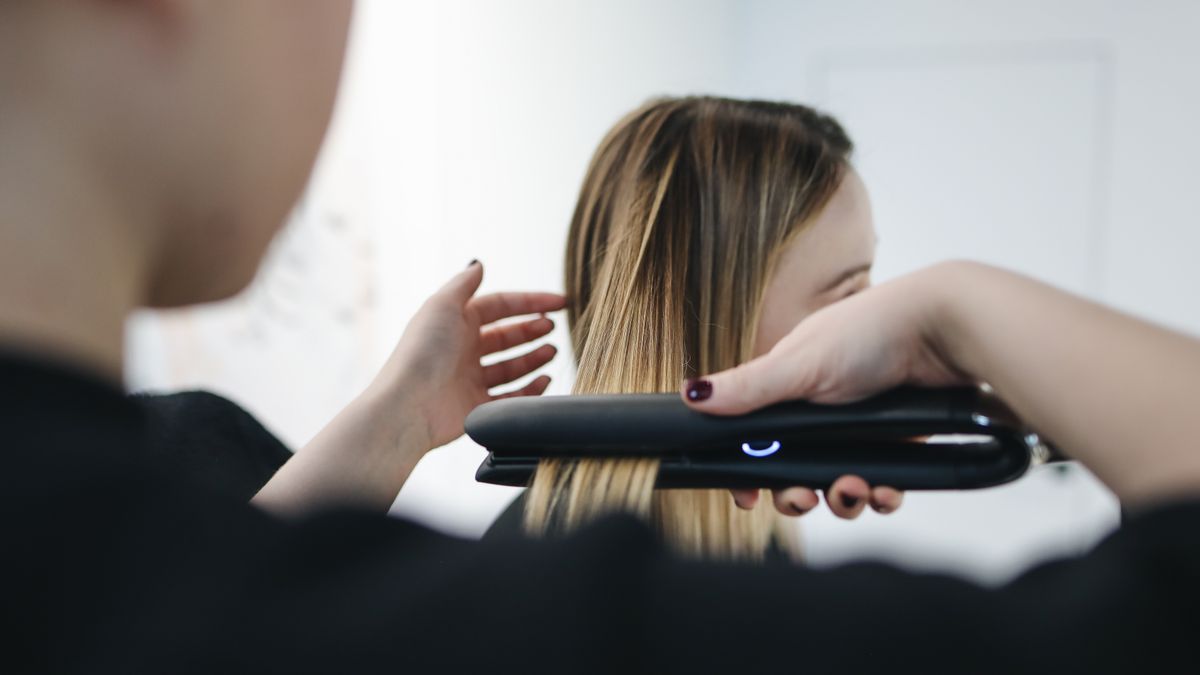
If you have typed trichologist Luton into a search bar because your hair suddenly looks thinner, check what is actually coming out. Short snapped pieces with no pale bulb, white dots along the shaft or split ends usually mean heat or colour is breaking the hair fibre while your follicles keep working. Lab studies show hot straighteners and blow-drying wear the protective cuticle, and bleach oxidises the keratin inside. Lower the heat, protect the lengths, space out colour, and see your GP about patches or a sore scalp.
Our weekly hair mask
Masque Me® Hair Mask, £24.95. A deep conditioning weekly mask for dry, stressed lengths, adding gloss and hydration where heat and colour have taken their toll.
Key takeaways
- Breakage leaves short pieces with blunt or frayed ends and no bulb. A shed hair is full length with a small pale club at the root.
- In a 2019 laboratory study, flat-ironed hair released water below 170°C, sulphur-containing gases from 200°C, and its keratin denatured at 237°C.
- A 2011 study found a hair dryer held 15 cm away and kept moving caused less damage than letting hair dry naturally.
- Bleach and permanent colour oxidise the keratin in your hair, and the NHS advises testing dye on a strand at least 48 hours before you use it.
- See your GP first for patches, a sore scalp or a dye reaction. A trichologist Luton residents can see privately helps most when the cause stays unclear.
How do straighteners, blow-dryers and colour weaken the hair fibre?
Straighteners, blow-dryers and colour weaken the hair fibre by damaging the cuticle, the overlapping outer scales that protect each hair, and then the keratin proteins in the cortex underneath, so the fibre dries out, loses strength and eventually snaps partway along its length instead of falling out from the root.
Once a hair leaves the scalp it is non-living keratin, so it cannot mend itself. DermNet lists hairdryer heat, bleach, relaxing chemicals and excessive brushing among the causes of acquired hair shaft damage, meaning injury to the hair after it has grown rather than a problem inside the follicle.
A 2019 University of São Paulo study of never-coloured hair found flat-iron heat damaged the cuticle, and Asian hair lost more protein than Caucasian hair. The temperatures it measured are in the table below.

Blow-drying is gentler than a straightener but still adds up. In a 2011 Korean study, hair tresses washed and dried 30 times showed more surface damage as the dryer got hotter. A 2025 laboratory model from an industry team found that the equivalent of a month of daily drying left lifted cuticles, lower water content and weaker fibres.
All of this comes from hair tresses in laboratories, not people, so it shows direction rather than a precise safe limit, and a 2025 paper from a Cambridge-based styling tool maker notes the industry has no standard way to measure heat damage.
Is it heat breakage, shedding or hair loss?
Heat breakage, shedding and hair loss are three different things: breakage is the hair fibre snapping partway along its length, shedding is the growth cycle releasing whole hairs from healthy follicles, and hair loss means the follicles themselves are changing, producing finer hairs or none at all, as in pattern hair loss or alopecia areata.
To tell them apart, look at the hairs you collect. DermNet explains that a resting hair released from the follicle is called a club hair because of its root: a small, pale, rounded bulb. A broken hair has no bulb, its ends are blunt, frayed or split, and the pieces are often only a few centimetres long.

| Sign | Heat or colour breakage | Shedding | Hair loss |
|---|---|---|---|
| What you find | Short pieces, often a few centimetres long | Full-length hairs | Finer, shorter hairs over time, or smooth patches |
| The end nearest the scalp | Blunt, frayed or split, no bulb | A small pale bulb (club hair) | Hairs growing back finer, or none in a patch |
| Where you notice it | Ends, crown, front sections you style most, where bands sit | All over the scalp | Parting, crown, temples or round patches |
| Timing | Builds up with heat, bleach and colour | Often 2 to 4 months after an illness or shock | Gradual over months or years, or sudden patches |
| First step | Less heat, more conditioning, space out colour | GP blood tests if heavy or lasting | GP, then specialist assessment |
The snapped-hair test
For three days, collect the hairs from your brush, pillow and clothes and lay them on white paper. Mostly short pieces with no bulb point to breakage from heat, colour or rough handling. Mostly full-length hairs with a pale bulb point to shedding, and heavy or lasting shedding is worth a GP visit.
Breakage clusters at the ends, the most-styled front sections and where a band sits. Tiny white dots along a strand can be trichorrhexis nodosa, points where the fibre has frayed like a broom. A 2017 review by Johns Hopkins and Howard University dermatologists calls it common in all ethnicities, especially tightly curled hair, and says gentle cleansing and conditioning to protect the shaft come before medicines. Friction snaps hairs along the hairline too, and our Cambridge guide to cycle helmets and hair breakage covers the rubbing from helmet pads and straps.
Doing this test before you look up a trichologist Luton practice can save you a fee, because the answer is often in your hairbrush. For breakage against genuine hair loss from any cause, our Coventry guide to telling breakage from real hair loss goes step by step, while this page stays with heat and colour.
What do bleach and permanent colour do to hair?
Bleach and permanent colour use hydrogen peroxide to oxidise the hair, which lightens natural pigment but also damages the keratin proteins inside the fibre, especially cysteine, the sulphur-containing building block that helps hold keratin together, so coloured hair ends up weaker and snaps more readily under heat and brushing.
A 2013 study from New Zealand research institute AgResearch found hydrogen peroxide bleaching significantly increased oxidative damage, mostly at cysteine, and produced by-products usually linked with heat or alkali. Bleach and hot tools seem to attack the fibre in overlapping ways, which is why the combination is so hard on hair.

Before you colour at home
The NHS says many permanent and some semi-permanent dyes contain PPD, which can irritate skin or cause allergic reactions. Test the dye on a strand of hair at least 48 hours before, as symptoms can take up to 72 hours to appear, and never leave dye on longer than the pack says. Call 999 if your lips, mouth, throat or tongue suddenly swell.
Fewer, well-spaced lightening sessions, colour on new growth only, and less heat while lengths are fragile all reduce breakage, and our guide to caring for bleach-damaged hair covers the after-care. For what bond-building products and protein masks can realistically do for bleached lengths, see our Rotherham guide to bond builders and protein masks.

A weekly deep conditioning mask with hydrolysed lupine protein, provitamin B5 and argan oil. It softens and smooths coloured lengths so they detangle with less snapping, and helps heat-styled hair look and feel healthier.
What temperature should you set your straighteners and hair dryer to?
Straighteners and hair dryers should be set to the lowest temperature that still styles your hair, because no UK body publishes a single safe setting, and laboratory studies show damage building as the heat rises, with water driven off below 170°C, sulphur-containing gases released from 200°C and keratin denaturing at about 237°C.
| Tool and setting | What the research found | What it means for you |
|---|---|---|
| Hair dryer about 15 cm away, kept moving (47°C in the study) | Less damage than natural drying after 30 washes (Lee, 2011) | Hold the dryer a hand span away and keep it moving |
| Hair dryer 5 cm away (95°C in the study) | The most surface damage, and colour lightening after 10 sessions | Never rest the nozzle on or near the hair |
| Flat iron, 25°C to 170°C | Water driven out of the fibre (Lima, 2019) | Even moderate settings dry hair, so condition well |
| Flat iron from 200°C | Carbon dioxide and sulphur-containing gases released | Keep well below this unless your stylist advises otherwise |
| Flat iron at 237°C | Keratin denaturation measured | Too hot for regular home use |
Sources disagree on drying. DermNet advises drying hair naturally or with a hairdryer on a cool setting, but the 2011 Korean study found hair left wet for longer showed damage to the cell membrane complex, the layer binding the cells of the hair together, which the dryer groups did not. A middle path is to blot, let hair dry partway, then finish on a cool or medium setting about 15 cm away. Fine or bleached hair starts weaker, so keep it at the low end. Our Grimsby guide to blow-drying or air-drying fine hair sets out how to dry fine or thinning strands without snapping them.

Protect Me® Heat Protection Spray
A leave-in spray with heat protection up to 230°C, plus colour and frizz protection, made with panthenol, niacinamide and sunflower oil. Mist it through your lengths before any hot tool to help reduce heat breakage and keep coloured hair looking fresh.
Get a discount on the hair breakage range
Join the Watermans mailing list and we will email a discount code straight to your inbox, so you can try the hair breakage range for less. Made in the UK, over 6.5 million bottles sold since 2012.
What does a safer heat and colour routine look like?
A safer heat and colour routine means fewer hot passes at lower settings, a heat protection spray every time, gentle detangling while hair is conditioned, and spacing out bleach and permanent colour, because each step cuts the cumulative damage that the cuticle and keratin cannot undo once the hair has left the scalp.
- Blot, do not rub. Squeeze water out with a towel, then let hair air dry partway before any heat.
- Detangle while conditioned. Work from the ends upwards with a wide-tooth comb, so knots separate instead of snapping.
- Never straighten wet hair. A 2017 case report in the International Journal of Trichology describes how high heat on wet hair can form gas bubbles inside the shaft, leaving hairs brittle and dry.
- Protect, then one slow pass. Spray through the lengths, then straighten small sections in one steady pass at a lower setting rather than several quick passes at a higher one.
- Loosen your styles. The British Association of Dermatologists warns that tight styles combined with chemicals such as relaxers raise the risk of traction alopecia, which can become permanent.
- Trim the frayed ends. A split cannot be glued back together, so a small regular trim removes it before it frays further up the shaft.
Heat and colour are not the only culprits, and our round-up of everyday causes of hair damage covers the rest. For ends that are already fraying, see our guide on how to keep split ends at bay. Nights matter too, and our Slough guide to pillowcases, wet hair and overnight breakage covers what happens to hair while you sleep.

Camellia & Black Castor Hair & Body Oil
A hair and body oil with black castor oil, camellia oil and omega 3, 6 and 9. A few drops smoothed over dry ends add shine and softness, so heat-styled lengths look and feel healthier between trims.
How long does heat-damaged hair take to grow out?
Heat-damaged hair takes as long to grow out as the damaged length itself, because scalp hair grows at about 1 cm a month according to DermNet, so frayed ends 10 cm below the scalp need roughly ten months of new growth before they can be cut away completely, while the new hair coming through is unaffected by past styling.
That holds as long as the scalp has not been burnt, chemically irritated or pulled for years by tight styles. Conditioner, masks and oils make damaged lengths look and feel better but cannot make them new, so many people take a shorter cut, then trim little and often. Easing breakage shows up as fewer short pieces in the brush well before the lengths grow out.
When is a trichologist Luton visit worth it, and when is a GP better?
A trichologist Luton residents see privately is worth the fee when your collected hairs are a mix you cannot read, when breakage keeps going despite a gentler routine, or when you want the hair shaft examined under magnification, while a GP is the right first step for patches, scalp pain or scaling, dye reactions and heavy shedding.
A trichologist can examine your hair and scalp under magnification and talk through your heat, colour and styling habits. Check that any practitioner is on the Institute of Trichologists register, which says it is the only UK trichology register accredited by the Professional Standards Authority, or belongs to the Trichological Society. Whether you choose a trichologist Luton based or travel to Milton Keynes, St Albans or London, ask what the fee covers, and bring your collected hairs, dated colour and bleach sessions and your usual straightener setting. Before assuming loss, it is worth learning how to spot heat damage and prevent it. Readers slightly further east can follow the same checks in our Ilford guide to finding a trichologist and what to expect.
The NHS advises seeing a GP about the cause of hair loss before going to a commercial hair clinic. Go promptly for smooth bald patches, a sore, red, weeping or scaling scalp, a straightener burn, a worsening dye reaction, or thinning along the hairline where you wear tight styles. For Luton residents, NHS dermatology is run by Bedfordshire Hospitals NHS Foundation Trust, with the Luton and Dunstable University Hospital team based at Arndale House, reached through a GP referral.
We sell hair care, so weigh our view accordingly. Our range is made in the UK and has sold over 6.5 million bottles since 2012. It is cosmetic: it reduces breakage and helps hair look and feel healthier, but it cannot change what a follicle is doing.
Frequently asked questions
Do I need a trichologist Luton or Bedfordshire based for heat-damaged hair?
Usually not at first. Short snapped pieces with no bulb point to breakage, and the first step is less heat, more conditioning and spacing out colour. A registered trichologist is worth the fee if the hairs you collect are hard to read or breakage carries on, and your GP comes first for patches, soreness or heavy shedding.
How can I tell a snapped hair from a shed hair?
Look at both ends. A shed hair is full length and has a small, pale, rounded bulb at the root, which DermNet calls a club hair. A snapped hair has no bulb, is usually short, and has blunt, frayed or split ends. Mostly snapped pieces point to heat, colour or rough handling rather than your follicles.
What temperature is safe for hair straighteners?
No UK body sets a safe temperature for straighteners. In a 2019 laboratory study, flat-ironed hair lost water below 170°C, released sulphur-containing gases from 200°C and its keratin denatured at 237°C. Use the lowest setting that works, one slow pass per section, and a heat protection spray before every use.
Is air drying better for my hair than a hair dryer?
Not always. DermNet suggests natural drying or a cool setting, but a 2011 study found hair left to dry naturally had damage that the dryer groups did not, and a dryer held 15 cm away and kept moving caused less damage overall. Blot with a towel, air dry partway, then finish on a cool or medium setting.
Does bleach make your hair fall out?
Bleach mostly causes breakage rather than hair falling from the root: it oxidises the keratin in the lengths, so bleached hair snaps more easily and can look thinner. A burning, blistering or swelling scalp after colour is different: the NHS says see a GP if it gets worse, and call 999 if your lips, mouth, throat or tongue swell.
Can split ends be mended?
A split end cannot be fused back into one fibre, because hair beyond the scalp is non-living keratin. Conditioners, masks and oils smooth the cuticle so splits look less obvious and snag less, but only a trim removes a split. DermNet puts growth at about 1 cm a month, so trim little and often.
Sources & references
- NHS, Hair loss
- NHS, Hair dye reactions
- DermNet, Hair loss
- DermNet, Telogen effluvium (hair shedding)
- British Association of Dermatologists, Traction alopecia
- Lee Y et al. Hair shaft damage from heat and drying time of hair dryer. Ann Dermatol, 2011
- Lima CRRC et al. Heat-damaged evaluation of virgin hair. J Cosmet Dermatol, 2019
- Zi Y et al. Establishment of Heat-Damaged Model for Hair. J Cosmet Dermatol, 2025
- Shaw N et al. Application of single hair fibre tensile measurements to create an industry-standard heat damage scale for hair. Int J Cosmet Sci, 2025
- Albers LN et al. Blowing Bubbles: Dermoscopy of Bubble Hair. Int J Trichology, 2017
- Dyer JM et al. Redox proteomic evaluation of bleaching and alkali damage in human hair. Int J Cosmet Sci, 2013
- Haskin A et al. Breaking the cycle of hair breakage: pearls for the management of acquired trichorrhexis nodosa (PubMed, 2017)
- Bedfordshire Hospitals NHS Foundation Trust, Dermatology
- The Institute of Trichologists
- The Trichological Society
What is the bottom line on trichologist Luton?
Hair that seems to be thinning after months of straightening, blow-drying or bleaching is often breakage: short pieces with no bulb, white dots and split ends, while the follicles carry on as normal. Before you pay for a trichologist Luton visit, do the snapped-hair test, turn the heat down, use a protection spray every time and space out colour. If you see patches, a sore or scaling scalp, or full-length hairs coming out in handfuls, see your GP first, and use a registered trichologist when the picture stays unclear. If your question is about products or a routine rather than a medical one, you can talk to Gail Waterman, our co-founder, as an AI avatar on the Watermans homepage.
Before your next styling session, mist a heat protection spray such as Protect Me through your lengths: it protects hair up to 230°C and is made with panthenol and niacinamide.
Watermans products are 100% cosmetic and do not treat medical hair loss. Individual results may vary.